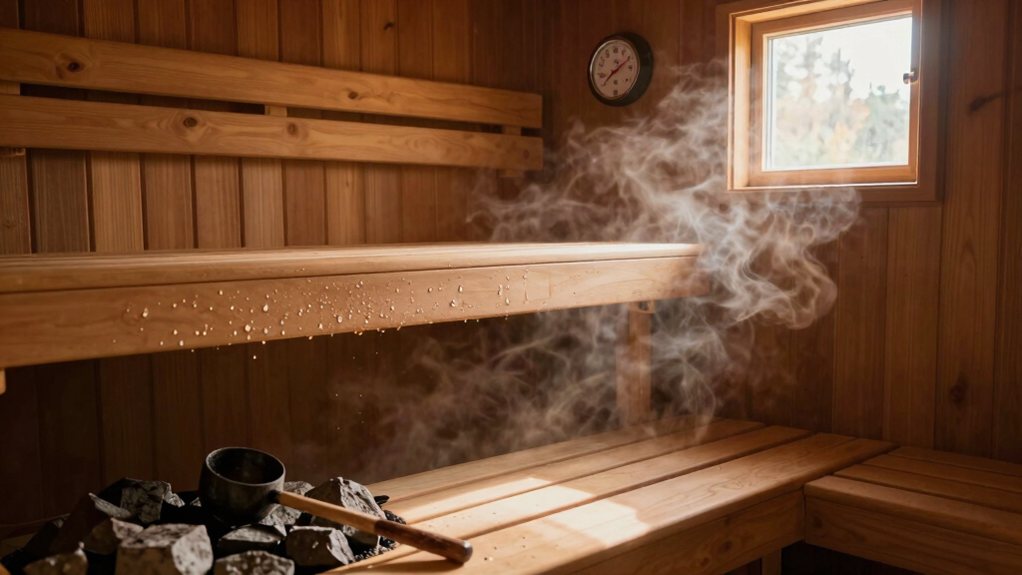

The 200 rule is a simple compass for keeping your sauna sessions safe and comfy. You add the temperature in Fahrenheit to the humidity percentage, and you want that total at or below 200. Think of it like a speed limit, not a strict law: 160°F plus 40% humidity hits the mark, but 180°F with 20% works too.
It helps beginners dodge overheating and dehydration without memorizing complex heat science. Your body always gets the final say, though, because core temperature can climb even when you feel fine.
Stick around, and you’ll discover exactly how to check your sauna’s score and what to do when things heat up past the safety zone.
What Is the 200 Rule for Saunas?
You’ve probably heard plenty of tips for getting the most out of your sauna time, but one guideline keeps popping up in conversations about comfort and safety: the 200 rule.
It’s a simple math trick, add your sauna’s temperature in Fahrenheit to its humidity percentage, and keep that total at or below 200.
Think of it like a seesaw: when one side goes up, the other comes down.
Heat rises, humidity falls—balance is the key to comfort.
Crank the heat to 180°F? You’ll want humidity around 20%.
Prefer a steamier 50% humidity? Cool things to about 150°F.
This balance keeps your session invigorating, not overwhelming.
The rule isn’t a strict law, more like a trusty compass pointing toward that sweet spot where heat and moisture work together, not against you.
Following this guideline helps prevent overheating and reduces the risk of dehydration during your sauna session.
When you pour water on the heater rocks, humidity can spike rapidly, making that combined total jump in seconds until ventilation gradually brings it back down.
How to Calculate Your Sauna’s 200 Rule Score
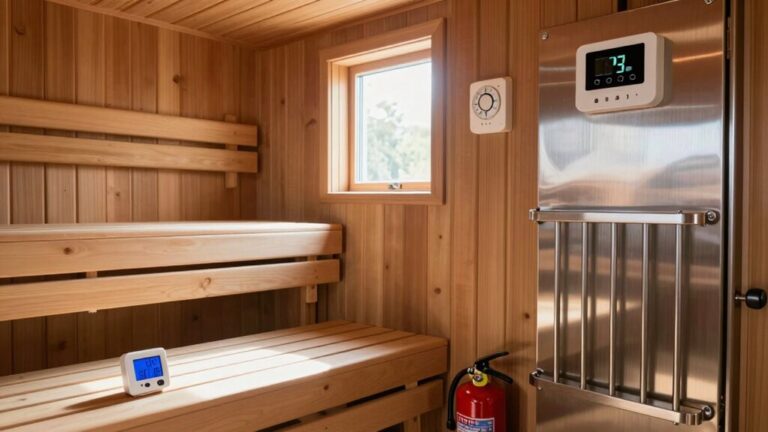
To calculate your sauna’s 200 Rule score, you’ll need two reliable tools: a thermometer that shows Fahrenheit and a hygrometer that measures relative humidity.
Start by placing both instruments at about bench height, since heat rises and you want readings where you’ll actually be sitting. For the most accurate readings, position your instruments at head height near the ceiling, about 20–30 cm below the top and opposite the heater.
Once you’ve got your numbers, simply add the temperature and humidity together.
If your thermometer reads 175°F and your hygrometer shows 25%, your score is a perfect 200.
Remember that your total should always stay below 200 to ensure a safe and comfortable sauna experience.
Measuring Temperature Accurately
Before you can add up your sauna’s 200 Rule score, you’ll need to know exactly how hot and humid your space actually is, guesswork won’t do it when comfort and safety are on the line.
Grab a sauna-rated thermometer, not the cheap indoor kind from your hallway. Mount it 36 to 54 inches from the floor, right where your head sits when you’re relaxing.
Keep it away from the heater’s direct blast, or you’ll get readings hotter than the air you’re actually breathing.
Think of it like checking your oven: you want the real temperature, not just the spot nearest the flame.
Let your sauna stabilize first, then peek at the thermometer. Remember that temperature drops 10–15°F per foot as height decreases, so your reading at head level will be notably warmer than what your feet experience.
You’ll also want to track humidity levels in % with a hygrometer, since the 200 Rule combines both temperature and moisture measurements to find your optimal balance.
Accurate numbers mean you’ll nail that sweet 200 score every single time.
Gauging Humidity Levels
Once you’ve got your temperature reading locked in, it’s time to figure out how much steam your sauna can handle without turning into a swamp. You calculate your 200 Rule score by adding your sauna’s temperature in Fahrenheit to the relative humidity percentage.
Grab your hygrometer, read the humidity, and do some quick math.
If your sauna runs at 170°F with 30% humidity, you’ve hit the sweet spot of 200. Scores below 200 feel drier and cooler, while above 200 gets steamy fast.
Think of 200 as your sauna’s comfort budget: you can spend it on heat, humidity, or a mix of both. Small water additions help you stay in range without overspending. Excessive heat risk becomes a real concern when your total climbs above 200, potentially leading to dehydration, dizziness, and strain on your body’s core temperature regulation systems.
Safe 200 Rule Combinations for Every Sauna Type
Whether you’re stepping into a traditional Finnish cabin, a modern infrared room, or a steamy Turkish-style hammam, you’ll want to know your numbers before you start sweating. The Rule of 200 helps you pair temperature and humidity safely across all sauna types.
Here’s how it breaks down:
- Traditional dry sauna: Aim for 170°F plus 30% humidity, or push to 180°F with 20% if you like it intense.
- Gentler traditional: Drop to 160°F and raise humidity to 40% for a steamier, easier session.
- Infrared setup: Try 150°F with 50% humidity, though most infrared rooms run drier than this.
- Steam sauna: You’ll often exceed 200, since 110–120°F with near-100% humidity is normal for true steam rooms.
Keep sessions under 20 minutes, watch your body, and enjoy the heat!
How Humidity Changes Your Sauna Experience
You’ve got your numbers down from the Rule of 200, but here’s where it gets interesting: those same digits can feel completely different depending on how much moisture is hanging in the air.
Picture stepping into 180°F with bone-dry air, your sweat vanishes fast, and the heat bites your skin like a desert wind. Now imagine that same temperature after tossing water on hot stones. Suddenly, you’re wrapped in thick, gentle warmth that hugs every inch of you. The humidity spikes, sweat clings, and your body works harder to cool down. High humidity makes heat feel stronger because sweat does not dry off easily, intensifying the sensation.
That’s the magic of löyly. Lower humidity lets you crank the heat higher, while steamier sessions demand cooler temperatures to stay comfortable. Your lungs, skin, and stamina all respond to this invisible variable. The penetrating sensation you feel during löyly occurs because water vapor molecules are smaller than nitrogen and oxygen in air, allowing them to travel deeper into your skin before condensing and releasing their latent heat.
Listen to your body, adjust gradually, and you’ll find your perfect balance between dry intensity and wet, enveloping heat.
Your Sauna Hit 210: Now What?
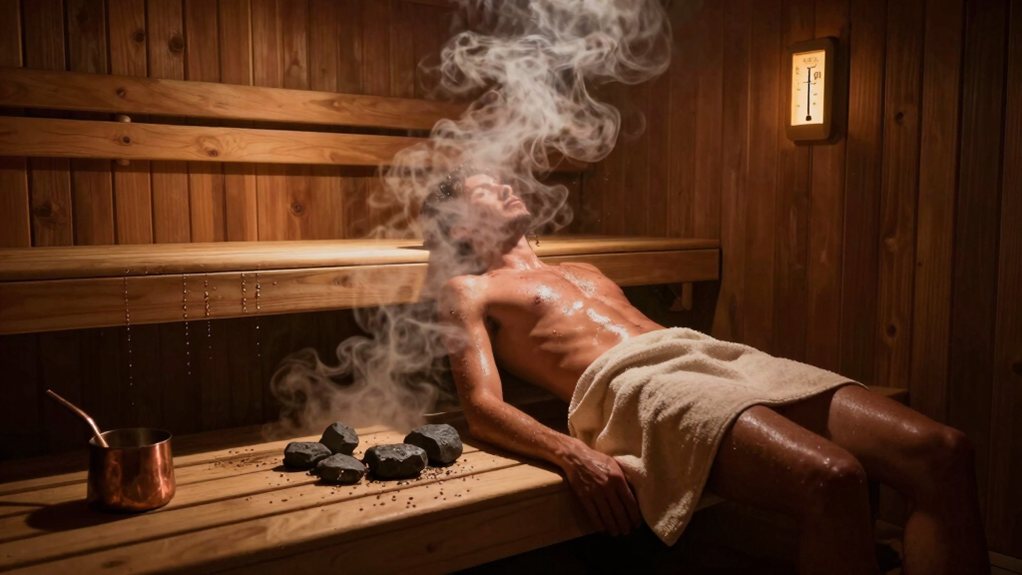
If your sauna’s temperature and humidity add up to 210, you’ve crossed past the safe zone of the 200 rule, so you’ll want to act fast to protect yourself.
Step out right away if you feel dizzy, nauseous, or just plain wiped out, because your body is telling you it’s under too much heat stress.
Once you’re safe, you can tweak the conditions and learn the warning signs that mean it’s time to call it quits.
Immediate Safety Steps
When your sauna thermometer climbs past 210°F, your body starts sending urgent signals that demand immediate attention, much like a smoke alarm blaring during a kitchen mishap: you don’t pause to debate, you act.
Watch for these warning signs that scream “exit now”:
- Dizziness or confusion, your brain’s cry for cooler temperatures
- Nausea or sudden fatigue, your stomach waving a white flag
- Rapid heartbeat, your heart working overtime without pay
- Sweating that suddenly stops, your body’s cooling system crashing
Feel lightheaded? Step out immediately.
Move to a cool spot, sit or lie down for 5–10 minutes. Seek medical help if your symptoms don’t improve within 15 minutes.
Take a lukewarm shower.
Sip water slowly: don’t gulp.
Wait until you’re fully comfortable before even thinking about returning.
Your safety beats any sauna streak.
Adjusting Sauna Conditions
Since your sauna thermometer just flashed 210, you’re standing at a crossroads between an intense sweat session and a safety risk you don’t want to take.
You’ve exceeded the Rule of 200, where temperature plus humidity should equal 200 or less for safe, comfortable sauna use.
First, grab your thermometer and hygrometer.
If you’re at 185°F, you’ll need humidity near 15% or lower to stay safe.
Drop the temperature or cut the steam: pick one, fast.
Add water to rocks in tiny scoops, not big splashes, to control humidity spikes.
Think of it like adjusting a shower: small turns, big difference.
Start drier, then add steam later if you want.
Watch for warning signs: dizziness, nausea, or excessive sweating mean it’s time to cool down.
Stay hydrated, keep sessions shorter at higher heat, and you’ll find your sweet spot without tapping out early.
Knowing When Exiting
Though your sauna thermometer just hit 210, you don’t need to panic: you need a plan. The Rule of 200 helps you stay safe, and 210 means you’ve crossed into the caution zone.
Here’s what to do:
- Check your body: dizziness, nausea, or lightheadedness mean exit immediately
- Step out and cool down: don’t push through discomfort
- Hydrate right away: water helps your body recover
- Wait before returning: only go back once conditions drop below 210
Warning Signs the 200 Rule Can Miss
Although the 200 Rule offers a handy starting point, it can’t catch every danger lurking in the heat. You might feel fine at first, but your core temperature keeps climbing, turning a cozy session into a risky one.
Watch for lightheadedness, nausea, chest pressure, or confusion, these are your body’s alarm bells, not suggestions.
Dehydration sneaks up too, since sweating drains your fluids even when numbers look safe. Drink 16–24 ounces beforehand, and skip the alcohol.
Your session length matters just as much as the math; staying longer doesn’t mean you’re tougher, it might mean the room’s too mild.
Conversely, bailing early signals real trouble.
How the 200 Rule Started (and Spread)
The rule spread quickly through consumer sauna websites, where writers copied and paraphrased the same simple formula. Here’s how it took off:
- Wellness blogs packaged it as beginner-friendly advice
- Safety framing made it feel like crucial guidance
- Easy arithmetic (170°F + 30% = 200) stuck in people’s minds
- Product marketing paired it with thermometers and hygrometers
Some sites even connected it to *löyly*, the Finnish steam ritual, though traditional Finnish practice never used this fixed number.
The rule’s real power: it’s memorable, shareable, and makes complex heat-humidity relationships feel manageable for newcomers.
When the 200 Rule Doesn’t Apply
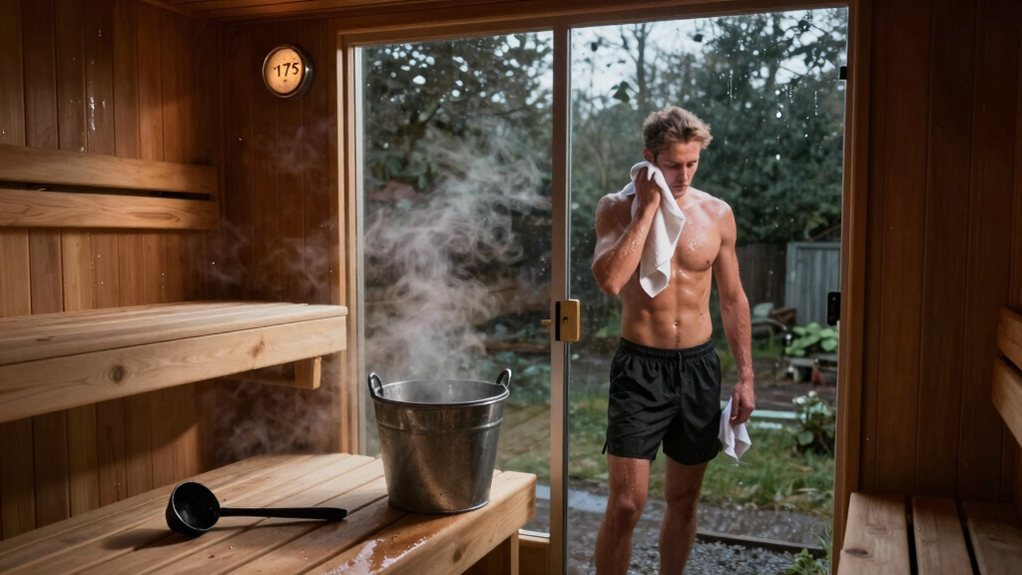
While the 200 Rule works great as a quick reference, you’ll quickly discover it isn’t a one-size-fits-all solution for every sauna experience.
Infrared saunas break the mold entirely, heating your body directly instead of warming the air around you.
Steam rooms laugh at the 200 limit, running 110°F with nearly 100% humidity.
Poor ventilation turns a “safe” number into a suffocating experience, while a high bench might park you in much hotter air than the thermometer suggests.
Trust your body over the math.
Listen to what your body tells you, not what the numbers say.
If you’re dizzy, nauseous, or can’t last ten minutes, the rule doesn’t matter: get out.
Think of it like a speed limit: useful guidance, but you still watch the road conditions and adjust accordingly.
Frequently Asked Questions
Can Children Use the 200 Rule Safely?
You shouldn’t use the 200 rule with children.
Keep their sauna sessions much shorter and cooler than adults require, supervise them constantly, and watch for any signs of discomfort immediately.
Does the 200 Rule Apply to Outdoor Saunas?
Yes, you can apply the 200 rule to outdoor saunas. You’ll measure the interior temperature and humidity just like indoors. You’ll need to monitor conditions more closely since weather affects heat retention and steam generation.
Should I Drink Water Before Checking My Score?
Yes, you should drink water before checking your score. Hydrating beforehand helps you handle the heat and humidity safely.
Don’t wait until after measuring, start your session well-hydrated to reduce dizziness and overheating risks.
Can I Exceed 200 if I’m Experienced?
You can briefly exceed 200 if you’re experienced, but you’ll need to keep sessions short and prioritize dry heat over humid conditions.
Stay alert for dizziness or nausea and exit immediately if they appear.
Does Altitude Affect the 200 Rule Calculation?
No, altitude doesn’t change the 200 rule calculation. You’ll still add temperature and humidity the same way at any elevation.
Just pay closer attention to how you’re feeling since high altitude can affect your body’s heat response.
Final Thoughts
Now you’ve got the full picture of the 200 rule, and you’re ready to sauna smarter, not harder. Remember, it’s your guide, not your boss. Listen to your body first.
Whether you’re chasing 200 or letting it ride to 210, stay hydrated, watch for warning signs, and enjoy the heat. Your perfect sauna session is the one that leaves you relaxed, not roasted.
So grab your towel, check your numbers, and sweat happy!