
The 200 Rule for saunas states that the temperature (°F) plus humidity percentage should equal 200 for ideal comfort and safety. For example, if your sauna is 180°F, your ideal humidity should be around 20%. This balance helps your body cool effectively through sweating while preventing overheating and dehydration. You can apply this rule across different sauna types, from traditional Finnish to infrared models, to maximize health benefits while maintaining a comfortable experience. The principles behind this guideline reveal fascinating insights about how your body responds to heat.
Origins and History of the 200 Rule
While you might expect the 200 Rule for saunas to have ancient Finnish origins alongside the sauna tradition itself, this guideline actually emerged much more recently in sauna history.
Unlike the smoke saunas dating back to the Iron Age or the ritual bathing practices from 4,000 B.C., the 200 Rule developed during the modern era of sauna evolution.
When electric saunas gained popularity in the 1950s, after their introduction by Metos Ltd in 1938, standardized guidelines became necessary for safe operation.
The technological shift from wood-fired to electric heating created the need for temperature recommendations.
This rule emerged as saunas evolved from traditional community fixtures to modern home and apartment amenities, representing a practical adaptation of ancient wisdom to contemporary living and reflecting the ongoing evolution of sauna culture. The advent of infrared saunas in more recent times has introduced new temperature considerations that differ from the traditional Finnish sauna parameters. Many Finnish families incorporate this temperature guideline into their routine, as they take saunas once every ten days on average.
The Science Behind This Temperature-Humidity Balance
The seemingly simple arithmetic behind the 200 Rule actually represents sophisticated physiological science.
When you’re in a sauna, your body cools itself primarily through sweating, but this cooling system becomes less effective as humidity rises. This is why the rule combines both factors—it’s tracking your body’s total heat stress, not merely air temperature.
Think of it like this: at 180°F with 20% humidity (sum: 200), your body can manage heat reasonably well.
But at 160°F with 60% humidity (also sum: 200), the higher moisture makes it harder for sweat to evaporate, creating similar overall strain.
The rule evolved from centuries of sauna practice and approximates the point where most healthy adults remain comfortable while still getting sauna benefits. This careful balance of temperature and humidity ensures safety by preventing risks of overheating and dehydration. Following this balance ensures optimal detoxification benefits while preventing potential heat-related illnesses.
How to Apply the 200 Rule in Different Sauna Types
Every sauna type requires a unique approach to the 200 Rule based on its specific heating mechanism and humidity capabilities.
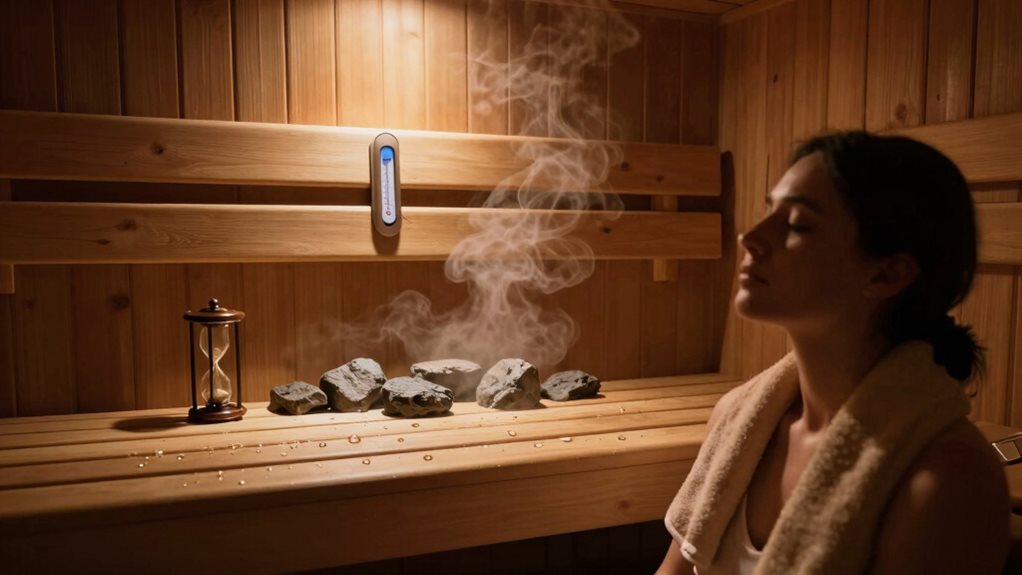
For traditional Finnish saunas, aim for 170-200°F with humidity between 0-30%. You’ll create steam by adding water to the hot rocks gradually, monitoring with both a thermometer and hygrometer. This practice supports the proper sauna experience while maintaining safety and maximizing wellness benefits. The traditional Löyly practice of pouring water over hot stones creates intense sweating that promotes relaxation and improved circulation.
In steam saunas, you’ll operate at lower temperatures (110-120°F) but with much higher humidity (up to 100%). The moisture compensates for reduced heat while maintaining comfort.
Infrared saunas run dry with minimal humidity (0-10%), allowing temperatures up to 200°F without discomfort. No water addition needed—just focus on heat control.
Dry saunas combine high heat (180-190°F) with low humidity (10-20%). Remember this simple formula: subtract the temperature from 200 to find your maximum safe humidity percentage.
Health Benefits and Safety Considerations
Properly applying the 200 Rule doesn’t just create a comfortable sauna experience—it delivers considerable health benefits while protecting you from potential risks.
When you maintain the balance between temperature and humidity, your body can safely enjoy the therapeutic effects without strain on your cardiovascular system.
- Prevents dangerous overheating and dehydration by keeping the combined heat-humidity index in check
- Improves blood circulation and muscle relaxation through ideal environmental conditions
- Supports natural detoxification processes by promoting healthy sweating without excessive heat
- Allows for longer, more comfortable sessions when the temperature-humidity balance feels right
- Reduces the risk of dizziness or lightheadedness that can occur in improperly balanced saunas
The Rule of 200 helps ensure optimal comfort by combining sauna temperature and humidity, such as 160°F with 40% humidity to equal 200.
Remember to limit your sessions to 10-20 minutes and always stay hydrated, especially if you’re new to sauna bathing.
Tips for Monitoring and Maintaining Optimal Conditions
Successfully monitoring your sauna’s conditions requires both the right tools and proper techniques to guarantee you’re getting the most from your sauna experience.
Install a digital hygrometer at head height, about 20-30 cm below the ceiling and opposite the heater to avoid direct heat interference.
Proper hygrometer placement at head height ensures accurate readings away from direct heat, giving you reliable sauna monitoring.
For ideal humidity control, adjust your ventilation gradually and add water one ladle at a time to the stones. If you feel dizzy or notice excessive sweating, it’s time to restore proper humidity levels.
After each session, open the door to disperse moisture and wipe down walls and benches to prevent mold growth. This routine maintenance helps protect wooden structures from warping and mold that can occur with improper humidity management.
Consider a thermo-hygrometer with memory function to track changes between sessions. These combined temperature and humidity measurements help you maintain the perfect balance for your sauna environment.
The “200 Rule” indicates that the sum of temperature and humidity percentage should ideally not exceed 200 points for optimal safety and comfort during your sauna session.
Frequently Asked Questions
Can Children Safely Follow the 200 Rule in Saunas?
No. Children shouldn’t follow the adult 200 rule. Their immature thermoregulation requires lower temperatures and humidity. Limit kids over 6 to brief, supervised sessions (5-10 minutes) with modified conditions like 150°F + 30% humidity.
How Does Altitude Affect the 200 Rule Calculations?
At higher altitudes, you’ll need to adjust your 200 Rule calculations. Subtract 1% humidity per 1,000 feet elevation from readings, and consider reducing your target sum by 10-20 points above 3,000 feet for comfort.
Should the 200 Rule Be Adjusted for Elderly Sauna Users?
Yes, you should adjust the 200 rule downward for elderly users. Your reduced thermoregulatory efficiency and cardiovascular reserve warrant a more conservative approach—aim for 180-190 instead and keep sessions shorter than usual.
Does Body Weight Impact One’s Tolerance to the 200 Rule?
Body weight doesn’t directly impact your 200 Rule tolerance according to available research. Your individual response to heat-humidity combinations matters more. Start conservatively and adjust based on your personal comfort and reactions.
Can Medications Interfere With Safe Sauna Use Under the 200 Rule?
Yes, your medications can intensify sauna risks beyond the 200 rule. Blood pressure drugs, diuretics, and heart medications may worsen dehydration and cardiovascular strain in high heat-humidity conditions. Always consult your doctor first.
Final Thoughts
By following the 200 rule, you’ve got a reliable guideline to guarantee your sauna experience is both enjoyable and safe. Remember, when the combined temperature and humidity percentage equals about 200, you’re in the sweet spot. Whether you’re using a traditional Finnish sauna or an infrared model, monitoring these conditions helps maximize health benefits while avoiding risks. You can now confidently adjust your sauna settings for the perfect balance of heat and humidity!