
Proper ventilation in your sauna isn’t just a luxury—it’s vital for your health and comfort. Good airflow maintains CO2 levels below 500 ppm, preventing shortness of breath and guaranteeing effective detoxification. Different sauna types require specific ventilation rates: wood-burning saunas need strong exhaust systems, while electric ones benefit from 4-6 air changes hourly. Strategic vent placement creates diagonal airflow that distributes heat evenly and prevents dizziness. The perfect sauna experience awaits when you understand these important airflow principles.
Why CO2 Levels Matter in Your Sauna Experience
When you step into a sauna, the air you breathe plays just as crucial a role in your experience as the heat itself.
The air you breathe in a sauna is as important to your wellness experience as the therapeutic heat that surrounds you.
As you relax in the warmth, your body naturally releases carbon dioxide with each breath, which accumulates in the space around you. Healthy saunas maintain CO2 below 500 ppm, while levels above 700 ppm begin to compromise your experience. Proper air exchange rates contribute significantly to maintaining these healthy CO2 levels. Both traditional and infrared saunas require adequate ventilation to prevent harmful buildup of gases and ensure safety.
High CO2 levels directly impact how your body responds to heat therapy.
You’ll feel shortness of breath sooner, and your sessions will likely shrink from the typical 15 minutes down to just 11 minutes.
The raised carbon dioxide displaces oxygen, interfering with your body’s detoxification process and increasing blood acidity, which makes your heart work harder.
Optimal Ventilation Rates for Different Sauna Types
Proper ventilation rates vary considerably across different sauna types, creating a delicate balance between fresh air supply and heat retention.
Your wood-burning sauna needs robust ventilation to support combustion, with dedicated air inlets plus a chimney for exhaust to prevent dangerous backdrafts.
For electric saunas, aim for 4-6 air changes per hour (ACH), with vents positioned to create diagonal airflow—a lower inlet near the heater and an upper exhaust on the opposite wall.
You can calculate the needed airflow by multiplying your room’s volume by desired ACH, then dividing by 60 to get CFM. Ensuring this diagonal air movement enhances overall circulation efficiency and prevents dead zones in your sauna. Finnish professionals recommend including a 10-15cm gap along the hot room door to facilitate proper air exchange.
Infrared saunas require less ventilation but still benefit from some air exchange to prevent stuffiness.
Commercial facilities need higher rates and mechanical systems to handle continuous use and multiple occupants.
Comparing Active vs. Passive Ventilation Systems
You’ll find two main approaches to sauna ventilation: active systems with powered fans that mechanically circulate air, and passive systems that rely on natural convection through strategically placed vents.
When it comes to reducing CO2 buildup, active systems outperform passive ones by maintaining consistent air exchange rates regardless of temperature differences or external conditions.
While passive ventilation might suffice for traditional saunas in ideal locations, you’ll get more reliable air quality control with an active system, especially in basement installations or humid environments where natural airflow can be restricted. Steam saunas require active ventilation systems for optimal performance due to their high humidity levels. Active systems with dual mechanical fans enhance both comfort and safety by preventing stale air and overheating during your sauna sessions.
Mechanical vs. Natural Systems
Sauna ventilation systems fall into two distinct categories that operate on fundamentally different principles.
Natural systems rely on physics—hot air rises, creating a flow that pulls cooler air in through lower vents while pushing warm, moist air out through upper vents.
Mechanical systems use fans to control airflow regardless of temperature differences.
When choosing between these approaches, consider these key factors:
- Stove type – closed-sided and net stoves interact differently with airflow patterns
- Room size – larger saunas often benefit from mechanical assistance
- Usage patterns – mechanical systems can pre-heat and accelerate post-session drying
- Climate – extreme external conditions may overwhelm natural systems
You’ll find mechanical systems offer more precise control over temperature stratification, reducing those uncomfortable hot zones at head level while maintaining even heat at the bench.
Proper ventilation ensures a comfortable experience by maintaining adequate oxygen levels, preventing the dizziness and fatigue associated with oxygen-poor environments.
CO2 Reduction Performance
When measuring a sauna’s air quality, CO2 levels serve as a crucial indicator of ventilation effectiveness. Active ventilation systems greatly outperform passive ones, reducing CO2 by 46% during typical 30-minute sessions.
While passive systems allow CO2 to rise from 400 to over 1000 ppm, mechanical downdraft systems keep levels below 700 ppm.
You’ll notice fresher air with mechanical systems that use powered exhaust below benches rather than relying on natural convection. The recommended ventilation rate of 6 ACH ensures proper air exchange for maintaining healthy breathing conditions. The high to low mechanical ventilation designs prevalent in Finland and Europe consistently demonstrate superior performance. Multiple small vents improve air mixing compared to single large vents, guaranteeing everyone experiences good air quality.
The ideal target is below 500 ppm, with up to 700 ppm still considered acceptable.
Adjustable fans in mechanical systems allow you to balance proper air exchange without wasting heat, maintaining both comfort and healthy breathing conditions.
Health Implications of Poorly Ventilated Saunas
Despite common perception that heat is the only concern in saunas, poorly ventilated environments create a perfect storm of health risks that extend far beyond simple discomfort.
When air doesn’t circulate properly, you’re exposed to dangerous levels of CO2 from your own breathing, which can quickly impair your thinking and cause dizziness.
Your body faces multiple challenges in these conditions:
- Respiratory distress from CO2 buildup and reduced oxygen
- Increased cardiovascular strain as your heart works harder
- Heightened dehydration risk due to inefficient sweat evaporation
- Greater exposure to mold and microbial hazards
The combination of these factors doesn’t just make your sauna session unpleasant—it transforms a potentially beneficial experience into one that might compromise your health, especially if you have existing medical conditions. Good ventilation maintains sufficient oxygen levels in the sauna environment, which is crucial for preventing these health risks and ensuring a safe experience.
Strategic Airflow Design for Maximum Comfort
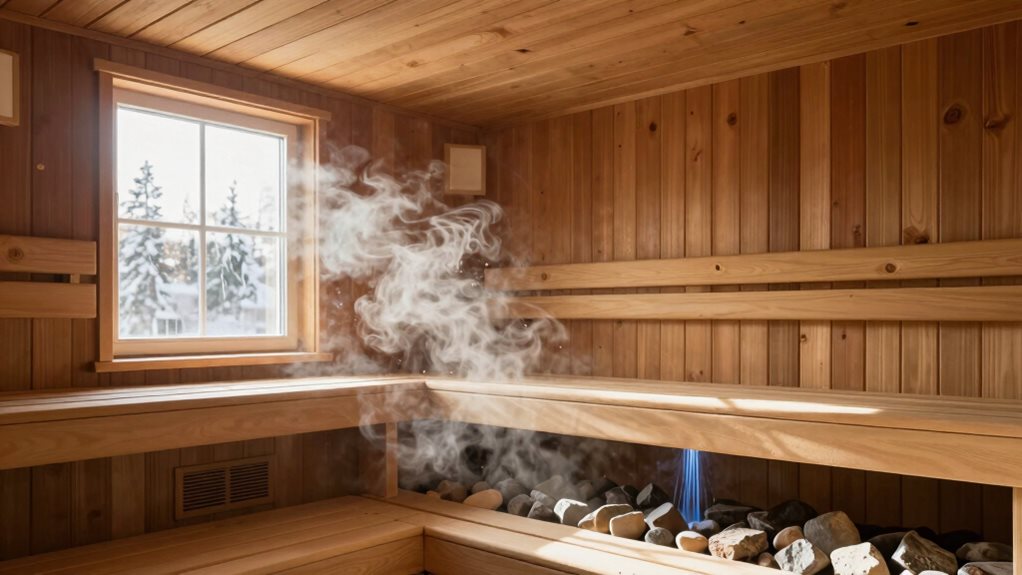
Creating the perfect sauna experience hinges on intelligent airflow design that balances comfort, safety, and performance.
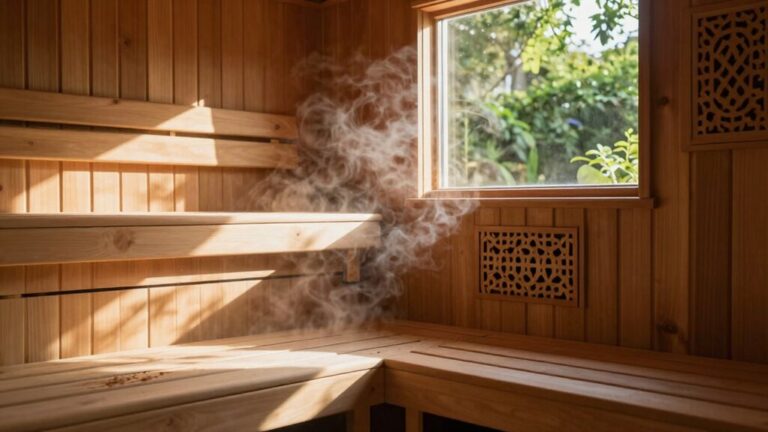
You’ll want to position your fresh-air intake low (about 4-12 inches above the floor) near the heater, while placing the exhaust vent high on the opposite wall. This diagonal cross-flow pattern guarantees warm air circulates throughout the room, preventing uncomfortable dead zones.
For ideal results, aim for 3-6 air changes per hour, sizing your vents appropriately for your sauna’s volume. A typical setup might include a 50-100 cm² intake vent and a slightly larger exhaust vent.
Don’t place benches directly in the airflow path—your feet will thank you! Adjustable vents are worth installing, allowing you to fine-tune airflow during different phases of your sauna session, preserving that perfect löyly while maintaining fresh oxygen levels.
Energy Efficiency and Extended Session Benefits
Proper ventilation in your sauna doesn’t only improve air quality—it dramatically boosts energy efficiency while extending your enjoyment.
When air flows correctly, your heater works less to maintain temperature, saving electricity and reducing wear on components.
Your ventilation system creates multiple benefits for sustainable sauna sessions:
- Balanced airflow prevents “hot spots,” distributing warmth evenly throughout the space.
- Proper air exchange reduces condensation that could damage insulation and wooden surfaces.
- Steady oxygen levels improve combustion efficiency in wood-burning saunas.
- Smart ventilation placement creates a convection loop that recycles heat naturally.
You’ll notice the difference in both comfort and utility bills.
With fresh air constantly circulating, you can safely enjoy longer sessions without the stuffiness or staleness that often cuts bathing time short.
Your sauna becomes not only more pleasant, but more economical too.
Measuring and Monitoring Your Sauna’s Air Quality
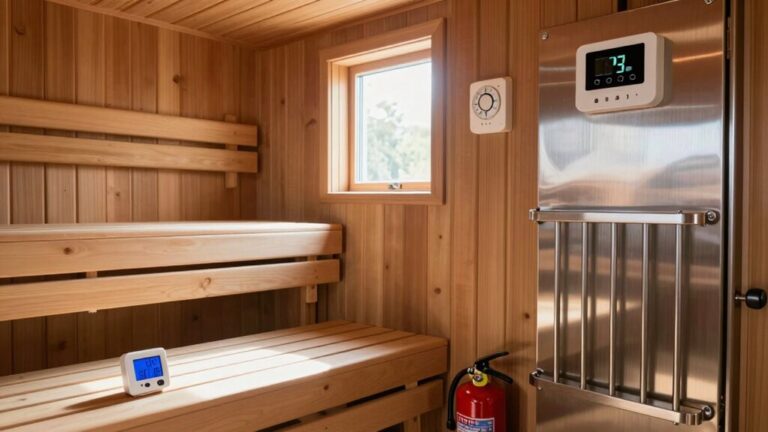
To maximize the benefits of your well-ventilated sauna, you’ll need reliable information about your environment. Proper monitoring requires measuring four key parameters: temperature, humidity, CO₂ levels, and particulate matter.
Place your measuring devices at head height while you’re seated on the top bench, but keep them 20-30 cm below the ceiling. For accurate readings, avoid positioning instruments directly above the heater where temperatures spike dramatically.
If your devices can’t handle high heat (most electronic sensors max out at 50°C), place them near the floor or under the foot bench.
Consider using multiple measurement points to account for temperature stratification, which can vary by ±0.5°C throughout the space.
Remember that CO₂ readings can be 80% lower at foot level than at face height, so position these meters where you actually breathe.
Frequently Asked Questions
How Long After Installation Should Ventilation Be Professionally Inspected?
You should have your sauna’s ventilation professionally inspected within the first year after installation, then annually or whenever you notice airflow problems or moisture buildup issues.
Can Portable Air Purifiers Effectively Supplement Sauna Ventilation Systems?
Yes, portable air purifiers like the Powerzone 100 can effectively supplement your sauna ventilation, removing pollutants and reducing CO2 while working alongside existing airflow systems for better air quality.
Do Different Sauna Woods Affect Ventilation Requirements?
Yes, your choice of sauna wood impacts ventilation. Denser woods like Cedar need less ventilation as they’re naturally resistant to humidity, while Aspen requires more even airflow for proper heating.
How Does Outdoor Humidity Impact Optimal Sauna Ventilation Settings?
In humid weather, you’ll need to reduce intake openings and run exhaust fans longer. When it’s dry outside, increase intake flow to help with evaporation while using steam more sparingly.
Are There Smartphone Apps for Monitoring Sauna Air Quality?
You’ll find specific sauna temperature apps like RuuviTag and HUUM, but no apps directly monitor sauna air quality parameters like VOCs or particulates without specialized heat-resistant sensors.
Final Thoughts
You’ve seen how proper ventilation transforms your sauna experience. With the right airflow, you’ll enjoy cleaner air, longer sessions, and better health benefits. Whether you choose active or passive systems, maintaining ideal CO2 levels should be your priority. Remember, good ventilation isn’t just about comfort—it’s crucial for safety. By monitoring air quality and implementing strategic design, you’ll create the perfect environment for your relaxing sauna ritual.