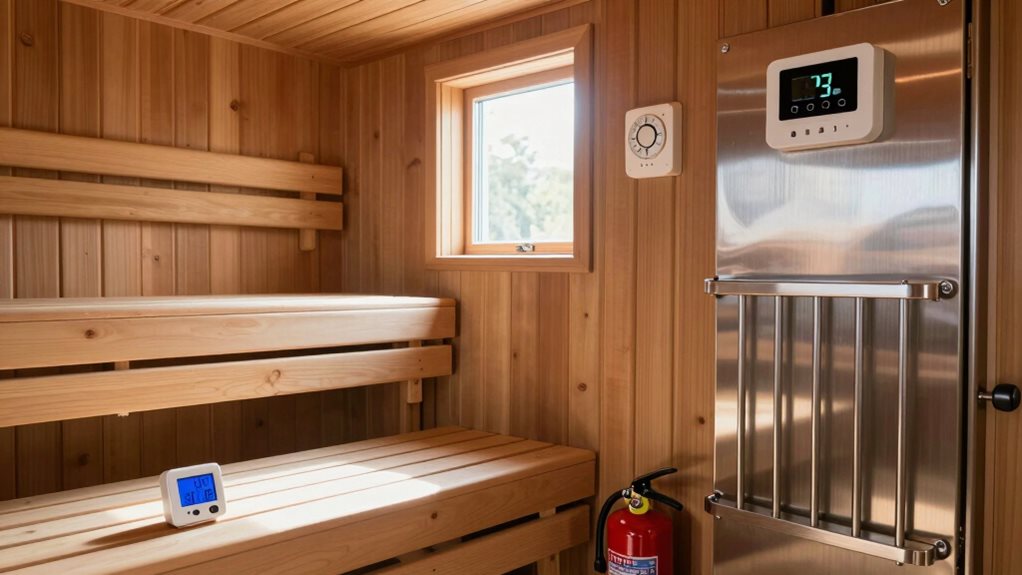

To build a safe custom sauna, you’ll need fire-rated barriers, proper insulation like mineral wool, and compliance with electrical codes with dedicated circuits. Install your heater with manufacturer-specified clearances, use non-combustible materials nearby, and guarantee outward-opening doors. Don’t forget adequate ventilation with strategic intake and exhaust vents, plus regular maintenance checks. These precautions prevent fire hazards while maintaining the relaxing benefits your sauna should deliver.
Critical Safety Standards for Sauna Installation
When building a custom sauna in your home, adhering to critical safety standards isn’t just recommended—it’s essential for preventing fires and guaranteeing everyone’s well-being.
You’ll need to obtain proper building permits before installation and verify your plans comply with local zoning laws.
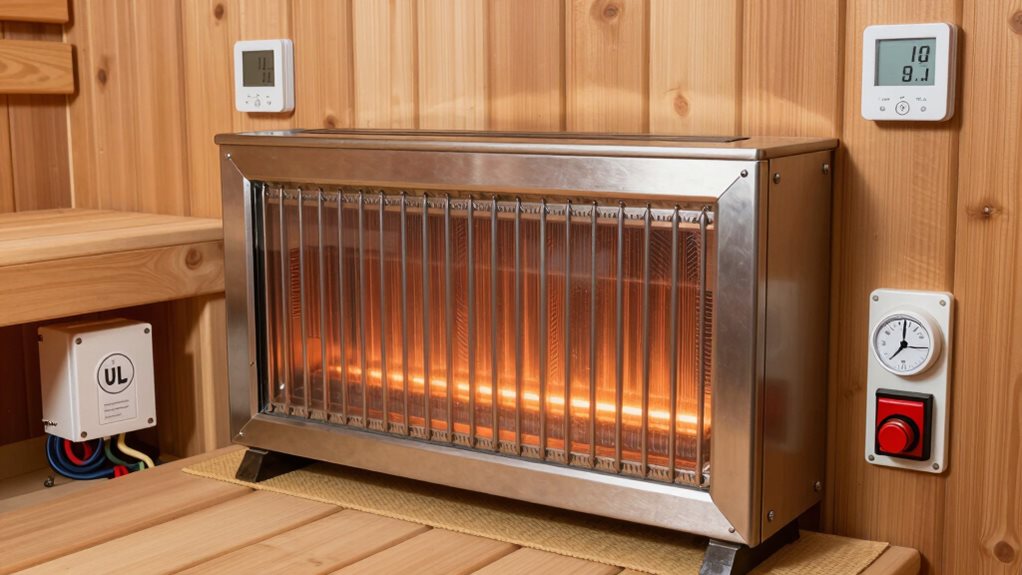
For heaters, remember to install a separate one-hour fire-rated barrier between the sauna and other areas of your home. Your heater must have an automatic high-temperature shutoff switch that you should never bypass. The heater should be connected to a dedicated circuit as required by the National Electrical Code for safe operation.
Always position it away from walls and benches according to manufacturer instructions.
Your sauna door must open outward with no locks or latches that could trap someone inside. All doors should provide a clear width of 32 inches minimum to ensure proper evacuation in emergency situations.
Install non-slip flooring, and never place additional benches or shelving over the heater—this creates a serious fire hazard.
Selecting Fire-Resistant Materials for Custom Saunas
You’ll need to protect your sauna from heat damage by using appropriate materials that shield against fire risk.
For areas surrounding your heater, install non-combustible materials like fire bricks, ceramic tiles, or stainless steel heat shields, maintaining proper clearances as specified by the manufacturer.
When insulating your sauna, choose mineral wool products instead of foam insulation, as mineral wool won’t burn or produce toxic smoke at high temperatures. Cedar wood, which is naturally decay-resistant, provides an excellent interior material choice that also offers good fire resistance compared to other wood options.
Heat-Shielding Requirements
Proper heat-shielding stands as the cornerstone of sauna fire safety, creating essential barriers between intense heat sources and combustible materials.
You’ll need to follow your heater manufacturer’s clearance specifications without exception, as these aren’t suggestions but safety requirements.
Metal heat shields with air gaps behind them can reduce required clearances, but only when your heater manufacturer has tested and approved this configuration.
For maximum protection, consider double-layer non-combustible barriers—metal facing over mineral wool works exceptionally well in high-heat zones.
Remember to secure all shields firmly to prevent shifting that could expose wood to dangerous heat.
During installation, document your compliance with detailed photos and measurements—you’ll thank yourself during inspections when you can demonstrate your careful adherence to safety standards.
Insulation Material Safety
Selecting the right insulation materials for your custom sauna isn’t just about heat retention—it’s a critical fire safety decision. For maximum protection, mineral wool stands out as an exceptional choice, withstanding temperatures up to 1,800°F while providing excellent soundproofing benefits.
When considering alternatives, sauna-specific products like FF-PIR insulation offer good heat resistance up to 200°C temporarily, but you’ll need to verify proper installation with aluminum barriers that are well-sealed.
Avoid standard PIR materials not designed for high-heat environments.
Fiberglass can work effectively but doesn’t match mineral wool’s heat tolerance. Specialist sauna boards like Kingspan Sauna-Satu combine thermal insulation with vapor sealing capabilities.
Always prioritize non-combustible materials and avoid anything that might release toxic fumes when heated.
Remember to seal all seams properly to maintain both safety and efficiency.
Regular inspections of your insulation’s condition will help ensure long-term energy management and prevent potential fire hazards from developing over time.
Electrical Considerations and Compliance Requirements
You’ll need specialized wiring for your sauna to prevent fire hazards and guarantee safe operation.
Sauna heaters require dedicated circuits with appropriate amperage (30-60A) and proper heat-resistant conductors like H07RN-F or high-temperature silicone alternatives where exposed to high temperatures.
Always install a local disconnect switch outside the sauna room for emergency shutdowns, and maintain manufacturer-specified clearances between electrical components and combustible materials. Hiring a licensed electrician is essential to ensure compliance with the National Electrical Code and proper installation safety protocols.
Specialized Wiring Requirements
Electrical safety forms the backbone of any sauna installation, with specialized wiring requirements that can’t be overlooked. Your heater’s voltage determines everything about your wiring setup, from circuit breaker size to wire gauge. Most residential saunas require dedicated 240V circuits that demand professional attention.
- Match your wire gauge to your breaker: #10 AWG for 30-amp, #8 for 40-amp, and #6 for 50-amp circuits
- Use NM-B cable for indoor installations but switch to weather-rated conduit for outdoor saunas
- Install GFCI protection in wet or damp locations to prevent shock hazards
- Place disconnect switches within sight of your sauna for emergency shutoffs
- Choose high-temperature rated wiring near heaters to prevent melting and fires
Always consult local building codes, as requirements vary by location and installation type.
Heater Isolation Protocols
Proper heater isolation stands as the next line of defense in your sauna’s electrical safety system.
You’ll need a dedicated circuit exclusively for your sauna heater, with no shared outlets or lighting on the same breaker. This isn’t optional—it’s required by electrical codes nationwide to prevent dangerous overloads.
Your electrician must install a brand-new 240V line matched precisely to your heater’s power requirements. For commercial installations, your system may use 208V three-phase power instead of the residential standard.
Don’t try to tap into existing circuits, as this creates serious fire hazards. Most jurisdictions also require GFCI protection, which quickly cuts power if a ground fault occurs.
Remember that local rules vary—some areas demand a disconnect switch within sight of the sauna (usually within 10-50 feet), while others allow the main breaker panel to serve this function.
Implementing Effective Sprinkler and Detection Systems
Three critical components make up an effective fire suppression system for your custom sauna: appropriate sprinkler head selection, proper installation methods, and adherence to safety standards.
When protecting your sauna from fire hazards, you’ll need high-temperature sprinkler heads with black fusible elements rated for 400°F or higher.
- Choose pendant or sidewall sprinklers with UL or FMG approval for high moisture environments
- Connect to existing sprinkler systems through a licensed contractor whenever possible
- Install backflow preventers, shutoff valves, and water-flow alarms on new installations
- Select recessed heads for aesthetic appeal, noting they’re typically limited to 290°F ratings
- Follow NFPA standards, which may classify your sauna as a bathroom for installation purposes
Steam saunas generally need less water protection due to their saturated environment, but you’ll still need proper drainage to prevent water accumulation.
Strategic Ventilation and Exit Planning
While a fire can turn deadly in mere minutes, strategic ventilation in your custom sauna not only improves comfort but serves as a critical fire safety measure.
Position your intake vent near the floor and exhaust vent on the opposite wall near the ceiling, with at least 6 inches of clearance below the ceiling. You’ll need 1 square inch of intake vent per cubic foot of sauna volume.
For ideal airflow, aim for six air changes per hour using 6-inch rigid ducts with minimal bends. Proper ventilation helps maintain even temperature distribution throughout your sauna, eliminating dangerous hot spots.
Don’t forget to install automatic dampers that close during high temperatures to prevent fire spread. Keep your exits clearly marked and pathways unobstructed, with a suitable fire extinguisher placed near the entrance.
Regular maintenance of your vents prevents dangerous overheating situations.
Essential User Guidelines for Safe Sauna Operation
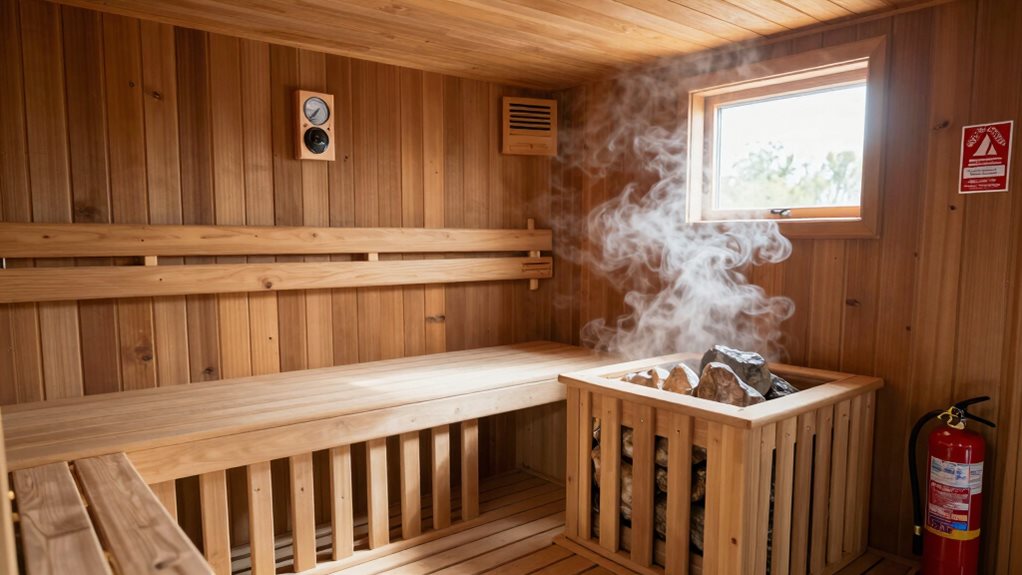
Operating your custom sauna safely requires more than just proper equipment—it demands mindful user behavior to prevent dangerous situations from developing.
Following these guidelines will help guarantee your sauna experience remains relaxing rather than risky:
- Never use your sauna while under the influence of alcohol, recreational drugs, or strong medications that cause drowsiness.
- Keep all towels, clothing, and reading materials away from heaters to prevent them from catching fire.
- Exit immediately if you feel dizzy, nauseated, or develop a headache during your session.
- Remove jewelry, watches, and metal objects before entering to avoid burns from heated metal.
- Limit sessions to 15-20 minutes and follow age restrictions, making certain children are supervised and those with medical conditions consult their doctor first.
- For safety during emergencies, ensure your sauna door always opens outwards according to proper installation standards.
Preventative Maintenance for Long-Term Fire Safety
Maintaining your custom sauna’s safety requires consistent attention to detail, much like how a car needs regular oil changes to prevent engine failure.
You’ll need to inspect electrical systems annually, checking wiring and heating elements for wear or damage. Don’t overlook your ventilation—clean vents weekly to guarantee proper airflow and prevent overheating.
For wood components, look for charring or discoloration, especially near heat sources. Apply breathable wood preservative yearly, and replace any damaged materials promptly.
Your heating system deserves special care too—limit electric heater use to 12 hours followed by a 6-hour cooldown, and schedule professional chimney sweeps every three years.
Establish a maintenance routine: daily disinfection, weekly deep cleaning, and monthly mold checks.
With proper care, your sauna’s wooden components can last 10-12 years while maintaining ideal safety.
Frequently Asked Questions
Can I Retrofit Fire Safety Features Into My Existing Sauna?
Yes, you can retrofit your existing sauna with water mist systems, sprinkler extensions, or infrared panel upgrades. Daily safety checks and proper inspections will also improve your sauna’s fire protection.
How Does Humidity Affect Fire Risk in Different Sauna Types?
In dry saunas, low humidity dries wood below 5% moisture, lowering ignition temperatures. Wet saunas mask immediate drying but accelerate wood deterioration. Infrared saunas present similar risks to dry saunas without humidity’s buffering effect.
Are Portable Saunas Subject to the Same Fire Safety Codes?
No, portable saunas typically face less stringent fire code enforcement than permanent installations. You’ll find they’re often exempt from building permits but must still meet basic electrical safety standards.
What Insurance Considerations Apply to Home Sauna Installations?
You must notify your insurer before installing a sauna as it’ll increase premiums, may require additional coverage, and failure to disclose risks claim denials for related damages.
How Do International Sauna Safety Standards Differ From US Requirements?
International standards follow IEC/EN 60335-2-53 with higher temperature limits, while U.S. historically used UL 875 with stricter operational limits. The U.S. is now harmonizing with international standards through UL 60335-2-53.
Final Thoughts
You’ll enjoy your custom sauna for years when you prioritize safety at every step. Remember to choose fire-resistant materials, maintain proper electrical connections, and establish clear emergency procedures. Regular inspections and maintenance are more than recommendations—they’re critical safeguards for your family. By following the guidelines we’ve outlined, you’re creating not only a relaxing retreat, but a secure one that brings peace of mind.