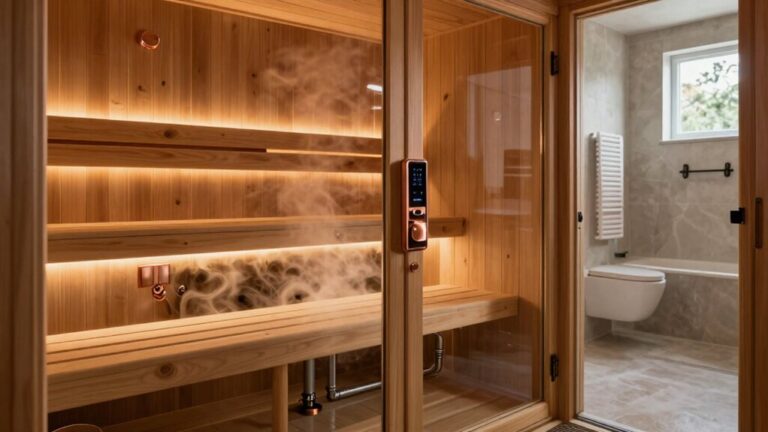
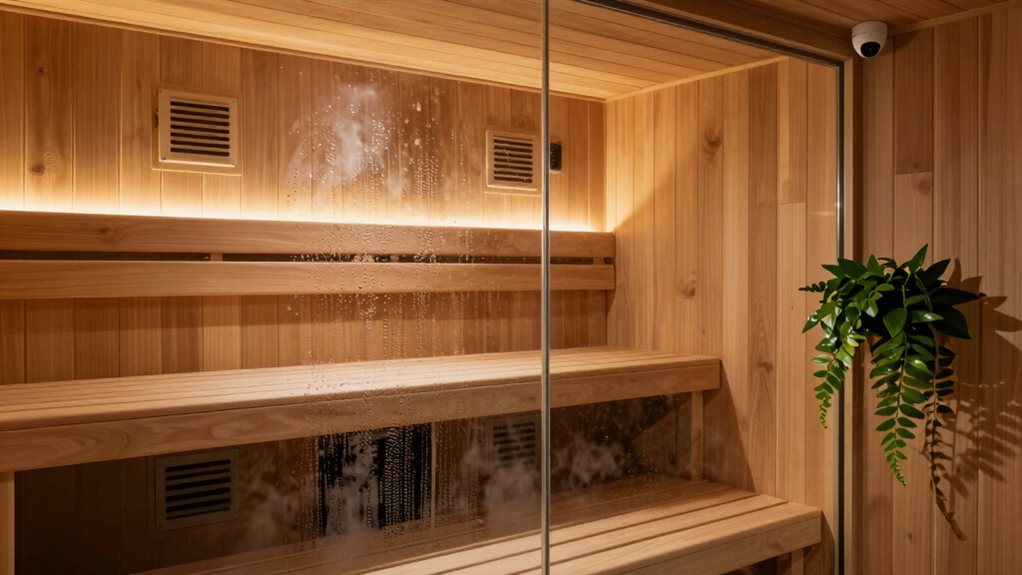

When setting up your sauna, watch out for ventilation mistakes! First, don’t skimp on vent sizing; you need at least one square inch for every cubic foot. Next, place vents wisely to avoid cold spots and stuffiness. Balanced airflow is key, so check those exhaust sizes. Don’t overlook vent types, as some might work better for your setup. Finally, keep up with maintenance to prevent blockages. Stick around to discover the best practices for creating a perfect sauna environment!
Incorrect Vent Sizing
When setting up a modern sauna, one of the biggest mistakes you can make is incorrect vent sizing. If your vents are too small, you’ll struggle with stale air and increased humidity. It’s recommended to have at least 1 square inch of vent area for every cubic foot of sauna volume. Imagine trying to breathe in a room with no fresh air! When vents are undersized, heaters can’t perform efficiently, making your sauna experience less enjoyable. Additionally, improper ratios between intake and exhaust can lead to moisture problems. Proper ventilation is critical to sauna performance, ensuring a safe and comfortable environment for users. This is particularly important because adequate air ventilation directly impacts temperature distribution and user comfort. Furthermore, investing in a quality sauna ventilation system can significantly enhance your overall sauna experience.
Poor Vent Placement
While you might’ve the best intentions in setting up a sauna, poor vent placement can really ruin the experience. For instance, if your intake vent is too high, it won’t bring cool air to the heater, leaving your feet cold and temperatures uneven. Also, placing the intake vent too far from the heater disrupts fresh air supply. And don’t even think about a low exhaust vent; it can trap hot air, making it hard to breathe comfortably! Positioning your exhaust vent on the same wall as the intake also blocks airflow, leading to stuffiness. Proper vent placement is crucial, so take the time to get it right for a truly relaxing sauna experience. This setup ensures optimal air quality and enhances your overall comfort, as a well-ventilated sauna promotes fresh air circulation that leads to a more invigorating experience. Additionally, investing in a quality sauna ventilation fan system can help maintain consistent airflow throughout the space.
Imbalanced Airflow
Imbalanced airflow can turn a peaceful sauna session into an uncomfortable experience. If warm air doesn’t mix well, you might find the upper bench feeling like a sauna and the lower bench like the arctic! This stark temperature difference can make you uneasy and might even pose safety risks. Stagnant air pooling at the ceiling indicates poor air mixing, leaving you in cold spots while others bask in warmth. If your sauna’s exhaust is too big or small, pressure changes could cause drafts or even pull in cold air. When you notice dramatic temperature differences—more than 10–15°C—it’s a sign that your airflow needs serious adjusting. Ensuring that your sauna achieves 4 to 6 air changes per hour can help maintain a comfortable environment for everyone. Consider investing in a sauna ventilation system kit to optimize your air distribution. Regularly checking and cleaning vents as part of routine maintenance will help improve overall air quality and ensure that everyone enjoys their time. Make sure your sauna has balanced ventilation, so everyone enjoys their time.
Neglecting Vent Types
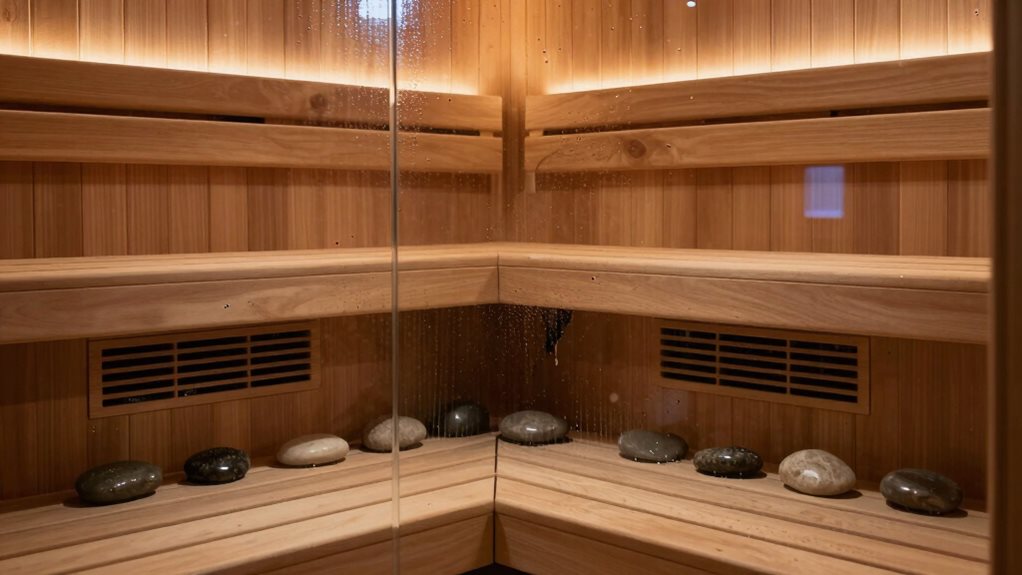
When it comes to sauna ventilation, the type of vents you choose really matters. Using fans with the right specifications can make all the difference in guaranteeing hot air circulates properly, while adjustable vent options help you cater to your sauna’s unique needs. Additionally, effective ventilation is crucial for comfort and safety in sauna use, ensuring that you can enjoy high temperatures without discomfort. Proper vent placement enhances air circulation within the sauna, contributing to a more enjoyable experience.
Fan Specifications Matter
Understanding fan specifications is crucial to creating a comfortable sauna environment, especially since the right choices can make all the difference in air quality and enjoyment. When selecting fans, consider CFM ratings, duct sizes, and placement. You want your sauna to breathe well without flapping like a hot summer day!
- A minimum of 15 CFM per person keeps CO2 levels in check.
- Proper ventilation helps to remove odors and humidity, enhancing the overall experience.
- Duct size matters; larger ducts mean quieter operation.
- Optimizing fan speed can improve airflow and reduce noise.
- Proper vent placement guarantees efficient circulation, as well-designed passive systems can promote a convective loop if the air is sealed properly.
Adjustable Vent Options
Have you ever wondered how adjustable vent options can transform your sauna experience?
Adjustable vents let you control the airflow, which is crucial for comfort. Unlike fixed vents that can merely give you one airflow option, adjustable vents adapt to your needs. You can crank up the airflow if it feels stuffy or dial it down for a more soothing session.
This flexibility not solely helps maintain better oxygen quality but also makes every sauna visit special. Imagine being able to set the perfect environment every time!
If you skip adjustable vents, you might miss out on a superior experience. So, investing in these customizable options can reveal the full potential of your sauna.
Maintenance Oversights
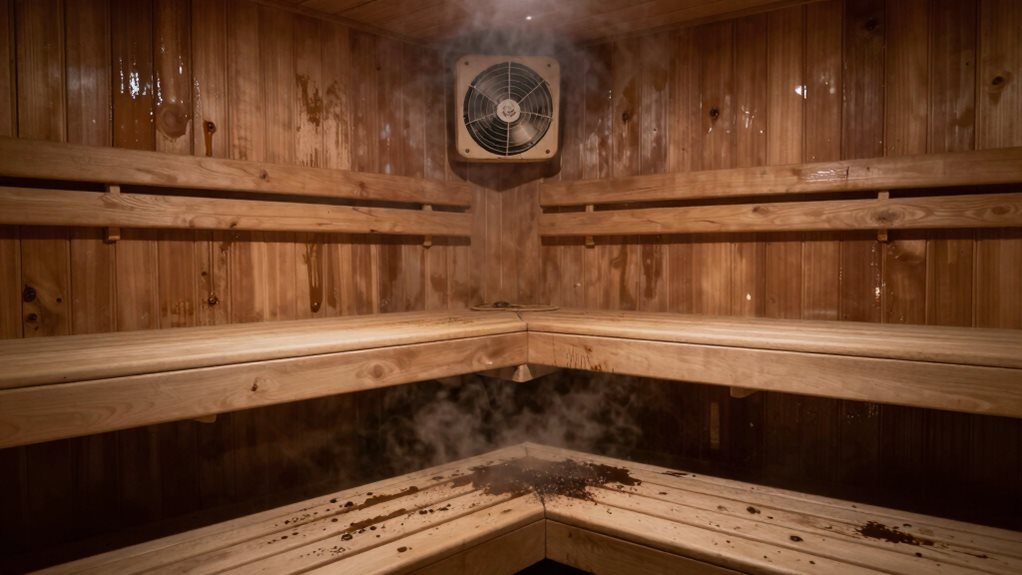
While it may seem easy to overlook maintenance in your sauna, neglecting crucial tasks can lead to a range of problems that affect your enjoyment and safety.
Regular checks can prevent issues that ruin your relaxing space. Here are key areas to focus on:
- Keep vents clean—dust and debris block airflow and can raise humidity.
- Manage moisture properly—skipping drying steps leads to wood damage and mold.
- Inspect vent hardware—loose or corroded grilles create unwanted leaks and airflow issues.
- Check electrical systems—ignoring controls can lead to overheating or fire risks.
Additionally, investing in a sauna moisture control system can further enhance your sauna’s performance and longevity.
Air Exchange Failures
Maintaining a sauna isn’t just about keeping it clean—it also involves assuring that the air circulates properly.
Air exchange failures can cause real problems; if you don’t have enough fresh air, it drops oxygen levels rapidly. Imagine sitting in a sauna with only stale air—yikes! You should aim for 6-8 complete air changes each hour during use, or else you risk high carbon dioxide levels.
Short-circuit flow patterns, where intake and exhaust vents are improperly placed, lead to cool zones and uneven heating. Keep your vents at the right height and verify they’re balanced.
Frequently Asked Questions
How Often Should I Clean My Sauna Vents?
You should check and clean your sauna vents weekly if used frequently. For less regular use, monthly checks suffice. Regular inspections prevent moisture buildup and maintain ideal airflow in your sauna environment.
What Materials Are Best for Sauna Ducting?
You should use galvanized steel, aluminum, or stainless steel for sauna ducting. These materials withstand high temperatures, resist corrosion, and maintain airflow. Insulated rock-wool ducts can also safeguard against heat loss while managing humidity effectively.
Can I Add More Vents Later?
Yes, you can add more vents later. Just guarantee proper placement and consider your sauna’s existing airflow. Testing airflow efficiency before and after installation helps maintain ideal ventilation for a comfortable experience.
How Can I Tell if My Sauna Is Too Humid?
You can tell if your sauna’s too humid by monitoring humidity levels with a hygrometer. If readings exceed 30%, or you experience excessive sweating and discomfort, it’s time to improve ventilation.
What Signs Indicate Poor Ventilation in My Sauna?
You’ll notice signs like stale air, excess humidity, uneven heat, and musty odors. If you feel lightheaded or struggle to breathe, poor ventilation’s likely affecting your sauna experience and overall comfort.
Final Thoughts
When it comes to ventilation in modern saunas, avoiding common mistakes can make all the difference. By guaranteeing proper vent sizing and placement, balancing airflow, and maintaining your system, you’ll create a comfortable and enjoyable environment for everyone. Don’t forget to choose the right vent types, too! With a little attention, you can transform your sauna into a relaxing oasis where each breath feels fresh and revitalizing. So, fire up that sauna and enjoy the perfect steam!