
Regular sauna sessions can seriously boost your mood and calm your mind. Studies show heat exposure drops cortisol (your stress hormone) while releasing feel-good β-endorphins, and your brain shifts into relaxed alpha-wave patterns similar to meditation.
For depression, combining sauna with therapy helped 86% of people in a 2025 study no longer qualify for their diagnosis. You’ll also sleep deeper, focus sharper from a 150% norepinephrine surge, and cut dementia risk by 66% with consistent use.
The science keeps getting more interesting from here.
How Sauna Sessions Ease Depression Symptoms
The warmth you’re seeking might do more than relax your muscles, it could lift your spirits in ways scientists are only beginning to understand.
The warmth you seek may do more than relax your muscles—it could lift your spirits in ways science is only beginning to reveal.
When you step into a sauna, your body temperature rises, then cools down in a rebound effect that lasts longer than simply splashing cold water on your face. This cooling response seems to reset something in people with depression, who often run slightly hotter than others.
Your brain enters a “totonou” state, imagine meditation without the effort, where your heart slows and your mind clears. Heat also triggers growth hormone release, like a natural mood booster.
Studies show single sessions can improve your mood for weeks, and when combined with therapy, the results beat counseling alone. A 2025 UCSF trial found that 86.2% of participants with major depressive disorder no longer met clinical criteria for depression after receiving whole-body heating combined with cognitive behavioral therapy.
The practice of deliberate heat exposure has roots in ancient Finland, where pit saunas lined with animal skins served as foundational wellness spaces thousands of years before modern clinical research began validating these mood-enhancing effects.
What Research Reveals: Sauna for Anxiety Relief
Why does stepping into a sauna feel like your worries start melting away? Your body switches gears, activating your rest-and-digest system while dialing down the fight-or-flight response that fuels anxiety. As your core temperature climbs, your brain releases β-endorphins, natural mood boosters similar to a runner’s high, while stress hormone cortisol drops.
Research backs this up. In one study, 78% of women with chronic fatigue improved after eight weeks of infrared sauna sessions. Another found four weeks of regular sauna use significantly reduced somatic complaints. The quiet, distraction-free environment also creates an ideal space to practice mindfulness techniques that further reduce anxiety symptoms.
Your brain shows the shift too: theta and alpha waves increase, signaling deep relaxation, while your heart rate slows post-session.
For best results, aim for 4–7 sessions weekly. You’re not just sweating, you’re rewiring your stress response, one session at a time.
Why Sauna Heat Resets Your Nervous System
Your body runs two internal systems that control how you feel and function, and sauna heat knows exactly how to flip the right switch. When you step into that hot room, your brain’s thermostat, the hypothalamus, kicks into gear, dialing up your heart rate and sweat production like you’re jogging, even though you’re sitting still.
This sympathetic surge is only half the story.
Once you cool down, your nervous system swings the other way, dropping your heart rate lower than when you started. Research shows regular sauna users develop calmer baseline heart rhythms, similar to meditation practitioners. Your brain follows suit, producing more alpha and theta waves, patterns linked to deep relaxation and sharper thinking. Heat exposure can improve thermoregulation, helping your body become more efficient at managing internal temperature over time.
After three weeks of sessions, stress hormones like norepinephrine fall significantly. You’re essentially training your nervous system to find calm faster.
Your Brain on Sauna: The Neuroscience of Heat Therapy

When you step out of a sauna, your brain doesn’t just feel different, it actually works differently. Scientists have watched this happen in real time, tracking how heat reshapes your neural patterns like a warm breeze reshaping sand on a beach.
Let’s look at what’s really going on inside your head when the temperature rises.
Research from Lithuanian Sports University shows that after sauna recovery, your brain enters a state of enhanced neural relaxation with increased alpha wave power—essentially your nervous system shifting into a more efficient, calmer mode of operation. This neural reset doesn’t just feel soothing; it translates to measurable improvements in how economically your brain processes information during cognitive tasks, with your visual processing showing particularly notable changes in electrical brain activity patterns.
Studies have also demonstrated that heat exposure significantly boosts norepinephrine levels, which directly enhances your focus and attention capacity.
Neural Activity Shifts
Your brain waves actually shift gears, like a car moving from city traffic to open highway.
You’ll experience more theta and alpha waves: theta brings that deep, meditative calm, while alpha keeps you alert yet relaxed. Think of it as your brain’s “chill mode” with benefits. AI can spot these sauna-induced changes with 88% accuracy, and they stick around even after you’ve cooled off. Research shows these brain wave patterns emerge during the rest periods between sauna sets, suggesting the neural benefits build throughout your session. Heat exposure also increases BDNF release in the hippocampus, supporting memory formation and long-term brain health.
Your neurotransmitters get a makeover too. Norepinephrine jumps up to 150%, sharpening your focus like coffee without the jitters. Prolactin soars even higher, speeding up brain signals by growing myelin, that’s the insulation around your neural wires.
Meanwhile, cortisol drops, and mood-boosting chemicals flood your system.
Heat-Induced Relaxation States
Those shifting brain waves and surging neurotransmitters aren’t just passing thrills, they’re the opening act for something deeper.
You sink into the heat, and your body responds like a well-oiled machine switching gears. Here’s what’s happening beneath the surface:
- Your blood vessels open wide, flooding your brain with oxygen-rich blood that clears mental fog like a morning breeze through an open window.
- Heat shock proteins activate, acting as tiny repair crews fixing damaged proteins and protecting your cells from stress.
- BDNF levels climb, literally building stronger connections between your neurons, think of it as upgrading your brain’s wiring.
- Your nervous system downshifts, flipping from fight-or-flight to rest-and-digest mode.
Research on brain stimulation has revealed that small temperature shifts can profoundly alter neuronal firing patterns, with even less than 1°C changes capable of suppressing or modifying neural activity in ways that may contribute to the calming effects experienced during heat exposure.
You aren’t just relaxing; you’re triggering a full-body maintenance cycle that leaves your mind clearer, calmer, and more resilient. Regular heat exposure also preserves neuronal integrity through protein maintenance and cellular repair mechanisms, adding another layer of protection to your brain’s long-term health.
Can Regular Saunas Protect Memory and Focus?
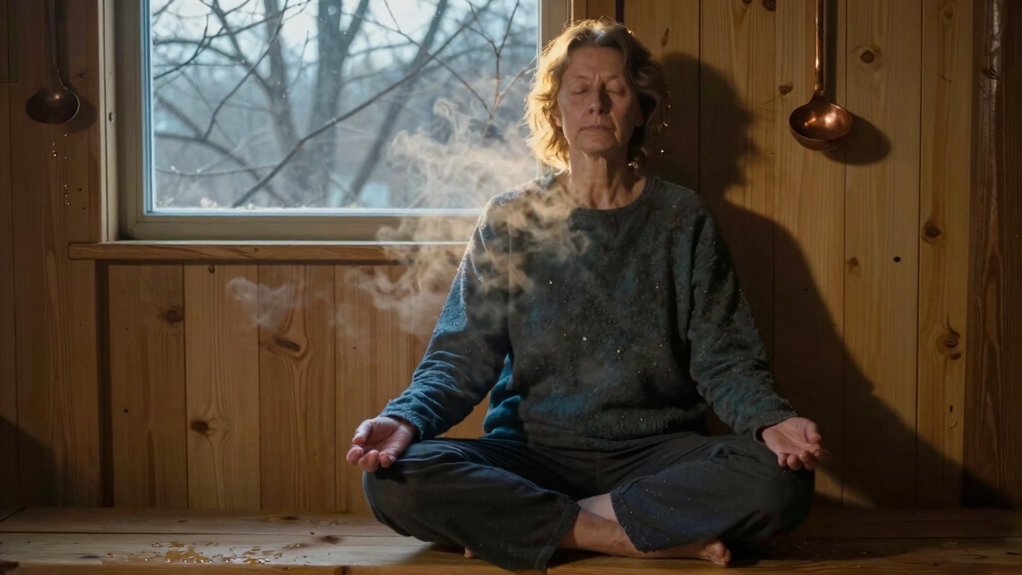
Just how sharp do you want your mind to stay as you age? Regular sauna use might help you protect your memory and focus. Studies show Finnish men who used saunas 4-7 times weekly had 66% lower dementia risk than those going once weekly. Even 2-3 sessions weekly gave 21% protection.
Want to stay sharp as you age? Regular sauna sessions could cut your dementia risk by up to 66%.
Your brain benefits because heat triggers helpful changes inside your body. Think of heat shock proteins as tiny repair crews, increasing about 50% during proper sauna sessions. These proteins fix damaged cells and build resilience.
Heat also boosts BDNF, a fertilizer for growing new brain connections.
Brain wave studies reveal improvements too. After sauna sessions, people show better alertness and faster reaction times. Your brain’s electrical activity shifts toward patterns associated with relaxed focus.
The protection lasts decades, with benefits still showing after nearly 40 years of follow-up.
Infrared or Traditional: Which Sauna Type Boosts Mood Faster?
You’re probably wondering whether infrared or traditional saunas can lift your spirits more quickly, and the answer depends on how your body responds to heat.
Infrared wraps you in gentle, penetrating warmth that works like a cozy blanket for your nervous system, while traditional saunas hit you with intense, steamy heat that mimics a hard workout’s rush.
Both approaches have been studied for depression relief, but they trigger different pathways in your brain and body, so let’s look at what the research actually shows about speed and effectiveness.
Heat Intensity Differences
How quickly can a sauna lift your spirits when you’re feeling low? It depends on the heat you’re soaking in.
Infrared saunas wrap you in gentle, penetrating warmth at 110-140°F, like sunlight sinking deep into your cells. You stay longer, letting serotonin and dopamine build steadily.
Traditional saunas blast you at 150-195°F, forcing rapid, intense sweat that spikes your heart rate like a workout, then drops it for instant calm.
Here’s how they differ:
- Depth: Infrared heats you from inside out; traditional surrounds you.
- Speed: Traditional hits fast; infrared builds gradually.
- Comfort: Infrared suits sensitive users; traditional challenges you.
- Duration: Longer infrared sessions sustain mood; brief traditional bursts spark quick relief.
Both work, you simply choose your heat style.
Depression Study Comparisons
When you’re stuck in a low mood, you want relief fast, so which sauna gets you there quicker, the gentle infrared wrap or the traditional blast of heat? Evidence tilts toward infrared for speed.
One 2021 study using a Clearlight dome found participants hit a core temperature of 101.3°F in about 82 minutes, with mood lifting noticeably right after sessions.
Researchers saw depression scores drop roughly 50% after a single weekly session, benefits lasting six weeks.
Traditional saunas help too, Finnish traditions show real mental health perks, but hard data on rapid mood boosts is thinner.
Think of infrared like a slow-rising tide that lifts you steadily, while traditional heat crashes in like waves, less studied for quick emotional shifts.
Weekly Sauna Sessions: Finding Your Optimal Frequency
What if finding your perfect sauna routine was simpler than you thought? Research points to clear patterns you can follow.
- Start with 3–4 weekly sessions, you’ll tap into a 40% lower all-cause mortality risk versus going just once.
- Build toward 4–7 times weekly, this unlocks the full 65% Alzheimer’s protection and 37% pneumonia reduction researchers found.
- Try 15–20 minute infrared sessions, five times weekly for four weeks measurably cuts somatic complaints and depression symptoms.
- Track your “totonou” state, that calm, clear feeling signals you’ve hit your personal sweet spot.
Your body responds to consistency, not extremes. Whether you prefer morning clarity or evening wind-downs, match your schedule to these evidence-based ranges.
You’ll feel the difference in your mood, sleep, and stress levels within weeks.
The Sleep-Sauna Connection: Better Rest, Better Mental Health
The numbers tell an impressive story: sauna users report up to 70% more deep sleep in those vital first two hours. That’s when your brain processes emotions and repairs itself. With 83% of regular users sleeping better, you’re joining a sizable club of well-rested people.
Better sleep isn’t just about feeling less groggy. It’s your mental health’s foundation. When you sleep deeply, you wake with steadier moods, sharper focus, and more resilience against anxiety.
Your sauna habit builds this bridge, night after restorative night.
Sauna Safety With Depression or Anxiety Medications
If you’re taking medications for depression or anxiety, you’ll need to pay extra attention to how your body responds to heat. Some common prescriptions, like SSRIs and certain antidepressants, can actually change how your brain controls temperature and how much you sweat.
Before you step into a sauna, it’s smart to chat with your doctor about whether your specific medications might make heat exposure trickier for you.
Drug Interaction Risks
Your mental health medications and sauna heat can interact in ways you’d never expect, making it crucial to understand what’s happening inside your body before you step into that steamy room.
Here are four key risks to watch for:
- Thermoregulation trouble: SSRIs like fluoxetine and citalopram scramble your hypothalamus’s temperature control, making overheating sneak up on you faster than you’d think.
- Sweat suppression: Anticholinergic drugs, think clozapine, olanzapine, or quetiapine, plug up your sweat glands like a clogged drain, trapping heat inside when you need to cool down most.
- Blood pressure drops: Vasodilators and some psychiatric meds team up with sauna heat to potentially send you tumbling into lightheadedness or worse.
- Dehydration dangers: Diuretics, ACE inhibitors, and GLP-1 drugs dull your thirst, leaving you parched before you even feel thirsty.
Always loop your doctor in before making sauna sessions part of your routine.
Temperature Sensitivity Concerns
Why does stepping into a sauna feel so different when you’re taking medication for depression or anxiety? Your body’s built-in cooling system isn’t working quite right.
Many common psychiatric medications interfere with temperature regulation. Tricyclics like amitriptyline dry up your sweat, while SSRIs such as Prozac scramble your brain’s thermostat signals. SNRIs including Effexor can push your internal temperature higher than safe limits.
Think of it like a broken air conditioner: you’re heating up without the usual warning signs.
Antipsychotics create similar problems, confusing your hypothalamus, the brain’s climate control center. You might feel dizzy, confused, or unusually tired before realizing you’re overheating.
Age, heart conditions, or combining multiple heat-sensitive drugs amplify these risks. Your thirst sensation might even stay quiet when you need fluids most.
Before sauna sessions, check with your doctor. They’ll help you understand your personal heat limits, so relaxation doesn’t become danger.
Your First 4 Weeks: Building a Sauna Habit That Sticks
How do you turn an unfamiliar practice into something you’ll actually look forward to? You start small, build tolerance, and let the benefits pull you forward.
Your first week, split sessions into three 10-minute rounds with cooling breaks, like interval training for heat. You’ll lose some water weight, maybe 0.5 to 2 kg, so hydrate well.
Weeks two through four, extend to two 15-minute bouts. Your body adapts, dehydration stabilizes, and suddenly 30 minutes feels natural.
To make this stick, remember four keys:
- Schedule it — free time drives consistency
- Know your why — health awareness boosts visits
- Remove friction — easy access matters after 31
- Find joy — enjoyment reinforces the habit
Skip these, and time or motivation barriers win. Build smart, and sauna becomes your ritual, not your chore.
Frequently Asked Questions
Can Sauna Use Replace Antidepressant Medication Entirely?
You can’t replace antidepressants with sauna alone.
Research shows saunas reduce depression symptoms effectively, but evidence supports them as an adjunct or alternative therapy, not a standalone replacement for medication.
Does Sauna Help With Seasonal Affective Disorder Specifically?
Yes, sauna helps with SAD. You’ll boost serotonin and dopamine, regulate your circadian rhythm, and reduce cortisol.
Infrared sessions mimic sunlight’s effects, counteracting winter’s short days and lifting your mood naturally.
Are Sauna Benefits Different for Men Versus Women?
Yes, you’ll experience sauna benefits differently than men. You’ll feel more heat-sensitive but release more mood-boosting norepinephrine. Your hormonal cycle affects comfort, and you’ll find deeper emotional restoration and stress relief from regular sessions.
Can Children or Teenagers Use Saunas for Anxiety Relief?
Yes, your child can use saunas for anxiety relief, but you’ll need to supervise closely.
Start with 5-15 minute infrared sessions at 60°C, 5 times weekly.
You’ll see reduced stress, better sleep, and improved focus.
How Long Do Mental Health Benefits Last After Stopping Sauna Use?
Your mental health benefits fade without ongoing sauna use. Studies don’t quantify exact duration, but consistency matters: depression relief required 20 sessions, and long-term brain protection needs 4-7 weekly sessions.
You’ll likely lose gains within weeks of stopping.
Final Thoughts
You’ve seen how sauna heat can lift your mood, calm your nerves, and sharpen your mind. Starting small, maybe twice a week, lets your body adapt without stress.
Pair those warm sessions with good sleep, and you’ll feel the difference. Just check with your doctor if you’re on medications, then dive in. Your brain and body will thank you for this simple, science-backed habit.