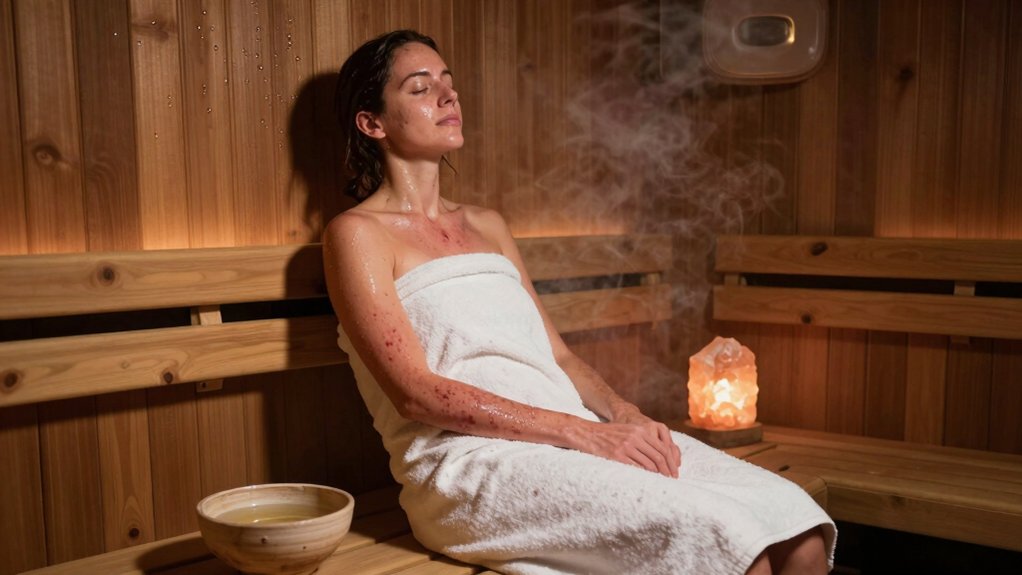

If you’ve got eczema or psoriasis, saunas can either soothe or sting depending on your timing. Infrared heat opens blood vessels and calms inflammation, but it worsens active flares by drying irritated patches.
Eczema often itches more with heat, while psoriasis may burn under steam. You’ll want to start low, around 110°F, rinse after, and moisturize fast.
The trick is knowing which type of heat your skin can actually handle, and the details below will show you exactly how to figure that out.
When Saunas Help Your Skin (and When They Make It Worse)
Why does sitting in a hot, steamy room make some people’s skin glow while others end up itchy and miserable? The answer lies in how your specific skin condition behaves under heat.
Saunas can work wonders when your skin is calm. The heat opens your blood vessels like highways, delivering oxygen and nutrients while flushing out inflammatory troublemakers.
When your skin is calm, sauna heat opens your blood vessels like highways—delivering oxygen, nutrients, and flushing out inflammatory troublemakers.
Infrared saunas, kept between 120°F and 140°F, are your gentlest option. They boost circulation without the suffocating steam that traditional saunas blast at eczema-prone skin. Research suggests that infrared sauna therapy may help fight inflammation and reduce pro-inflammatory chemicals in the blood, potentially improving overall skin health for those with systemic inflammatory conditions.
But timing matters enormously. Step into that warmth during an active flare, and you’ve essentially invited a wildfire to spread. The heat saps moisture from your already compromised barrier, turning manageable dryness into an itchy nightmare.
Skip rinsing within two minutes or moisturizing within three, and you’re practically guaranteeing trouble.
For eczema specifically, traditional dry heat saunas are typically more beneficial than steam rooms, as the dry heat helps soothe inflammation and reduce itching without adding excess moisture that can further irritate sensitive skin.
How Eczema and Psoriasis Respond to Heat Differently
While you might assume all irritated skin reacts the same way to a hot summer day, your body tells a completely different story depending on whether you’re dealing with eczema or psoriasis.
If you have eczema, heat hits like an itch attack. Your weakened skin barrier can’t handle sweat, so you scratch furiously, creating dry, swollen patches that keep you awake at night. Think of your skin like a cracked sidewalk, rain just makes it crumble more. Heat rash, which also thrives in hot, humid conditions, can sometimes be confused with eczema flare-ups but typically resolves within 2-3 days rather than lingering for weeks. Unlike heat rash, eczema is a chronic condition that may require long-term treatment and management to control symptoms effectively.
With psoriasis, you’ll feel burning instead of itching, like touching a hot stove. Your immune system goes into overdrive, speeding up skin cell growth until thick, scaly plaques form on your elbows and knees. No oozing, just stinging red islands that flake more in the heat.
Knowing your body’s heat language helps you choose the right relief.
What Infrared Actually Does to Inflamed Skin
Your skin’s heat language isn’t just about feeling hot or bothered: it’s about what’s happening beneath the surface when infrared waves reach your cells. When you use infrared therapy, those waves penetrate your skin like sunlight through a window, but without the harmful UV rays. They dive into your cells, boosting their energy production and waking up tiny powerhouses called mitochondria.
Think of mitochondria as your skin’s batteries. They get charged up, reducing inflammation and cranking out collagen for repair.
Your fibroblasts, the workers building new skin tissue, get busier too. They start forming fresh blood vessels and laying down collagen like bricklayers fixing a wall.
Meanwhile, your skin temperature rises at the junction between layers, hitting about 113°F after 15 minutes of standard treatment. You’re essentially jump-starting your skin’s natural healing crew.
This gentle warming effect mirrors how red light therapy increases ATP production to energize skin cells and support their natural renewal process.
While early research suggests these cellular changes may help with wound healing and reducing inflammation, more extensive human clinical studies are still needed to confirm the full effects.
How to Sauna Safely With Sensitive Skin
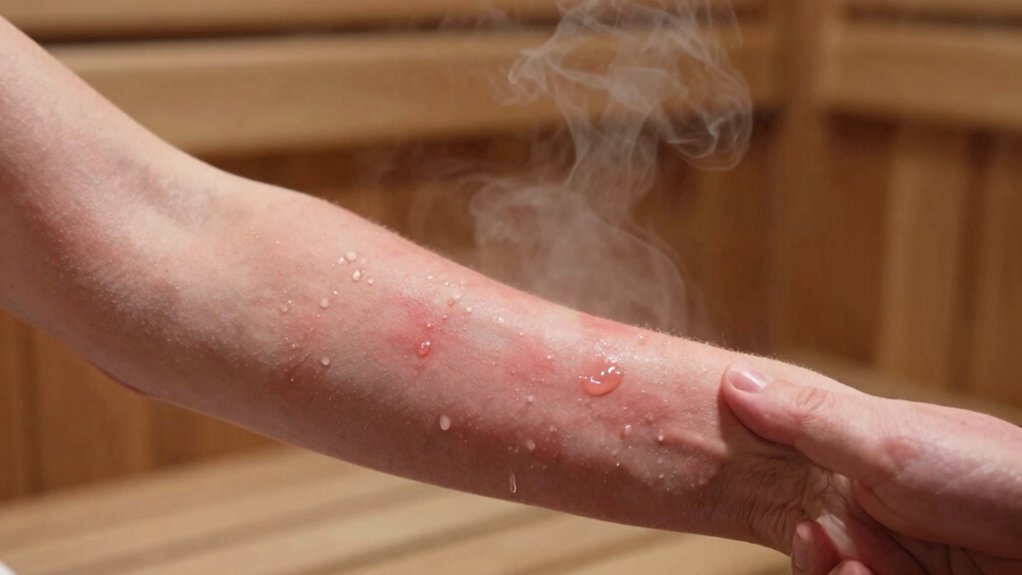
Where exactly do you begin when your skin flares up at the slightest provocation? Start by picking the right sauna: dry heat from traditional saunas is gentler on eczema than steamy rooms, which can feel like a harsh, wet blanket on raw skin. Gradual exposure helps you assess your personal tolerance without overwhelming sensitive skin. Research shows that stress reduction plays a major role in skin improvement, as stress triggers 37% of psoriasis flares and 54% of eczema flares, making the calming environment of a sauna potentially beneficial beyond just heat exposure.
Think of your skin barrier like a brick wall; moisture and active infections crumble those bricks, so skip sauna sessions until your skin stabilizes. When you’re ready, keep temperatures low: no hotter than 110°F for your first two weeks, then gradually climb to 115°F if your skin cooperates.
Never exceed 130°F, as higher heat turns up sweat production, which stings compromised skin like salt on a paper cut. Afterward, rinse with lukewarm water, pat dry gently, and moisturize immediately to lock in hydration.
What Clinical Studies Actually Show
For psoriasis, one study tracked 213 men and found that saunas didn’t change skin lesions for nearly 88% of them. However, 10.7% saw improvement, and regular sessions actually helped reduce thick, scaly plaques. Think of it like softening rough sandpaper, smooth, but still there. When researchers removed the scaly plaques from affected skin, they found that perspiration levels rebounded, suggesting the reduced sweating was caused by the physical barrier of the scales themselves rather than permanent damage to sweat glands. This aligns with findings that increased blood flow from heat exposure supports the healing process in compromised skin.
Interestingly, psoriasis patches sweat 50% less than healthy skin, which researchers confirmed using special silicone prints.
Infrared saunas show more promise. A 2012 trial with just 20 psoriasis patients found infrared outperformed blue light for symptom relief. Another 2006 study noted better skin texture overall.
For eczema, the research is thinner, mostly anecdotal. Scientists agree saunas work best as backup singers, not solo artists, alongside traditional treatments.
Frequently Asked Questions
Can Children With Eczema Use Saunas Safely?
You can let children with eczema use saunas, but you must take extreme caution. You’ll need pediatrician approval first, use lower temperatures around 110-130°F, limit sessions to 5 minutes, and stop immediately if their skin reacts.
How Often Should I Sauna for Psoriasis Relief?
Start with two 15-minute sessions weekly at 115°F, then gradually increase to 3-4 sessions per week as your skin tolerates it.
Consistency matters more than intensity for reducing your flare-ups.
Will Sauna Use Affect My Topical Medications?
Yes, sauna use affects your topical medications.
You’ll need to shower pre-sauna, rinse sweat within 2 minutes post-session, then reapply treatments within 3 minutes while damp to maintain their effectiveness and prevent irritation.
Should I Shower Before or After Sauna Sessions?
Shower both before and after.
Pre-sauna showering removes impurities that could clog pores. Post-sauna rinsing clears sweat, salt, and compounds within two minutes to prevent irritation and inflammation.
Can I Combine Sauna With Light Therapy Treatments?
You can absolutely combine sauna with light therapy treatments. You’ll maximize benefits by using red light during or immediately after infrared sauna sessions when your circulation’s already boosted and your pores are open.
Final Thoughts
You now understand how saunas affect your skin in surprising ways. Heat isn’t always your enemy, but it isn’t always your friend either. Listen to your body, start slow, and choose the right sauna type for your condition.
With smart precautions, you might discover real relief. Your skin journey is uniquely yours, so experiment carefully and find what works. Ready to turn up the heat wisely?