
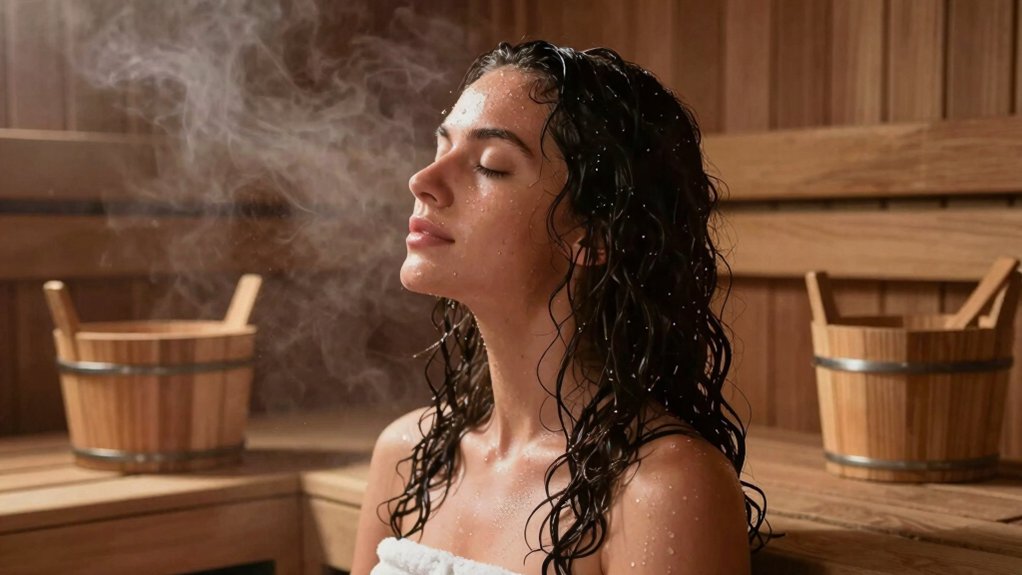

Steam rooms transform your hair by opening the cuticle, so moisture and conditioner penetrate deep into each strand. You’ll boost circulation to your scalp, flush out trapped oils, and strengthen keratin proteins without spending salon prices.
A $15 shower cap and your bathroom’s steam work just as well as pricey treatments, saving you $30–$75 per visit. Weekly 15–20 minute sessions fit any budget and routine, giving you softer, shinier, more resilient hair at a fraction of the cost, and there’s even more to discover about making steam work smarter for your specific hair goals.
What Steam Rooms Actually Do to Your Hair (Beyond Softness)
Why stop at not just running your fingers through softer strands when a steam room can transform your hair from the roots up? When you settle into that warm, misty air, steam penetrates five layers deep, reaching your scalp’s sensitive tissue and hair follicles like a gentle, therapeutic hug.
Your pores open wide, flushing out impurities and unclogging ducts. Imagine clearing a clogged drain so everything flows freely again. Sebum production kicks into gear, giving your scalp natural moisturization from within.
Meanwhile, the heat boosts blood circulation, delivering oxygen and nutrients straight to your follicles like a delivery truck bringing fresh supplies. Your keratin proteins, those bundles holding your hair together, get repaired and strengthened. You’re not just getting softness; you’re rebuilding your hair’s foundation. However, without proper protection, repeated steam exposure can lift the cuticle and lead to chronic dryness over time.
This epidural blood perfusion from the steam’s warmth helps rejuvenate your scalp at the cellular level, creating the ideal environment for healthy hair growth.
Your First Steam Session: A Simple Guide for Home or Gym
How do you actually turn that warm, misty air into a hair transformation? Start by washing your hair with gentle shampoo to remove buildup, then apply a deep conditioner or mask that matches your hair type. Section your hair into parts so the treatment reaches every strand evenly. The moist heat helps open your hair cuticle to enhance treatment absorption and improve moisture retention. Steam softens hair strands, enabling natural detangling with less damage when you comb through later.
At home, you have options: sit in a steamy bathroom, wrap a hot microwaved towel around your head, or use a handheld steamer. At the gym, apply your mask before entering the steam room, but keep sessions under 20 minutes to avoid irritation. Cover your hair with a shower cap to trap heat and boost absorption.
After steaming, rinse with cool water to seal your cuticles, detangle gently with a wide-tooth comb, and style as usual. You’re done!
5 Hair Problems You Can Fix With Regular Steam Sessions
Steam-powered hair repair isn’t just salon marketing, it’s a genuine tool you’ve already got access to, whether you’re stepping into your gym’s steam room or creating your own at-home mist session.
You’ll tackle dryness head-on as warm vapor penetrates your scalp layers, delivering moisture straight to thirsty follicles. Your strands drink up this clean humidity, restoring elasticity and vibrant color without expensive salon masks. Steam maintains high humidity to support moisture retention, ensuring your hair stays hydrated long after your session ends. The deep hydration delivered by steam also helps protect against future breakage and adds natural volume to your hair.
If breakage haunts your brush, steaming opens your hair cuticle so conditioners actually work. Your hair bends instead of snapping, and textured types see less shedding with regular sessions.
Frizz fighters, rejoice: steam outperforms oils by deeply softening rough textures, sealing hydration for bouncier, manageable curls.
Even thinning concerns improve as increased circulation feeds your follicles nutrients and oxygen, clearing buildup for a healthier growth environment.
Why Your Conditioner Works Better in Steam Room Humidity
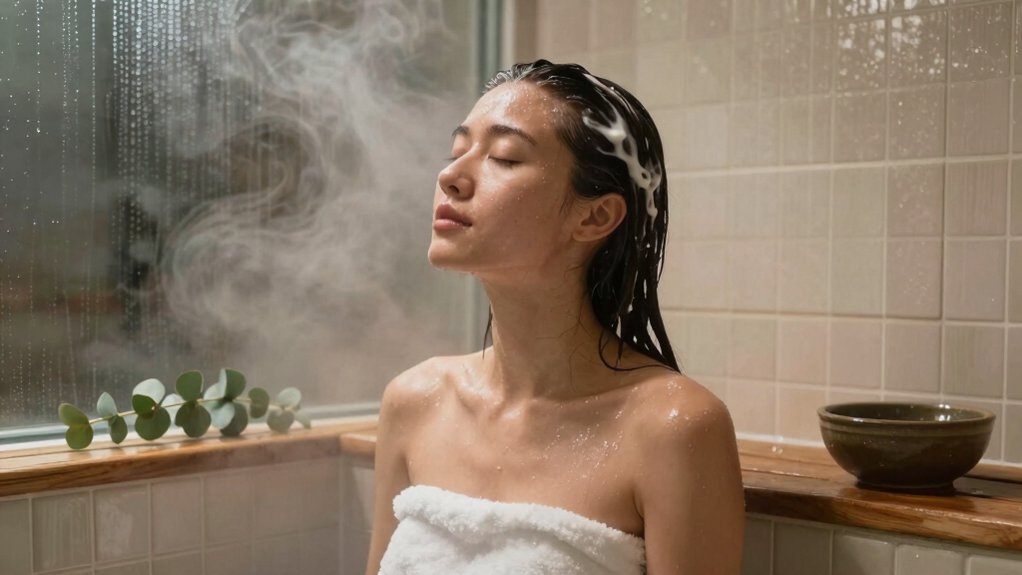
When you step into a steam room, the warm, moist air gently lifts your hair’s outer layer, called the cuticle, much like how steam opens up the pores on your face.
This natural opening creates tiny pathways that let your conditioner sink deeper into each strand, delivering nourishment where it’s needed most.
You’ll notice your hair stays softer and more hydrated long after you leave, because the humidity helps lock all that goodness right where it belongs.
The 100% humidity environment maintains consistent moisture levels throughout your treatment, ensuring your hair receives continuous hydration without the drying effects of lower-humidity heat sources.
Unlike dry air that can cause discomfort for skin and respiratory system, the steam room’s saturated atmosphere keeps your hair and scalp in optimal condition for absorbing treatments.
Cuticle Opening Mechanism
Your hair’s outer layer, those tiny, overlapping scales called cuticles, usually sits tight and flat like shingles on a roof, keeping moisture locked in or locked out depending on what your hair needs. But when you step into a steam room, everything changes.
The warm, moist heat gently lifts those scales, much like humidity makes a wooden door swell and stick. Steam maintains 90-100% humidity around your strands, causing your cuticles to absorb water and expand by 10-20%.
This creates small channels, boosting your hair’s permeability by 30-50%. Think of it as unzipping a jacket so conditioner can slip inside. After 10-15 minutes, you’ve got wider pathways for nourishing ingredients to reach your hair’s inner cortex, where real repair happens. This intense moisture boost is why steam treatments are often described as a facial for your hair and scalp, delivering deeply hydrating and nourishing results.
For maximum treatment efficacy, it’s recommended to apply a hair treatment immediately after steaming while your cuticles remain open and receptive.
Deeper Product Penetration
Those lifted cuticles aren’t just sitting there for show, they’re your ticket to getting way more out of every product you put on your hair. When you step into that steam room, the moist heat opens your hair’s outer layer like a flower blooming in the rain. This lets your conditioner, oils, and masks sink in way deeper than they ever could with dry heat.
Here’s what happens when you combine steam with your favorite products:
- Your conditioner penetrates deeper: Moist heat carries hydrating ingredients past the surface, right into the hair shaft.
- Oils absorb faster: Warm steam helps nourishing oils slide through open cuticles instead of sitting on top.
- Masks work harder: Deep conditioning treatments reach damaged areas that normally stay untouched.
- You use less product: Better absorption means every drop counts, stretching your budget further.
Steam transforms basic conditioning into salon-level treatment without the price tag.
Enhanced Hydration Retention
A steam room’s 100 percent humidity isn’t just heavy air, it’s a direct line to your hair’s deepest moisture reserves. When you step inside, steam penetrates your hair shaft and opens the cuticle layer, those protective scales that usually lock moisture out. Think of it like opening a door: suddenly, your conditioner can walk right in.
Your hair contains keratin proteins connected by hydrogen bonds, and these bonds love humidity. They absorb moisture, soften, and become more flexible. This means less breakage when you brush or style.
Steam also improves your hair’s porosity, so it drinks up and holds onto hydration long after you’ve left the room. You’re essentially rewiring your hair’s ability to stay moisturized, turning dry, brittle strands into resilient locks that remember how to stay hydrated.
Steam Room or Salon Steaming: Where to Spend Your Money
Where exactly should you put your hard-earned cash when it comes to hair steaming, at a fancy salon or right in your own bathroom? Let’s break it down so you can make the smartest choice for your wallet and your waves.
Here’s what you need to weigh:
- Price per session – Salons charge $30–$75 each visit, while home steamers cost $15–$150 once.
- Frequency matters – Monthly salon trips add up fast; home steaming saves serious cash long-term.
- Results quality – Pros deliver spa-level pampering, but DIY methods penetrate cuticles just as deeply.
- Convenience factor – Shower steaming with a cap costs zero extra and fits your weekly routine seamlessly.
Pick salon visits for special occasions or initial treatments, then maintain moisture affordably at home between appointments.
How Steam Unclogs Follicles When Shampoo Fails
You’ve figured out where to steam your hair, but now you’re probably wondering why steam works so much better than your regular shampoo routine.
Your shampoo scrubs the surface like a broom sweeping a floor, but steam acts like a power washer for your scalp. The moist heat opens your hair follicles and pores, lifting cuticles so trapped oils, creams, and debris can escape.
Steam doesn’t just clean your scalp—it power washes what your shampoo leaves behind.
Think of it as softening dried paint before you scrape it off: steam loosens hardened buildup that your shampoo simply can’t touch.
High porosity hair especially benefits, since those open cuticles trap grime like a sponge. Steam penetrates deep, boosting blood circulation and rejuvenating follicles your shampoo ignores.
You’ll finally clear the blockages causing itchiness and thinning, setting the stage for healthier growth.
Fixing Damaged Hair: Steam Recovery for Heat and Color Stress
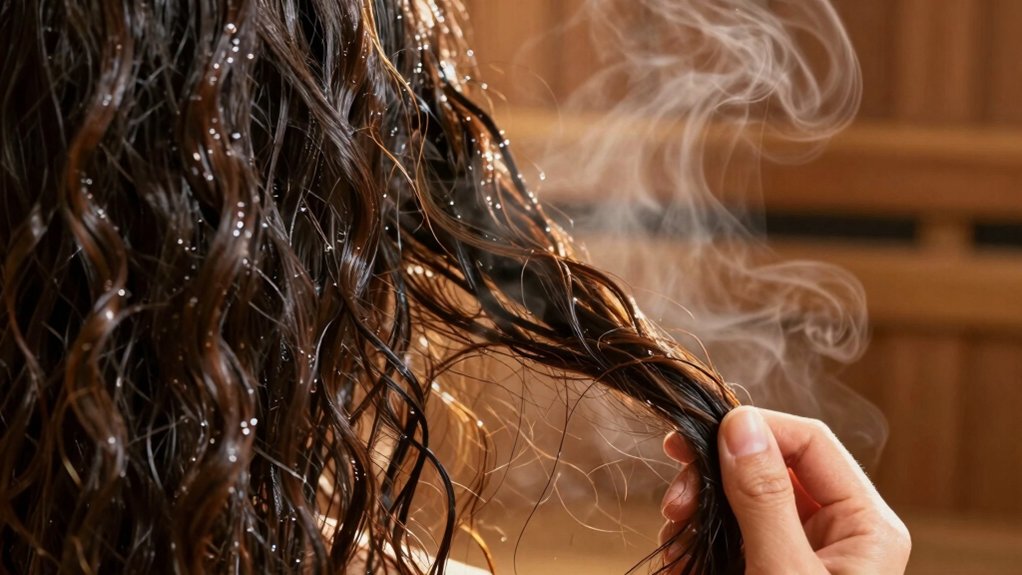
You’ve probably noticed your hair feeling straw-like after one too many blowouts or color sessions, and that’s where steam steps in as your affordable rescue plan.
Restoring Moisture Balance
Regular steam sessions can become your hair’s best friend when heat styling tools and color treatments have left it feeling like straw. You can restore your hair’s moisture balance without expensive salon visits, turning your bathroom into a healing retreat.
Here’s how steam transforms your thirsty strands:
- Opens the door: Heat lifts your hair’s protective cuticles like opening tiny gates, letting conditioners and oils sink deep into the cortex where they’re needed most.
- Draws moisture in: Humidity creates pressure that pushes hydration into every strand, like a sponge soaking up water.
- Locks it down: Your hair retains this moisture longer, becoming softer, shinier, and far less prone to snapping.
- Builds resilience: Regular steaming strengthens your hair’s natural elasticity, so it bounces back from daily stress.
Repairing Protein Structure
Heat styling and color treatments wage a quiet war on your hair’s building blocks, breaking down the keratin proteins that keep strands strong and supple.
Steam steps in as your hair’s repair crew, using humidity to rebuild those damaged protein structures.
Here’s how it works: steam’s moisture reacts with your hair’s hydrogen bonds, the same ones that make hygrometers measure humidity. These bonds snap back into place, restoring structural integrity like straightening a bent paperclip. Your cuticles open, allowing steam to reach the cortex where it mends protein fibers stressed by heat tools.
The result? Your hair regains elasticity, becoming less prone to snapping when you brush or style. Think of steam as protein therapy for your strands, repairing damage from the inside out, boosting shine, and rebuilding body without expensive salon treatments.
Reversing Chemical Damage
How does your hair feel after that last dye job or flat iron session, maybe a bit straw-like, frizzy, or snapping when you brush it? You’re not alone, and steam can help reverse that chemical damage.
Here’s how steaming rescues stressed strands:
- Cuticle repair — Steam opens your cuticles like a door, letting moisture and treatments sink deep into damaged hair.
- Scalp revival — The heat boosts blood flow, feeding follicles starved by harsh chemicals.
- Deep detox — Steam clears out residue and buildup left behind by color treatments.
- Elasticity boost — Hydration restores flexibility, so hair bends instead of breaking.
Spend 15-20 minutes steaming weekly, then rinse cool to seal those benefits. Your chemically treated hair deserves this affordable recovery.
Can Steam Actually Grow Hair? What the Evidence Shows?
Why does everyone keep saying steam will give you a full head of hair overnight? Let’s set the record straight, you’re smarter than that.
Steam rooms do boost circulation, delivering extra oxygen and nutrients to your follicles like a delivery truck bringing supplies to a construction site. This creates a healthier growth environment, but here’s the catch: no clinical evidence proves steam alone regrows hair on balding scalps.
Think of it as watering soil, you can’t revive a dead seed, but you can help living plants thrive.
The stress reduction from regular sessions helps prevent shedding caused by tension, and sweating cleanses your scalp by unclogging pores. However, overdoing it backfires. Sessions exceeding one hour can trigger temporary shedding through heat shock.
Use steam as one tool in your hair care toolbox, not a magic wand.
Weekly Steam Schedules That Fit Your Budget and Routine
Where do you even begin with fitting steam treatments into your already-packed schedule? You start by treating steam like a coffee date with your hair, short, sweet, and totally doable.
Here’s your four-step game plan:
Here’s your four-step game plan to treat steam like a coffee date with your hair—short, sweet, and totally doable.
- Match your hair’s needs. Dry, curly locks love weekly 15-20 minute sessions, while fine hair thrives on biweekly treatments.
- Stack it smart. Pair steaming with your regular wash day, steam after shampooing, then deep condition under a shower cap for zero extra trips.
- Cut costs creatively. Use your bathroom’s natural steam, grab an affordable handheld steamer, or alternate with no-equipment methods.
- Protect your time. Keep sessions under 20 minutes, skip consecutive heat days, and you’ll maintain healthy hair without the salon price tag.
Frequently Asked Questions
Can Steam Damage Low-Porosity Hair?
Steam won’t damage your low-porosity hair. You simply avoid overheating by using proper technique.
Your hair actually benefits: you’ll see reduced breakage, better moisture retention, and improved manageability with regular steaming sessions.
Should I Cover My Hair in Steam Rooms?
Cover your hair if you want scalp benefits without frizz, or leave it uncovered for deep conditioning treatments.
Use a plastic cap to lock in products and prevent excess moisture absorption.
How Long Should Hair Stay Wet Post-Steam?
Keep your hair damp for 15-20 minutes after steaming to maximize product absorption, then rinse with cold water.
Don’t let it stay wet longer than 30 minutes, or you’ll risk over-moisturizing and weakening your strands.
Is Steam Safe for Sensitive Scalps?
Steam can be safe for your sensitive scalp if you take precautions.
You’ll want to use lower temperatures, keep sessions brief, pre-moisturize, and avoid steaming during active flare-ups.
Always listen to your skin’s signals.
Can I Steam With Braids or Extensions?
Yes, you can steam with braids or extensions. Wash human hair braids within a week after sweating, condition thoroughly, and dry completely.
Avoid synthetic braids in steam, heat releases harmful chemicals. Monitor your scalp for irritation.
Final Thoughts
You’ve learned how steam rooms can transform your hair without draining your wallet. Whether you’re battling dryness, damage, or slow growth, regular steaming fits any routine.
Start small, stay consistent, and watch your strands thrive. Your hair deserves this simple, science-backed boost, so grab a towel, step into that warmth, and let the magic happen.
Healthy, happy hair is closer than you think.