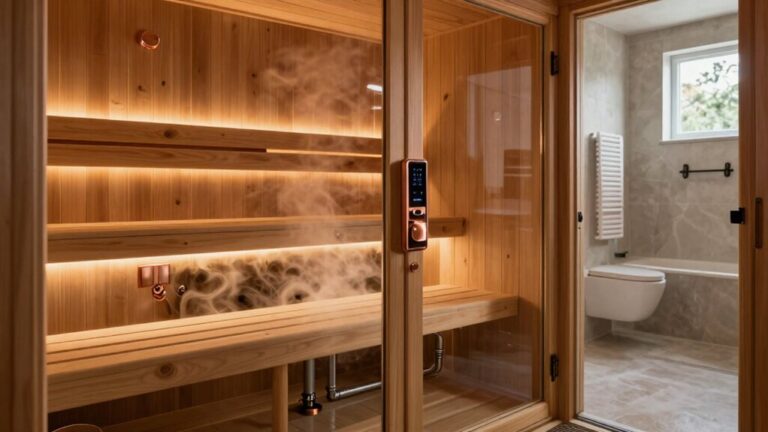
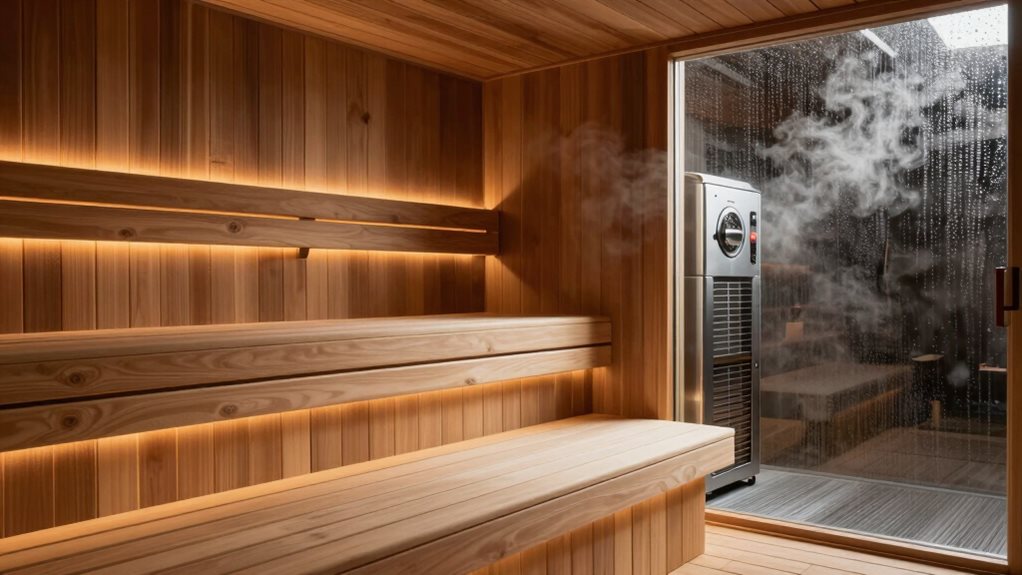

Sauna heating systems come in different types, each offering a unique experience. Electric heaters heat quickly, while wood-burning stoves create a classic feel but take longer. You’ll find that infrared heaters warm your body directly at lower temperatures, making sessions shorter. When it comes to costs, electric heaters are pricier to run than infrared. Regular maintenance keeps your sauna enjoyable and safe. Stick around, and you’ll discover even more about how to choose the right sauna for you!
Types of Sauna Heating Systems
When it comes to sauna heating systems, you’ve got four main choices that each offer a unique experience.
First up, electric sauna heaters are super handy; they’re easy to control with timers and temperature settings. They heat stones, which then radiate warmth, creating that delightful löyly when you splash water on them. Additionally, electric sauna heaters are available in various sizes to suit different sauna spaces.
Next, wood-burning heaters give you that classic sauna feel with the cozy crackle of fire and a natural aroma.
Gas-fired heaters run on propane or natural gas and are great for larger saunas, delivering good heat without the electric hassle.
Finally, infrared panels offer a completely different vibe, focusing on warming your body directly rather than the air, making them perfect for short sessions without the steamy environment.
Performance: Heat-Up Time & Temperature Control
When it comes to enjoying your sauna, heat-up time and temperature control really matter.
Different sauna types heat up at varying speeds; for example, infrared saunas can warm up in just 10–15 minutes, while traditional wood-burning stoves may take longer. Additionally, large saunas often require a longer heating time of about 30-45 minutes, making it essential to consider size when planning your sauna sessions. Moreover, the average heating time for a medium sauna with a 6 kW heater is a common benchmark for users. Using an electric sauna heater can significantly reduce heat-up time compared to traditional methods.
Plus, managing humidity alongside temperature can improve your experience, making it important to know how different systems work for the best results.
Heat-Up Time Comparison
Have you ever wondered how quickly different sauna heating systems can get you to that cozy, relaxing temperature? Electric resistive heaters typically take about 15 to 60 minutes, depending on the power and size of your sauna. If you’re using infrared heaters, you’re in luck—they heat you up in just 10 to 15 minutes! Infrared heaters(they are more affordable initially) require minimal maintenance, primarily occasional dusting. Additionally, many users find that infrared saunas provide a more comfortable experience due to their lower ambient temperatures. Wood-burning stoves, on the other hand, need about 60 to 90 minutes for a full warm-up. Gas-fired heaters are a middle ground, reaching ideal warmth in 20 to 30 minutes. Keep in mind that bigger stone masses take longer to heat, while the quality of insulation and ambient conditions can also affect your wait time. For example, choosing a 6kW heater could provide gradual heating that is more cost-effective for smaller, well-insulated saunas.
Temperature Control Precision
After you’ve chosen your ideal sauna heating system and waited patiently for it to warm up, the next step is confirming that it maintains that perfect temperature for your relaxation session.
Accurate temperature control is essential, and the type of sensor you use matters. For instance, RTD sensors offer better precision than basic thermistors, keeping the heat consistent. Additionally, investing in quality sauna heater controllers can enhance temperature management capabilities. Choosing sensors with a lower maximum error, such as the Si7051: ±0.25°C accuracy, can significantly improve the reliability of the temperature readings. Moreover, integrating luxury sauna heater controllers can elevate your overall sauna experience.
Placement also plays a big role; sensors near the heater respond quickly but mightn’t reflect the overall room temperature accurately. To combat this, some systems use multiple sensors to balance readings.
Advanced controllers, using PID algorithms, further refine fluctuations, guaranteeing you enjoy a steady, cozy experience while avoiding wild temperature swings.
Humidity Management Options
Managing humidity in your sauna isn’t just about creating a pleasant atmosphere; it also plays a crucial role in improving your overall experience. For precise humidity control, consider hygrometers. Analog models are simple and durable, while digital ones provide real-time readings and alerts. If you want both temperature and humidity measured, thermo-hygrometers do the trick. With traditional saunas, you can manually add water to stones for steam. For a high-tech approach, smart controls adjust humidity automatically, keeping levels comfortable. Proper humidity levels are essential not only for comfort but also for enhancing sweating, which aids in the detoxification process. Additionally, investing in a reliable sauna moisture control system can significantly improve your sauna experience. Maintaining appropriate humidity is crucial for preventing respiratory irritation, protecting your sauna’s wood and enhancing your experience. Whatever method you choose, maintaining the right humidity prevents respiratory irritation and protects your sauna’s wood. Ultimately, it boosts relaxation, guaranteeing you enjoy a revitalizing and invigorating sauna session every time.
Operating Cost & Energy Efficiency
When you plunge into the world of sauna heating systems, understanding the operating costs and energy efficiency can help you make smarter choices for your relaxation spot.
For instance, electric heating could cost you around $1.19 to $2.21 per two-hour session, whereas an infrared sauna may only set you back about $0.27 to $0.41. That’s quite a difference!
Factors like insulation and heater size play a huge role in costs. A well-insulated sauna requires less energy, saving you money.
Also, using smart controls can help minimize wasted energy. Additionally, selecting a home sauna heating system that fits your specific needs can greatly enhance efficiency and overall experience.
Installation, Space & Safety Considerations
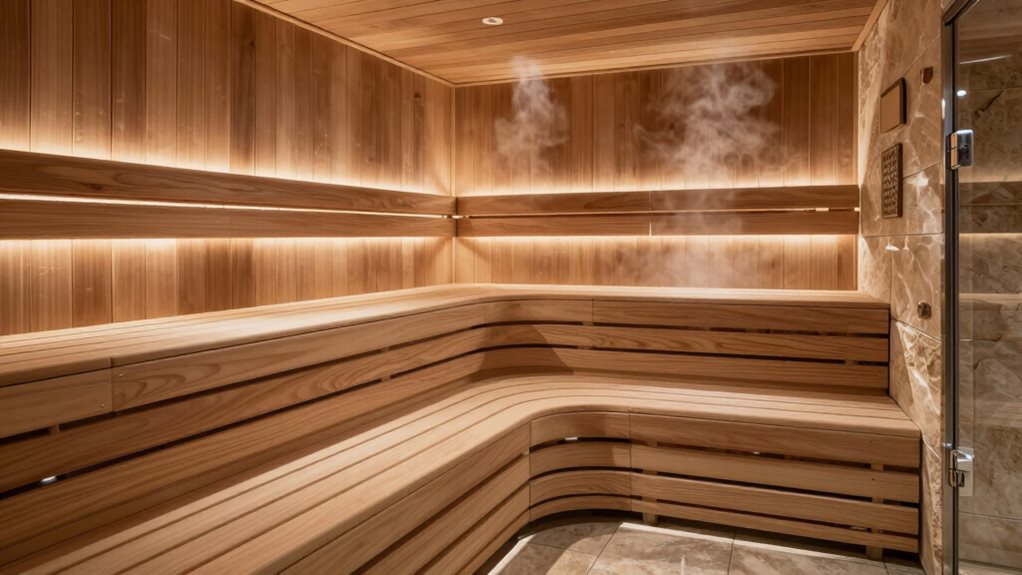
Before you start setting up your sauna, it’s important to contemplate how installation, space, and safety come together to create a relaxing environment.
First, measure your space carefully and find a stable, level surface for your heater. Be certain to keep 4-12 inches of clearance from walls for proper airflow.
You’ll want a licensed electrician for the wiring to guarantee safety, following local codes. Remember, your heater needs to be at least 6 inches from the floor and 45 inches from the ceiling.
Maintain safety clearances from flammable materials and install protective devices like a temperature sensor and auto-shutoff timer. Additionally, consider adding a sauna ventilation system kit to enhance air quality and circulation.
With careful planning, you’ll enjoy a safe and peaceful sauna experience!
User Experience & Subjective Factors
While you might think saunas are all about heat and steam, there’s much more to the user experience than just sweating it out.
Imagine stepping into a space that adapts to you. With multi-user profiles, everyone in your household can enjoy personalized settings. You can even control the sauna from your phone, thanks to smart home integration!
Beyond comfort, many use saunas for relaxation and stress relief, and it works—83.5% of sauna-goers report better sleep.
Plus, saunas aren’t just for one; they’re social spots where you can catch up with friends or conduct meetings.
With all these features, you might find yourself spending more time unwinding, feeling better, and connecting with others in your sauna sanctuary. Additionally, incorporating HEPA air purifiers into your sauna experience can enhance air quality and contribute to overall well-being.
Maintenance, Lifespan & Environmental Impact
To keep your sauna in top shape, regular maintenance is key, and it doesn’t have to be a hassle.
You’ll want to clean your sauna thoroughly 1-3 times a year using alkaline cleaners. For heaters, a light cleaning every few weeks usually works. Inspect your heater monthly for any damage or loose connections.
Don’t forget to check the sauna stones; rearranging them every few months helps distribute heat evenly. Regular use also prevents mold, so aim for at least twice a week.
Plus, improving ventilation keeps things fresh. With proper care, your sauna will offer a relaxing experience for years to come, while minimizing energy waste and environmental impact. Additionally, consider incorporating a sauna air purifier into your routine to enhance air quality and maintain a healthy environment.
Happy relaxing!
Electric Resistive Heaters
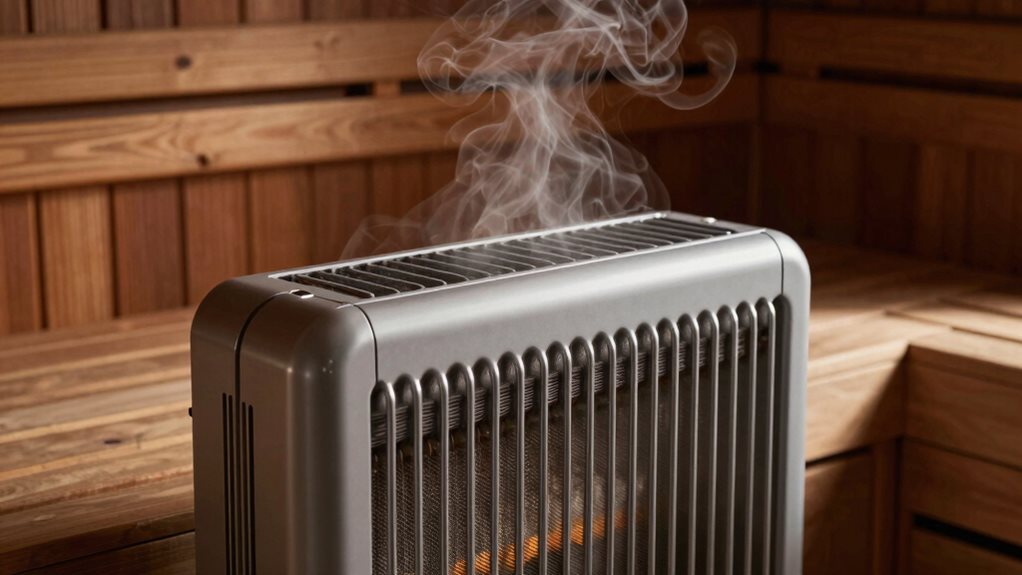
Electric resistive heaters are a popular choice for sauna enthusiasts, and it’s easy to see why.
These heaters offer efficient and straightforward heating, giving you a cozy environment to unwind.
Electric resistive heaters provide efficient heating, creating a warm and inviting atmosphere perfect for relaxation.
Here’s what makes them stand out:
- Fast heat-up times: Higher kW ratings heat your sauna quickly, so you won’t wait long.
- Durable element options: Nichrome coils or ceramic elements guarantee reliability and even temperature.
- Steam creation: The classic water-on-stones method produces a delightful, humid atmosphere.
- Control systems: Timers and thermostats help maintain consistent temperatures for a better experience.
Additionally, indoor electric sauna heaters are designed to maximize energy efficiency while providing optimal performance.
Wood-Burning Heaters
Wood-burning heaters offer an authentic sauna experience that many enthusiasts cherish.
However, they come with unique maintenance and operation challenges, like guaranteeing proper ventilation and chimney care to keep everything running seamlessly.
If you’re ready to welcome the warmth of a wood-fired stove, you’ll need to be prepared for some hands-on upkeep to keep your sauna enjoyable and safe!
Authentic Sauna Experience
Imagine stepping into a sauna where the crackling flames dance and the warm, earthy scent of burning wood wraps around you like a comforting blanket.
This authentic experience is like no other, engaging your senses in a way electric saunas can’t match. You’ll find tranquility while enjoying:
- The soothing sounds of the crackling fire, improving your relaxation.
- Even heat that seeps deep into your muscles for ultimate comfort.
- A delightful steam that softens your skin and eases your breathing.
- The powerful, aromatic scent of burning wood, relieving stress.
With these elements combined, a wood-burning sauna connects you to ancient traditions and provides a holistic experience that promotes well-being.
You’ll feel revitalized and refreshed, ready to take on the world!
Maintenance and Operation Challenges
When you enjoy the warmth and comfort of a sauna, it’s important to remember that proper maintenance is key to keeping that experience enjoyable.
Regularly inspect your chimney for blockages and clean it after every use to guarantee good airflow. Check your sauna stones for cracks and replace them annually to maintain ideal heat.
Don’t forget to clean the ash from the stove after each session; this prevents airflow blockages and boosts efficiency. Make certain your vents are clear of obstructions, allowing fresh air to circulate.
If you notice low heat or excessive smoke, it could indicate larger problems. By staying on top of these tasks, you’re making sure a safe, effective, and cozy sauna experience every time!
Infrared Heaters and Combi Systems
Sauna options have expanded considerably over the years, giving you more ways to relax and rejuvenate. Among these choices are infrared heaters and combi systems, each offering unique benefits:
- Infrared heaters provide deep tissue warmth at lower temperatures.
- Combi systems let you enjoy both radiant heat and steam.
- Infrared heats up quickly, saving you time.
- Combi systems can create that traditional sauna sweat-like experience.
Infrared heaters make it easy and cost-effective to unwind, burning calories while promoting mood and relaxation. They use less energy and fit into your space with ease.
On the other hand, combi systems combine the best of both worlds, giving you the warmth of traditional saunas plus the depth of infrared heat, all wrapped up in a versatile package.
Frequently Asked Questions
How Do Different Sauna Heaters Affect My Health and Well-Being?
Different sauna heaters influence your health by varying heat penetration, sweating intensity, and cardiovascular benefits. Infrared offers gentler heat for longer sessions, while traditional provides intense sweat and cardiovascular boosts, though it can be harsher on sensitive individuals.
Which Sauna Heating System Is Best for Beginners?
For beginners, infrared heaters are best. They provide efficient, direct body heat without extreme temperatures, making your first experience comfortable. Their lower operating temperatures suit newbies, guaranteeing a gentle introduction to sauna benefits without overwhelming sensations.
Can I Switch Sauna Heating Systems Later?
Yes, you can switch sauna heating systems later. Just consider compatibility, necessary upgrades, and costs involved. Make sure to evaluate performance benefits, too, as each type offers unique advantages for your sauna experience.
What Accessories Enhance the Sauna Experience?
To improve your sauna experience, consider using backrests, seat cushions, and sauna towels for comfort. Aromatherapy diffusers and LED lights set the mood, while thermometers help monitor temperature for a safe, enjoyable session.
How Do Local Regulations Affect Sauna Installations?
Local regulations impact your sauna installation by requiring permits, adhering to zoning laws, and complying with safety and electrical codes. Ignoring these can lead to fines or forced removals, so it’s crucial to check.
Final Thoughts
In conclusion, choosing the right sauna heating system is all about what fits your needs best. Whether you opt for electric, wood-burning, or infrared, each system has its own strengths. Remember to take into account how quickly it heats up, how much it costs to operate, and how much space you have. With the right information and a bit of planning, you’ll be on your way to enjoying the relaxing and health-boosting benefits of sauna time in no time!