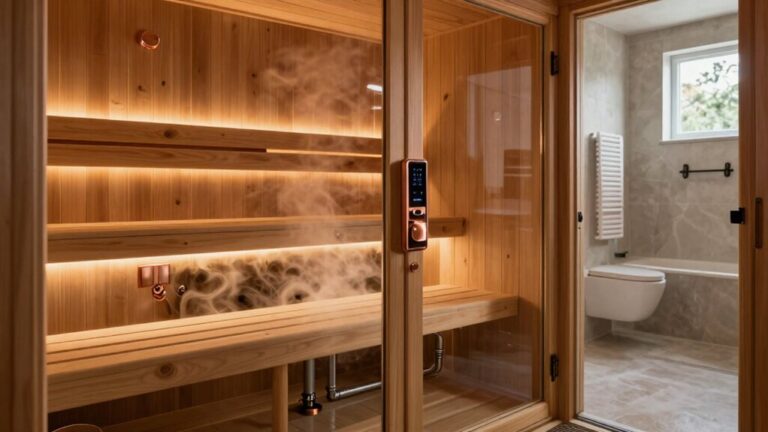
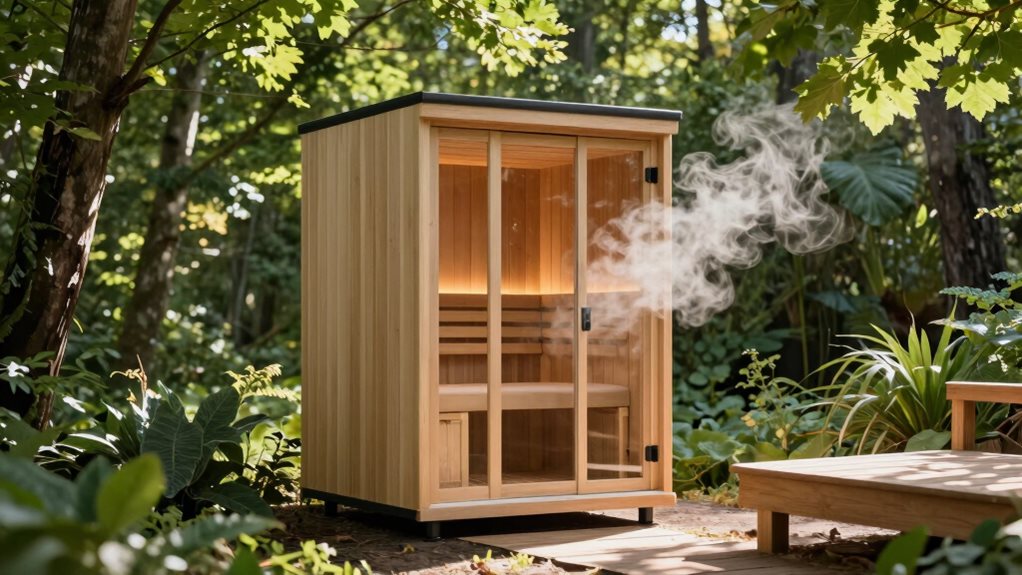

Portable and prefab saunas provide flexible ways to enjoy relaxation and wellness. A portable sauna tent is lightweight and easy to set up, making it great for outdoor use. On the other hand, prefabricated cabins offer stylish comfort with modern designs. Both options have their pros, like energy efficiency, but also some cons, like limited space. To get the most out of your sauna, pay attention to design rules, such as proper ventilation and sizing. There’s plenty more to discover!
Understanding Portable Sauna Tents
When you think about relaxing in nature, portable sauna tents might pop into your mind as a perfect addition to your adventures.
These tents are designed using heat-retentive fabrics like multi-layer PVC, which helps keep the warmth inside while resisting steam. Lightweight aluminum frames make them easy to carry and set up anywhere. Sauna tents offer flexibility in their setup, allowing users to enjoy sauna benefits in any outdoor setting, whether it’s a forest or a backyard. Portable sauna tents are constructed from heat-resistant fabric for durability and portability, making them an excellent choice for both camping trips and home use. Additionally, many models feature infrared portable sauna cabins that provide efficient heating while minimizing energy consumption.
Experience ultimate relaxation with portable sauna tents crafted from heat-retentive fabrics and lightweight aluminum frames, ensuring easy setup anywhere.
You’ll find various heating options, from wood-burning stoves for that classic sauna experience to electric heaters for precise temperature control. Depending on how many friends you’re bringing, you’ll want to choose a size that fits everyone comfortably.
Safety’s key too; make sure to check clearances and ventilation to keep the air fresh. A portable sauna tent can enhance your outdoor experience like nothing else!
Exploring Prefabricated Cabin Options
As you explore the world of prefabricated cabins, you’ll find that these structures offer a convenient and stylish way to enjoy nature, whether for a cozy weekend getaway or a more permanent residence. From vacation rentals to backyard guesthouses, prefab cabins come in various sizes and styles to suit any need. You can choose compact models for campsites, which sleep a few people, or larger cabins perfect for year-round living. Many options are made using strong materials like timber or durable fiberglass, FRP (Fiber Glass Reinforced Polyester), guaranteeing they can withstand the elements. With fast delivery and easy assembly, these cabins can help you start your adventure sooner, especially as modern designs like the floor-to-ceiling glass gable wall offer stunning views and enhance the experience of being in nature.
Comparing Heating Methods: Infrared vs. Traditional
When choosing between infrared and traditional saunas, understanding their heating differences can really help.
Infrared saunas heat your body directly at lower temperatures, while traditional saunas crank up the heat to create a warm environment all around you.
This not just affects how quickly they heat up but also how energy-efficient they are, making it important to contemplate your needs and preferences before making a decision. Additionally, infrared saunas are known for their ability to promote detoxification and relaxation, which can enhance your overall wellness experience.
Heating Mechanism Differences
While both infrared and traditional saunas aim to provide a warm, relaxing experience, they go about it in very different ways.
Traditional saunas use stoves or heaters to warm the air, creating an immersive heat that fills the entire space. You might think of this as wrapping yourself in a thick blanket!
In contrast, infrared saunas emit light that your body absorbs directly, like sunshine on your skin, warming you from the inside out. This method heats you up quickly—often within 10-15 minutes—while traditional saunas can take up to an hour.
Infrared saunas are generally easier to install and maintain, using less energy, which means faster, more efficient sessions. Additionally, many people find that the home sauna kit infrared provides an accessible way to enjoy the benefits of sauna therapy in their own space.
Temperature Range Comparison
Understanding the right temperature range for your sauna experience is key to maximizing its benefits.
Infrared saunas typically run at 120–150°F, offering a comfortable zone that still promotes sweating and relaxation. This lower temperature range allows for infrared sauna heaters to penetrate deeper into the skin, enhancing detoxification and muscle recovery. On the other hand, traditional saunas crank it up to 160–200°F, providing a more intense heat experience in shorter sessions. While infrared might allow longer stays—up to 30–40 minutes at lower temperatures—traditional saunas could get you a heart-pumping workout in just 10-20 minutes. It’s like comparing a relaxed stroll with a sprint! Keep in mind that humidity levels affect your experience, too. In steam rooms, for instance, even lower temperatures can feel hotter because of the moisture in the air. Additionally, humidity control is crucial, as it distinguishes wet steam saunas from dry saunas, each creating unique temperature experiences.
Energy Efficiency Assessment
Energy efficiency plays a crucial role in selecting the right sauna for your needs, influencing both your comfort and your utility bills.
When comparing infrared and traditional saunas, you’ll find that infrared models stand out for several reasons:
- Energy Use: Infrared heaters consume 40-60% less energy than traditional ones, making them a cost-effective choice for regular use. Additionally, many users appreciate the health benefits that come with infrared heat, such as improved circulation and relaxation.
- Heat-Up Time: Infrared reaches ideal temperature in just 15-30 minutes, while traditional saunas can take 30-60 minutes, wasting energy during that time. This efficiency can be particularly advantageous for pre-assembled saunas that require minimal setup time.
- Long-Term Savings: With a lifespan of 20-30 years, infrared saunas lower your overall costs due to less energy and fewer maintenance needs. Furthermore, custom saunas typically require less frequent replacement due to premium materials.
Choosing the right heating method can keep you relaxed without breaking the bank!
Advantages of Portable and Prefab Saunas
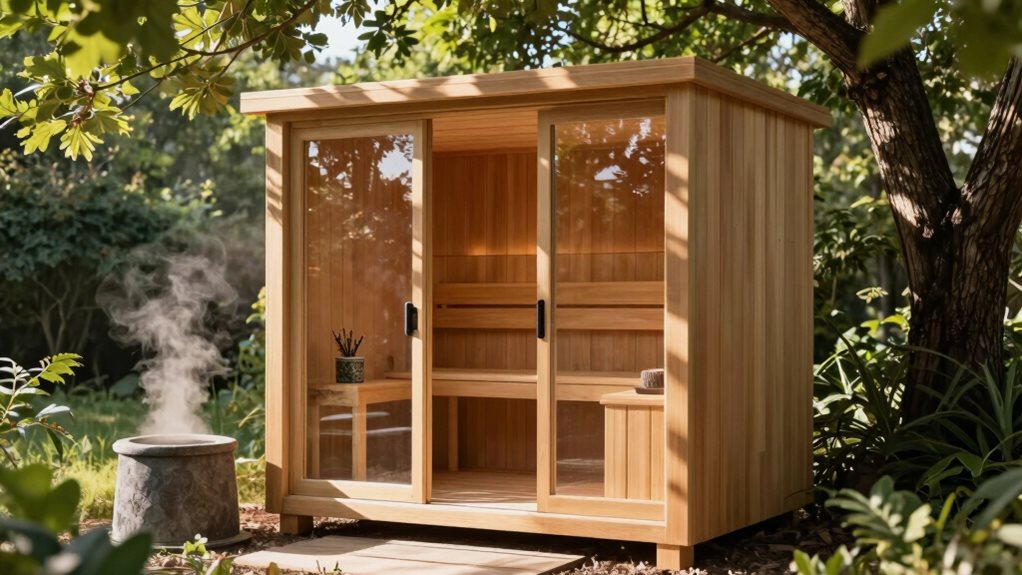
When you’re looking for a way to enjoy the benefits of sauna therapy without the hassle, portable and prefab saunas really shine.
These options make installation a breeze—most prefab kits fit together in just a few hours, while portable saunas set up in mere minutes! They don’t require fancy electrical work or dedicated spaces, so you can squeeze them into tight spots like bedrooms or balconies. Additionally, prefab sauna kits include all necessary components for easy assembly, streamlining the process even further. With a home sauna kit, you’re ready to transform your space effortlessly.
Plus, they’re energy-efficient, heating small spaces quickly and reducing your electric bill. With lower costs and minimal maintenance, you gain affordable access to sauna therapy at home.
Experience affordable sauna therapy at home with energy-efficient options that quickly heat your space and cut down on maintenance costs.
Best of all, you’ll enjoy health benefits like relaxation, improved circulation, and even a little weight loss! What’s not to love?
Disadvantages to Consider
While portable and prefab saunas offer exciting convenience, there are some disadvantages you should consider before making a purchase.
- Limited Size and Comfort: Many designs accommodate just one person, which cuts down on social experiences. Plus, compact seating can be uncomfortable for taller users, leading to a not-so-relaxing session.
- Reduced Thermal Performance: Thinner materials often mean quicker heat loss, resulting in longer warm-up times. Some portable models can’t reach the high temperatures you might expect from a traditional sauna.
- Long-Term Costs: Lower initial prices can lead to recurring expenses, like replacing worn parts. Plus, energy costs can add up quickly due to frequent use. Additionally, portable electric sauna heaters can help mitigate some of the thermal performance issues associated with certain models.
Weighing these factors carefully can help you decide if a portable sauna fits your needs.
Health, Safety, and Performance Insights
Saunas can be a fantastic way to improve your health and wellbeing, but understanding the health, safety, and performance insights is crucial for making the most of your experience.
Regular sauna use can lower your risk of heart problems, but if you have cardiovascular issues or high blood pressure, it’s wise to get medical advice first.
When using a portable sauna, keep an eye on hydration—too much heat can lead to dehydration, which might make you feel sluggish.
Remember, a core temperature rise can be good, but it can also be risky, especially for older adults.
Balancing your sauna time and guaranteeing you cool down adequately helps maximize benefits while keeping things safe.
Enjoy your sauna sessions responsibly!
Essential Design Rules for Optimal Use
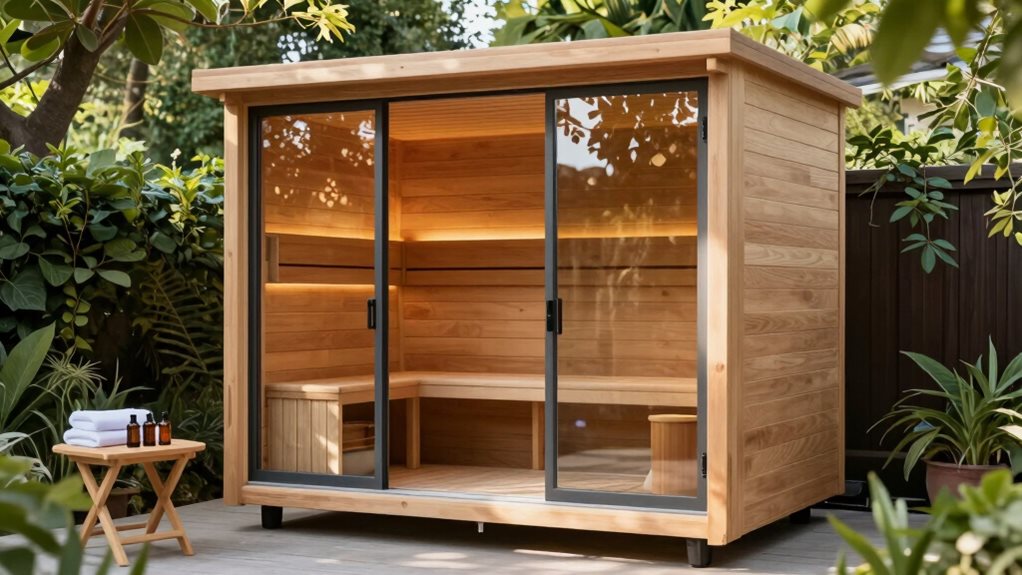
Creating the perfect sauna experience isn’t merely about hopping inside; it involves thoughtful design to improve both comfort and safety as well as effectiveness.
To guarantee ideal use of your sauna, consider these crucial design rules:
- Size Matters: Aim for a compact sauna of at least 6′ × 6′ with a 7′ ceiling, leaving 24 inches of bench space per person for comfort. The optimal bench and heater placement should promote user capacity to ensure a comfortable and enjoyable experience for everyone. Additionally, selecting the right indoor sauna heater kit can enhance the overall warmth and ambiance.
- Strategic Heating: Place the heater opposite the benches to distribute heat evenly and allow safe entry with a clear aisle of 24–30 inches. Additionally, ensuring the correct heater size is crucial for heating efficiency to avoid underpowered performance.
- Ventilation Counts: Install an inlet vent near the heater and an outlet vent high on the opposite wall to promote airflow and reduce humidity.
These simple yet effective guidelines will help create an enjoyable sauna experience.
Happy relaxing!
Frequently Asked Questions
How Much Space Do I Need for a Portable Sauna?
You’ll need at least 9 square feet for a single-user sauna, while a two-person unit requires around 16 square feet. Always guarantee additional clearance for comfortable entry and ventilation during your sauna sessions.
Can Portable Saunas Be Used Outdoors Year-Round?
Yes, portable saunas can be used outdoors year-round. Just make sure you’ve chosen durable materials, adequate insulation, and a reliable heating source, so you can enjoy a cozy experience regardless of the season’s challenges.
What Is the Average Cost of Prefab Saunas?
The average cost of prefab saunas ranges from $1,000 to $7,000, depending on size and materials. If you consider installation, expect to add labor costs, which can vary greatly based on your choices.
How Do I Maintain a Portable Sauna?
To maintain your portable sauna, wipe surfaces after each use, use non-toxic cleaners, and verify for wear. Deep clean regularly, unplug when working on electrical components, and guarantee proper ventilation to prevent mold.
Are Portable Saunas Safe for Children?
Portable saunas can be safe for children if properly supervised and used within recommended guidelines. Guarantee temperatures are low, sessions are brief, and hydration is prioritized. Always monitor them for any signs of heat-related discomfort.
Final Thoughts
In conclusion, portable and prefab saunas offer a fun and convenient way to enjoy the benefits of heat therapy at home. By understanding the differences in design, heating methods, and their pros and cons, you can make the best choice for your needs. Whether you’re relaxing solo or bonding with friends, these saunas can improve your wellness routine. Just remember the fundamental design rules to guarantee you get the most from your sauna experience!