
To balance fast heat-up times and longevity in sauna heaters, choose the right type, like electric or infrared for quick warmth. Properly size your heater, aiming for 1 kW per 45-50 cubic feet of space. Regular maintenance is key too—check stones and clean connections often. You’ll enjoy a cozy sauna without stressing the system. Understanding these aspects helps you get the best experience. Curious to find out more ways to optimize your sauna?
Understanding Heater Types and Their Heat-Up Characteristics
When you’re choosing a sauna heater, it’s essential to understand the different types available and how quickly they can heat up.
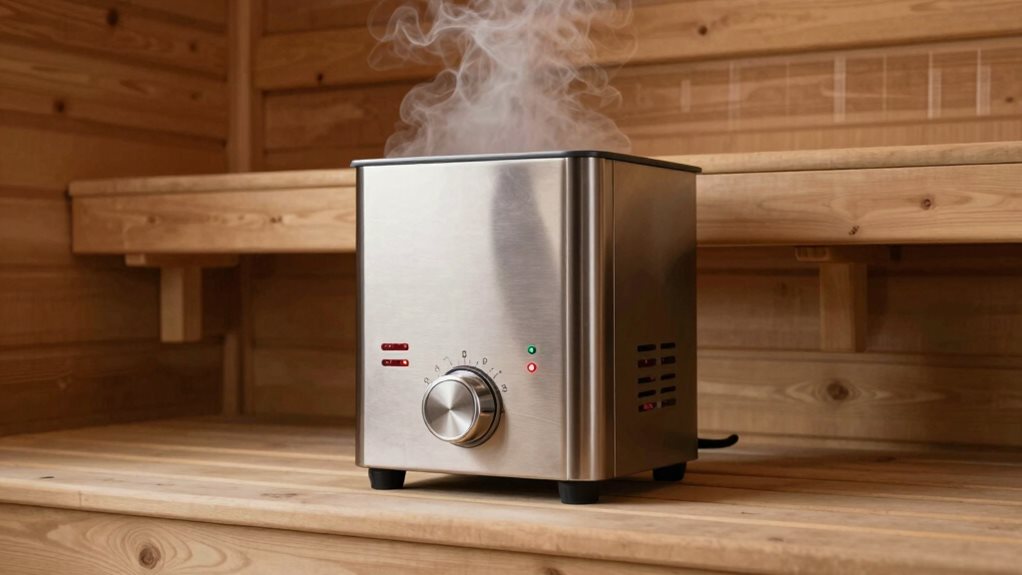
Electric heaters are the most popular, especially in urban areas, heating up faster than gas or wood options. If you’re in a hurry, models like the Harvia KIP can warm your sauna in no time. Additionally, energy efficiency is an important factor to consider, as electric heaters can provide a consistent and cost-effective heating experience. Infrared heaters are also noted for their quick heat-up times, as they directly warm the body instead of heating the air.
Electric heaters are the top choice for speed, especially models like the Harvia KIP, perfect for a quick warm-up.
Wood-burning heaters, while offering a delightful aroma, can take 30-60 minutes to reach that cozy warmth. Gas heaters also take about the same time but are more commonly found in gyms than homes.
Finally, infrared heaters heat your body directly and are the fastest, though they lack the traditional vibe. Each type has its charm—choose based on your sauna needs and lifestyle!
Power Sizing for Optimal Performance
When sizing your sauna heater, it’s essential to use the right power guidelines to avoid getting an oversized unit that can lead to wasted energy and an uncomfortable experience. By considering factors like room size, insulation, and any large glass areas, you can fine-tune your heater’s output for an ideal balance between fast heat-up times and efficient performance. Additionally, properly sized heaters achieve 180°F in about 45 minutes, ensuring a quick and pleasant start to your sauna experience. Plus, adjustable output options can help you maintain the perfect temperature during use, making each sauna session enjoyable and relaxing! Understanding the total volume of sauna you need to heat is key to selecting the right heater size.
Heater Power Guidelines
Choosing the right power rating for your sauna heater can feel a bit confusing, but it’s crucial for guaranteeing a comfortable and enjoyable experience. A common guideline is about 1 kW per 45–50 cubic feet of sauna space. For example, a 3 kW unit works well for 112–150 ft³, while an 8 kW heater suits 336–420 ft³. Remember, if you have high ceilings or lots of windows, you might need to boost the power by 10–15% to offset heat loss. It’s important to ensure that the heater power matches sauna volume to avoid heating inefficiencies. Also, check that your electrical system can handle the heater’s requirements—nobody wants a blown fuse during relaxation time! Utilize manufacturer calculators to get the most accurate match for your specific sauna setup. Happy heating!
Avoiding Oversized Units
Opting for the right size sauna heater can make a world of difference in your sauna experience, as oversized units often lead to more problems than benefits.
When you pick a heater that’s too powerful, you might face rapid temperature spikes, which can be uncomfortable. Oversizing can also result in uneven heat distribution, causing poor steam quality.
You’ll be caught in a cycle of frequent on and off periods, wasting energy while increasing wear on the unit.
To size your heater correctly, aim for about 1 kW per 45-50 cubic feet of space.
Adjustable Output Benefits
Finding the right sauna heater isn’t solely about picking a size; it’s also about how adaptable the unit is for your needs.
An adjustable output heater can match your sauna’s size and your personal preferences perfectly. For instance, if your sauna is 4-6 cubic meters, a 4.5 kW heater might be just right.
But if you’ve got an 8-12 cubic meter space, you’ll need between 6 and 9 kW for ideal warmth.
Models like the EOS EmoTec H and Saunum AIR 10 let you customize your heat and airflow, guaranteeing a cozy session.
This flexibility not only improves comfort but also increases energy efficiency, meaning you can enjoy your sauna without worrying about high electricity bills.
The Importance of Stone Capacity and Thermal Mass
When setting up a sauna, it’s crucial to understand how stone capacity and thermal mass play a key role in creating the perfect atmosphere for relaxation and rejuvenation.
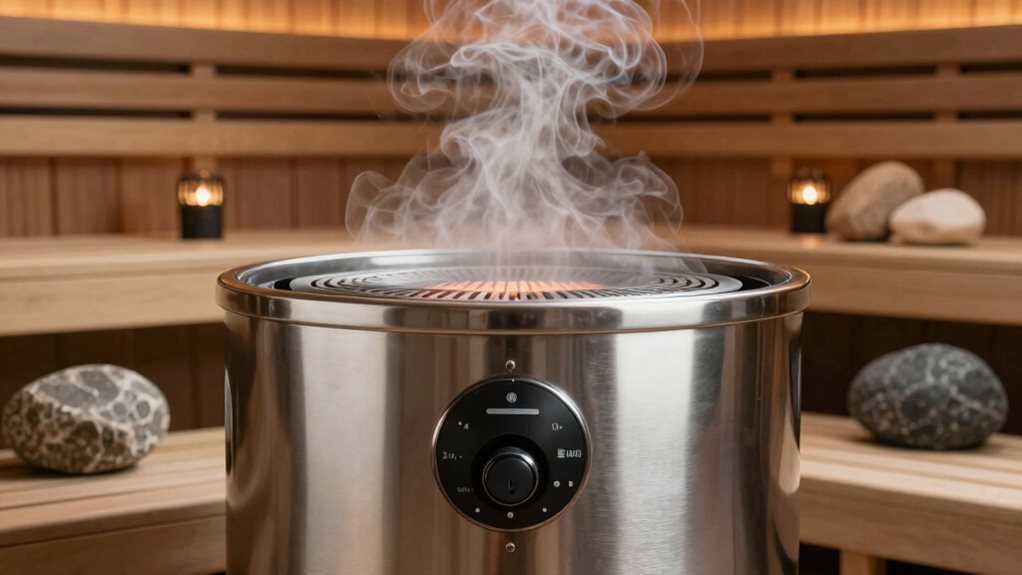
The right amount of stones can help store heat longer, but too many can slow down your heater and make it harder to reach that cozy temperature.
Using a mix of stone sizes is smart, as smaller stones react quickly to water, while larger ones keep things warm for extended periods.
Aim for the recommended 2–6 inch sizes to guarantee even heating and good steam.
Effective Control Strategies for Sauna Heaters
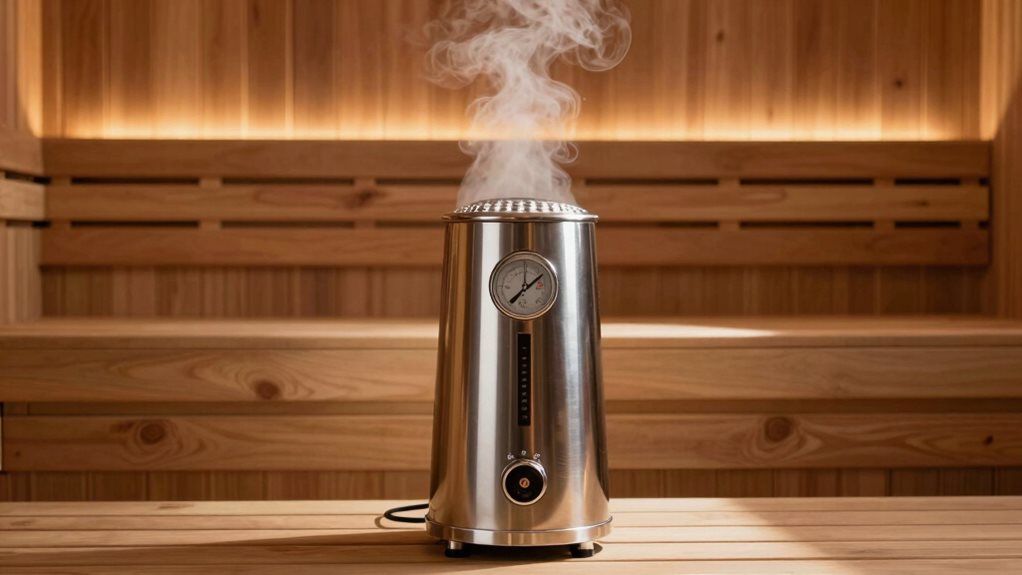
To create a comfortable and enjoyable sauna experience, effective control strategies for sauna heaters are essential.
Using advanced methods like PID controllers helps maintain a steady temperature, adjusting power constantly to avoid drastic changes. You might also enjoy the benefits of adaptive tuning, which keeps the heat just right, even with changing loads.
For quick warm-ups, Model Predictive Control (MPC) anticipates how the sauna will heat, optimizing power use and reducing overshoot.
You can also benefit from power modulation techniques, like pulse-width modulation, which offer more gradual ramping to protect your heater. Premium heaters often require separate controllers to ensure effective operation and enhance user experience.
And don’t forget the importance of intuitive user interfaces and programmable preheat timers—they’re perfect for getting your sauna ready just when you want it!
Selecting Durable Materials and Construction
Selecting the right materials for your sauna not only boosts its longevity but also improves your overall experience. If you choose Thermowood, you’ll enjoy a beautiful, golden-brown finish that resists moisture, pests, and decay. Its heat-treated nature keeps it stable even in humid conditions. Cedar is another excellent option, thanks to its natural oils that combat decay and give off a pleasant aroma when heated. Additionally, using sustainable insulation options like sheep’s wool or cork; they’re eco-friendly and help regulate moisture effectively. Don’t overlook vapor barriers like aluminum foil, which protect against moisture damage. Finally, using high-temperature-resistant adhesives guarantees strong bonds while keeping harmful emissions at bay. Incorporating quality materials significantly enhances durability, ensuring your sauna maintains optimal performance over the long term.
Maintenance Practices to Extend Heater Life
Maintaining your sauna heater is essential for guaranteeing it operates seamlessly and lasts a long time.
Regularly checking your sauna stones is a great start. Be sure to remove and inspect them every 2–6 months; replace any that crumble or discolor. Clean stones improve airflow, reducing spots that might overheat.
You should also check electrical connections every 6–12 months—loose wires can lead to big issues! Keeping the sauna dry between sessions helps prevent rust, so leave doors open when not in use.
If you spot any corrosion, treat it right away to avoid bigger problems later.
Finally, consider having a professional look over your heater annually to catch any potential safety concerns before they become serious!
Analyzing Energy Use and Efficiency
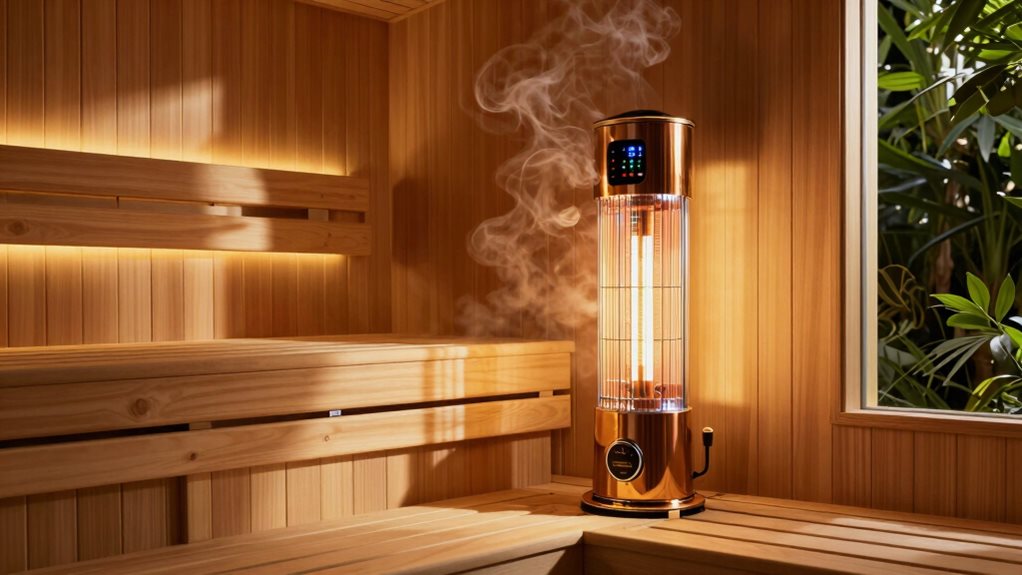
When you step into the world of sauna use, understanding energy consumption and efficiency is essential for maximizing your experience and keeping costs manageable.
For traditional saunas, a 6 kW heater uses 7-9 kWh over two hours, largely during the preheat phase. Curiously, infrared saunas only consume 1-3 kWh per hour, which is much less! Sauna bathing efficiency improves when you maintain ideal temperatures around 70-80°C. Factors like installation location and heater sizing also impact energy use. For instance, indoor saunas can be up to 25% more efficient than outdoor ones. Furthermore, maintaining the desired temperature throughout the session is crucial for optimal heat generation.
Additionally, back-to-back sessions save energy, so why not enjoy your sauna time with friends? Just remember to choose the right heater size for your sauna’s volume to maximize efficiency!
Balancing Heat-Up Speed With Longevity Considerations
Finding the right balance between heat-up speed and longevity is key to enjoying your sauna experience. As you choose a heater, think about how quickly it warms up and how long its components will last.
Traditional electric rock heaters heat air and steam quickly but wear out faster. Infrared heaters provide fast comfort without stressing the system much, while hybrids combine both methods for the best of both worlds.
It’s like having your cake and eating it too! Oversized heaters might reach your target temperature quickly, but they can damage elements over time.
Proper sizing, good insulation, and smart control strategies, like ramp-rate control, can help guarantee you enjoy quick heat and a long-lasting sauna.
Frequently Asked Questions
Can I Use Any Stones in My Sauna Heater?
No, you can’t use just any stones in your sauna heater. Choose igneous options like basalt or granite for durability and heat retention, avoiding unsuitable types that could crack or release harmful toxins when heated.
What Is the Average Lifespan of a Sauna Heater?
The average lifespan of a sauna heater typically ranges from 5 to 20 years, depending on usage and maintenance. If you use it 1-2 times a week, expect it to last 8-12 years or more.
How Often Should I Replace Sauna Stones?
You should replace sauna stones annually for regular use or sooner if they show visible damage. For wood-fired heaters, inspect yearly and replace upper stones every 1-2 years based on condition. Always check stones after heavy use.
Can Sauna Heaters Operate on Different Power Sources?
Yes, sauna heaters can operate on different power sources. You’ve got electric, gas, and wood-burning options. Choose based on your setup and preferences, guaranteeing you install the appropriate power supply for your chosen heater type.
What Are the Signs of a Failing Heater?
You’ll notice signs of a failing heater like uneven heating, tripping circuit breakers, unresponsive controls, odd noises, or burning smells. Ignoring these issues can lead to serious safety hazards or complete heater failure.
Final Thoughts
Balancing fast heat-up times with heater longevity isn’t just about picking the right model; it’s also about smart choices in power, materials, and maintenance. By understanding your heater’s capabilities and making informed decisions, you can enjoy quick warmth without sacrificing durability. Think of it like cooking a perfect meal: it takes the right tools, ingredients, and timing. With these tips in mind, you’re all set to enjoy your sauna quickly and for years to come!