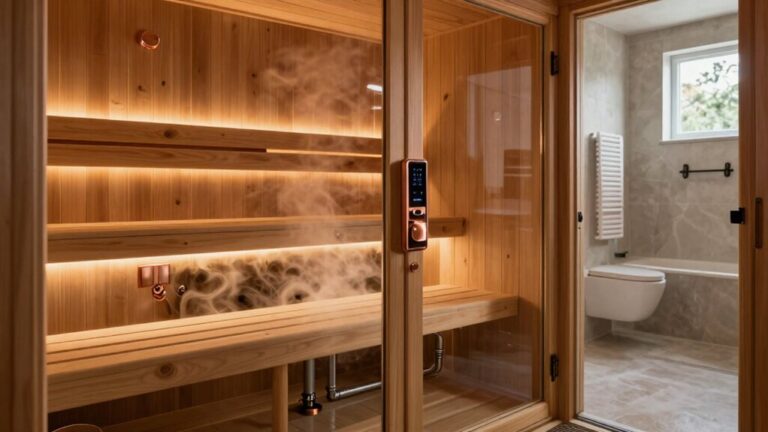
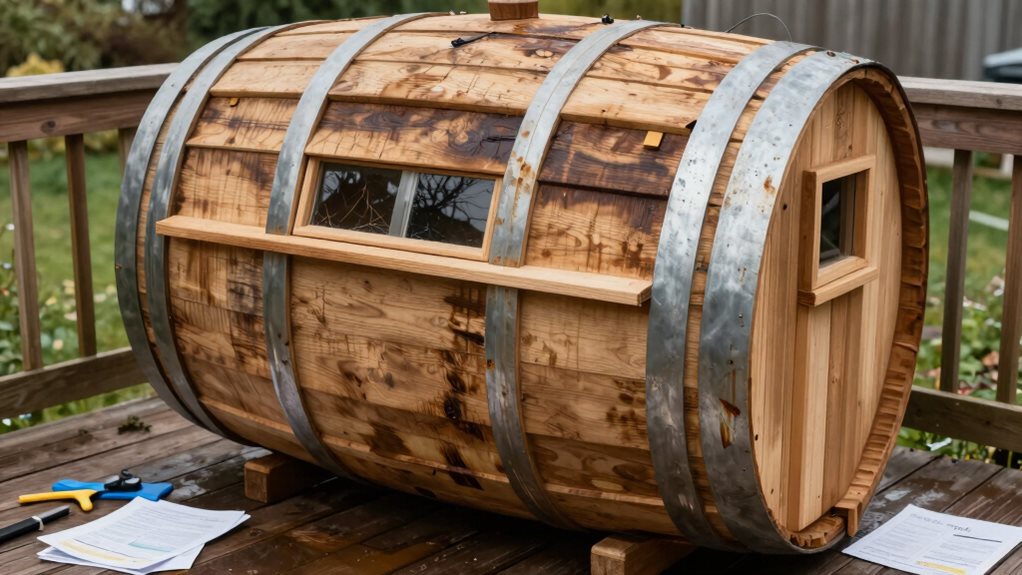

When buying an outdoor sauna kit, you’ll face hidden challenges most sellers won’t mention. Low-cost vapor barriers often melt above 70°C, bargain heaters fail quickly, and poor wood choices like pine lead to sticky resin and mold growth. Coastal locations require marine-grade hardware, while desert installations need UV protection. Foundation stability, proper ventilation, and electrical safety are frequently overlooked. These pitfalls can transform your relaxing retreat into a costly headache.
The Illusion of Low-Cost Sauna Solutions
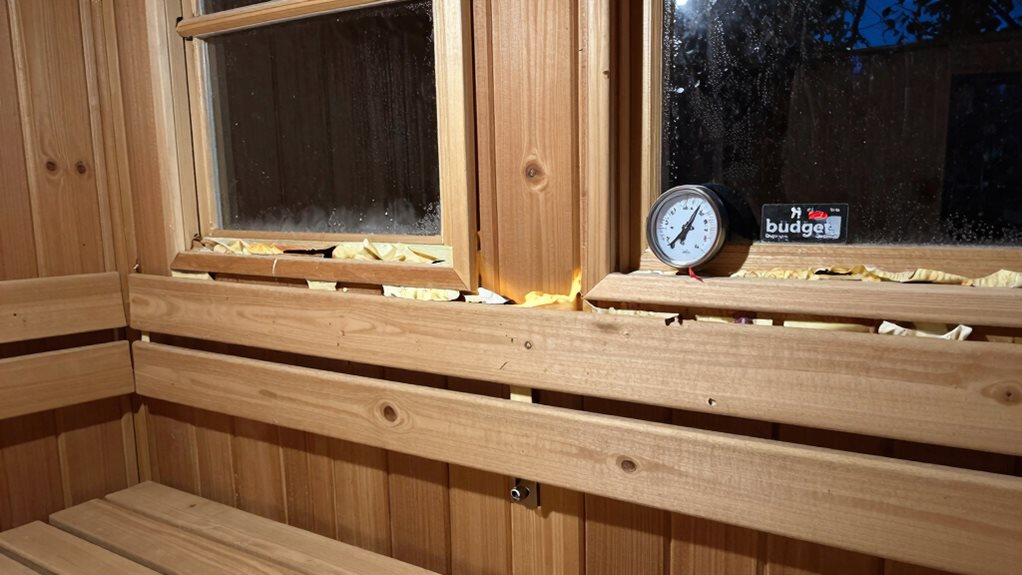
Five critical factors often lead sauna buyers into the trap of false economy when shopping for outdoor kits.
You’ll initially feel good about saving money, but that satisfaction quickly fades when problems emerge.
Plastic vapor barriers that melt above 70°C create a perfect example of this illusion. While they cost less upfront, they’ll fail in your 80-100°C sauna environment, forcing a complete replacement.
Cheap vapor barriers promise savings but deliver disaster when they melt in your sauna’s intense heat.
Similarly, those bargain heaters with thin metal and minimal stones might save you hundreds initially, but you’ll spend twice as much replacing them after just two years of use.
The same principle applies to uncomfortable knotty benches, resin-secreting exterior woods, and infrared units masquerading as true saunas.
What appears as smart savings today often becomes tomorrow’s costly mistake, turning your backyard retreat into an ongoing financial drain.
Material Longevity Concerns in Different Climate Zones
Your outdoor sauna’s longevity depends heavily on how your local climate affects its materials, with coastal salt air causing different problems than desert heat or mountain freeze-thaw cycles.
While Western Red Cedar and Thermowood stand up remarkably well in humid coastal environments due to their natural oils and modified cell structures, untreated hemlock might quickly deteriorate in these same conditions.
You’ll need to take into account these climate-specific reactions when selecting your sauna materials, as the wrong choice could mean the difference between a structure that lasts 30 years versus one that needs replacement after just 5-7 years.
Climate-Specific Material Deterioration
When selecting materials for your outdoor sauna, understanding how different climate conditions affect longevity is crucial for making a wise investment.
In humid environments, cedar tends to retain moisture, leading to surface checks and green staining, while thermowood resists water absorption and shrinks less, minimizing cracks in rainy regions.
If you’re dealing with freeze-thaw cycles, cedar offers moderate resistance but requires regular maintenance, whereas thermowood provides superior protection without additional sealants.
For areas with high UV exposure, remember that cedar will naturally silver-gray over time, while thermowood ages to a dusty brown more evenly.
In extremely cold climates, your sauna structure needs proper maintenance with yearly applications of water-repellent finish and adequate thickness to prevent heat loss and material failure during harsh winters.
Coastal vs. Desert Durability
Coastal and desert environments present dramatically different challenges for outdoor sauna materials, requiring specific adaptations to maximize longevity.
In coastal areas, you’ll battle constant salt spray and humidity that accelerate wood rot and corrode standard hardware. Your coastal sauna needs marine-grade stainless steel fittings and monthly mildew checks to survive.
Desert saunas face different enemies. Intense UV radiation and extreme heat cause wood to dry, crack, and deteriorate rapidly. You’ll need generous roof overhangs and premium UV-resistant finishes, especially in high-altitude locations where radiation intensifies.
The maintenance demands differ considerably too. Coastal kits require frequent sealant reapplication and post-session ventilation for 30-60 minutes.
Desert installations benefit from standard hardware with UV protection and need less drying time between uses, but still demand regular shade maintenance.
Thermal Barriers and Insulation Deficiencies
Despite being a critical component of any outdoor sauna, thermal barriers and insulation represent the most overlooked aspects of commercial sauna kits.
You’ll find most kits specify inadequate R-values (R-13 to R-19) that simply can’t handle cold climates, leading to chilly spots and wasted energy.
The vapor barrier problems are equally concerning.
Many kits use plastic barriers that release toxic fumes above 200°F, while superior aluminum foil options remain absent. This issue is compounded by failing to place barriers on the warm side of walls, which is essential for preventing moisture damage.
Without proper high-temperature tape for sealing seams, humidity bypasses these barriers entirely, creating mold issues.
Material choices matter too.
Standard fiberglass insulation degrades in sauna conditions, while better options like rockwool are omitted to cut costs. Non-perforated foil vapor barriers offer superior moisture protection but are rarely included in commercial kits.
The ceiling, where heat naturally collects, needs R-26 to R-30 values but rarely receives this level of protection.
Wood Selection and Aging Issues
Your sauna’s longevity depends heavily on the wood you’ll choose, with untreated options like pine expanding dramatically in humidity cycles compared to thermally modified alternatives.
You’ll face premature aging when cheaper woods warp and crack during seasonal changes, creating gaps that compromise your sauna’s performance.
Thermowood and properly treated cedar will maintain their integrity through years of steam exposure and temperature fluctuations, saving you from costly replacements that often plague kits made with inferior materials. Western Red Cedar offers exceptional natural moisture resistance making it an excellent choice for outdoor saunas exposed to varying weather conditions. Hypoallergenic wood options such as aspen, alder, and poplar provide a toxin-free environment for users with sensitivities while still offering reasonable durability.
Expansion Rate Variability
Within sauna construction, wood selection plays an essential role in managing expansion rate variability, which can make or break your outdoor structure’s longevity.
Different woods respond uniquely to the intense heat-humidity cycles of sauna environments.
When selecting materials for your sauna kit, consider these vital expansion factors:
- Cedar’s tight knots are denser than surrounding wood, causing uneven expansion that leads to warping and cracking over time.
- Thermowood’s heat treatment removes moisture and resin, creating exceptional dimensional stability with minimal reaction to humidity changes.
- Pine-spruce boards expand approximately 0.26% per percentage point of moisture change, with tangential expansion exceeding radial movement.
- Barrel designs with stainless steel bands accommodate natural wood movement, while cabin styles with rigid hardware restrict expansion, increasing stress points.
Untreated Wood Consequences
Five critical problems plague untreated wood in outdoor sauna environments, turning what should be a relaxing retreat into a maintenance nightmare.
First, wood readily absorbs moisture, inviting rot and fungal growth that weakens your structure.
Second, pine and spruce release sticky resin when heated, creating unsightly oozing on surfaces.
Third, the warm, damp conditions create perfect breeding grounds for mold, especially if you don’t leave doors open after use. Proper ventilation systems can significantly reduce humidity levels, which should ideally remain between 30-50% when the sauna isn’t in use.
Fourth, temperature fluctuations cause untreated wood to warp, crack, and deform as it expands and contracts unevenly. Cedar provides much better stability with its naturally lower expansion and contraction rate.
Finally, certain wood treatments release toxic vapors when heated, posing serious health risks.
You’ll want to evaluate alternatives like cedar, larch, or thermally modified wood that resist these common problems and require less maintenance.
Structural Support and Foundation Problems
Proper structural support and foundation planning can make or break your outdoor sauna experience. Your sauna kit requires a solid foundation capable of supporting up to 1,400 pounds consistently without shifting or settling.
The difference between decades of enjoyment and costly repairs lies in what’s beneath your sauna—not what’s inside it.
When foundations fail, you’ll face structural gaps, heat loss, and voided warranties.
Four critical foundation considerations include:
- Surface stability – Avoid grass, dirt, or loose gravel that shifts over time
- Load capacity – Verify your foundation can bear the weight without compromising structural integrity
- Perfect leveling – Install on completely level surfaces to prevent alignment problems with doors and panels
- Moisture management – Incorporate proper drainage to direct water away from your sauna and prevent rot
Remember that seasonal freeze-thaw cycles can cause frost heave, especially in northern climates, making proper foundation planning crucial for your sauna’s longevity.
Moisture Management and Ventilation Failures
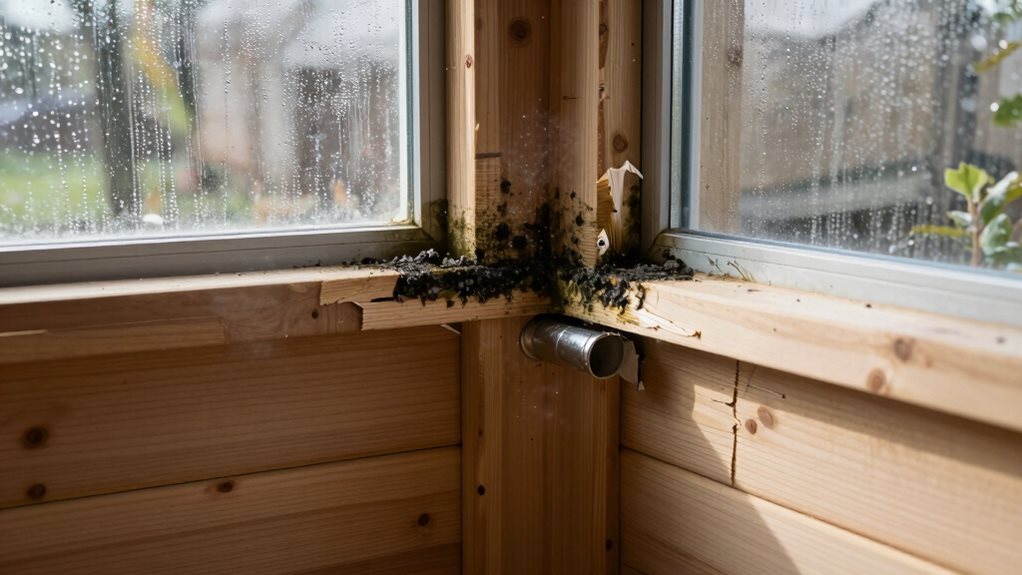
While establishing a solid foundation keeps your sauna physically stable, moisture control protects it from deteriorating from the inside out. Most kit designs fail to address the constant battle between steam and wood. When you heat those rocks, steam condenses on cooler surfaces like glass doors and corners, seeping into wooden structures. Many outdoor sauna kits lack sloped flooring that would otherwise prevent water pooling and promote proper drainage.
Your kit likely lacks proper ventilation with both intake vents near the heater and exhaust vents at the ceiling on opposite walls. Without this airflow, humidity levels soar beyond the ideal 10-20% during use, creating perfect conditions for mold growth. Another critical oversight is inadequate flashing installation around chimney exits and roof seams, leading to water intrusion during rain or snow.
After sauna sessions, moisture from sweat and condensation remains on surfaces, gradually warping wood and creating those telltale black streaks in corners. Many kits also omit crucial monitoring tools like hygrometers that would help you track humidity levels and prevent damage.
Heat Source Placement and Safety Violations
Most sauna kit manufacturers don’t tell you that improper heater placement is a disaster waiting to happen. Your heater must maintain specific clearances from walls and benches to prevent fire hazards, but many kits gloss over these essential details.
Here’s what you need to know about safe heater installation:
- Dedicated 220-240V circuits are mandatory – standard outlets won’t cut it and can create serious fire risks.
- All electrical components must remain outside the sauna room to prevent damage from heat and moisture.
- Temperature monitors must be installed to guarantee temps don’t exceed the 195°F safety limit.
- Heat-resistant wiring and proper grounding systems are non-negotiable for preventing electrical fires.
Don’t compromise on these safety requirements, even if your kit instructions seem vague about them. Installation should include a proper disconnect switch as NEC compliance requires this safety feature for shutting off power in emergencies.
Regulatory Requirements and Permit Challenges
Steering through the regulatory maze for outdoor sauna installation can feel like trying to solve a puzzle with missing pieces.
You’ll need to maneuver varying local requirements that differ dramatically between jurisdictions.
Your first step is checking zoning laws and property setbacks. Even small saunas below 120 square feet, which are often exempt from building permits, may still need electrical permits for heaters requiring 240V connections.
Remember, DIY electrical work isn’t allowed for these installations – you’ll need a licensed electrician.
Don’t forget to check if your HOA imposes additional restrictions.
Submit detailed plans showing dimensions, location, and electrical specifications when applying for permits. Skipping this process could result in fines or forced removal, turning your relaxation project into a stressful situation.
Planning ahead prevents costly mistakes.
Maintenance Requirements Not Disclosed by Manufacturers
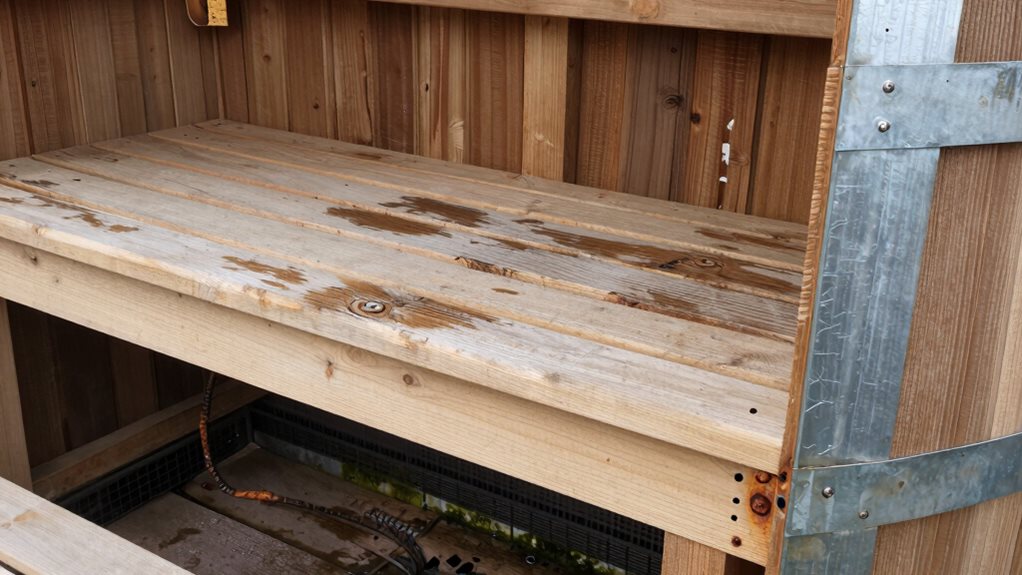
Beneath the gleaming promise of relaxation, sauna manufacturers often leave out crucial maintenance details that could extend your investment’s lifespan by years.
Manufacturers conceal vital sauna maintenance secrets that could add years to your wellness investment.
You’re rarely told that wooden components need yearly treatment with breathable preservatives, or that UV-inhibiting stains should be applied each summer to prevent sun damage.
Here’s what manufacturers typically don’t mention:
- Deep cleaning requirements – Monthly deep cleans are necessary, with twice-monthly sessions for daily users to prevent mold growth.
- Heater stone maintenance – Stones need regular inspection for cracks and replacement, not merely occasional rinsing.
- Structural tightening – Stainless steel bands require periodic tightening to maintain integrity and prevent air leaks.
- Door and vent care – Wooden doors often swell with moisture and need sanding to function properly.
Site Planning and Installation Realities
While proper maintenance keeps your sauna functioning, the realities of where and how you’ll install it determine if it ever gets used at all.
You’ll need 12-foot wide pathways for equipment access and must clear obstacles like trees for crane passage. Your foundation requirements aren’t just suggestions—frost-proof footings and proper drainage prevent rot and structural damage.
Local regulations can derail your project if overlooked. Check for required setbacks from property lines and water bodies, and submit proper plans with dimensions before breaking ground.
Don’t forget utilities—electric saunas need a dedicated 220-240V circuit installed by a licensed electrician, often requiring permits and inspections.
Your location choice matters too. Avoid flood-prone areas, guarantee wood decks can support the weight, and remember that proper ventilation prevents moisture buildup underneath your new sanctuary.
Frequently Asked Questions
How Does Sauna Frequency Affect Kit Longevity?
You’ll need more frequent maintenance with higher sauna use. Daily sessions accelerate wood drying, seal deterioration, and hardware stress compared to weekly use. Proper care extends your kit’s lifespan.
Can Outdoor Sauna Kits Be Installed Near Saltwater?
Yes, you can install outdoor sauna kits near saltwater, but you’ll need specialized marine-grade materials, salt-resistant electrical components, and regular maintenance to prevent corrosion damage from salt air and spray.
What Insurance Implications Come With DIY Sauna Installations?
DIY sauna installations can void your insurance coverage if you don’t obtain proper permits, hire licensed electricians, or follow building codes. You’ll also face premium increases and potential claim denials.
Are Prefab Sauna Warranties Transferable to New Homeowners?
No, prefab sauna warranties aren’t transferable. When you sell your home, the new owners won’t receive any manufacturer coverage for parts, repairs, or defects on the existing sauna.
How Do Electrical Requirements Differ for Outdoor Versus Indoor Saunas?
Outdoor saunas require weatherproof wiring, mandatory GFCI protection, and often heavier gauge cables. They’ll typically need trenching for underground lines, while both types need dedicated circuits matching heater specifications.
Final Thoughts
You’ve now seen that outdoor sauna kits aren’t always the bargain they appear to be. From material quality to safety concerns, these apparent shortcuts can lead to headaches down the road. Before purchasing, research thoroughly, consult local regulations, and consider long-term maintenance costs. Your perfect backyard retreat shouldn’t compromise on safety or durability. Sometimes, investing more upfront saves you time, money, and frustration in the years ahead.