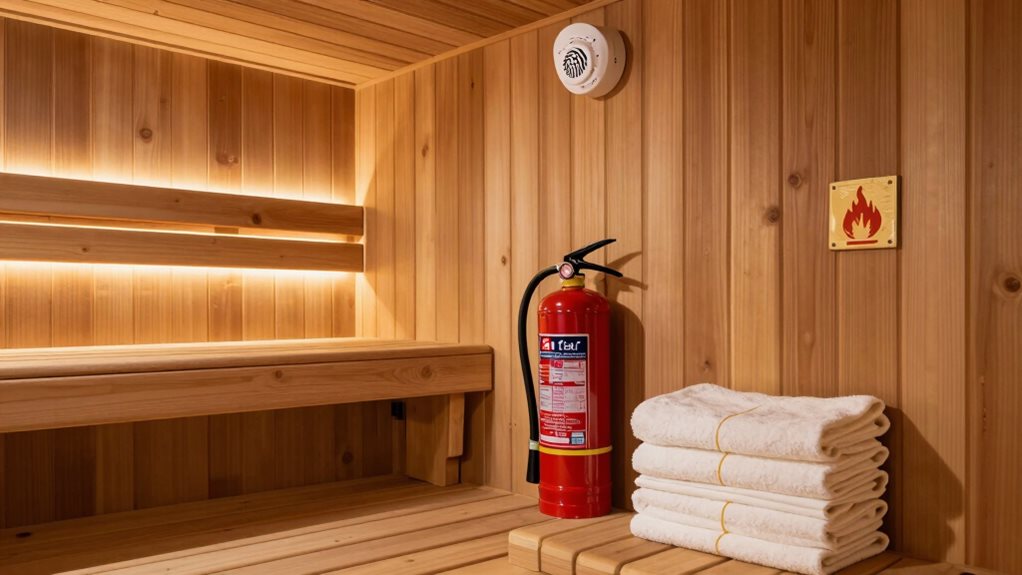

Fire safety is key for sauna owners. Start by choosing fire-resistant materials like stone and tempered glass, and make sure your heater is installed correctly, keeping clearances in mind. Also, use the right electrical setup and don’t skimp on safety features like smoke detectors and automatic shutoffs. Ventilation’s important, too, as it keeps air flowing nicely. Regularly check everything for issues. With these steps, you’ll not just keep your sauna safe but also enjoy every steamy moment in it! Exciting details await!
Understanding Fire-Resistant Materials
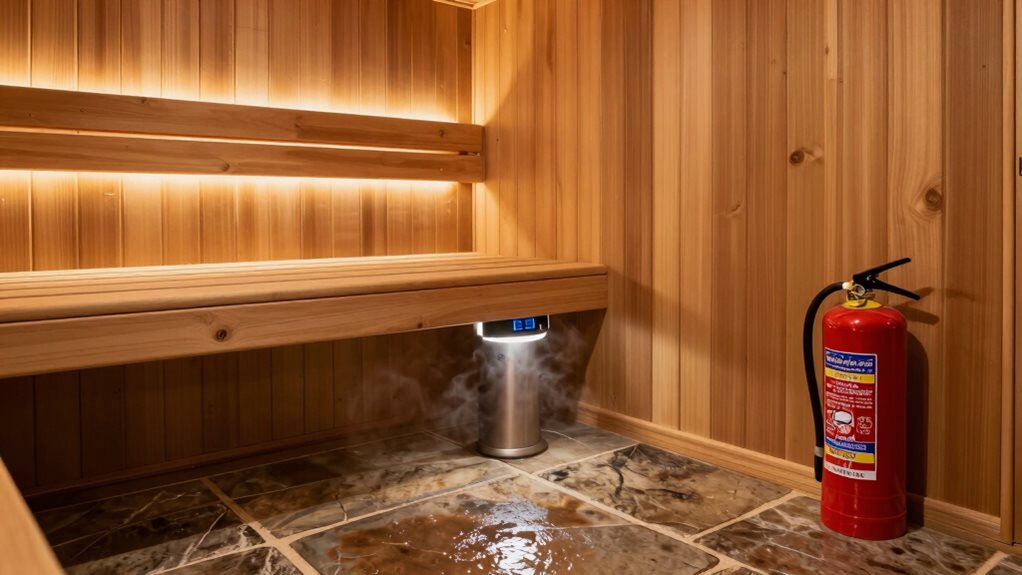
When you think about building a sauna, understanding fire-resistant materials is key to keeping your space safe and cozy. You’ll want non-combustible materials for walls and surrounds, like stone, concrete, or tempered glass. These options not only resist heat but also look great! For insulation, mineral wool is a superstar; it can handle extreme temperatures without a sweat. When picking wood, consider thermowood or low-resin options like Western red cedar. They’re less likely to warp or leak resin under heat. Additionally, utilizing natural materials like cob and hempcrete enhances thermal efficiency while providing fire resistance. Finally, add some stainless steel accessories to protect your sauna from heat damage. Choosing the right materials helps guarantee your sauna is a comfy retreat that’s also fire-safe, letting you relax without worry!
Proper Installation of Heating Equipment
When you’re setting up your sauna, it’s essential to pay attention to heater clearance requirements, as this helps prevent any fire hazards. You’ll also need a dedicated circuit installation, which keeps your electrical system safe while providing the power your heater needs. Plus, including automatic shutoff features is a smart way to add an extra layer of safety, ensuring compliance with local codes giving you peace of mind while you relax in your sauna.
Heater Clearance Requirements
Proper installation of heating equipment in saunas is crucial for safety, and understanding clearance requirements is a key part of that process.
You’ll want to keep electric heaters about 10 cm (4 in) from walls; higher-powered units may need 15–20 cm (6–8 in). Wood-burning stoves, however, require more space—up to 91 cm (36 in)—due to their heat output. Additionally, remember that maintaining a dedicated circuit for your heater is essential to ensure safety and functionality.
Remember, your heater needs ceiling clearance too, so check the manufacturer’s instructions. Install guards around the heater to prevent burns, keeping them away from combustible materials.
It’s also important not to place seating or towels in the heater’s exclusion zone. By following these clearance guidelines, you’ll have a safer and more enjoyable sauna experience. Enjoy your warm retreat!
Dedicated Circuit Installation
Installing a dedicated circuit for your sauna is vital for guaranteeing its safe operation.
You’ll want to match the circuit amperage to the heater’s nameplate to avoid overloads. For most traditional electric heaters, a two-pole 240V breaker is your go-to, usually between 30 A and 60 A.
Make sure you use the right conductor size, like 10 AWG for 30 A, to guarantee efficient performance. Don’t forget GFCI protection! It helps keep you safe in damp sauna environments.
Local disconnects are also important, letting you quickly turn off the power for maintenance or emergencies.
Remember to clearly label everything, so you, and anyone else, can easily understand what’s what during service.
Safety first, sauna success second!
Automatic Shutoff Features
Automatic shutoff features in your sauna’s heating equipment are key to guaranteeing both safety and efficiency. They help prevent accidents and protect your investment. Understanding these systems can make your sauna experience safer and more enjoyable.
Here are three crucial features to take into account:
- Temperature Limit Switches: These cut power when temperatures get too high, preventing damage and requiring a manual reset for safety checks.
- Timer-Based Auto Shutoff: Many heaters automatically turn off after 60 minutes, so even if you forget, you won’t roast in there!
- Overheat Protection Sensors: These advanced sensors detect excessive heat and trigger a shutoff, keeping you and your equipment safe.
With these features, you can relax knowing your sauna has built-in safety!
Ensuring Electrical Safety
When it comes to guaranteeing electrical safety in your sauna, taking the right precautions can make all the difference.
First, install a dedicated circuit with the right size breaker—most sauna heaters use 240 V and need 30–60 A breakers. Don’t forget to use a two-pole breaker to disconnect both hot legs at once.
Ensure a dedicated circuit with a 30–60 A two-pole breaker for your sauna heater to enhance safety.
Ground all metal parts to reduce shock risk, and make sure your GFCI protection is in place, especially in humid areas.
Choose conductors rated for high temperatures and moisture, and avoid standard outlets inside the sauna.
Implementing Effective Ventilation Systems
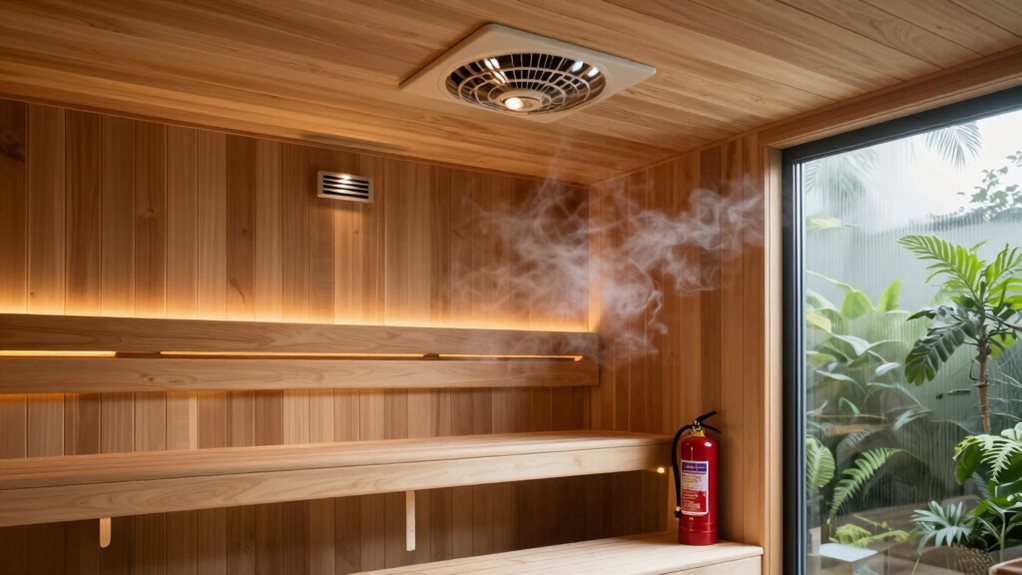
When it comes to making your sauna both comfortable and safe, effective ventilation systems are key. You’ll want to think about how to design your supply vents and set up your exhaust strategy to keep fresh air flowing while removing stale air. Just like a well-tuned orchestra, each part has to work together to create the perfect sauna experience! Incorporating a mechanical ventilation system can help reduce heat stratification and ensure a continuous supply of fresh, oxygen-rich air. Additionally, proper airflow is crucial for preventing discomfort and overheating, enhancing the overall sauna experience.
Supply Ventilation Design
Proper supply ventilation design is key to enjoying a safe and comfortable sauna experience.
When designing your sauna’s supply ventilation, keep the following fundamentals in mind:
- Vent Placement: Position your supply vent near the heater, about 4-12 inches above the floor. This helps warm the incoming air quickly and encourages it to rise.
- Sizing Matters: Aim for a minimum opening of 4×8 inches near the door or roughly one square inch per cubic foot of sauna space to guarantee proper airflow. Effective venting ensures that moisture buildup is minimized, protecting your sauna materials and preventing mold growth. Additionally, ideal ventilation supports 4 to 6 air changes per hour, which helps maintain a comfortable atmosphere by removing stale air.
- Right Materials: Use heat-resistant metals like galvanized steel for your ducts and vents, as plastic can warp or off-gas at high temperatures.
Implementing these principles aids in maintaining fresh air and improves your sauna experience!
Exhaust Ventilation Strategies
Exhaust ventilation is vital for keeping your sauna comfortable and safe, especially since it helps eliminate hot, moist air that can build up during use. Place your exhaust vent on the wall opposite the heater to create a good cross-flow. A low-level vent, positioned about 8 to 24 inches from the floor, encourages thermal circulation, but you can also add a high vent near the ceiling to capture rising hot air. Proper ventilation systems ensure a consistent airflow which is essential for optimal sauna performance. Aim for the vent area to match about one square inch for every cubic foot of sauna space. Properly routing ducting to the outdoors should be straightforward and insulated to avoid condensation. Additionally, ensure that your ventilation aligns with proper heater power requirements to maintain a comfortable sauna environment. And don’t forget to seal all joints to maintain airflow and prevent unwanted leaks.
Importance of Smoke and Fire Detection
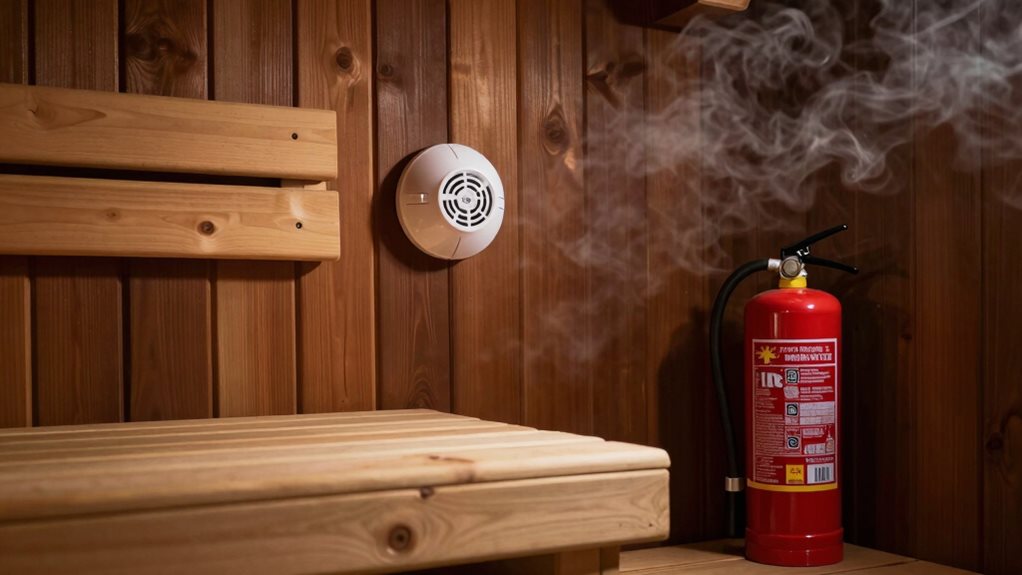
Although you might think of a sauna as a safe and relaxing space, the importance of smoke and fire detection can’t be overstated.
While saunas offer relaxation, prioritizing smoke and fire detection is essential for ensuring safety.
By investing in the right detection systems, you’re not only protecting your sauna but also anyone who uses it. Here are three key reasons for proper detection:
- Early Warnings: Smoke and heat detectors help catch issues before they escalate, providing valuable time for safety.
- Safety Integration: Well-placed detectors can work with other safety systems to shut off power or alert authorities if something goes wrong.
- Lower Insurance: Having documented safety measures can decrease your insurance premiums and prove your commitment to safety.
Ensure you choose high-temperature detectors and place them correctly for effective coverage.
Establishing Operational Policies for Users
When you’re operating a sauna, it’s crucial to have clear policies in place for everyone using the space.
Start by defining who can use the sauna—staff, members, guests, and contractors—along with their credentials. Schedule supervision checks at least every 30 minutes to guarantee safety.
You should restrict unattended access, using locked control panels to keep weirdos out! Make certain children aren’t left alone without a guardian.
Also, establish rules for start/stop procedures, always conducting pre-start inspections to catch dangers early.
Remind users: no flammable items, alcohol, or even jewelry! Set time limits for sessions and encourage rehydration afterward.
With these policies, everyone can enjoy the sauna while staying safe and sound.
Preparing for Emergencies
When it comes to emergencies in your sauna, having a solid plan can make all the difference.
You need to guarantee that everyone knows where the emergency exits are, how to grab a fire extinguisher quickly, and what steps to take during a crisis.
Training your staff in these protocols not just keeps everyone safe but also brings peace of mind to all your sauna users.
Emergency Exits Planning
Planning effective emergency exits in your sauna is crucial for keeping everyone safe during unexpected situations. You want to guarantee that paths are clear and exits are accessible.
Here are three key points to contemplate:
- Door Operation: Make sure doors open outward and require no keys or complex mechanisms. This prevents anyone from getting trapped inside during a panic.
- Egress Capacity: Calculate how many people can safely exit the sauna at once. Confirm your setup meets local codes to allow for swift evacuation. Remember, proper ventilation and safety measures are essential to ensure a safe environment.
- Visible Signage: Invest in high-contrast exit signs that remain visible, even in steamy conditions. This helps everyone find their way out quickly.
Fire Extinguisher Accessibility
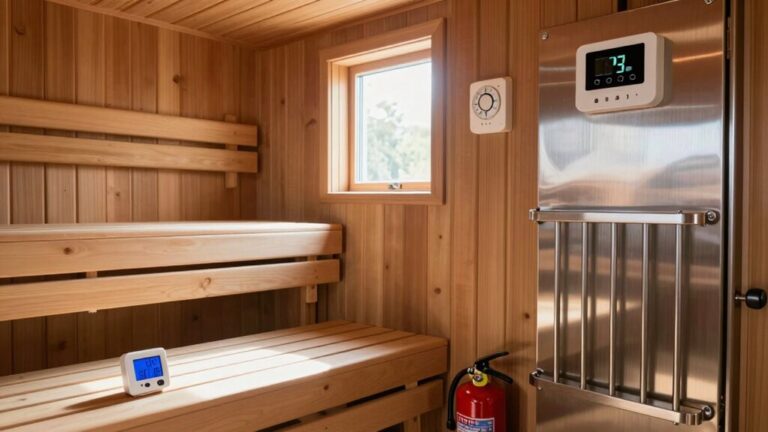
Having quick access to a fire extinguisher in your sauna can make a big difference in an emergency. To guarantee safety, place the extinguisher outside the sauna, where it’s easy to grab. Confirm it’s no higher than 48 inches off the floor, and at least 15 inches from the ground.
You’ll want at least 30 by 48 inches of unobstructed space in front, so you can reach it quickly. Select a Class A extinguisher for wood and paper fires, or a multi-purpose one for other fire types, especially near electrical hazards.
Keep the sauna door ajar to facilitate speedy evacuation. A few thoughtful placements and guidelines can help prevent small fires from escalating into bigger problems!
Staff Training Protocols
To guarantee everyone’s safety during emergencies in your sauna, staff training protocols are essential. Your team should be well-prepared and knowledgeable about their roles when tension rises.
Here are three key areas to focus on:
- Emergency Procedures: Confirm all employees understand documented procedures for incidents, including fire and personal injuries. Regular refreshers help keep everyone sharp.
- Recognition and First Aid Training: Train staff to recognize heat-related illnesses and provide basic first aid, including CPR/AED techniques.
- Evacuation and Drill Protocols: Conduct regular drills so staff can practice evacuation, verifying everyone is accounted for in emergencies.
Regular Inspection and Maintenance Practices
While it might seem tempting to enjoy your sauna without a second thought, regular inspections and maintenance are key to preventing fires and confirming everyone’s safety.
First, check your electrical systems often. Look for frayed wires, test your heaters, and replace those rocks that might be crumbling. Even the sensors and smoke detectors need a monthly check!
On top of that, inspect wooden components for any signs of charring. You’ll want to verify proper ventilation too, so clean those ducts regularly.
Daily self-inspections by your staff add that extra layer of security. Remember, a small effort now can help avoid big problems later.
Complying With Building Codes and Insurance Requirements
When you decide to install a sauna, it’s not just about the fun of relaxation; you also need to traverse a web of building codes and insurance requirements.
It may seem overwhelming, but following these steps will put you on the right track:
- Get the Necessary Permits: Most areas require building and electrical permits. You’ll need to submit plans detailing your sauna’s size and materials.
- Follow Safety Regulations: Use fire-resistant materials and maintain clearances around heating elements. Make sure you have a high-temperature shutoff switch attached to the heater.
- Meet Door Requirements: Install doors that open outward and don’t use locks, guaranteeing everyone can exit quickly in case of an emergency.
Training and Educating Staff on Fire Safety
Training staff on fire safety isn’t just a good idea—it’s vital for everyone’s well-being. By educating your team, you’re not only guaranteeing safety but also creating a calm and prepared environment.
Start with formal training sessions covering emergency protocols, fire extinguisher use, and recognizing heat-related illnesses. Regular refreshers keep everyone sharp!
Daily self-inspections help staff spot hazards like discarded materials or risky user behavior. Don’t forget to involve emergency services for extra support.
Equip your team with fundamental knowledge—how to shut down equipment safely or alert emergency responders. When your staff knows what to do in a fire emergency, everyone stays safe.
Frequently Asked Questions
Can I Store Towels or Personal Items in the Sauna?
No, you shouldn’t store towels or personal items in the sauna. High temperatures can ignite materials, create hazards, and promote mold growth. Keep your personal belongings outside to guarantee a safer and cleaner sauna experience.
What Should I Do if the Smoke Alarm Goes Off?
If the smoke alarm goes off, evacuate the sauna immediately, shut it down using the emergency stop, and alert designated personnel. Don’t re-enter until safety is confirmed and the alarm is silenced manually.
How Often Should I Replace Sauna Heater Elements?
You should replace your sauna heater elements every 3 to 5 years with regular maintenance, or sooner if you notice cracks or uneven heating. Regular inspections help prolong their lifespan and guarantee safe, efficient operation.
Is It Safe to Use Essential Oils in Saunas?
It isn’t safe to use crucial oils in saunas without precautions. They can irritate your respiratory system and potentially pose safety risks. Always dilute oils and consult a healthcare professional before use, especially if you have sensitivities.
What Safety Gear Should Staff Wear During Sauna Operations?
During sauna operations, you should wear moisture-wicking clothing that’s breathable, along with non-slip sandals for safety. Make certain your gear allows for movement and avoids trapping heat, promoting comfort and hygiene in the environment.
Final Thoughts
To summarize, keeping your sauna safe from fire means paying attention to details. By using fire-resistant materials and properly installing heating equipment, you can lower risks considerably. Don’t forget about electrical safety and ventilation, as they’re essential. Regular maintenance and emergency plans are just as important. Always check local building codes and make sure your staff knows what to do. With these tips, you can enjoy your sauna confidently and safely, knowing you’re prepared for anything!