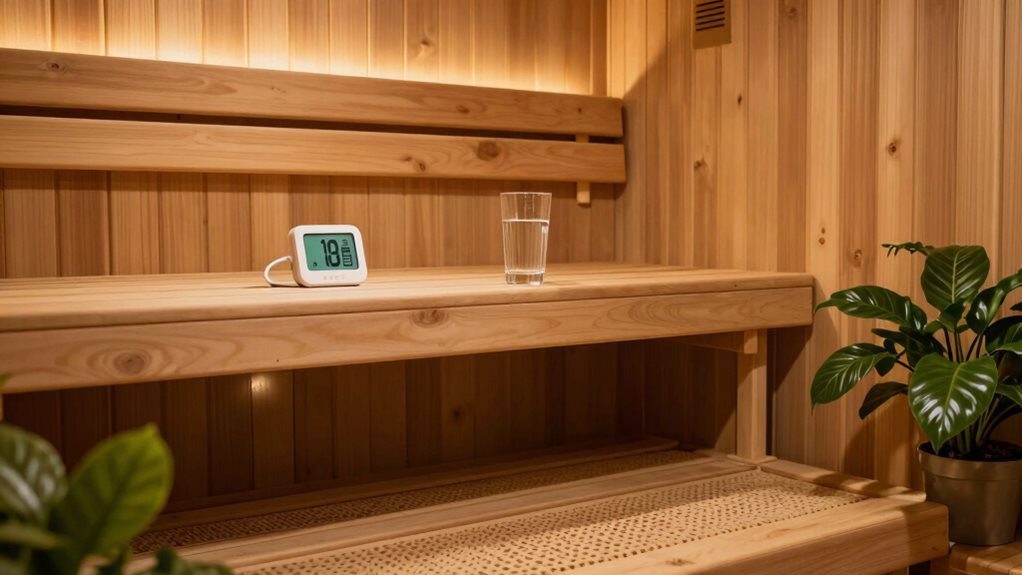

When setting up your at-home sauna, follow crucial health and safety measures. Check local building codes and get permits for installation. Make sure your sauna heater has proper electrical safety, like GFCI protection and a dedicated circuit. Don’t forget proper ventilation, as fresh air keeps things safe and comfortable! Keep an eye on your health, starting with short sessions and staying hydrated. With all this in mind, you’ll create a fun and safe sauna experience! There’s even more to discover about sauna safety!
Building Codes and Permits for Sauna Installation
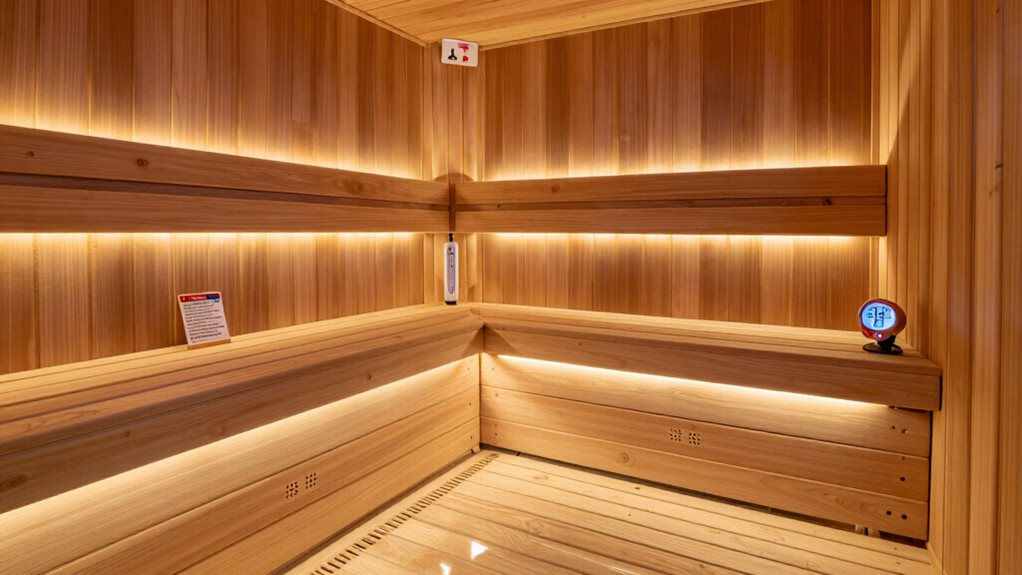
When you’re thinking about installing a sauna at home, it’s essential to steer through the maze of building codes and permits that might apply to your project.
Start by checking local zoning laws, which may restrict where you can place your sauna. If you’re in a historic district or a homeowners’ association (HOA), you might need special approvals, especially if the sauna’s visible. Accessible saunas must comply with building codes to ensure safety and usability for all users.
Building permits are typically required for structural changes, like adding foundations or framing new walls. Even prefabricated kits may need verification from local officials.
If you skip these steps, it can lead to fines or the headache of removing your sauna.
Electrical Safety Standards for Sauna Heaters
When you’re setting up your sauna, understanding power input limitations is vital for safety and performance.
Most of your sauna heaters will need a 220–240 V supply, and it’s important to hire a professional for installation to guarantee everything is up to code. A proper setup not merely keeps your sauna operating efficiently but also helps prevent any electrical mishaps that could ruin your relaxation time! Additionally, ensure the heater is compatible with your electrical system, as most sauna heaters require significant power that 240V lines can provide. Many homeowners opt for electric sauna heater solutions, which are designed to meet these power specifications effectively.
Power Input Limitations
Understanding power input limitations is crucial for safely enjoying your at-home sauna experience. Most residential electric sauna heaters run between 1.5 to 9 kW, well within the 20 kW limit set by the IEC standards.
You’ll want to make sure your sauna heater operates on a dedicated circuit, which means no sharing with other devices. Typical voltage ranges are either 240 V for traditional heaters or 120-240 V for infrared units.
Breaker sizing is important: a 4.5–6.0 kW heater needs about a 30 A circuit. Don’t forget about continuous-load rules, which affect wire selection.
Finally, verify you install GFCI protection to keep things safe. You want to relax, not worry about wires! Additionally, consider investing in a home sauna heater kit to ensure you have all the necessary components for a safe and efficient setup.
Professional Installation Requirements
Installing a sauna in your home can be an exciting project, but it’s essential to follow professional installation requirements to guarantee your safety and enjoyment.
First, hire a licensed electrician to verify all wiring meets NEC compliance—this minimizes risks of fire and shock. You’ll need a dedicated 240V circuit and 2-pole breakers, as no electrical outlets can exist inside the sauna due to heat and moisture.
Use appropriate wiring gauges: 10-gauge for heaters up to 30 amps, and 8-gauge for 40-60 amps. Don’t forget GFCI protection; this cuts power if water makes contact. Additionally, consider the perfect electric sauna heater to ensure optimal performance and efficiency for your setup.
Following these guidelines not only keeps you safe but also helps you fully enjoy your sauna experience without worry.
Proper Ventilation and Installation Practices
Creating a comfortable and safe sauna experience hinges on getting the ventilation and installation just right. For your sauna, make certain to position the supply air pipe no more than 24 inches from the floor, ideally behind your feet to help circulation. If you have a closed-sided stove, place the intake directly above it, keeping it at least 31 inches high. You’ll also want your exhaust air pipe to be larger than the intake, set up high on the opposite wall for better hot air exit. For ideal airflow, aim for at least one vent per 50 cubic feet of space and change the air about seven times per hour. Following these steps guarantees a fresh, enjoyable sauna experience, as effective ventilation is crucial for comfort and safety in sauna use! Additionally, ensuring proper sauna ventilation helps to prevent excess moisture buildup, reducing mold and mildew risk.
User Health Precautions for Sauna Sessions
When you step into a sauna, it’s more than simply about enjoying the heat—it’s crucial to prioritize your health and safety. Before using a sauna, check with a doctor if you have heart issues, are pregnant, or take medications that affect how you handle heat. Starting your first session at just 5 to 10 minutes to avoid overheating is essential; gradually building up to around 15 to 20 minutes can enhance your experience. Additionally, sauna use may lead to increased circulation and relaxation, providing further benefits during your sessions. A portable sauna can be a great addition to your home for these health benefits. Don’t forget to drink water before and after your sauna time to stay hydrated! Also, avoid heavy meals or alcohol since they can make you feel dizzy. Most importantly, never use a sauna alone, especially if you’re at higher risk. Your safety comes first!
Age-Specific Guidelines for Sauna Use
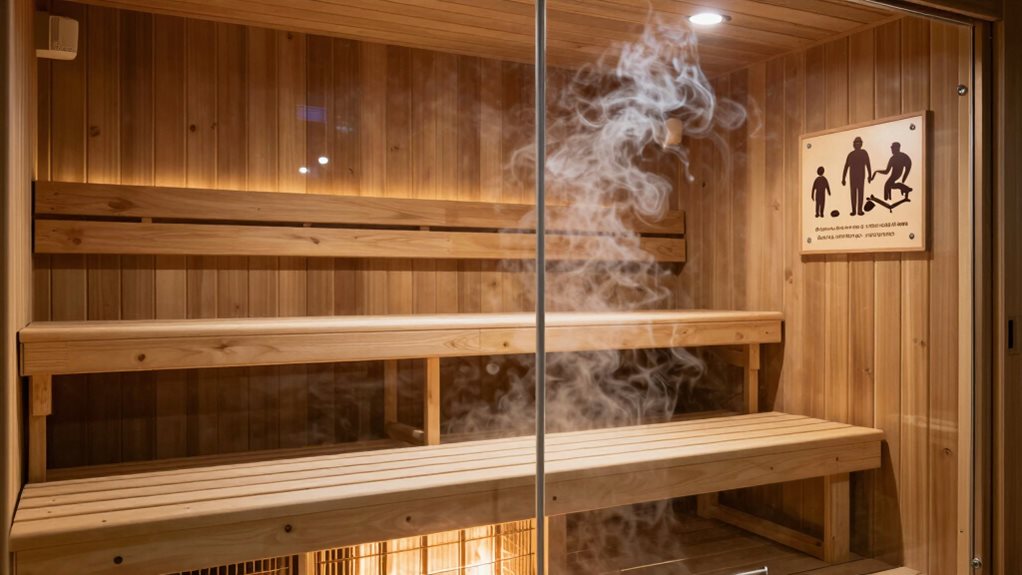
Using a sauna can be a relaxing experience, but it’s important to take into account age-specific guidelines to keep everyone safe and comfortable.
For kids under 5, it’s best to avoid sauna use due to the risk of overheating.
If your child is between 6 and 8, they can go in for 3 to 5 minutes under your watchful eye.
Kids aged 9 to 12 can enjoy sessions of 5 to 15 minutes, while teens can handle 10 to 15 minutes if they’re careful.
For seniors, there’s no strict age cutoff, but always check with a doctor.
Remember, the key is supervision and monitoring for any signs of discomfort.
Happy sauna-ing!
Maintenance Practices and Prohibitions for Saunas
When it comes to keeping your sauna in great shape, knowing what to avoid is just as important as knowing what to do.
You’ll want to keep certain items away from your sauna to prevent damage, and cleaning it regularly will help it last longer.
Plus, having the right safety equipment on hand makes sure you’re prepared for any surprises, keeping your sauna experience both enjoyable and safe. Additionally, investing in sauna moisture protection products can significantly enhance the longevity and performance of your sauna by preventing moisture-related issues.
Prohibited Items Near Sauna
Saunas offer a relaxing escape from daily life, but it’s essential to keep certain items away to guarantee everyone’s safety and comfort.
First off, eating or drinking is a big no-no; it keeps things clean and reduces the risk of feeling nauseous. You also need to ditch glass containers, as they can shatter and cause injuries.
Skip electronic devices, too, because they don’t mix well with steam or heat. Be careful with personal care items—oils, lotions, or even strong perfumes aren’t allowed.
Heavy clothing and dirty shoes? Forget about ’em!
Finally, no smoking or shaving inside; these can create safety hazards.
Keep these rules in mind, and you’ll enjoy your sauna worry-free!
Cleaning and Maintenance Tips
After making certain your sauna is clear of any prohibited items, it’s time to focus on keeping it in tip-top shape.
Start by wiping down benches and backrests with a damp microfiber cloth after each use. This simple act removes sweat that can stain the wood. Remember, leave the door open for a bit to let moisture escape.
Weekly, give everything a gentle scrub using a wood-safe cleaner, and check your sauna stones for any cracks. Don’t forget to clean the glass and clear out any debris!
Monthly, inspect for mold and verify your vents are clear.
Finally, give the wood a little oil treatment once or twice a year to keep it looking great.
Happy sauna-ing!
Safety Equipment Checklist
Creating a safe and enjoyable sauna experience takes more than just enjoying the heat; you’ll need the right safety equipment too.
Here’s a checklist to help you stay safe:
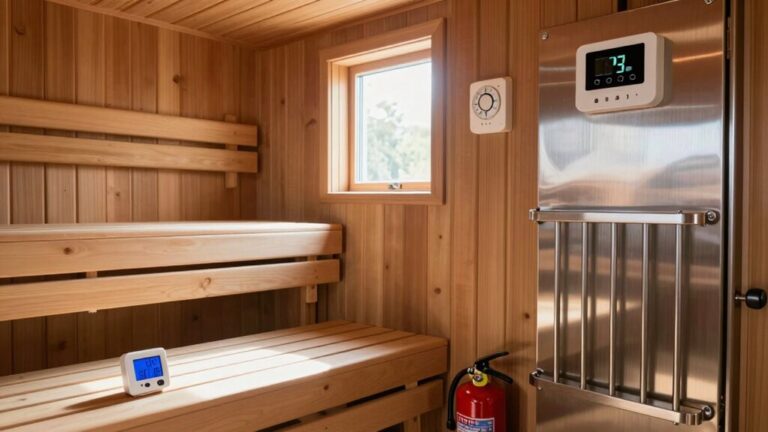
- Electrical Safety: Use a dedicated circuit, GFCI protection, and a manual disconnect switch. Make sure to hire a licensed electrician to ensure safety and compliance during installation.
- Heater Safety: Install a guardrail, an overtemperature cut-out, and a fire extinguisher for emergencies.
- Ventilation: Verify you have controllable vents, a thermometer, and a hygrometer for monitoring air quality. Proper ventilation methods are mandated by building codes to ensure safe airflow and temperature control, including the installation of a fireproof sauna ventilation system to prevent fire hazards.
- Personal Safety: Choose non-slip flooring, round bench edges, and display sauna-safe signage.
Frequently Asked Questions
What Type of Sauna Is Best for Home Use?
For home use, a hybrid sauna’s your best bet. It combines traditional and infrared features, providing versatility and comfort for the whole family. You’ll enjoy both intense heat and soothing infrared benefits.
How Much Space Is Needed for an At-Home Sauna?
You’ll need at least 9 to 12 square feet for a single-user sauna, with dimensions around 3′ x 3′ or 3′ x 4′. For comfort, consider a minimum ceiling height of 6.5 feet.
Can I Install a Sauna Outdoors in My Backyard?
Yes, you can install a sauna outdoors in your backyard. Just make certain you follow local regulations, select a suitable location, and provide adequate space for installation, access, and safety measures.
What Are the Benefits of Regular Sauna Use?
Regular sauna use offers cardiovascular benefits, lowers blood pressure, reduces inflammation, and may improve mood and sleep. You could also experience improved exercise tolerance and decreased risk of respiratory conditions and dementia with consistent sessions.
How Much Does a Home Sauna Typically Cost?
A home sauna typically costs between $2,500 and $7,000, with the national average around $6,000. Prices vary based on type, size, and installation, so you’ll want to contemplate your specific needs and budget.
Final Thoughts
So, as you jump into the world of at-home saunas, remember to prioritize safety! Check local building codes and permits, make certain your electrical setup is up to standard, and don’t skip out on proper ventilation. Listening to your body and following age-specific guidelines keeps those sauna sessions enjoyable. Regular maintenance helps prevent issues and keep your sauna in top shape. With these tips, you’ll be able to relax and enjoy your sauna confidently and safely!