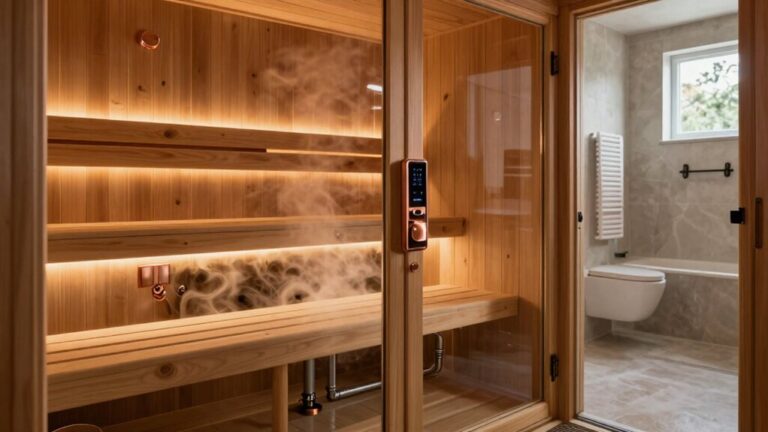
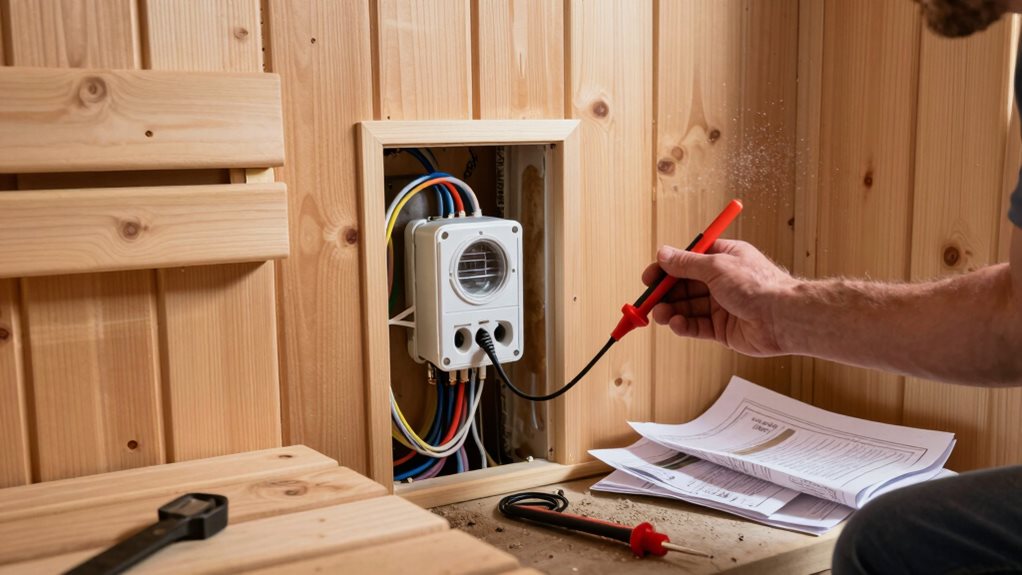

When installing an electric sauna heater, you’ll face several common challenges. You’ll need a dedicated 240V circuit with proper amperage (30-60A), adequate clearances between the heater and combustible materials, and proper ventilation for moisture control. Maneuvering permits and code compliance can be tricky, as local regulations vary greatly. Securing maintenance access for future repairs is often overlooked. Proper planning and understanding manufacturer specifications will help you avoid these potential pitfalls.
Electrical Supply and Circuit Requirements
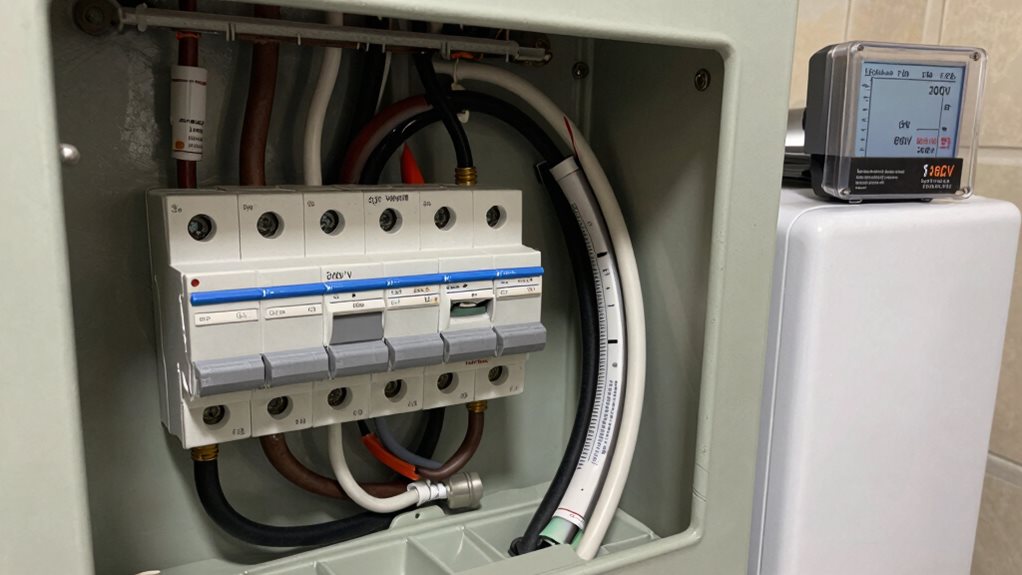
The proper electrical setup forms the foundation of any successful sauna heater installation, yet it’s where many DIY enthusiasts encounter their first roadblocks.
Most residential sauna heaters require a 240V single-phase supply, which isn’t the standard household outlet you’re used to. Your heater will need a dedicated circuit with a proper amperage rating, typically between 30-60A depending on your heater’s size.
You’ll need to install a 2-pole breaker in your electrical panel and run appropriate wiring—usually between #10 and #6 AWG copper conductors. Don’t try to cut corners here; undersized wiring can overheat, while incorrect breaker sizing risks either nuisance trips or dangerous fire hazards.
For installations where the panel is far from the sauna, you’ll need to account for voltage drop by potentially upsizing your wiring. Commercial installations might require a 208V/3PH configuration instead, which will reduce your heater’s output by approximately 25% compared to a 240V setup.
Navigating Code Compliance and Permit Processes
Once you’ve sorted out your electrical requirements, you’ll face what many DIY sauna enthusiasts find most intimidating: traversing the maze of permits and code compliance.
You’ll likely need multiple permits – building permits for structural work, electrical permits for that dedicated circuit, and possibly mechanical permits if you’re adding ventilation systems.
Be prepared to submit detailed documentation, including the heater’s installation manual, wiring diagrams, and certification paperwork.
You’ll also need floor plans showing clearances and electrical load calculations to prove your home’s service can handle the addition. Additionally, proper copper wiring rated for high temperatures is essential for safe sauna operation.
Common inspection failures stem from missing documentation, improper disconnects, wrong wire types, and GFCI confusion.
Remember that requirements vary greatly between jurisdictions – what passes inspection in one town might fail in another, so always check with your local authority having jurisdiction.
Proper Heater Placement and Safety Clearances
You’ll need to keep your sauna benches protected from the intense heat radiating from your electric heater, typically by maintaining at least 4-6 inches between bench edges and the heater unit.
Wall spacing requirements are equally critical, with C-series heaters demanding a minimum of 42 inches from ceiling and specific clearances from combustible wall surfaces as outlined in manufacturer specifications.
These clearances aren’t just suggestions—they’re vital safety measures that prevent fire hazards and guarantee your sauna operates at ideal temperatures without overheating surrounding materials. Improper placement can create dangerous conditions and may void warranty coverage, especially with traditional models that operate at high temperatures between 170-190°F.
Bench Protection Guidelines
Properly installing your electric sauna heater requires careful attention to bench protection guidelines, which safeguard both your sauna’s wooden surfaces and its users from excessive heat exposure.
Choose softwoods like Western red cedar or aspen for bench tops, as they conduct less heat and reduce burn risks.
Don’t use standard varnishes that can crack or release fumes; instead, apply thin coats of food-grade paraffin oil or sauna-specific treatments.
Remember to treat undersides and end grain to prevent moisture damage and mold.
Always maintain proper clearances between your heater and benches according to manufacturer specifications, and install approved guardrails to prevent accidental contact.
Create airflow channels under benches to prevent heat buildup, and never position bench backs directly over heaters.
Your upper benches shouldn’t be closer to the heater than the maximum surface-temperature distance specified in your manual.
Follow the recommended bench depth of at least 60 cm (24 inches) to ensure users can sit comfortably without overheating.
Install your sauna heater on a dedicated circuit as required by the National Electrical Code to prevent overloading and reduce fire hazards.
Wall Spacing Requirements
Wall spacing requirements stand as one of the most crucial safety aspects when installing your electric sauna heater.
You’ll need to maintain proper side clearances, typically ranging from 4 to 8 inches depending on your heater’s power rating. Higher-powered units (above 9 kW) often require greater spacing of 15-20 cm for safety.
Remember, measurements are usually taken from the heater’s surface or stones—not the mounting bracket.
Don’t assume that non-combustible walls mean you can ignore clearances; manufacturer limits still apply. While insulation boards can sometimes reduce required distances, only use materials explicitly approved in your installation guide.
Never block the air gap between your heater and the wall, as trapped heat increases fire risk. Improper clearances may lead to wall carbonization from excessive heat exposure.
When in doubt, consult your specific model’s manual, as requirements vary considerably between different heater designs.
Ventilation and Moisture Control Solutions
While setting up an electric sauna heater, proper ventilation and moisture control can make the difference between a luxurious, long-lasting sauna experience and a problematic installation with poor air quality.
For ideal airflow, place your supply inlet high on the wall above the heater, about halfway between the heater top and ceiling. This creates the best mixing of cooler air with rising hot air. This mechanical high-to-low approach has been proven to maintain healthier CO2 levels and significantly improve the overall sauna experience.
Install your exhaust vent on the opposite wall under the bench, about 18 inches from the floor. This arrangement efficiently removes humid air while creating balanced temperature distribution. Users have reported significant heart rate improvements from regular sauna use with proper ventilation systems.
Consider using a variable-speed fan with controls rather than relying on passive ventilation.
You’ll want a 6-inch duct for most small domestic saunas, with a backdraft damper to prevent cold air from entering when the fan is off.
Essential Safety Features and Protective Measures
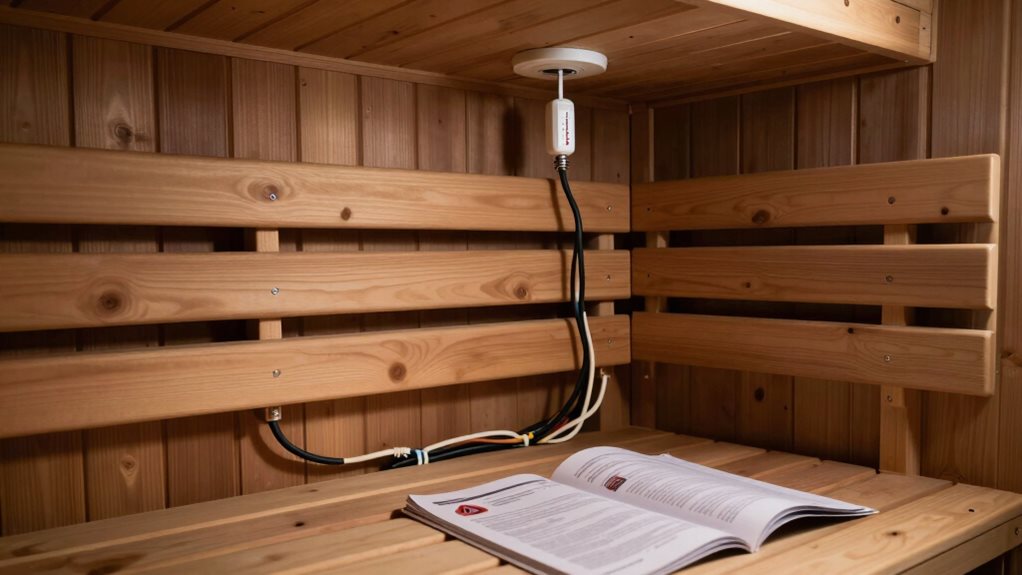
Safety features and protective measures form the backbone of any electric sauna heater installation, serving as critical safeguards against potential hazards.
You’ll need to verify your heater includes overheat protection with automatic shutdown capability, preferably with dual sensors to prevent single-point failures.
Install your heater on a dedicated circuit with proper breaker sizing and GFCI protection to guard against electrical faults in the moist sauna environment.
Don’t forget to include a local disconnect switch for quick power isolation during maintenance.
Always maintain proper clearances between your heater and combustible materials, and install protective guards or cages to prevent accidental contact burns.
Secure the control panel where it can’t be tampered with, and regularly inspect wiring connections for signs of wear or corrosion that could compromise safety.
Overcoming Site Constraints and Logistical Hurdles
When planning your electric sauna heater installation, you’ll need to take into account the challenges of running power to remote locations and potentially digging trenches for underground wiring.
Your placement decisions should allow enough clearance for regular maintenance access, as blocked or cramped spaces can make filter cleaning, element replacement, or control panel servicing nearly impossible.
Remember that manufacturers typically recommend specific maintenance clearances that, if ignored, might void your warranty or create safety hazards.
Distance and Trenching Challenges
Three key distance factors will shape your electric sauna heater installation, often determining whether your project succeeds or requires considerable modifications.
First, you’ll need adequate clearance between your heater and walls—at least 10 cm for standard units and 15-20 cm for high-power models over 9kW.
Second, your sauna’s distance from your main electrical panel impacts wire gauge selection and may necessitate a subpanel for installations far from your home’s power source.
Finally, don’t overlook trenching requirements for outdoor units. You’ll need weatherproof conduit buried at code-compliant depths, with GFCI protection throughout.
This often requires professional electrician services, especially for barrel saunas where wiring paths must be carefully planned.
Checking these distance constraints early helps prevent costly surprises and potential reworking of your entire sauna design.
Access for Maintenance
Access to your sauna’s heating components becomes a key consideration that’s often overlooked until the first maintenance issue arises.
When planning your sauna installation, think about how technicians will reach the heater when repairs are needed. Tight mechanical rooms with limited clearance can make replacing heating elements difficult and may even void warranties. Regular heater inspection quarterly is essential to maintain safety and performance standards.
Consider electrical access points too. Distant breaker panels or unmarked circuits create frustrating delays during maintenance.
Remember that fixed benches, finished surfaces, and built-in furniture can block essential access panels, potentially requiring partial demolition for simple repairs.
For rooftop or remote saunas, factor in the logistical challenges of transporting replacement parts through narrow stairwells or scheduling crane services.
These access considerations might seem minor during installation but will greatly impact future maintenance costs and downtime.
Frequently Asked Questions
Can I DIY Install a Sauna Heater if I Have Basic Electrical Knowledge?
No, you shouldn’t install a sauna heater yourself with basic knowledge. You’ll need a licensed electrician for the 240V circuit, proper grounding, and code compliance to guarantee safety.
How Does Hard Water Affect Sauna Heater Performance and Maintenance?
Hard water deposits scale on your heater elements and stones, reducing heat transfer, increasing energy costs, shortening equipment lifespan, and degrading steam quality. You’ll need more frequent maintenance and cleaning.
What’s the Typical Lifespan of an Electric Sauna Heater?
You’ll typically get 5-10 years from your electric sauna heater. With proper maintenance and moderate usage, you can extend its life to 10-15 years or even up to 20 years.
Can I Use a Smart Outlet or Controller With My Sauna Heater?
No, standard smart outlets won’t work. You’ll need Harvia’s Xenio WiFi controller or similar manufacturer-specific systems designed for 240V heaters. DIY solutions violate safety codes and create hazards.
Is a Floor Drain Necessary for a Residential Sauna Installation?
Floor drains aren’t necessary for most residential saunas. You’ll only need one if you’re planning frequent water use, installing near wet areas, or intend to hose down your sauna regularly.
Final Thoughts
You’ve now learned about the major challenges when installing electric sauna heaters. By understanding electrical requirements, code compliance, proper placement, ventilation needs, safety features, and site constraints, you’re better prepared to tackle your installation confidently. Remember, proper installation isn’t just about comfort—it’s about creating a safe environment for relaxation. When in doubt, don’t hesitate to consult professionals who can guarantee your sauna meets all safety standards.