
When designing a home sauna, it’s important to manage risks associated with combustible materials. For example, charred wood can weaken the structure, while flammable items like towels too close to heaters can ignite easily. Using non-combustible materials, like natural stone or stainless steel, greatly reduces fire risks. Always maintain safe distances from heaters and guarantee good ventilation. Keeping flammable substances stored safely is also vital. There’s so much more to think about for a safe sauna experience!
Understanding the Risks of Combustible Materials in Saunas
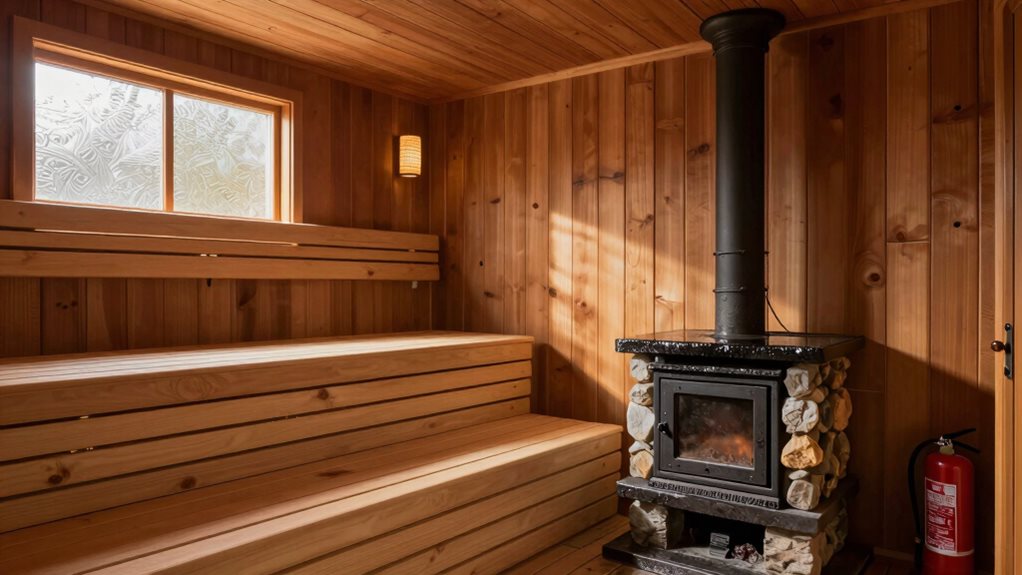
When you step into a sauna, the warm, soothing heat can feel like a hug from the inside, but it’s crucial to keep in mind that this relaxing space comes with its own set of risks, especially when it comes to combustible materials.
Charred wood might look harmless, but it releases toxic fumes and can weaken the structure, making it more prone to damage.
You’ll want to avoid using flammable liquids near heaters, as they can ignite and cause fires in a flash.
Towels and paper cups too close to heaters? That’s a recipe for disaster!
Always keep a safe distance around heaters to prevent accidents.
Additionally, incorporating sauna moisture protection products can help minimize the risk of damage and enhance safety within your sauna.
Understanding these risks helps you enjoy your sauna safely and keep your space relaxing and enjoyable!
Recommended Non-Combustible Materials for Sauna Construction
Choosing the right materials for your sauna can greatly improve both safety and comfort, guaranteeing you enjoy a worry-free experience. Using non-combustible materials is vital. Here are some top recommendations:
- Natural Stone: Granite or slate for floors and heater surrounds offers excellent heat resistance. Additionally, these stones provide thermal efficiency and can help regulate temperature in your sauna. It is essential to select materials designed for hot, humid sauna environments to ensure long-lasting durability. Furthermore, utilizing stone products can enhance the aesthetic appeal of your sauna.
- Ceramic Tiles: These are easy to clean and suitable for wet areas, making them perfect for sauna floors.
- Stainless Steel: Ideal for stove surrounds and fasteners, it’s corrosion-resistant and safe around heat.
- Mineral Wool Insulation: Non-combustible and effective, it maintains performance even under sauna heat.
Compliance With Building Codes and Safety Regulations
Understanding compliance with building codes and safety regulations is crucial for anyone looking to install a home sauna. You’ll likely need a building permit to guarantee your sauna meets safety standards. This process involves submitting detailed plans and can take weeks, but it’s worth the wait. For outdoor saunas under 120 sq. ft., permits might even be unnecessary! If you go electric, a dedicated 240V, 30-40 amp circuit is usually required, so get a licensed electrician on board. Additionally, local authorities may require specific documentation for sauna installation. It’s also important to confirm local building codes regarding the installation requirements of your sauna to avoid any compliance issues.
Moreover, ensuring your sauna has proper home sauna heating systems is essential for both efficiency and safety. Don’t forget—zoning laws come into play, dictating distance from property lines and size restrictions. Inspections check everything from wiring to flooring, making certain your sauna isn’t only fun, but also safe.
Stay informed, and you’ll enjoy your sauna worry-free!
Essential Heater Protection Measures
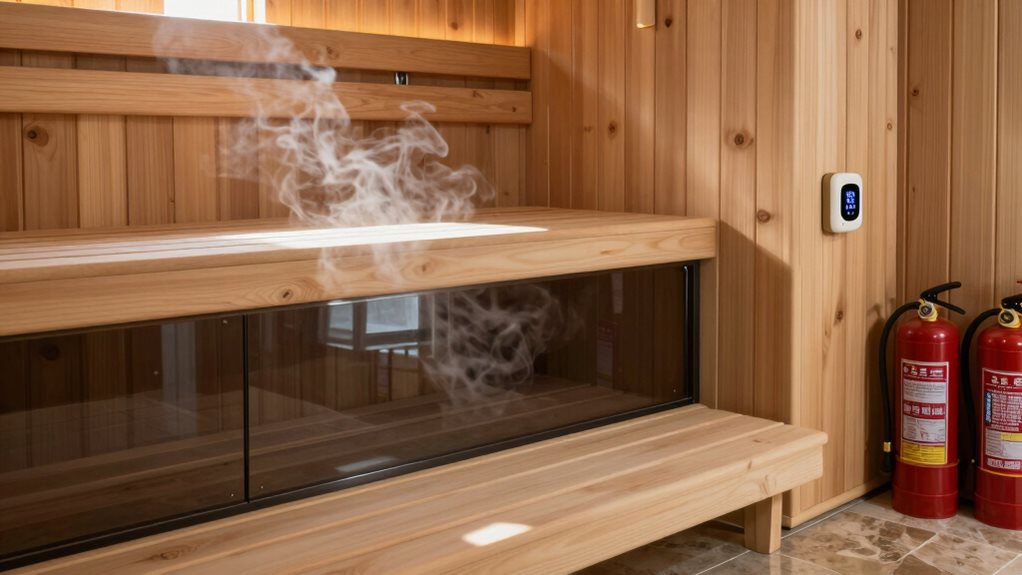
To guarantee your home sauna is as safe as it’s enjoyable, focusing on essential heater protection measures is key.
Implement these guidelines to assure a safe environment:
- Maintain Clearance: Keep the heater at specified distances from combustible materials, using heat shields if necessary.
- Secure Flooring: Position the heater on non-combustible flooring to prevent heat transfer to underlying combustibles.
- Install Guards: Use fixed heater guards that keep kids and pets away, while allowing airflow for cooling.
- Check Electrical Safety: Install the heater according to local codes with proper circuits, and use built-in overheat cutoffs for added safety.
Additionally, consider incorporating a fireproof sauna ventilation system to enhance safety and air quality within your sauna.
Prohibited Flammable Substances in Saunas
When designing your home sauna, it’s essential to steer clear of any flammable liquids and materials that could spark a fire.
Imagine dousing your sauna heater with vodka—it might sound funny, but that kind of risky move can lead to disaster!
To keep your sauna safe, stick with non-flammable products and store anything potentially hazardous far away from the heat.
Essential Prohibited Liquids
Have you ever thought about what might make your sauna experience dangerous? Knowing which liquids to keep out of your sauna is vital.
Here’s a quick list of important prohibited liquids to avoid:
- Volatile Essential Oils: These can form explosive vapor mixtures, especially when heated.
- Solvent-Containing Products: Items like paint thinners can create serious ignition risks near heaters.
- Alcohol-Based Products: Hand sanitizers and spirits can ignite easily, posing a fire hazard.
- Flammable Personal-Care Treatments: Hair oils and similar items can catch fire in high temperatures.
Keeping these liquids out of your sauna not just protects you but also guarantees a relaxing experience.
Play it safe and stick to recommended necessities!
Safe Material Storage
While it might seem like the cozy atmosphere of a sauna could handle anything, storing flammable substances improperly can turn your relaxation space into a potential danger zone.
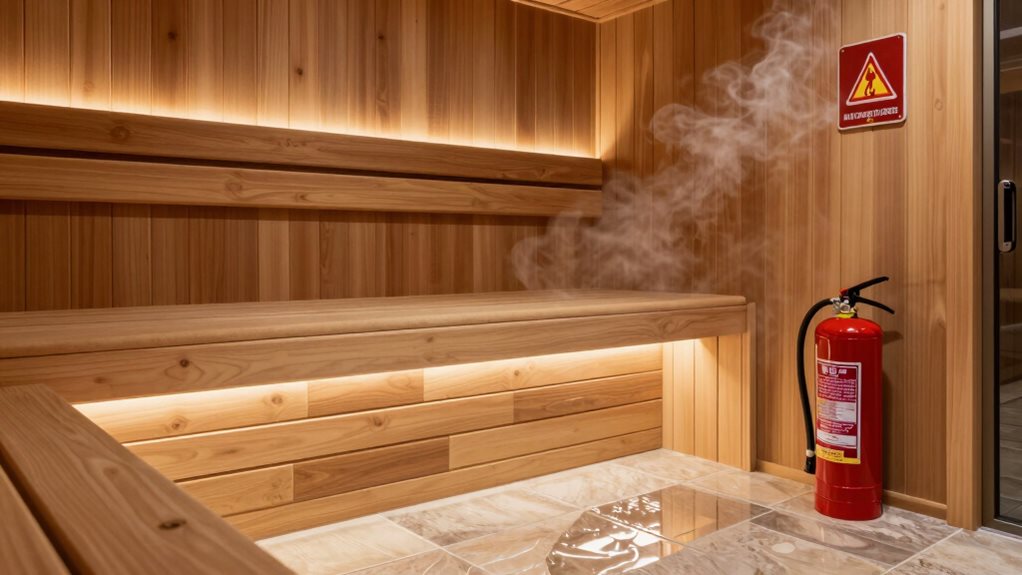
For safety, avoid using chemically treated wood, as it releases harmful gases when burned. Don’t store flammable textiles, like towels or robes, close to heaters; signage and barriers can help prevent accidents.
Also, steer clear of inappropriate fuels; your stove should only use approved materials, and ashes need to cool in non-combustible containers. Maintain proper clearances from heated surfaces to combustibles to reduce fire risks considerably. Additionally, using a sauna moisture control system can help manage humidity levels and prevent the build-up of moisture that could potentially lead to mold growth and compromise the integrity of stored materials.
Maintenance and Safety Protocols for Saunas
To keep your sauna safe and functional, establishing a solid maintenance and safety routine is essential.
Regular upkeep helps prevent issues that could compromise your relaxation time.
Consistent maintenance is key to ensuring your sauna stays in top shape for ultimate relaxation and enjoyment.
Here are four key protocols you shouldn’t skip:
- Daily Cleaning: Wipe down benches and floors after each use to reduce dirt and moisture build-up.
- Weekly Maintenance: Dust and vacuum the electric heater and controls to avoid dust hazards.
- Monthly Inspections: Check your heater and stones for any cracks or debris that could cause overheating.
- Annual Safety Check: Hire an electrician to verify your wiring meets safety codes and inspect your heater’s components.
Following these simple steps will guarantee your sauna remains a safe haven!
Importance of Fire Risk Assessments
When it comes to using a sauna at home, understanding fire risks is essential.
You’ll want to identify potential hazards, such as electrical issues or combustible materials that could ignite.
Identifying Potential Hazards
Fire risk assessments play a crucial role in identifying potential hazards in your home sauna.
By conducting these assessments, you can spot risks that may lead to fire incidents. Here are four key hazards to evaluate:
- Combustible materials: Timber linings and inappropriate finishes increase the likelihood of ignition.
- Heating sources: Faulty installations or non-rated equipment can produce sparks or overheating.
- Housekeeping practices: Storing towels or flammable items inside the sauna raises fire risks considerably.
- Detection failures: Lack of proper smoke detectors or ventilation may delay fire detection and allow flames to spread.
Additionally, ensuring proper sauna ventilation system can significantly reduce fire risks by maintaining optimal air flow and temperature.
Taking the time to assess these hazards can help you create a safer and more enjoyable sauna experience.
Don’t take chances—safety first!
Implementing Safety Measures
Evaluating potential hazards is just the first step on the path to a safe home sauna; now it’s time to implement safety measures that really make a difference.
A formal fire risk assessment is key; it examines your sauna’s design and spotlights areas that need attention. For instance, your sauna should have at least 60 minutes of fire resistance, specifically around the enclosure.
It’s also crucial to check the heater and electrical parts to verify they can handle those steamy environments. Don’t forget ventilation! Proper fire detection systems designed for high heat are a must, and keeping good records helps maintain safety over time.
Taking these measures secures your sauna’s enjoyment, guaranteeing peace of mind every time you step inside.
Role of Carbon Monoxide Detectors in Saunas
To guarantee your sauna experience is all about relaxation rather than danger, having a carbon monoxide detector is essential. This device prevents the dangerous buildup of odorless gas from wood-burning heaters, keeping you safe while you unwind. Proper ventilation design helps reduce the risk of carbon monoxide accumulation, enhancing the overall safety of your sauna.
Here are four key points to remember:
- Installation: Place detectors near exterior walls, and avoid high humidity areas.
- Functionality: Regularly check your detectors as part of your sauna maintenance routine. Regular maintenance ensures that your sauna operates efficiently and safely.
- Location: Install detectors on every level of your home, especially near bedrooms.
- Safety Measures: Combine with proper ventilation and fire protection features for thorough safety.
With a carbon monoxide detector in your sauna, you can relax knowing you’re protected from toxic vapors while enjoying the comforting heat!
Sustainable Wood Choices for Sauna Construction
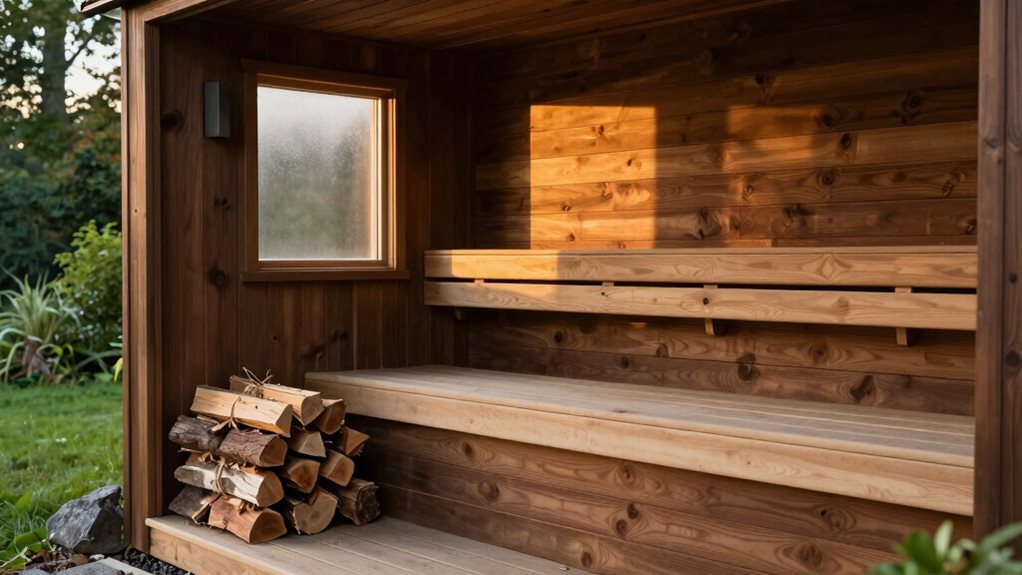
When you’re building a sauna, choosing the right wood can make all the difference, not merely for the structure’s durability but also for the environment. A natural wood sauna heater enhances the overall experience, providing warmth and comfort.
Consider using Thermowood, treated at high temperatures to resist warping and moisture. It’s a smart choice since it’s derived from sustainably sourced timber. Additionally, Thermowood offers enhanced durability due to its unique thermal modification process, ensuring your sauna stands the test of time. Sustainable wood options contribute to sustainability by minimizing waste and environmental impact.
Alternatively, FSC-Certified wood guarantees your sauna comes from responsibly managed forests, protecting biodiversity and supporting local communities. Incorporating eco-friendly materials helps ensure a more sustainable future for our planet.
Don’t overlook reclaimed wood, which reduces waste and gives your sauna character.
Rapidly renewable options like bamboo grow quickly and are incredibly strong.
Finally, opt for resin-free options like cedar and aspen, known for their natural resistance to decay and comfort at high temperatures.
Accept sustainability—your sauna and the planet will thank you!
Frequently Asked Questions
Can I Use Untreated Wood in Sauna Construction?
Yes, you can use untreated wood in sauna construction, but choose low-resin species like cedar to minimize health risks and guarantee proper ventilation. Be aware of moisture management to avoid warping or decay over time.
How Often Should I Inspect My Sauna for Fire Hazards?
You should inspect your sauna for fire hazards monthly. Conduct visual checks for dust buildup, and make certain all fire detection systems function properly. Schedule a detailed inspection at least once a year for thorough safety measures.
What Is the Ideal Temperature Setting for Sauna Heaters?
For sauna heaters, the ideal temperature setting typically ranges from 150 to 195°F (65 to 90°C) for traditional saunas. Start conservatively if you’re new, aiming for 140 to 158°F (60 to 70°C).
Are There Specific Safety Measures for Children Using Saunas?
Yes, guarantee strict supervision, limit exposure time, use lower temperatures, monitor for distress signs, provide hydration, and eliminate hazards. Always prioritize safety, setting clear limits for children’s sauna use to prevent overheating and injuries.
How Can I Improve Ventilation in My Home Sauna?
To improve ventilation in your home sauna, position fresh air intake near the heater and exhaust vents high on the opposite wall. Make certain vents are appropriately sized, and adjust their openings for ideal airflow.
Final Thoughts
To sum up, managing combustible materials in your sauna is key to guaranteeing a safe and enjoyable experience. By choosing non-combustible materials, following safety regulations, and regularly maintaining your sauna, you’re taking important steps to reduce fire risks. Don’t forget to install carbon monoxide detectors for that extra peace of mind. So, whether you’re relaxing or unwinding, knowing you’ve created a safe haven makes your sauna time even sweeter! Stay safe, and enjoy your cozy retreat!