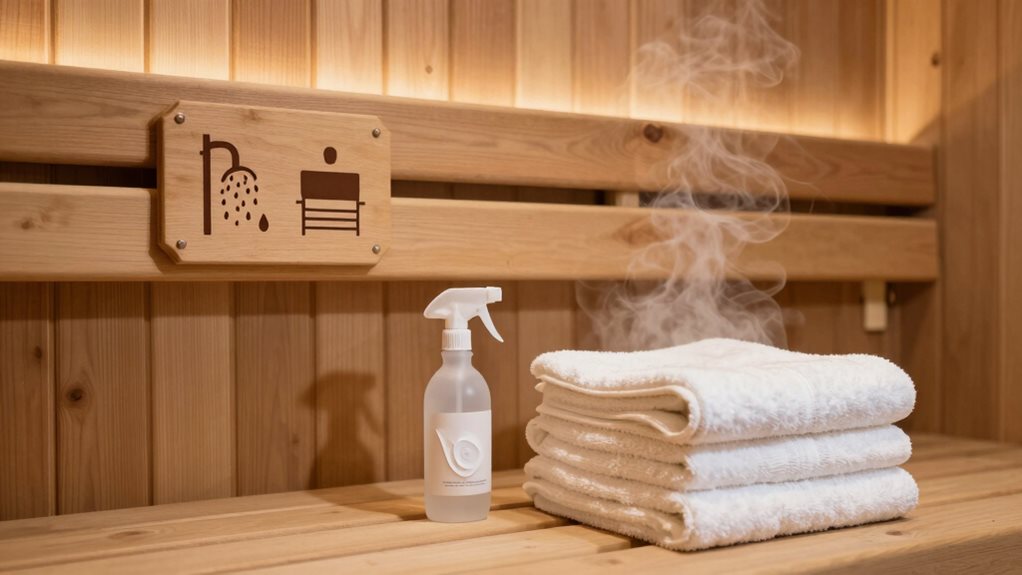

To combat unhygienic behavior in saunas, implement clear rules requiring towel use on benches and pre-sauna showers. Post visible signage with positive language at eye level, and train staff to enforce rules tactfully. Design spaces with easy-to-clean materials, sloped floors, and removable benches. Create a culture of cleanliness by highlighting that “90% of guests shower before entering.” Effective sauna hygiene combines smart design, consistent enforcement, and social norms that naturally encourage everyone’s compliance.
The Towel Mandate: Why Sitting Directly on Benches Is a No-Go
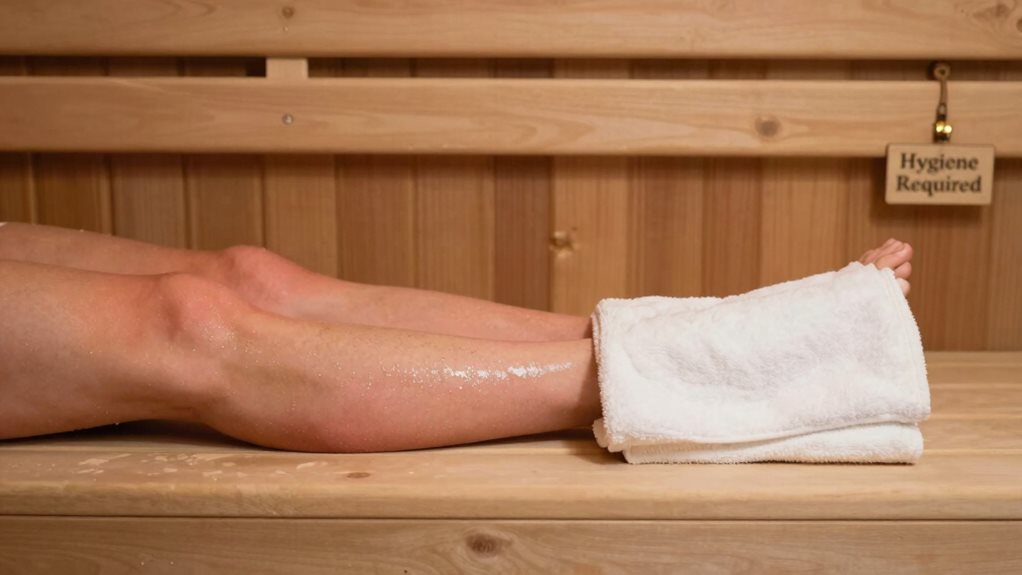
When you enter a sauna, one rule stands above all others: always sit or lie on a towel. This isn’t just about etiquette—it’s about health and maintenance. Your sweat contains oils and bacteria that can stain wooden benches, requiring annual sanding to remove.
Always place a towel beneath you in the sauna—it’s not just polite, but protects both your health and the wooden benches.
Without a towel barrier, you’re exposing yourself to potential infections. Research shows that ceramic seats at 40°C create perfect conditions for microbes to thrive, and cleaning barely reduces these levels.
While wooden seats perform better hygienically, they still need protection from body oils. Your towel acts as a personal barrier, preventing direct contact with surfaces used by others.
Sauna operators typically clean benches with hydrogen peroxide, but your towel provides that extra layer of protection that keeps everyone safer.
Pre-Sauna Shower Protocol: Removing Contaminants Before Entry
Beyond sitting on a towel, properly preparing your body before sauna entry marks another cornerstone of sauna hygiene.
You’ll need to shower before each session, removing oils, dirt, and cosmetics that could contaminate shared surfaces. This Finnish tradition isn’t just polite—it’s crucial for both cleanliness and improving your detoxification experience.
Use warm water and mild soap for a quick 2-3 minute cleanse, focusing on oil-prone areas without harsh scrubbing.
After showering, pat yourself dry thoroughly or leave skin slightly damp to help with heat acclimation.
For best results, hydrate with about two cups of water 30-60 minutes before your session, remove all jewelry, and avoid heavy meals for at least two hours prior.
This preparation guarantees you’ll sweat efficiently while keeping the sauna environment clean for everyone.
The Science Behind Sauna Surface Contamination
When you sit on a sauna bench, you’re not merely encountering heat but potentially a complex ecosystem of microbes that transfer through sweat and skin contact.
Sauna surfaces develop different contamination profiles based on their temperature and humidity levels, with traditional high-heat saunas often showing different microbial patterns than lower-temperature steam rooms.
Various sauna materials, from wooden benches to stone surfaces, present unique risks for bacterial and fungal colonization, with porous materials sometimes harboring more persistent contaminants than even surfaces. Extended sauna sessions leading to approximately 3% body weight loss through dehydration can significantly impact intestinal barrier function, potentially increasing susceptibility to infections.
Microbial Transfer Mechanisms
The invisible world of microbes travels throughout saunas in surprisingly predictable patterns that explain how bacteria move from person to surface to person. When you sit on a bench, your skin cells and sweat leave behind a microbial calling card that waits for the next user.
High-touch areas like bench edges and door handles become bacterial hotspots through repeated contact. The harder you press (sitting versus lightly touching), the more microbes transfer into wood pores. Moisture from sweat or wet towels helps bacteria survive the expedition. Fortunately, most of these organisms are normal human flora and typically non-infectious in sauna environments.
A single contaminated person can seed multiple surfaces, creating a chain reaction of contamination. Microbes form protective communities called biofilms in damp areas, while crevices and textile items like towels create safe havens where bacteria hide from cleaning and heat, ready to transfer to your skin.
Temperature-Humidity Impact
Sauna temperature and humidity levels create a complex battlefield where microbes either thrive or die, depending on precise conditions. When you’re enjoying temperatures between 70-90°C, you’re actually participating in microbial control!
These high temperatures rapidly inactivate most enveloped viruses and heat-sensitive bacteria that might be on benches or handles. In dry saunas, pathogens typically die within minutes as the heat disrupts their protective structures.
Humidity plays a vital role too. In steam rooms, higher humidity makes respiratory droplets heavier, causing them to fall onto surfaces rather than remain airborne. While this reduces breathing in germs, it may increase surface contamination.
The good news? Most microbes can’t survive the extreme heat-humidity combination you experience during your sauna session, making properly maintained facilities surprisingly hostile environments for pathogens. However, without proper moisture management, mold can develop in these warm environments, compromising both the sauna structure and indoor air quality.
Material Colonization Risks
Though you mightn’t see them, your sweat-drenched body leaves behind more than just moisture on sauna surfaces. Your sweat contains a cocktail of substances, including heavy metals like aluminum, lead, mercury, and cadmium.
Women’s sweat typically contains higher concentrations of these elements than men’s.
Different sauna materials interact uniquely with these substances. Infrared saunas appear particularly effective at drawing out toxins, with mercury concentrations nearly 35 times higher than in other sweating methods.
The wood benches and walls absorb these excretions, potentially creating breeding grounds for bacteria if not properly cleaned.
When you scrape sweat off your body, you’re also removing skin cells and sebum—natural oils that can contaminate surfaces up to 10 times more than clean sweat alone.
This combination creates an ideal environment for microbial growth.
Effective Signage: Communicating Rules Without Confrontation
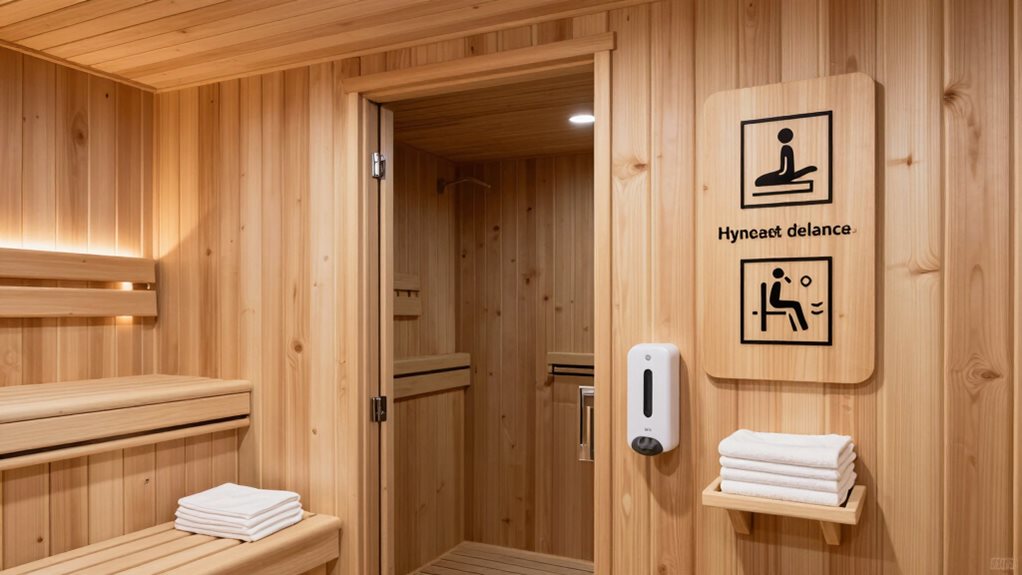
Effective signage serves as your first line of defense against unhygienic sauna behaviors, communicating essential rules without creating uncomfortable confrontations.
When designing your sauna rules sign, focus on positive language that emphasizes safety rather than restrictions, making guests more likely to comply willingly.
Choose durable materials like 3mm PVC signboard that withstands humidity and heat, guaranteeing your message remains clear over time.
Position your sign at eye level near entrances where it’s impossible to miss.
For maximum effectiveness, include:
- Clear, bold text with universal symbols that transcend language barriers
- Safety-focused rules like “Shower before entering” and “Limit sessions to 10 minutes”
- A positive closing statement such as “For everyone’s safety and enjoyment”
This non-confrontational approach protects both your facility and your guests’ experience.
Staff Training for Tactful Rule Enforcement
While proper signage can set expectations, your staff represents the human element that brings rules to life and assures they’re followed. Your sauna operation requires well-defined roles with specific staff members responsible for supervision during each shift.
Signs point the way, but your staff embodies the rules, turning printed policies into lived experiences through consistent, attentive supervision.
First, confirm your team completes certification in sauna operation and emergency response. Establish 15-minute inspection intervals and maintain detailed training records. Your curriculum should cover heat stress recognition, hygiene enforcement, and de-escalation techniques.
Equip staff with pre-approved scripts for handling violations: “For everyone’s health, we ask that you shower before entering. The facilities are just around the corner.”
Train them to use a three-step approach: friendly reminder → firm instruction → temporary removal for repeat offenses. This gradual enforcement maintains dignity while confirming compliance.
Optimal Cleaning Cycles Based on Usage Patterns
You’ll need different cleaning protocols during peak times when saunas see heavy traffic, including hourly disinfection of high-touch surfaces like benches and door handles.
Your facility’s overnight deep cleaning schedule should align with usage patterns, intensifying after days with 4+ sessions and reducing frequency during slower periods.
Remember that consistent maintenance prevents the buildup of bacteria and mold, making both daily spot cleanings and thorough weekly scrubdowns crucial parts of your sauna hygiene strategy.
Peak-Period Disinfection Protocol
Maintaining hygienic conditions in saunas requires a carefully structured approach, especially during times when facility usage peaks throughout the day.
When your sauna experiences high traffic, implement a targeted cleaning strategy that focuses on both efficiency and thoroughness.
During peak periods, you’ll want to:
- Perform hourly high-touch disinfection of door handles, bench edges, and control panels using sauna-safe solutions.
- Replace bench towels and floor mats every 1-2 hours to limit surface contamination.
- Schedule short 5-10 minute ventilation flushes between back-to-back sessions to reduce humidity and exchange stale air.
Don’t wait for visible dirt to appear—use occupancy metrics to trigger cleaning cycles.
When you’ve had 5-10 users in an hour, that’s your signal to conduct a quick spot-clean of high-contact surfaces.
Overnight Deep Cleaning
After your sauna closes for the day, an overnight deep cleaning routine becomes essential for maintaining both hygiene and equipment longevity.
Your cleaning approach should match your usage patterns—high-traffic saunas need weekly thorough wipes and monthly sanding of benches.
Start by running the heater for 15-20 minutes after the final session to dry out moisture and kill bacteria.
Then, combine one tablespoon of baking soda with a liter of warm water to wipe down all surfaces, focusing on benches and backrests where sweat accumulates.
For monthly deep cleans, use a soft-bristle brush with a vinegar-water solution on high-touch areas.
Always leave the door open overnight to fully ventilate the space, preventing moisture buildup that leads to mold and wood warping.
Designing Sauna Spaces That Encourage Hygienic Behavior
Thoughtful design choices in sauna spaces can greatly impact users’ hygienic behavior, creating environments that naturally promote cleanliness.
When you’re planning a sauna facility, prioritize materials that visibly show dirt and are easy to clean, like light-colored tiles and moisture-resistant woods such as cedar or Thermo Aspen.
For ideal hygiene promotion, focus on these key design elements:
- Install properly sloped floors with central drains and wooden gratings to prevent slipping while allowing water to flow freely.
- Design benches that can be lifted or removed for thorough cleaning on both sides, reducing bacteria buildup.
- Place ventilation vents strategically—one near the floor behind the heater and another near the ceiling—to eliminate moisture and prevent mold growth.
Creating a Culture of Cleanliness Through Social Norms
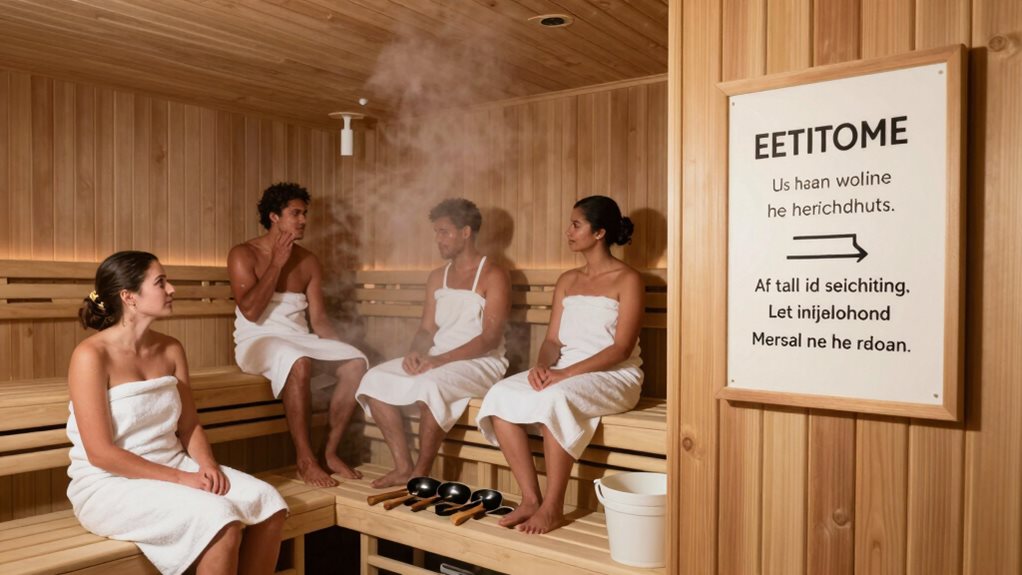
Nearly every successful sauna establishment relies on social norms to maintain cleanliness, not merely formal rules.
You’ll notice that when regular users shower before entering, newcomers naturally follow suit. This visible peer behavior is powerful!
Clear expectations about towel use on benches and pre-sauna showers work best when consistently modeled by respected community members.
Nothing establishes sauna etiquette more effectively than seeing respected regulars demonstrate proper towel use and shower practices.
When facilities highlight that “90% of guests shower before entering,” they’re using descriptive norms to encourage everyone to comply.
The most effective approach combines brief, specific prompts (“Seat towel required”) with culturally relevant messaging positioned at key locations like entrances and locker rooms.
Pre-sauna rituals, like mandatory shower routines, transform one-time rules into habits everyone follows.
Even a simple disapproving look from fellow bathers often does more to maintain hygiene than any written policy!
Preventing Product Use: Oils, Lotions, and Their Impact on Sauna Surfaces
When you apply oils and lotions in the sauna, you’re not only moisturizing—you’re creating sticky residues that trap dirt, promote microbial growth, and damage wooden surfaces.
These products can also create fire hazards when they come in contact with heating elements, potentially igniting or causing electrical shorts that void equipment warranties.
You’ll protect both yourself and the sauna by keeping these products outside the sauna environment, using only manufacturer-approved fragrances, and showering before your session to remove any lotions already on your skin.
Product Contamination Risks
The improper use of oils and lotions in saunas creates serious contamination risks that extend beyond mere cleanliness concerns. These products leave residues that become breeding grounds for harmful microorganisms in the warm, moist environment.
Studies have found fecal coliforms in 50% of analyzed bath waters, while oils can spread athlete’s foot and toenail fungus among users.
Your sauna session might also mobilize toxins that deposit on surfaces:
- Heavy metals like mercury (0.86 μg/L) and lead (up to 40 μg in 15 minutes) are excreted in sweat
- Chemical compounds including phthalates and PCBs can transfer to benches
- Fragrance concentrates contain irritants marked with H317, causing allergic skin reactions
When these substances mix with oils on surfaces, they create a contamination cycle that affects everyone who uses the sauna afterward.
Effective Prevention Techniques
Preventing harmful products from contaminating sauna surfaces requires a thorough approach that combines clear rules, strategic design features, and regular maintenance procedures.
You’ll find success by implementing visible “no-oils/lotions” signage at entry points that clearly explains why these products are prohibited.
Provide ample towel rails and bench covers so users can create barriers between their skin and wooden surfaces.
Your daily cleaning routine should include wiping down benches with mild, wood-safe solutions to remove residues before they build up.
For long-term protection, apply sauna-specific paraffin oils to benches every six months, which helps prevent absorption of unwanted substances.
Don’t forget to train your staff to perform consistent spot checks and document violations—this accountability system drastically improves compliance rates among sauna users.
Illness Exclusion Policies to Protect All Sauna Users
Establishing clear illness exclusion policies represents one of the most effective strategies for maintaining sauna health and safety.
When you’re enjoying the warm, humid environment of a sauna, you’re also in an ideal setting for germ transmission. Respiratory droplets concentrate in these small spaces, and shared surfaces can harbor pathogens for hours.
For everyone’s protection, follow these illness exclusion guidelines:
- Stay home with respiratory symptoms – including coughs, runny nose, sore throat, or loss of taste/smell.
- Skip the sauna with fever or within 24 hours of fever – even if you’ve taken medication to lower your temperature.
- Avoid sauna use after stomach illness – wait at least 48 hours after vomiting or diarrhea before returning.
Frequently Asked Questions
Are Swimsuits Hygienic Alternatives to Towels in Saunas?
No, swimsuits aren’t hygienic in saunas. They trap bacteria, prevent skin breathing, and don’t absorb sweat. You’ll be more comfortable and cleaner using cotton towels instead.
How Long Should Wooden Sauna Surfaces Dry Between Cleanings?
Allow wooden sauna surfaces to dry completely for 1-2 hours after cleaning. You’ll need longer drying periods after deep cleans, typically running the heater on low to guarantee thorough drying.
Can Infrared Saunas Harbor Fewer Germs Than Traditional Ones?
Yes, infrared saunas harbor fewer germs than traditional ones. You’ll find their dry, low-humidity environment and lower temperatures considerably limit bacterial growth compared to steamy traditional models with higher humidity levels.
Should Different Rules Apply to Private Versus Public Saunas?
Yes, you’ll need stricter protocols in public saunas to protect all users, while your private sauna allows flexibility with personal temperature, clothing options, and maintenance schedules.
Are There Special Considerations for Sauna Use After Workouts?
Yes, you’ll need to wait 10-15 minutes post-workout, hydrate thoroughly, shower before entering, and limit sessions to 15-20 minutes to avoid overheating your already warm body.
Final Thoughts
By creating clear rules, effective signage, and training staff to enforce hygiene standards, you’ll build a safer sauna environment for everyone. Remember, your commitment to showering before entry, using towels, and following posted guidelines doesn’t just protect you—it shows respect for fellow sauna-goers. When we all work together to maintain cleanliness, we create a culture where proper sauna etiquette becomes second nature, safeguarding these relaxing spaces and keeping them healthy for years to come.