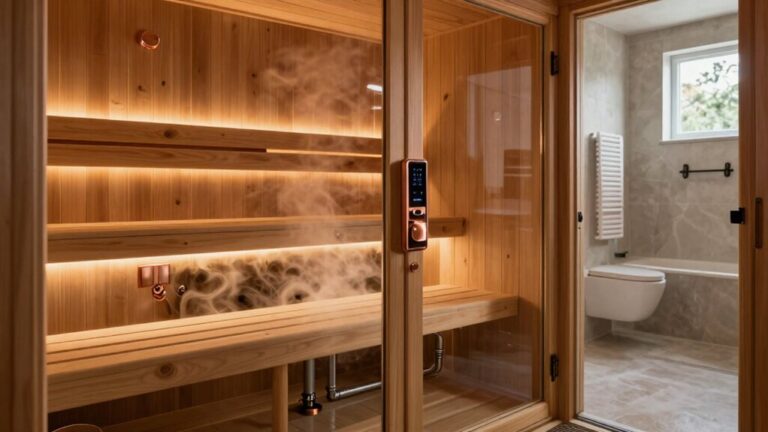
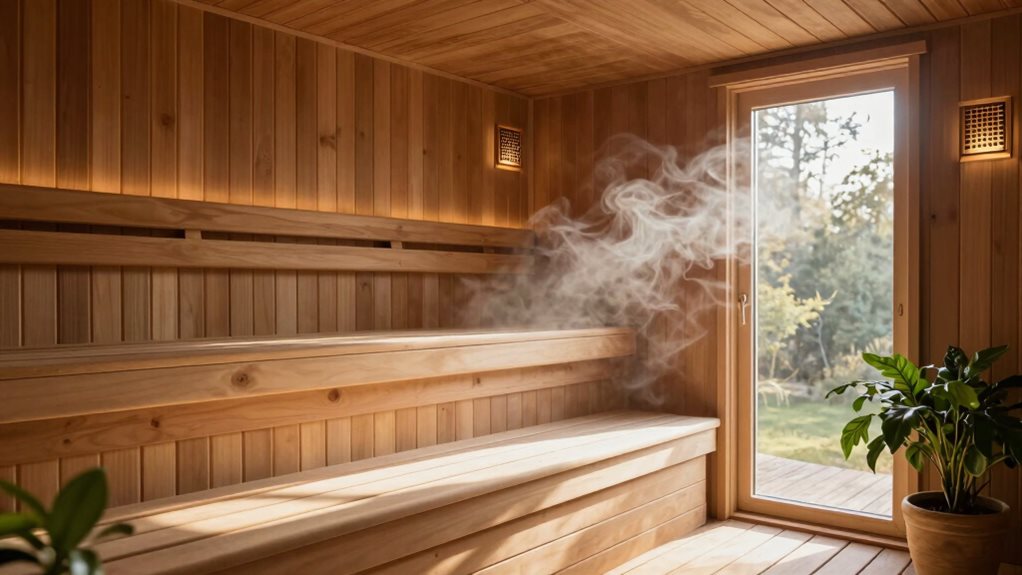

To achieve an airy feel in your sauna, focus on vent placement and sizing. Position your intake vents low (about 4 inches from the floor) near the heater, allowing cool air to enter. Exhaust vents should be higher, near the ceiling. Make sure the exhaust area is larger to let heated air out efficiently. Using adjustable vents lets you control airflow based on your needs. With the right tweaks, you’ll create a comfy atmosphere without losing valuable heat. Discover more tips for perfect ventilation!
Understanding Vent Placement Fundamentals
When it comes to setting up your sauna, understanding where to place the vents is crucial for creating a comfortable and enjoyable experience.
Start by placing the intake vent low, around 4 inches from the floor, close to the heater. This brings in cool air that heats up as it circulates. Proper ventilation is essential for optimal air quality and ensures a pleasant sauna environment. Effective ventilation also helps to reduce risks of dizziness and nausea during sauna use. Additionally, incorporating a sauna ventilation system kit can simplify the installation process and enhance airflow efficiency.
Meanwhile, the exhaust vent should be high, near the ceiling, to let out hot, humid air. Think of it like keeping your house fresh; you want cool air coming in and warm, stale air going out!
For even better airflow, consider diagonal placements across the room. This setup guarantees air moves evenly through the sauna, making the heat more pleasant for everyone inside.
Your sauna experience will be much improved with effective vent placement!
Balancing Vent Sizing for Optimal Airflow
To achieve the best airflow in your sauna, balancing the sizes of intake and exhaust vents is key. You want to guarantee that air can flow freely in and out, so matching their sizes helps keep the temperature even throughout the space. If your vents are too big or too small, you might lose heat or end up with stale air, which is definitely not what you want when you’re trying to relax! Proper venting improves heater efficiency, ensuring that your sauna maintains both warmth and comfort. Additionally, proper ventilation is crucial for sauna design, enhancing the overall experience and user comfort. Effective ventilation systems can also maximize air circulation, providing a refreshing environment that complements the sauna’s heat.
Equal Intake and Exhaust
Balancing the intake and exhaust in your sauna is crucial for creating a comfortable, enjoyable experience. You’ll want to position the intake near the heater, low to the floor, allowing fresh air to flow directly to the heat source. The exhaust should be high on the wall, opposite the intake, letting hot, humid air escape naturally. This setup encourages a seamless convection loop, reducing hot and cold spots. Typically, the exhaust area should be larger—about 1.5 to 2 times the intake—since warmer air expands. A good rule is a 4-inch intake paired with a 6 to 8-inch exhaust. Proper airflow design enhances both comfort and sustainability, preserving heating elements and wooden interiors. Additionally, implementing adequate ventilation helps maintain optimal oxygen levels for a healthier sauna experience. Investing in a quality sauna ventilation fan system can further improve air circulation and ensure consistent temperature throughout your sauna.
Sizing for Air Changes
Achieving the right airflow in your sauna is vital for a comfortable experience, and it starts with properly sizing your ventilation. You’ll want to aim for 5–8 air changes per hour (ACH) to keep the air fresh and maintain humidity control. This is crucial because ACH is essential for assessing the adequacy of ventilation in enclosed spaces. For a traditional sauna, 5–6 ACH helps stabilize the temperature. To find the right airflow, calculate your sauna’s volume by multiplying length, width, and height. Use the formula: ACH = (CFM × 60) ÷ room volume. For example, a small two-person sauna typically needs about 30–40 CFM for ideal ventilation. Higher ACH is necessary for areas with increased humidity, making it particularly important in sauna environments. Additionally, using sauna moisture protection products can help maintain the integrity of your sauna by preventing moisture damage. Be mindful of vent placement too; balancing intake and exhaust will improve air circulation, guaranteeing a delightful sauna experience without unwanted stale air!
Avoiding Excessive Heat Loss
Finding the perfect balance in vent sizing is crucial for keeping your sauna cozy while preventing excessive heat loss. Oversized vents can make your sauna feel drafty, leading to chilly feet and disrupted relaxation. To guarantee you maintain a comfortable atmosphere, consider these tips:
- Size it right: Avoid vents that are too small or too large; balanced sizing is key.
- Adjustable controls: Use dampers or timed fans to manage airflow and minimize heat loss during your sessions. Additionally, proper insulation can help enhance energy efficiency by reducing the overall heat loss from your sauna. Ensuring effective ventilation systems prevents discomfort and enhances your overall sauna experience. Investing in a sauna moisture control system can significantly improve humidity management for a more pleasant environment.
- Optimize convection: Position intake vents low and exhaust vents high to improve natural airflow and keep warmth circulating evenly.
Exploring Passive vs. Mechanical Ventilation
When you think about sauna ventilation, you’ll come across two main options: passive and mechanical systems.
Passive ventilation relies on natural airflow without any fans, letting temperature differences do the work, while mechanical ventilation uses powered fans for controlled air movement.
Each has its perks—passive systems offer a simple, natural approach, while mechanical systems provide superior air quality and temperature control, making your sauna experience even more enjoyable!
Natural Airflow Benefits
Natural airflow in your sauna plays a crucial role in improving your overall experience and health benefits.
With proper ventilation, you can enjoy a revitalizing and safe environment that boosts relaxation. Here are some key advantages:
- Improved Air Quality: Natural ventilation keeps oxygen levels high while removing harmful toxins, guaranteeing you breathe easy.
- Comfort Boost: By regulating humidity and moisture, it prevents that stuffy feeling, allowing you to enjoy your session without discomfort.
- Durability: Consistent airflow protects your sauna’s structure from mold and decay, making sure it lasts longer. Additionally, implementing a fireproof sauna ventilation system enhances safety and efficiency, ensuring optimal performance throughout your sauna sessions.
Embracing natural airflow not only improves your sauna experience but also contributes to your well-being, making every session more enjoyable and relaxing!
Mechanical System Advantages
While many people cherish the cozy warmth of a traditional sauna, incorporating a mechanical ventilation system can greatly improve your experience.
This system guarantees consistent air exchange, preventing stuffy air even in tightly sealed homes. Say goodbye to cold spots!
With quicker warm-up times and efficient heat distribution, you’ll spend less time waiting and more time relaxing. Plus, controlling humidity reduces mold risk and keeps your sauna in top shape.
You can even adjust airflow, balancing heat and fresh air based on your preferences.
A mechanical downdraft setup efficiently circulates warm air and expels excess moisture, creating a more enjoyable space. Additionally, a sauna air purifier can enhance the overall air quality, ensuring a fresh and clean environment for your relaxation.
Importance of Adjustable Controls and System Flexibility
Adjustable controls and flexible systems are key to enjoying your sauna experience fully, as they let you customize the environment to suit your needs.
Adjustable controls and flexible systems enhance your sauna experience, allowing for a fully customized and comfortable environment.
Here’s how you can make the most of your sauna:
- Tailor Airflow: Use adjustable vent covers to improve or reduce airflow based on occupancy, guaranteeing comfort for everyone inside.
- Heat Management: Open vents during long sessions for fresh air or close them during heat-up to trap warmth, optimizing the sauna’s efficiency.
- Personalized Comfort: With manual speed controls, you can adjust fan settings, making your sauna feel just right whether you’re by yourself or with friends.
With these features, you not just boost your comfort but also create a healthier sauna experience that meets your unique preferences. Additionally, investing in a quality sauna heater kit can enhance your sauna’s performance and overall enjoyment.
Maintaining Indoor Air Quality and System Efficiency
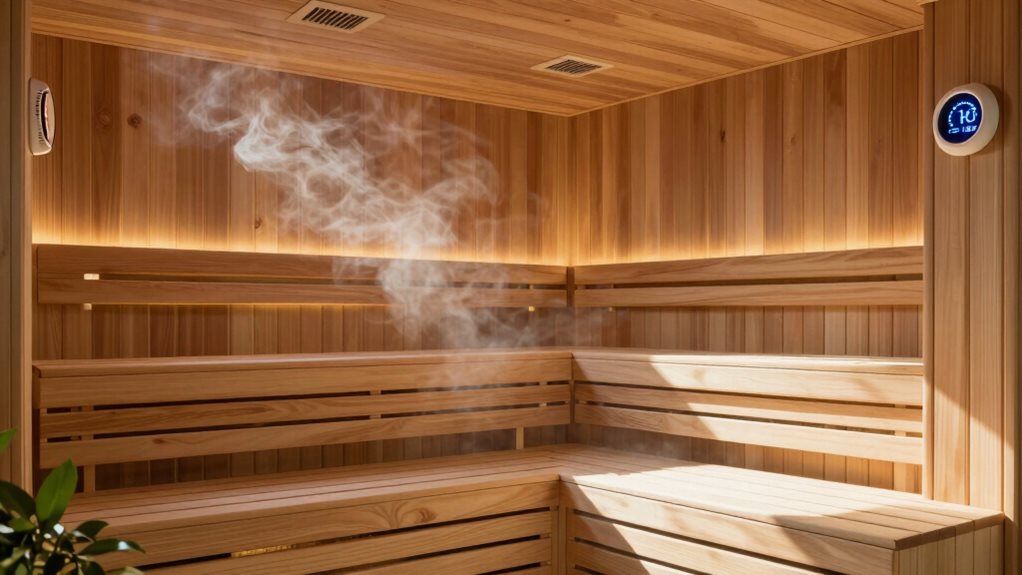
To keep your sauna experience enjoyable and healthy, it’s essential to pay attention to indoor air quality and system efficiency. Aim for 5 to 8 air changes per hour (ACH) in your sauna, about 6 ACH being ideal.
That means for a two-person sauna, you’ll need around 30 to 40 CFM of fresh air. Place your fresh-air vent low, near the heater, to mix warm air and keep CO2 levels low. The exhaust should be higher on the opposite wall to remove stale air effectively.
Monitoring CO2 levels can help you guarantee good air quality. Finally, proper ventilation helps reduce humidity and microbial growth, making for a cleaner, more inviting sauna experience that you’ll love stepping into! Additionally, incorporating HEPA air purifiers can further enhance your sauna’s air quality by filtering out allergens and pollutants.
Design Tweaks for an Airy Atmosphere Without Heat Loss
Creating an airy atmosphere in your sauna doesn’t have to mean sacrificing warmth or comfort.
With the right design tweaks, you can enjoy a fresh, ventilated space that keeps the heat just where you want it. Consider these tips:
- Position intake vents low, near the heater, to quickly warm cool air and promote circulation.
- Install exhaust vents higher, around 600–900 mm from the floor, for ideal air exchange and convection.
- Ensure balanced vent sizing to allow four to six air changes per hour, keeping the air fresh while retaining warmth.
Additionally, using proper sauna insulation building materials can significantly enhance your sauna’s thermal efficiency, ensuring that the warmth remains where it is needed most.
Frequently Asked Questions
How Often Should Sauna Vents Be Cleaned?
You should clean sauna vents after every use, perform light cleaning monthly, and conduct thorough cleanings every 3–6 months. Immediate action’s needed if you notice mold, odors, or reduced airflow at any time.
What Materials Are Best for Sauna Vent Covers?
You’ll find cedar, particularly western red and Spanish cedar, makes the best sauna vent covers. They improve appearance, provide durability, and guarantee proper ventilation, creating an inviting atmosphere while maintaining functionality in your sauna.
Can Poor Ventilation Cause Health Issues?
Yes, poor ventilation can cause health issues. You’ll experience higher CO2 levels, leading to dizziness, cognitive impairment, and respiratory problems. Inadequate airflow also increases humidity, fostering mold and bacteria growth, compromising your overall well-being.
How Can I Tell if My Sauna Is Well-Ventilated?
You can tell if your sauna’s well-ventilated by checking for a fresh smell, even temperatures, quick drying surfaces, and no condensation. Monitor CO2 levels and airflow to guarantee proper air exchange during sessions.
What Are Common Signs of Vent Blockages?
Common signs of vent blockages include reduced airflow, visible debris around vents, unusual fan noises, and persistent condensation. You might notice uneven heating or odors, all indicating that your sauna’s ventilation system needs attention.
Final Thoughts
Incorporating good ventilation in your sauna makes a huge difference in comfort and air quality. By understanding vent placement and choosing the right size, you can increase airflow without losing heat. Whether you opt for passive or mechanical systems, remember to keep controls adjustable for flexibility. These changes not merely create an airy feel but also improve your sauna experience overall. So, go ahead, breathe easy, and enjoy your sauna sessions like never before!