
When choosing between wood-burning stoves and electric heaters for your sauna, think about your preferences. Wood stoves offer a traditional experience with rich warmth, but they take longer to heat up and require chimney installation. On the other hand, electric heaters heat up quickly and let you control temperatures easily, making them user-friendly. Each option comes with its own maintenance and cost considerations, so it’s key to weigh these factors. Stick around to discover tips for selecting the right heater for your sauna needs!
Heating Methods Overview
When it comes to heating your sauna, you have two main options: wood-burning stoves and electric heaters.
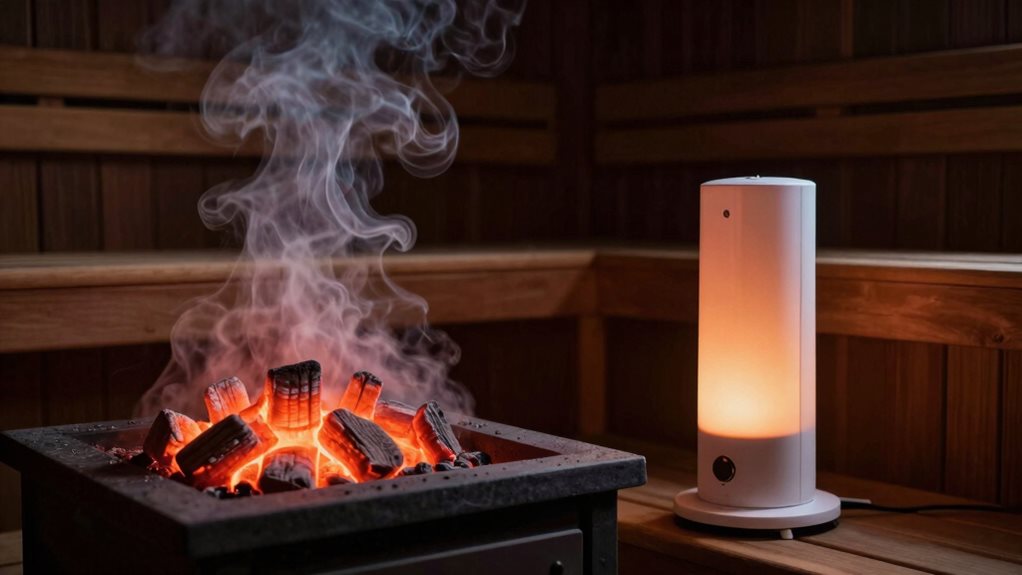
Wood-burning stoves create heat by burning wood, which warms stones inside the stove. This method gives you a toasty environment that reaches up to 195°F (90°C). While it takes these stoves longer to heat up, they hold onto that warmth longer, giving off a residual heat that keeps you cozy. Infrared saunas offer quicker heat-up times, typically taking around 15-20 minutes, compared to the longer heating time of wood-burning stoves. Additionally, when paired with sauna rocks, electric heaters can generate steam, enhancing the overall experience with humidity benefits. An electric sauna heater can be an excellent choice for those who prefer convenient heating options.
On the other hand, electric heaters heat up quickly, reaching steady temperatures just as high. However, they cool down fast once they’re turned off.
Both methods make you sweat, but wood-burning stoves offer a traditional sauna experience with variable heat, while electric heaters provide precise temperature control.
Choose wisely!
Installation Requirements Comparison
When you’re thinking about installing a sauna, the differences between wood-burning stoves and electric heaters can really catch your attention. Wood-burning setups often require careful planning, including specific permits and the right kind of chimney, while electric installations can feel like a breeze with fewer structural demands. However, both options have their unique requirements, so it’s crucial to know what you need before you get started! Electric sauna heaters commonly operate at 240V/1PH, ensuring they deliver the substantial power needed for effective heating. Proper heater sizing is essential to prevent energy waste and ensure optimal temperature. Additionally, electric sauna heaters are often praised for their ease of use, allowing users to simply set a timer and enjoy the warmth without the hassle of maintaining a fire.
Wood-Burning Setup Necessities
To create a safe and effective wood-burning sauna, you need to pay close attention to installation requirements that guarantee efficiency and minimize fire risk.
Start with the right clearances—most stoves need to be 4 to 12 inches from walls and 3 feet below the ceiling. Use non-combustible flooring like concrete or tile to protect against heat, and make sure your chimney is insulated and properly installed to vent gases effectively. Proper ventilation is crucial to prevent smoke and carbon monoxide buildup, ensuring a safe environment.
Additionally, ensure that the stove is installed with a minimum safety distance of 30 to 50 cm from surrounding objects to prevent fire hazards. Don’t forget a fresh-air inlet for combustion and clear space around the stove to prevent accidents. Installing heat shields helps manage heat transfer, while smoke detectors keep you safe.
Electric Installation Simplicity
Setting up an electric sauna offers a different set of installation requirements compared to wood-burning options, making it a more streamlined choice for many.
Most electric sauna heaters need a 240V/1PH power supply, which is common in homes. You’ll also need a dedicated 40-amp circuit with a 2-pole breaker to guarantee everything operates efficiently without overloading. When wiring, use the correct gauge wire and metallic conduit to protect it from heat. While it might seem tempting to tackle this yourself, hiring a licensed electrician is essential. Hiring a professional ensures compliance with local codes and regulations, providing peace of mind. They’ll handle the technical stuff, making sure it meets safety standards for proper operation. Additionally, the convenience of electric sauna heaters allows for quicker heating times, enhancing your overall sauna experience. Plus, a dedicated circuit prevents interruptions, giving your sauna the power it needs to create that perfect atmosphere for relaxation.
Performance and Heating Efficiency
Understanding the performance and heating efficiency of sauna heaters can make a big difference in your overall sauna experience.
Electric heaters are quicker, reaching temperatures in about 20–60 minutes, which means less waiting for that perfect heat. In contrast, wood-burning stoves can take 40–180 minutes, depending on many factors. With electric heaters, you enjoy consistent, controllable temperatures, while wood stoves create variable heat levels based on fire intensity. Additionally, electric heaters require a 220V hardwired electrical connection, which may factor into your installation considerations. Electric options also convert almost all energy into heat, making them efficient, while wood stoves lose some heat through exhaust. Wood-burning heaters emphasize a traditional, elemental approach that enhances the overall sensory experience of the sauna. Moreover, investing in a reliable sauna heater kit can ensure that your sauna operates at optimal performance for years to come.
Electric heaters heat up in 20–60 minutes, while wood stoves can take 40–180 minutes to reach optimal temperatures.
If you’re looking for rapid warming with the intense heat of a wood stove, consider hybrid setups that combine both systems, giving you the best of both worlds for your sauna sessions!
Ambiance and Experience in the Sauna
While you may think a sauna is all about heat, the real magic lies in the ambiance and experience that each type of heater creates.
With wood-burning stoves, you get crackling flames and a soft glow that bring tranquility. The natural scents of burning wood fill the air, creating a rich aroma while sounds of popping logs intensify your immersion.
Lighting the fire becomes a meditative ritual, taking about 1.5 hours for heat to build, which fosters a deeper connection to the experience. This living fire generates a calming atmosphere that electric heaters simply can’t match.
The gentle, radiant warmth invites you to relax, making the traditional wood-fired sauna feel both nostalgic and uniquely special. Additionally, a natural wood sauna heater enhances the overall experience, bringing a connection to nature that complements the soothing heat.
Maintenance and Upkeep Considerations
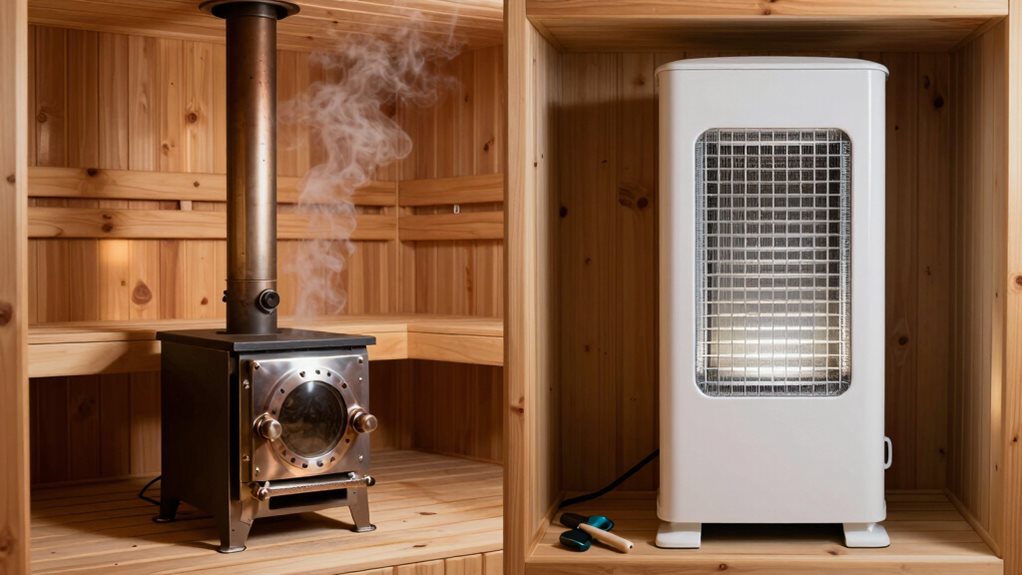
When it comes to keeping your sauna in top shape, maintenance varies quite a bit between wood-burning stoves and electric heaters.
With wood stoves, you’ve got to manage ash buildup and make sure the chimney stays clean, but electric heaters only require a little dusting and checking the wiring.
Understanding these differences and considering long-term costs can help you choose the heating option that fits your lifestyle best.
Wood Maintenance Requirements
Taking the time to care for your wood-burning stove can greatly improve your sauna experience.
First, empty the ash drawer after every use to keep the air flowing effortlessly. You don’t want any obstructions!
Check the firebox monthly for cracks or warps, which can harm efficiency. Cleaning the glass and surfaces with a soft brush keeps everything looking sharp and makes your sauna inviting.
Don’t forget to inspect the chimney yearly for creosote buildup; this can prevent dangerous fires.
Also, store good-quality, dry wood properly to guarantee efficient burning. Regularly checking for pests and mold on your firewood keeps those pesky issues at bay.
With proper maintenance, your sauna will offer warmth and relaxation for years to come!
Electric Maintenance Advantages
Maintaining an electric sauna heater comes with a set of advantages that can make your sauna experience even better! Unlike wood-burning stoves, electric heaters typically require less intensive upkeep, allowing you to focus more on relaxation.
Here’s what you can easily handle:
- Wipe down the exterior post-session to prevent stains and corrosion.
- Vacuum monthly to keep dust away and guarantee efficiency.
- Inspect the heater 3–4 times a year to catch issues early.
- Check electrical connections quarterly to avoid potential dangers.
- Deep-clean every few months, including stone care, to promote even heat.
With simpler maintenance routines, you can enjoy your sauna more and worry less about the upkeep! Additionally, electric sauna heaters often come with home sauna heater kit options designed for efficiency and ease of installation.
Long-Term Cost Considerations
While you might be excited about enjoying the warmth of your sauna, it’s important to contemplate the long-term costs associated with its maintenance and upkeep.
Annual maintenance can range from $100 to $400, depending on usage, which includes cleaning and inspections. Inspecting and calibrating your heater might set you back another $50 to $150 each visit.
Don’t forget about routine consumables like cleaners and replacement stones, adding another $20 to $100 yearly. If you opt for a wood-burning stove, factor in fuel costs which can vary due to season and supply.
With electric heaters, your monthly energy bill usually hovers around $24 to $50, offering a more predictable expense. Additionally, consider investing in a sauna air purifier to enhance air quality, which can further improve your overall sauna experience.
Planning ahead can keep your sauna experience enjoyable and budget-friendly!
Cost Analysis of Wood vs. Electric
When considering whether to heat your sauna with wood or electricity, you’ve got to look closely at both initial costs and ongoing expenses.
Electric heaters can range from $300 to $1,500, but don’t forget the additional installation fees for dedicated wiring. In contrast, wood-burning stoves typically cost more upfront and often require extensive setup, like chimneys and flues.
Electric heaters are affordable initially, but installation can add up, while wood stoves generally incur higher upfront and setup costs.
Here’s a quick breakdown:
- Electric setups have lower initial prices, but installation can be pricey.
- Wood stoves can be more expensive to purchase and install.
- Fuel costs vary greatly—wood can sometimes be free.
- Ongoing maintenance is required for both systems.
- Consider your local electricity rates for accurate comparisons.
Additionally, many homeowners find that home sauna heating systems can significantly enhance their overall sauna experience.
Environmental Impact and Sustainability
Understanding the environmental impact and sustainability of sauna heating options is crucial if you want to make an informed choice.
Electric heaters often shine in low-carbon grids powered by renewables, producing minimal emissions. In contrast, wood-burning stoves release not only CO2 but also pollutants like fine particulate matter, which can degrade air quality and pose health risks.
While sustainable wood sourcing can help, poorly managed forests can lead to deforestation. It’s like choosing between a clean river and a muddy pond.
Even with the latest advancements, wood stoves can still produce harmful emissions. So, when selecting your sauna heater, consider the entire lifecycle and local environmental effects to guarantee a healthier choice for both you and the planet!
Choosing the Right Sauna Heater for You
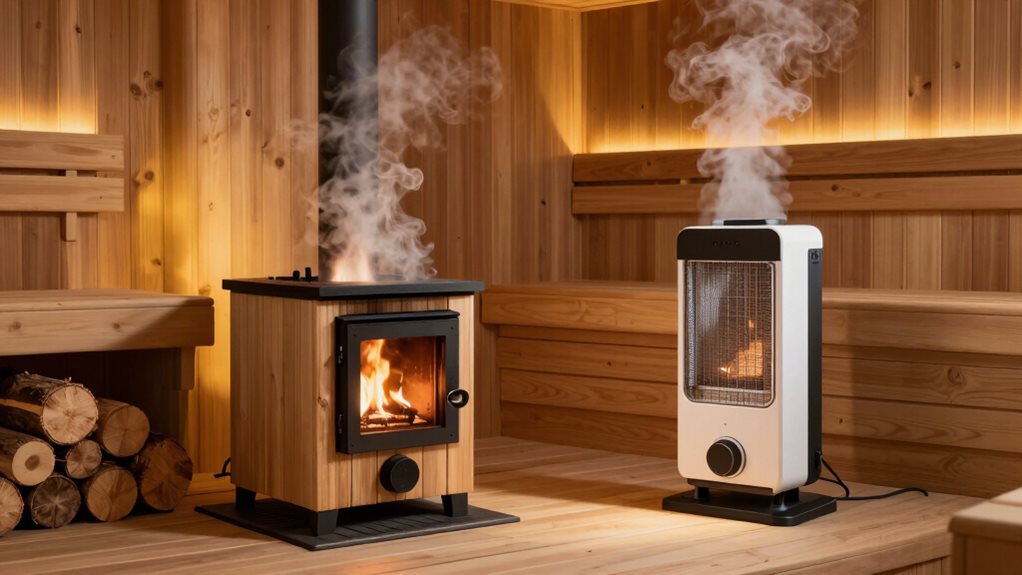
How do you choose the right sauna heater that fits your needs? First, think about where your sauna will be and how you plan to use it. Here are some factors to evaluate:
- Electric Heaters: Perfect for urban settings; quick to heat but can raise energy bills.
- Wood-Burning Heaters: Offer an authentic, cozy experience with that delightful wood aroma, ideal for outdoor spaces.
- Infrared Heaters: Efficient for small areas, providing direct heat but missing the classic sauna feel.
- Gas Heaters: Cost-effective and good for larger saunas, but you’ll need gas access.
- Combi Heaters: Great for customizing humidity and heat preferences.
Electric heaters are widely available and come in various sizes, making it easier to find the right sauna heater electric stove for your needs.
Frequently Asked Questions
Can I Use a Wood Stove in an Indoor Sauna?
Yes, you can use a wood stove in an indoor sauna, but you must follow local building codes, safety regulations, and installation requirements to guarantee proper ventilation and fire safety. Always prioritize safety and compliance.
How Do Electric Sauna Heaters Work?
Electric sauna heaters convert electricity into heat via resistance elements, warming stones that emit radiant heat. Thermostats maintain temperature, while steam generation occurs when water’s thrown on hot stones, improving the sauna experience.
What Is the Best Type of Firewood for Wood-Burning Stoves?
For wood-burning stoves, the best firewood includes dense hardwoods like oak and hickory, which offer high heat output and long burn times. Make certain it’s well-seasoned at 15–20% moisture for peak performance and efficiency.
Are Electric Sauna Heaters Energy-Efficient?
Yes, electric sauna heaters can be energy-efficient, especially modern models. They optimize heating with thermostats, reduce energy consumption over time, and when properly sized for your space, they minimize waste and costs during use.
Can I Switch From Wood to Electric Sauna Heating Later?
Yes, you can switch from wood to electric sauna heating later. Just cover the chimney, frame for the electric heater, and consult a qualified electrician for safe installation and peak performance based on your sauna’s size.
Final Thoughts
In the end, choosing between a wood-burning stove and an electric heater for your sauna really comes down to your personal preferences and lifestyle. Both have their perks, whether it’s the authentic crackle of wood or the convenience of electricity. By weighing factors like cost, maintenance, and ambiance, you can find the perfect match for your sauna experience. So, get ready to relax and enjoy the soothing warmth customized just for you!