
When you’re planning a sauna installation, you need to understand its power requirements to guarantee everything operates seamlessly. Traditional saunas typically require a 220-240V power supply and need 30 to 60 amps, while smaller infrared models can work with 110-120V and 15 to 20 amps. It’s also essential to use dedicated circuits to avoid overloads and guarantee safety. Plus, local codes and permits might be necessary, so stick with us to learn more!
Voltage Requirements for Sauna Installations
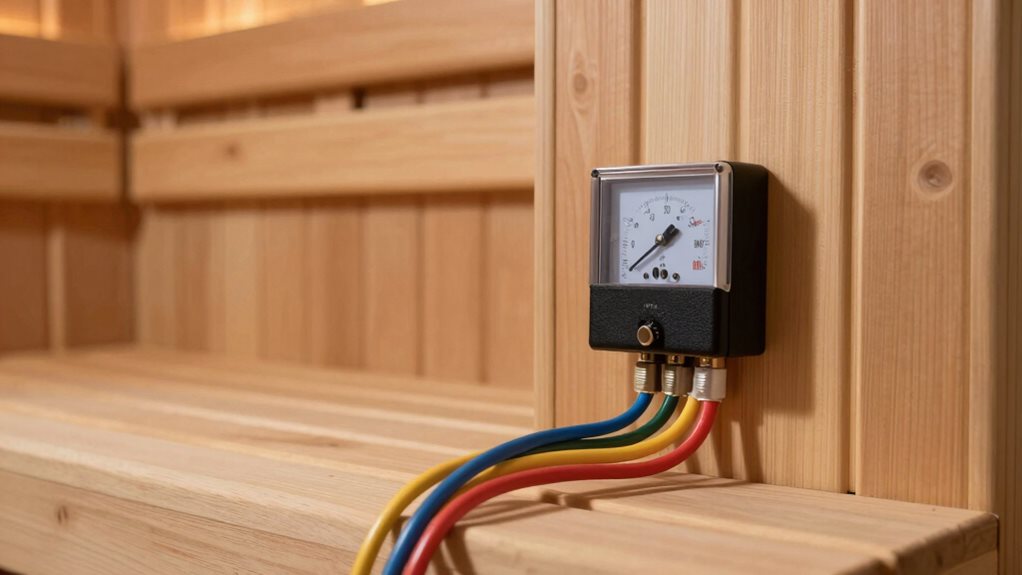
When it comes to sauna installations, understanding voltage requirements is key to getting the most out of your experience. Traditional saunas typically need a 220-240V power supply, allowing them to heat up quickly and reach higher temperatures. Most electric heaters use 240V single-phase, perfect for home setups. Conversely, infrared saunas usually operate on 110-120V, making them super easy to install. If you’re looking at larger infrared models, they might require 220-240V for peak performance. Moreover, 240V/1PH electric heaters are the most common for traditional saunas, ensuring efficient heating. So, whether you’re working with a cozy 1-2 person infrared sauna or a spacious traditional unit, knowing the right voltage helps guarantee your sauna operates seamlessly. Just keep local codes in mind to avoid any electrical hiccups—you’ll be relaxing in no time!
Amperage and Circuit Sizing Considerations
To enjoy your sauna experience fully, understanding amperage and circuit sizing is vital.
Most traditional saunas need between 30 and 60 amps, depending on their size and heater type. Smaller infrared saunas usually work with just 15 to 20 amps, while larger ones demand 40 to 60 amps.
When setting up your sauna, you’ll want the right breaker size to match your heater’s wattage; for instance, a 30-amp breaker suits a 4.5-6.0 kW heater.
Plus, using the correct wire gauge is imperative—like 6-gauge wire for 50-60 amp circuits—to prevent overheating.
Importance of Dedicated Circuits and Breakers
When it comes to sauna installations, having dedicated circuits and breakers is essential.
They help prevent circuit overloads by keeping your sauna’s hefty electrical load separate from other appliances, which means fewer trips to the breaker box.
Plus, following safety standards guarantees you enjoy your sauna without worrying about electrical issues.
Preventing Circuit Overloads
Preventing circuit overloads is vital, especially when you’re setting up a sauna in your home.
Saunas often require dedicated circuits to handle their high power demands without sharing the load, which can lead to overloaded circuits. For larger saunas, you’ll typically need a 220-240V circuit with a 30-60 amp breaker, while smaller infrared saunas might manage with a 120V, 15-20 amp circuit.
A dedicated circuit helps avoid repetitive breaker trips during peak usage, letting your sauna operate seamlessly. Plus, using the right amp breakers guarantees you don’t undersize your setup, which can cause dangerous overload situations.
Ultimately, keeping your sauna’s electrical needs isolated helps guarantee a safe and enjoyable experience while you relax and unwind.
Ensuring Safety Standards
Assuring safety standards in sauna installations is vital, especially since you’re working with high-powered equipment.
To guarantee your sauna operates safely, let’s focus on the importance of dedicated circuits and breakers:
- Dedicated circuits provide power solely for your sauna, avoiding conflicts with other appliances.
- Breakers must match your sauna’s heater specifications, typically requiring 30-40 amps for most models. Additionally, it’s essential to hire a licensed electrician to ensure compliance, safety, and proper installation of your sauna’s electrical components.
- GFCI protection is critical to prevent shocks in the moist sauna environment.
Wiring Specifications for Safety and Compliance
Understanding wiring specifications is vital for guaranteeing the safety and compliance of sauna installations, especially when you consider how moisture and heat can pose serious hazards.
You need to make certain your sauna’s circuit has GFCI protection to reduce electrical shock risks in damp environments. It’s fundamental to use the right wire gauge—like 10-gauge for 30 amps, 8-gauge for 40 amps, and 6-gauge for 50 amps—to safely handle power.
Dedicated circuits prevent overheating and fire hazards, so you can’t use existing ones. Most heaters require 220-240V, with some smaller infrared units using 110-120V.
Plus, remember to encase your wires in moisture-resistant sheathing to keep them safe from the sauna’s steamy atmosphere!
Navigating Code Compliance and Permits
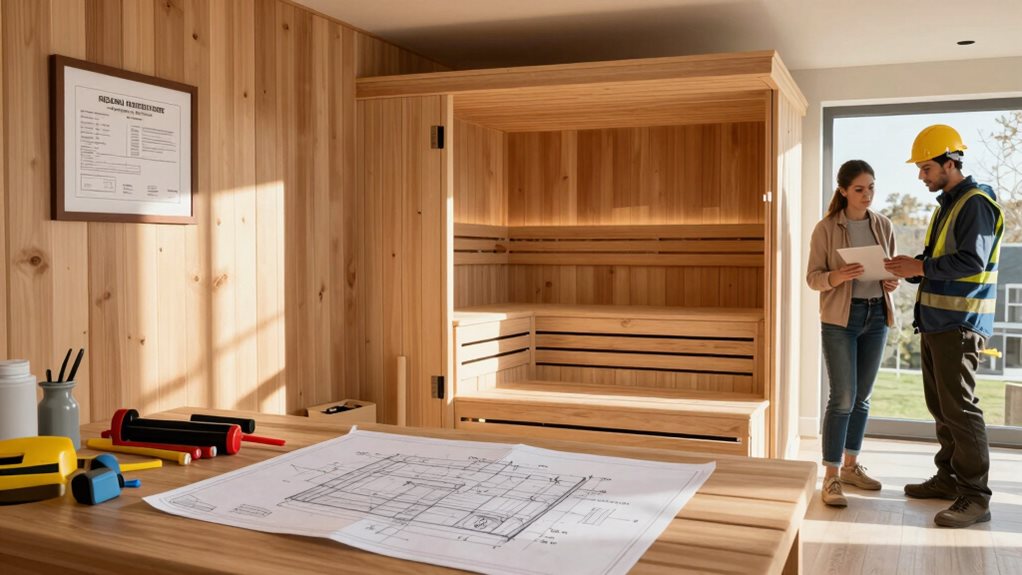
Before diving into your sauna installation, it’s essential to grasp the nuances of code compliance and permits. Getting the proper permits not only keeps you safe but also guarantees your sauna meets local regulations.
Here are some key points to reflect on:
- Local permits are often necessary, requiring plans that detail sauna size and construction.
- Zoning laws typically classify saunas as accessory structures with specific size limits; sometimes, outdoor saunas under 120 sq. ft. don’t need permits.
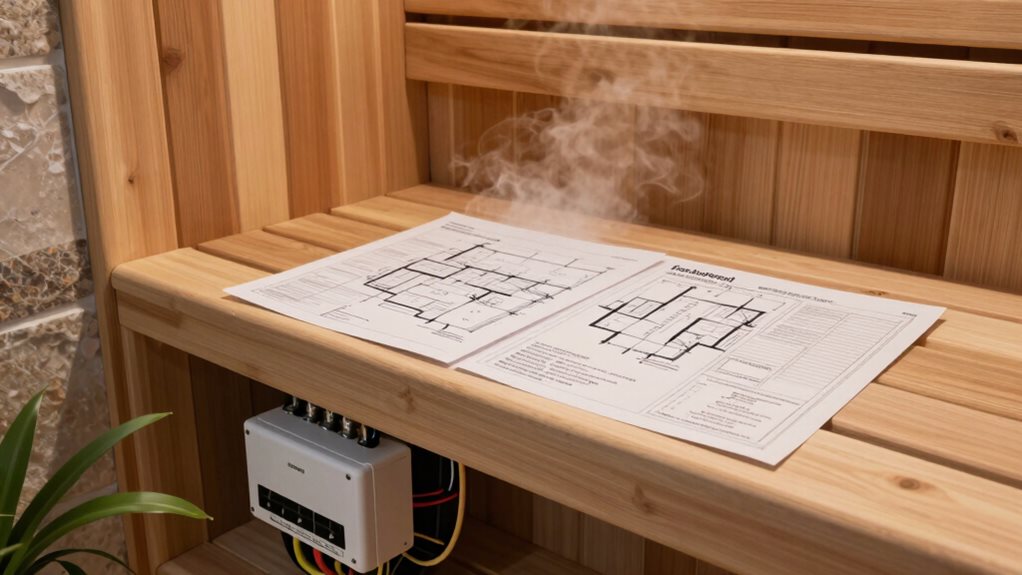
- Inspections verify compliance, and you might need to submit electrical diagrams. Furthermore, it’s crucial to ensure that your sauna adheres to the National Electrical Code (NEC) to promote safety and functionality.
Ensuring Safety Through Professional Installation
When you set out to install a sauna, guaranteeing safety through professional installation makes all the difference. Hiring a licensed electrician guarantees all wiring meets safety codes, like using dedicated circuits for heaters and installing ground fault circuit interrupters (GFCIs) nearby. Heaters must be positioned safely, at least 10 cm from walls and 30 cm from benches, with protective barriers to prevent burns. Additionally, proper placement ensures compliance with safety distance requirements. Proper ventilation and insulation are crucial to avoid moisture damage. Plus, features like non-slip flooring and an outward-opening door help during emergencies, making your sauna safer.
Frequently Asked Questions
Can I Use an Extension Cord for My Sauna?
No, you can’t use an extension cord for your sauna. It can overheat, create fire hazards, and potentially void the manufacturer’s warranty. Always follow proper installation requirements for safety and compliance.
How Far Can the Power Source Be From the Sauna?
The power source can be placed within 10 to 50 feet of your sauna, depending on local codes. Make certain it’s easily accessible and follows NEC guidelines for safety and convenience during operation.
Are There Energy-Efficient Sauna Options Available?
Yes, energy-efficient sauna options are available! You can choose infrared saunas for lower electricity use, or hybrid models that let you optimize energy consumption. Proper insulation and control strategies also improve efficiency considerably during operation.
What Happens if I Overload My Sauna’s Electrical Circuit?
If you overload your sauna’s electrical circuit, it could trip circuit breakers, stop heating, and risk overheating wires. This increases fire hazards and electrical shocks, leading to costly damage and potential safety issues in your home.
Do Saunas Require Special Ventilation for Electrical Components?
Yes, saunas need special ventilation for electrical components. Proper airflow prevents moisture buildup, protecting your electrical systems from damage. Always integrate ventilation with GFCI protection to guarantee safety and efficient operation of your sauna.
Final Thoughts
So, as you immerse yourself in sauna installations, remember that understanding power compliance is key to safety and enjoyment. By paying attention to voltage, amperage, and proper wiring, you’re not merely following rules; you’re creating a cozy and safe space. Always opt for dedicated circuits and consider expert help, because a little knowledge goes a long way. With careful planning and adherence to codes, you’ll transform your sauna into a peaceful retreat without power hassles. Enjoy the heat!