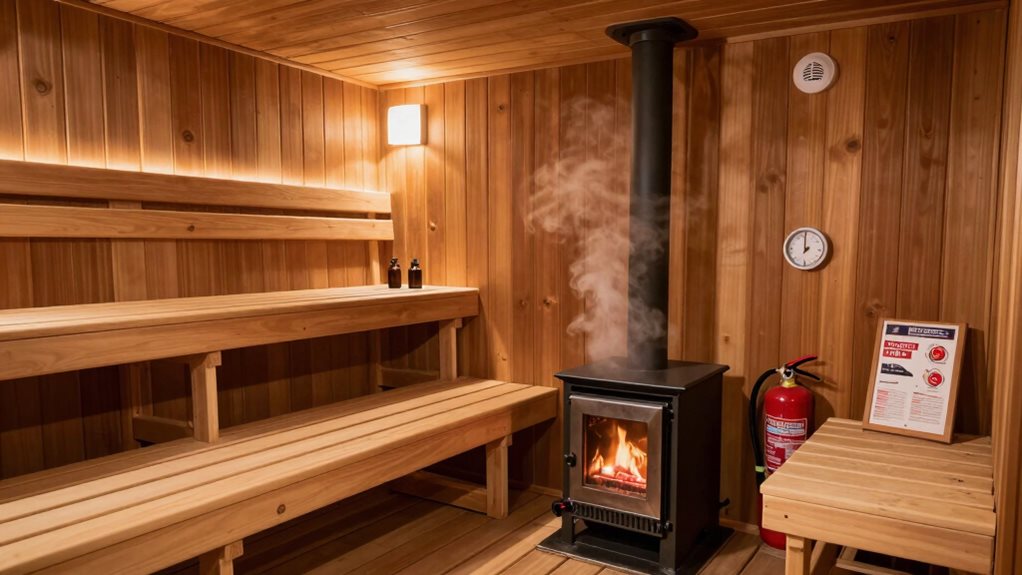

Fire safety in modern saunas is a big deal. To keep everyone safe, make certain your sauna has good fire compartmentation, meaning it can withstand fire for 60 minutes. Position your heater correctly, at least 10 cm from walls and 30 cm from benches, and use proper electrical setups. Don’t forget about ventilation, smoke alarms, and regular maintenance. Following these safety tips helps prevent disasters and guarantees a great sauna experience. You’ll find even more tips for keeping your sauna safe!
Understanding Fire Compartmentation Requirements
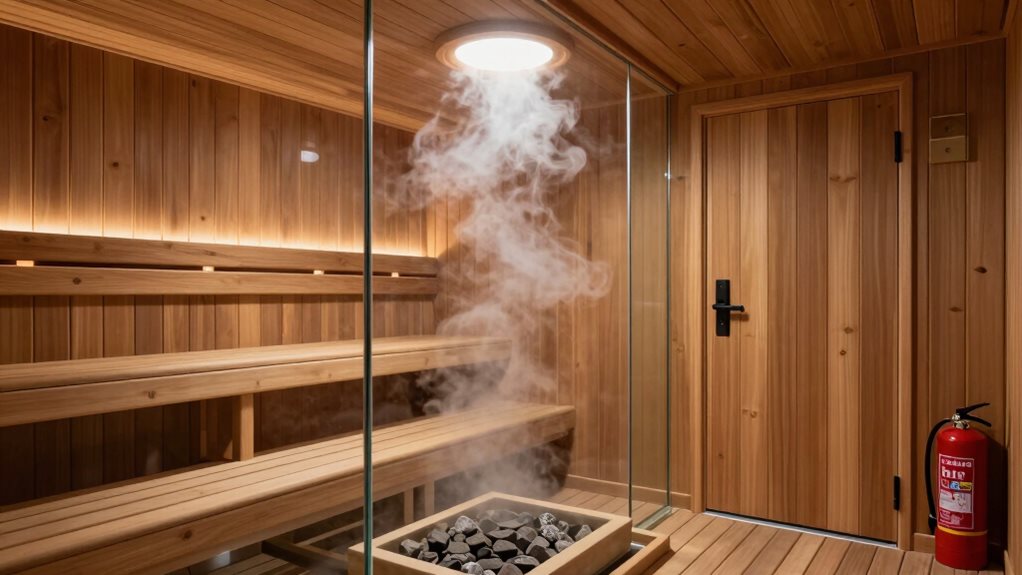
When it comes to enjoying a sauna, safety should always be your top priority, and understanding fire compartmentation requirements is a vital part of that.
You need to guarantee that your sauna enclosure, including walls, floors, and ceilings, has a 60-minute fire resistance rating. This means it can handle a fire for that duration, helping to keep you safe and secure. It’s important for fire barriers to stretch both horizontally and vertically to control fire spread, as any openings need protection with approved fire-stopping materials. Additionally, you must ensure that your sauna is designed to provide accessible features for all users, adhering to accessibility guidelines.
Also, if your sauna’s in a plant room, it should be within a separate 60-minute fire compartment.
Heater Safety and Installation Guidelines
When it comes to heater safety in your sauna, proper placement and installation are essential. You need to make sure your heater is positioned correctly, with safe distances from walls and seating areas, so that everyone stays burn-free and cozy. Plus, using barriers and following electrical safety protocols won’t just protect you but also keep your sauna experience fun and worry-free! Ensuring that the heater power matches the sauna room area for optimal heating effect is also crucial for enhancing heating efficiency. Additionally, adherence to building codes will ensure that all safety measures are met during the installation process. Finally, selecting a high-quality sauna heater kit will greatly contribute to the overall safety and performance of your sauna.
Safe Heater Placement
Securing safe heater placement in your sauna is essential for protecting both your space and those who use it.
First, maintain a minimum side clearance of 10 cm from combustible walls, or 15-20 cm for high-power heaters. Keep at least 30 cm from benches, expanding to 50 cm with guardrails to avoid burns.
Always follow manufacturer specifications for ceiling clearance to guarantee proper airflow. Avoid placing shelving above the heater since that can increase fire risks.
Install a steel or mesh guard over the heater top to prevent direct contact.
Finally, work with a licensed electrician for proper wiring and circuit installations. Additionally, consider using sauna moisture protection products to enhance safety and longevity of your sauna materials.
These steps will keep your sauna a safe, relaxing haven rather than a hotheaded disaster!
Barrier Requirements Explained
Securing safety in your sauna doesn’t just end with proper heater placement—barrier requirements also play a crucial role.
Following guidelines helps protect against potential fire hazards. Here’s what you need to keep in mind:
- Guarantee a one-hour fire-rated separation between the sauna heater and adjacent areas.
- Use non-combustible materials like gypsum board or metal studs for walls around your heater. Insulation prevents moisture from entering wall cavities and can enhance fire safety by reducing the risk of heat buildup in the structure.
- Install a protective heater guard to prevent accidental contact with hot surfaces.
- Maintain clearance zones to avoid heat transfer to combustible finishes.
Electrical Safety Protocols
Setting up a sauna involves more than just guaranteeing proper barrier requirements; electrical safety protocols play an equally important role in keeping you and your sauna safe.
To start, make sure your sauna heater complies with the IEC 60335-2-53 standards for safety. Most heaters require a 240V single-phase connection, needing hard-wiring to your electrical box. The importance of using a 240V/1PH connection is crucial for the effective operation of high-power sauna heaters. Choosing the right electric sauna heater can also enhance safety and efficiency in your setup.
Don’t forget the breaker! You’ll need a dedicated 30 to 60-amp circuit based on your heater’s size. Proper wire gauge matters too; 10/2 wire works well for heaters under 30 feet from the breaker.
Finally, be cautious about safety features! Installing GFCI protection can keep you safe from electric shocks, and remember—no outlets inside the sauna!
Stay smart and enjoy your sauna!
Essential Detection and Suppression Systems
When it comes to keeping your sauna safe, having the right detection and suppression systems is key.
Fire sprinkler systems can help douse flames quickly, while carbon monoxide alarms protect against hidden dangers.
Fire Sprinkler Systems
Fire sprinkler systems play a crucial role in keeping modern saunas safe from the threat of fire.
You’ll want to verify your sauna is equipped with the right setup to protect you and your guests effectively. Here are key elements to contemplate:
- Install Heads Inside: Make sure sprinkler heads are placed inside the sauna to control any fire quickly.
- Temperature Calibration: Opt for high-temperature heads that activate at 286°F, preventing false alarms.
- Qualified Installation: Always hire a licensed sprinkler contractor to verify proper installation and compliance with local codes.
- Regular Maintenance: Keep your sprinkler system well-maintained to guarantee it works when needed.
With these precautions in mind, you can enjoy your sauna while keeping safety at the forefront!
Carbon Monoxide Alarms
Carbon monoxide alarms are an important part of guaranteeing safety in and around your sauna. It’s imperative to install them in hallways near sleeping areas, but not directly inside the sauna because heat and humidity can damage them.
Verify the alarms you pick meet UL 2034 standards, and place them at least 10 feet away from steam and heat sources. Test them monthly, replace batteries annually, and clean them to prevent bugs from interfering.
Educating yourself and your guests about what to do if the alarm goes off is essential—everyone should know to evacuate immediately to fresh air.
Ventilation Standards for Saunas
Ventilation standards for saunas are crucial not just for comfort, but also for safety, guaranteeing that you can relish your sauna experience without concerns.
To keep air fresh and flowing, consider these important guidelines:
- Install intake vents near the floor, 4 inches from the ground, and exhaust vents 4-6 inches from the ceiling.
- Verify the intake vent provides at least 4 square inches of space per person, while the exhaust vent should have a minimum of 5 square inches.
- Maintain seven to eight air changes per hour for ideal oxygen levels, as adequate ventilation is crucial to prevent discomfort. Additionally, ensure that the lower vent serves as an intake for fresh air to further enhance your sauna’s air circulation.
- For even heating, position the supply vent near the ceiling, making certain warm air circulates effortlessly.
Following these standards helps you achieve a safe and enjoyable sauna experience.
Importance of Maintenance and Inspections
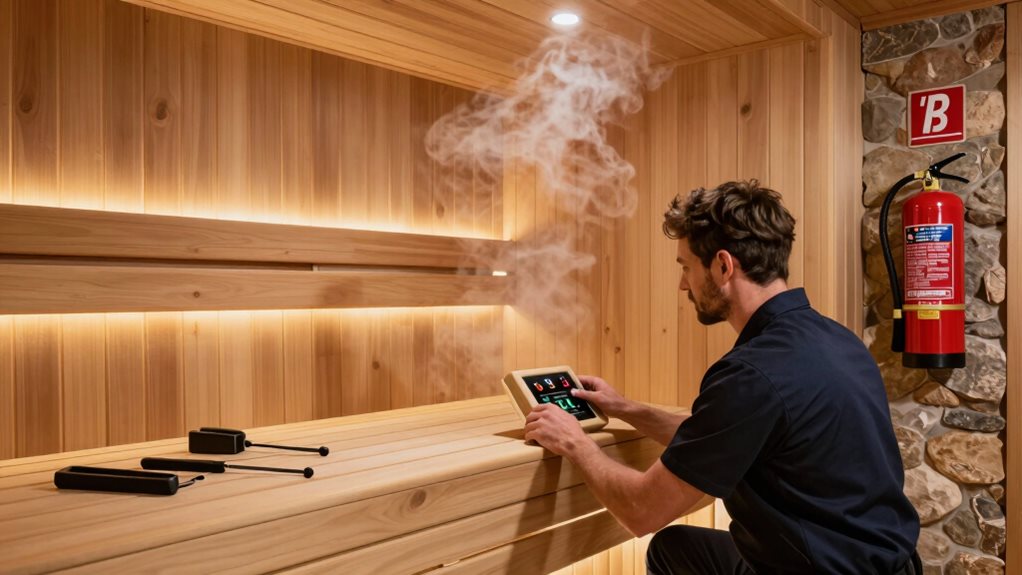
When it comes to enjoying your sauna experience, maintaining and inspecting your sauna regularly isn’t just a chore—it’s essential for confirming safety and comfort.
By checking wiring, outlets, and heating elements, you can catch wear and damage early, preventing future hazards. Look for obstructions or discoloration around heaters, and verify thermostats work correctly to avoid overheating.
Don’t forget to inspect your chimney and flue every few years to prevent blockages that could lead to smoke hazards. It’s also smart to test smoke detectors and check fire extinguishers to guarantee they’re in good shape.
User Protocols for Safe Operation
While enjoying the soothing warmth of a sauna can be a fantastic experience, following safety protocols is crucial to making certain your time remains relaxing and hazard-free.
Enjoying a sauna is wonderful, but prioritizing safety ensures a truly relaxing and hazard-free experience.
To guarantee safe operation, keep these important guidelines in mind:
- Always supervise children in the sauna and never allow them to enter alone.
- Avoid using any heating devices or flames inside the sauna, as these can be dangerous.
- Make certain to shower and dry off before entering to keep the wood in good condition.
- Keep jewelry and lotions out of the sauna; they can get uncomfortably hot and ruin your experience.
Emergency Preparedness and Evacuation Plans
After establishing safe operation protocols in the sauna, it’s important to contemplate what to do in case an emergency arises.
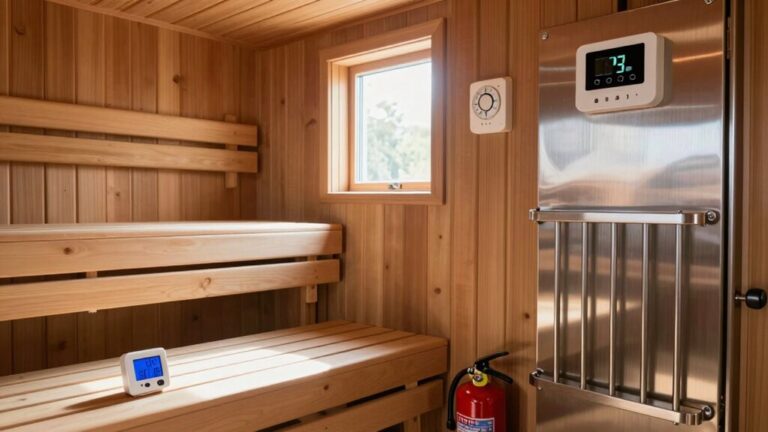
You’ll want to install smoke detectors and fire extinguishers near entrances, verifying they’re suitable for electrical fires. Equip your facility with emergency stop buttons inside and outside the sauna, and provide first aid kits for staff access.
Make sure exits are clear and well-marked, even in steam. Create an evacuation plan, encouraging immediate action if a fire is detected.
Regularly practice fire drills with users, so everyone knows what to do. Finally, review your emergency response plan annually, updating it as needed.
A little preparation now can make a big difference later—safety first!
Training and Awareness for Staff and Users
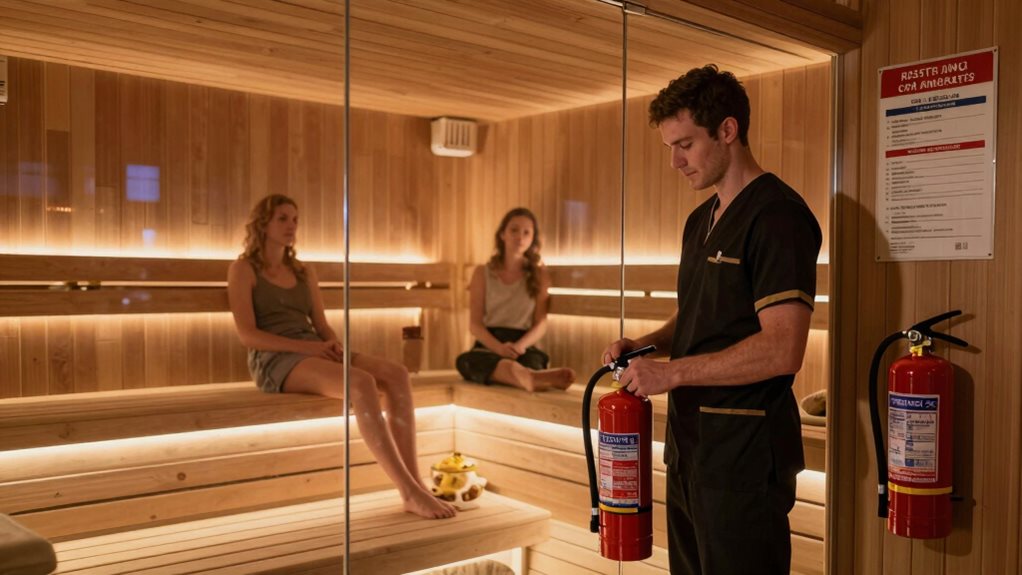
Effective training and awareness for both staff and users are key to maintaining a safe sauna environment.
To keep everyone informed and proactive, consider these crucial points:
- Document formal training for staff on sauna operation and emergency procedures.
- Provide safety guidelines to users, clearly outlining correct sauna use.
- Monitor sauna areas regularly to guarantee compliance with safety protocols and identify any hazards.
- Install informational signs to help users recognize symptoms of heat-related illnesses.
Frequently Asked Questions
How Often Should Sauna Fire Safety Equipment Be Replaced?
You should replace sauna fire safety equipment like heaters every 5-20 years, stones every 12-18 months, and inspect panels every 6-8 years. Regular checks guarantee safety and efficiency, so don’t neglect maintenance schedules.
What Should I Do if I Smell Smoke in the Sauna?
If you smell smoke in the sauna, exit immediately, activate the emergency alarm, and shut down the unit. Move to fresh air, assess your condition, and notify emergency services if smoke persists.
Can Saunas Be Built in Basements or Attics Safely?
Yes, you can safely build saunas in basements or attics, but make certain they have the proper structural integrity and follow local building codes for ventilation, fire safety, and humidity control to prevent hazards.
Are Portable Saunas Compliant With Fire Safety Regulations?
Yes, portable saunas can comply with fire safety regulations, but you’ll need to secure permits and guarantee proper installation. Follow local codes for ventilation, fire resistance, and safety features to meet compliance standards successfully.
What Fire Safety Certifications Should Sauna Manufacturers Have?
Sauna manufacturers should have UL, ETL, CSA, and CE certifications. These guarantee electrical safety, compliance with standards, and protection against fire hazards, giving you confidence in the product’s reliability and safety for use.
Final Thoughts
To sum up, keeping your sauna safe is crucial for everyone’s enjoyment and well-being. By understanding fire safety, properly installing heating systems, and maintaining equipment, you’re creating a relaxing environment that reduces risks. Don’t forget to educate users about safe practices and have an emergency plan in place. Regular maintenance and inspections show your commitment to safety. So, relax and unwind, knowing you’ve done your part to keep things safe and sound!