
When using a sauna, it’s essential to prioritize electrical safety. Make certain you have Ground Fault Circuit Interrupters (GFCIs) installed, as they cut off power during faults and reduce shock risks. Always use a dedicated circuit for your sauna heater—usually a 240 V circuit for traditional saunas or 120 V for infrared ones. Don’t skip electrical permits, inspections, or professional installation, as they help keep everything safe and compliant. Keep these tips in mind and you’ll be well on your way to a worry-free sauna experience!
Importance of GFCI Protection in Saunas
When you step into a sauna, the last thing on your mind should be worrying about electrical safety, yet that’s where GFCI protection comes into play.
A Ground Fault Circuit Interrupter, or GFCI, detects any current imbalances and cuts off the power to prevent electric shocks—super important in a moist environment like a sauna. Since saunas are often high in humidity, the risk of shock increases greatly. Correct wire gauge and type are also critical components for sauna wiring safety to ensure that GFCI devices function as intended.
GFCI devices trip the circuit whenever they sense a ground fault, effectively halting power flow. This isn’t just a suggestion; it’s a requirement in many building codes to guarantee user safety.
Requirements for Dedicated Circuits
To enjoy a sauna experience safely, it’s vital to have a dedicated circuit designed specifically for your heater.
Traditional saunas usually need a 240 V circuit, while small infrared units may run on a 120 V circuit. For most traditional heaters, aim for a breaker size between 30 A and 60 A, depending on the heater’s wattage.
If you’re working with infrared models, a 15 A to 20 A circuit typically does the trick. Remember to use the correct wire gauge—like 10 AWG for 30 A—to guarantee safety. Additionally, consider investing in a home sauna heater kit to ensure you have all the necessary components for a safe installation.
Finally, always double-check your existing panel’s capacity; you might need an upgrade to handle that new circuit. Don’t skip these steps; your sauna experience relies on it!
Understanding NEC and Local Code Compliance
When you’re setting up a sauna, understanding the National Electrical Code (NEC) and your local codes isn’t just important—it’s vital. These guidelines help keep your sauna safe and compliant, covering everything from which materials to use to how inspections work. Ensuring proper electrical systems is a key element of these regulations.
Importance of NEC Compliance
Guaranteeing compliance with the National Electrical Code (NEC) is crucial, especially when it comes to installing sauna heaters. Following NEC guidelines not just boosts safety but also minimizes hazards like electrical overloads.
Here are some key points to take into account:
- Dedicated Circuits: Confirm your sauna heater has its own circuit to prevent trips and overloads.
- Overcurrent Protection: Use circuit breakers sized per NEC requirements to protect against shorts and overloads.
- GFCI Installation: If your sauna is in a moist area, install GFCI breakers to guard against electric shocks.
- Clearances: Maintain appropriate distance from combustible materials to avoid fire risks and guarantee proper airflow.
Additionally, ensure that you select a sauna heater electric that meets the necessary safety standards for optimal performance and reliability.
Local Code Variations
Understanding local code variations is essential for confirming that your sauna installation meets safety standards and operates efficiently.
Different areas may have unique requirements, like GFCI protection for outdoor and high-moisture saunas, which helps prevent dangerous shocks. While the National Electrical Code (NEC) sets general guidelines, local codes can specify things like wire size, circuit types, and clearance distances.
For instance, indoor saunas typically use NM-B cable, but outdoor models need weather-rated conduit. Remember, your sauna’s heater might require a dedicated 240V circuit, so consult local regulations.
Always check with a licensed electrician to guarantee you’re following both NEC and local rules—keeping your sauna safe while you enjoy that cozy heat!
Installation Inspection Requirements
To guarantee your sauna meets safety standards and operates effectively, installation inspection requirements play a critical role.
You’ll want to verify several key aspects are checked during the inspection:
- Dedicated Circuit Verification: Confirm the sauna heater has a dedicated circuit, and the breaker rating matches the heater’s requirements.
- Grounding and Bonding Checks: Inspect that the heater’s frame is properly grounded and bonded to meet safety codes.
- GFCI Protection: Ascertain GFCI protection is installed where the code requires for that equipment type.
- Conductor Inspection: Check that conductors are suitable for the sauna’s heat and moisture conditions and are adequately protected.
Completing these inspections guarantees a safer, more enjoyable sauna experience while keeping you within compliance!
Importance of Electrical Permits and Inspections
Before you start wiring your sauna, you need to apply for an electrical permit—think of it as getting a thumbs-up from your local building authorities.
This process, while it might take some time and fees, guarantees that everything follows the National Electrical Code, which is vital for your safety.
Permit Application Process
When you’re installing a sauna, especially one with electrical components, getting the right permits and inspections isn’t just a formality—it’s a vital step that guarantees safety and compliance.
You’ll want to proactively tackle the permit application process, making sure you meet all local regulations.
Here are some common permits you might need:
- Building Permit – Necessary for any permanent sauna installation.
- Electrical Permit – Required for hardwired sauna heaters and new circuits.
- Mechanical Permit – Needed if you’re modifying ventilation systems.
- Plumbing Permit – Relevant for water lines or steam systems.
Proper permits not just guarantee safety but also protect your property value, keeping everything operating efficiently and legally.
Don’t skip this key step!
Inspection Benefits Explained
While you might think that getting your sauna inspected is just another box to tick off your to-do list, it actually plays a crucial role in keeping you and your family safe.
Inspections help spot degraded insulation and corroded connections that could lead to electrical shocks or fires. They guarantee your GFCI protection works properly in that moist environment. You’ll also confirm grounding is correct to prevent hazardous touch voltages.
With documented inspections, you can prove compliance with safety codes, reducing legal risks. Plus, inspections boost the long-term reliability of your sauna, catching issues early before they become costly.
Ultimately, they assure safety for everyone, including emergency responders, so don’t overlook this important step!
Benefits of Professional Installation
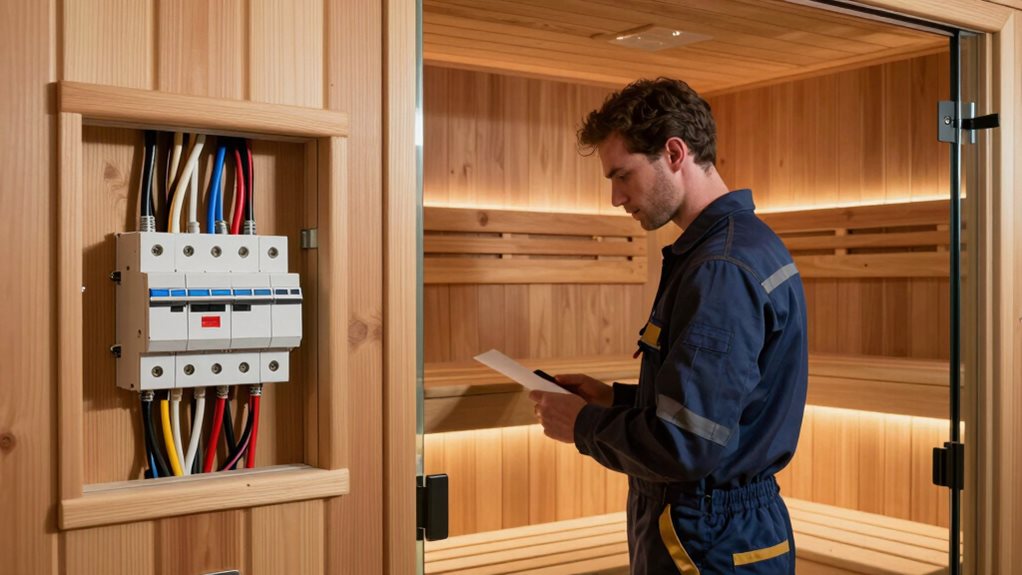
Choosing professional installation for your sauna may seem like an extra expense at first, but it pays off in safety and reliability. By hiring experts, you can rest easy knowing your sauna meets all necessary codes.
Here are some benefits to contemplate:
- Code Compliance: Professionals understand the National Electrical Code and local amendments, reducing the chance of unsafe installations and failed inspections.
- Correct Sizing: They calculate the electrical load, verifying your circuits are suitable, which helps avoid overloads.
- GFCI Protection: Experts determine the best placement for Ground Fault Circuit Interrupters, lowering shock risks in humid environments.
- Thorough Testing: Professionals perform testing to validate everything works safely before handing over the sauna.
- Home sauna heating system installations by professionals ensure optimal performance and longevity of your investment.
Trust in their skills to maintain your sauna safe and enjoyable!
Additional Safety Features for Saunas
Safeguarding your sauna experience goes beyond just professional installation; it involves incorporating a variety of additional safety features that improve protection and peace of mind.
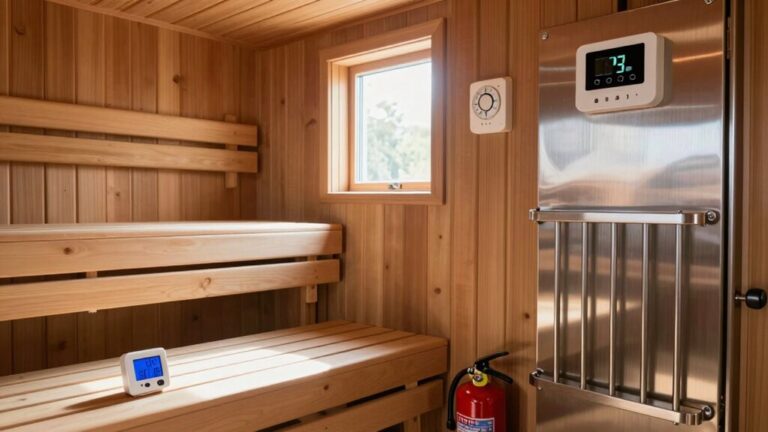
For instance, installing a Residual Current Device (RCD) guarantees rapid disconnection during electric faults, reducing shock risks. Circuit breakers with proper trip settings can prevent overheating, while local disconnect switches let you quickly cut power for maintenance.
Using temperature controls that shut down heaters if they get too hot adds extra security. Don’t forget moisture-rated components to handle sauna humidity and heat.
Finally, a reliable smoke detector and good ventilation can help keep you safe from fire hazards. Additionally, implementing an effective ventilation system can significantly enhance air quality and comfort in your sauna. These features make your sauna experience enjoyable and worry-free!
Proper Wiring and Conduit Usage
Adding extra safety features helps guarantee a worry-free sauna experience, but the backbone of a safe sauna setup lies in proper wiring and conduit usage.
Ensuring proper wiring and conduit usage is crucial for a safe and enjoyable sauna experience.
It’s essential to follow specific guidelines to make sure everything operates seamlessly and safely. Here are some key points to keep in mind:
- Use copper conductors for their heat resistance and higher ampacity.
- Select the right gauge based on calculated full-load amperage to prevent overheating.
- Install a dedicated circuit for your sauna heater, making certain no shared loads with other devices.
- Choose durable conduit suited for high humidity, like metal conduit, to protect the wiring from moisture.
Ensuring Heater Compliance and Safety Standards
When you’re setting up a sauna, verifying your heater meets safety standards is crucial for a worry-free experience.
Start by choosing a heater certified by a Nationally Recognized Testing Laboratory, like UL or CSA. This guarantees your heater’s safe for sauna use. Always follow the manufacturer’s installation instructions about clearances and ventilation.
Look for heaters with over-temperature protection to avoid overheating.
Don’t forget about controls! Install a thermostat that limits the room temperature to the code max of 194°F. Also, use timers to prevent the heater from running indefinitely.
Finally, confirm your heater’s clearances from combustible materials are in line with the manufacturer’s guidelines to avoid fire risks. Choosing a high-quality electric sauna heater can greatly enhance your sauna experience.
Enjoy your sauna, knowing you’ve prioritized safety!
Frequently Asked Questions
Can I Install a Sauna Without Professional Help?
You shouldn’t install a sauna without professional help. Improper installation can lead to serious safety hazards and code violations, putting you and others at risk. It’s best to hire a licensed electrician for compliance and safety.
What Size Wire Is Needed for Sauna Installations?
For sauna installations, you’ll need 10/2 wire with a 30-amp breaker for 4.5kW or 6.0kW heaters, and 8/2 wire with a 40-amp breaker for 8.0kW heaters. Always consult an electrician.
How Often Should Sauna Electrical Systems Be Inspected?
You should inspect sauna electrical systems annually, at a minimum. If usage is heavy or issues arise, increase inspections to every 3-6 months. Regular checks guarantee safety and prevent potential electrical hazards during operation.
Are Extension Cords Safe for Sauna Use?
No, extension cords aren’t safe for sauna use. They can’t handle high power demands, risk overheating, and pose shock hazards. Always use permanent, compliant wiring for safety and reliability in your sauna’s electrical system.
What Should I Do if My Sauna Trips the Breaker?
If your sauna trips the breaker, first check the breaker’s position, inspect for overheating, and reset only after confirming the absence of water. If the problem persists, consider contacting a licensed electrician for assistance.
Final Thoughts
When it comes to electrical safety in your sauna, following the right codes and guidelines is essential. Using GFCI protection, having dedicated circuits, and guaranteeing proper permits can keep you safe while you relax. Don’t underestimate the importance of professional installation and compliance with safety standards. By paying attention to wiring, conduit, and heater requirements, you’re not merely following the rules—you’re creating a safe and enjoyable sauna experience that lets you unwind without worry!