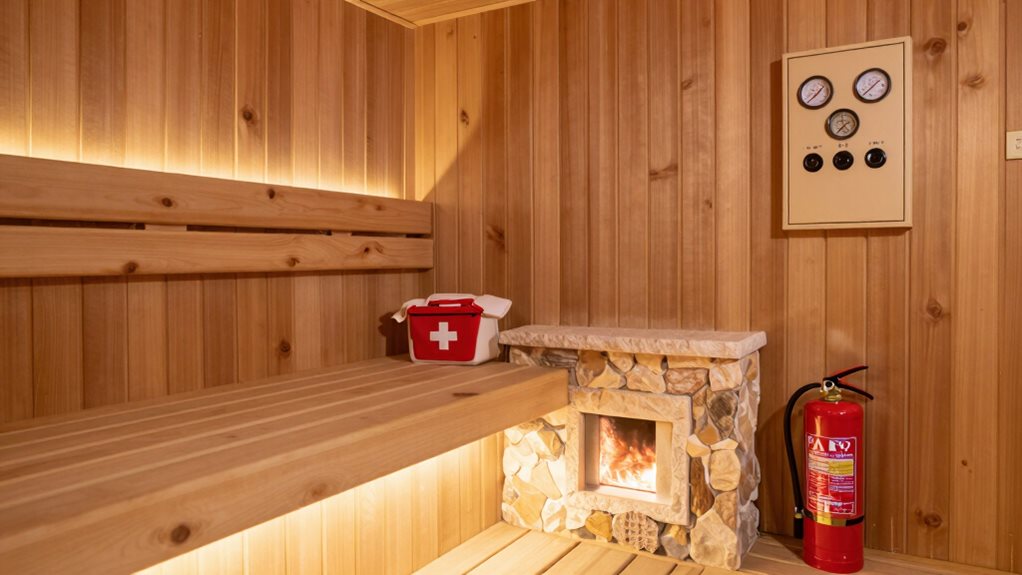

When using a sauna, safety’s key! Keep flammable items away from heaters to prevent fires. Make sure your sauna has proper wiring and is on a dedicated circuit to avoid electrical issues. Remember, saunas can pose health risks, so stay hydrated and limit sessions to 15-20 minutes. Regular maintenance and staff training are crucial for safety, too. With these tips, you’re on your way to a safer sauna experience—and there’s even more to explore!
Understanding Fire Risks in Saunas
When you step into a sauna, the soothing heat can feel like a warm hug, but it’s important to remember that this cozy atmosphere carries some fire risks you’ll want to avoid.
Stepping into a sauna offers a warm embrace, but be mindful of hidden fire risks lurking in the heat.
One common hazard comes from combustible items like towels and clothing placed too close to the heater; they can ignite and cause fires.
Also, if heaters aren’t installed correctly or if maintenance is neglected, the risk increases dramatically. For example, when timber surfaces become charred from prolonged heat, spontaneous ignition may occur.
In small, enclosed rooms, temperatures can soar to a staggering 600 °C almost instantly. Additionally, utilizing a fireproof sauna ventilation system can significantly mitigate these risks by ensuring proper airflow and temperature regulation.
Identifying and Mitigating Electrical Hazards
When you’re enjoying the warmth of a sauna, it’s essential to keep an eye on electrical hazards that could turn a relaxing experience into a dangerous one. Faulty wiring and improper installation can lead to serious risks, so make certain all electrical components are sauna-rated and installed correctly. Additionally, ensuring that you choose the right sauna heater electric can greatly reduce potential hazards associated with heating elements.
Faulty Wiring Risks
Faulty wiring in your sauna can put a damper on your relaxing experience, and it’s vital to spot potential electrical hazards before they escalate into bigger issues.
Common faults like short circuits, ground faults, and overloaded circuits can lead to severe dangers, including fire and electric shock. Keep an eye out for signs like frequent breaker trips, flickering lights, or discolored insulation. These are red flags that demand immediate attention.
If you notice anything odd, disconnect the power and avoid using the sauna until a professional inspects it. Remember, using extension cords isn’t safe!
Installation Best Practices
Installing a sauna safely involves more than just plugging it in; it’s important to follow best practices that assure both enjoyment and safety.
Start with dedicated circuits just for your sauna heater, so you don’t overload shared ones. These circuits, sized between 30 to 60 amps based on your heater capacity, help prevent tripped breakers and potential fire hazards.
You’ll also need a Ground Fault Circuit Interrupter (GFCI) to protect against shocks, especially in wet areas; this device instantly cuts the power if it detects imbalances.
Finally, consider proper wiring and grounding. Using the right wire gauge and grounding techniques, you’ll guarantee a safe connection.
Additionally, ensure that you choose a sauna heater kit that meets safety standards to further enhance your sauna’s safety profile.
Hiring a licensed electrician assures compliance with local codes, making your sauna experience worry-free.
Assessing Health Risks for Sauna Users and Firefighters
When you step into a sauna, it’s important to think about your health and safety, both as a user and for firefighters who might enter during emergencies. Increased temperatures can put extra strain on your heart, while the risk of falls and other injuries can also lurk in steamy environments. Plus, for firefighters battling sauna fires, the dangers of cancer and toxic smoke add to the list of risks, making it essential to stay aware of these health concerns. Regular sauna use can help maintain healthy blood pressure levels, which in turn may reduce the risk of heart-related issues for users.
Firefighter Cancer Risk
As firefighters bravely tackle flames and save lives, they often face hidden dangers that can impact their health long after the sirens fade. One of these dangers is cancer, with firefighters showing higher rates of many types, including lung, bladder, and skin cancers.
This risk is linked to harmful substances they encounter, like benzene and asbestos, during fires. While sauna use is sometimes suggested to help reduce harmful toxins in the body, studies on its effectiveness are limited.
Saunas may provide some benefit in flushing out chemicals, but they shouldn’t replace proper protective gear or decontamination practices after a fire. Safety first remains the best motto for tackling both fires and health risks.
Cardiovascular Event Concerns
While sauna use can offer various health benefits, it’s essential to evaluate the potential cardiovascular risks, particularly for firefighters.
During sauna sessions, your heart rate can soar, mimicking moderate exercise, which might feel great but can be risky for those with certain heart conditions. If you have unstable heart issues or high blood pressure, it’s best to skip the sauna. The intense heat can cause sudden drops in blood pressure, making you feel faint. In fact, studies show that sauna frequency can significantly reduce the risks of sudden cardiac events among healthy individuals. Regular sauna bathing reduces risk of sudden cardiac death and heart disease, making it crucial to be mindful of individual health conditions.
Hydration is key, too! Sweating without replenishing fluids can stress your heart. So, stay cautious, especially if you’re on medications or over the age of 65.
Always consult a healthcare professional before diving into sauna sessions if you have any underlying health concerns.
Sauna Fall Injuries
Sauna fall injuries are more common than you might think, especially in facilities where the environment can lead to accidents.
Wet floors, poorly maintained steps, and obstacles can create dangerous conditions. In fact, slips and falls cause over half of sauna injuries!
If you’re older, be extra cautious; falls are particularly risky for older adults. Dizziness can also play a role—heat, dehydration, and alcohol can make you feel faint, leading to dangerous tumbles.
That said, wearing slip-resistant footwear and guaranteeing safe facility design can reduce your risk.
Remember, falling isn’t just about losing your balance; it can lead to serious injuries like fractures and concussions.
Importance of Code Compliance in Sauna Construction
Building a sauna might seem like a fun project, but confirming you comply with local codes and regulations is crucial for both safety and peace of mind.
First off, you’ll likely need a building permit, especially for outdoor installations. Don’t forget the electrical permit for hardwired heaters; after all, safety first!
Before starting your sauna project, remember that a building permit and electrical permit for heaters are essential for safety.
You’ll also want to watch for zoning rules that dictate how close your sauna can be to property lines. Inspections at various stages guarantee everything’s up to snuff—ignore them, and you might face serious consequences. Regulatory Framework for Home Saunas outlines the importance of adhering to specific guidelines to prevent fines and ensure legal installation. Additionally, compliance with accessible features is essential to ensure all users can safely access the sauna.
Using approved materials and adhering to fire-safety codes not only protects you but also keeps your insurance valid.
Effective Fire Suppression Systems for Saunas
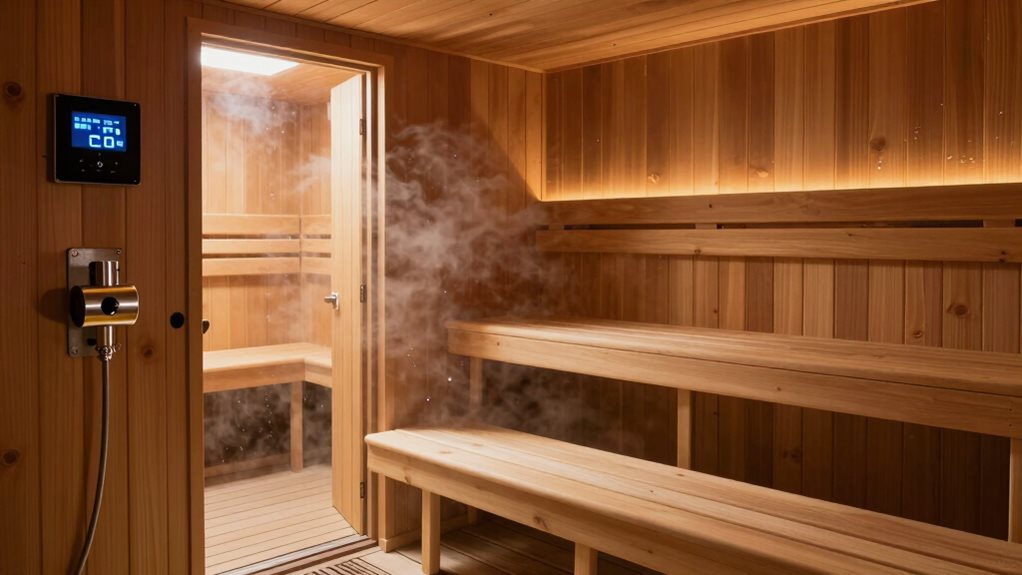
When it comes to enjoying the warmth and relaxation of a sauna, securing safety doesn’t stop at building codes. One effective solution is a water-mist fire suppression system.
These systems use fine droplets that cool flames and displace oxygen, quickly controlling fires while using much less water than regular sprinklers. You’ll find nozzles positioned near heaters, guaranteeing direct coverage.
Unlike traditional systems, water-mist causes minimal damage and dries quickly! Additionally, using thermally-triggered nozzles prevents false alarms from steam, so you won’t be interrupted during your relaxation time.
Essential Prevention Measures for Sauna Safety
The warmth and relaxation of a sauna can be a wonderful escape, but securing your safety while enjoying this experience is vital.
The soothing tranquility of a sauna offers a perfect retreat, but prioritizing safety is essential for a truly enjoyable experience.
To start, keep the sauna temperature between 70-100°C for Finnish saunas and 40-60°C for infrared types. Limit your sessions to 15-20 minutes and stay hydrated by drinking water before, during, and after.
Shower before entering, and always wear clean clothes or towels to maintain hygiene. Don’t forget to remove jewelry and avoid bringing food or drinks inside.
If you feel dizzy or faint, exit immediately! For children and pets, supervision is key.
Regular Maintenance and Inspections: A Key to Safety
To keep your sauna experience safe and enjoyable, regular maintenance and inspections are crucial.
Start with daily cleaning of floors and benches to eliminate sweat and dirt, which can lead to bacteria. Each week, check for loose screws and clean under benches.
Don’t forget about a monthly deep clean with mild cleaners—your sauna deserves a spa day too!
Quarterly maintenance checks on drains and heater elements will keep everything running effortlessly. Inspect wood surfaces for damage or warping regularly, guaranteeing a safe environment. Additionally, consider investing in sauna moisture protection products to help preserve the integrity of your sauna over time.
Training Staff on Sauna Operational Safety
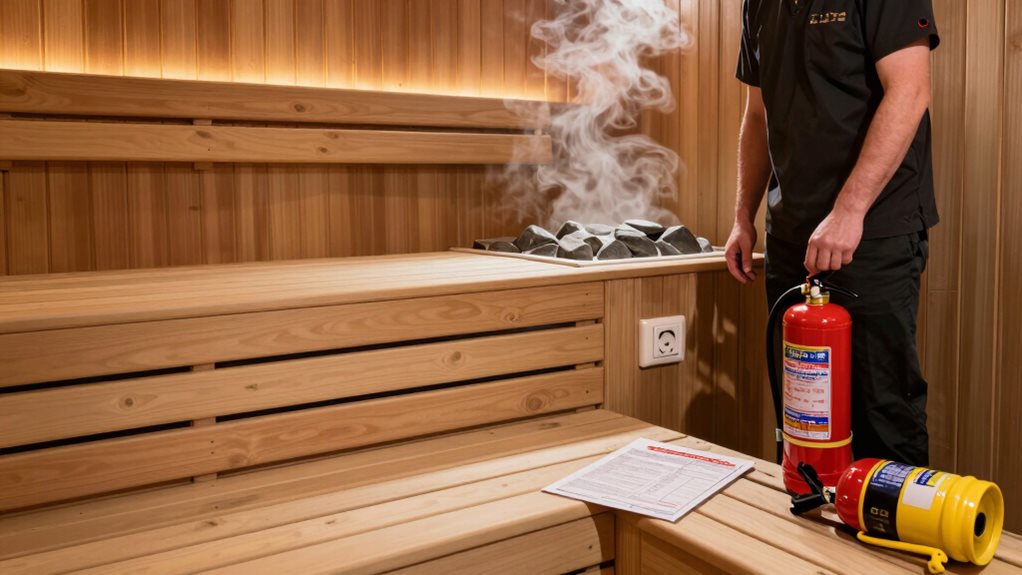
Keeping your sauna well-maintained helps guarantee a relaxing experience, but training staff on operational safety takes that care a step further. A solid training program is crucial. You should have documented objectives and a modular curriculum covering everything from startup and shutdown procedures to emergency protocols.
It’s important to know the health risks linked to sauna use, like heat exhaustion and medications that may not mix well with heat. Your team will gain practical skills, promoting safety during every session. Staff must understand their roles clearly, with regular refresher courses for everyone.
Training on effective communication with users helps guarantee patrons enjoy a safe sauna experience while following guidelines that prevent risks. All this makes for happier, healthier visits!
Frequently Asked Questions
What Should I Do if I Smell Smoke in the Sauna?
If you smell smoke in the sauna, turn off the heating source immediately, evacuate everyone safely, activate the alarm, and call emergency services. Don’t re-enter until authorities confirm it’s safe to do so.
How Can I Tell if My Sauna Requires Maintenance?
If your sauna shows signs like uneven heating, unusual odors, or visible mold, it likely needs maintenance. Also, check for electrical issues, damaged wood, or persistent condensation to guarantee peak performance and safety.
Are There Specific Sauna Brands Known for Safety?
Yes, brands like Tylo, Harvia, and Sunlighten are known for their safety features. They emphasize certified components, low-EMF designs, and non-toxic materials, guaranteeing you make a safer choice for your sauna experience.
Can Using the Sauna Too Often Be Harmful?
Yes, using the sauna too often can be harmful. You risk dehydration, heat-related illnesses, and cardiovascular strain. Stick to recommended usage limits, take breaks, and always listen to your body’s signals to stay safe.
What Items Are Prohibited in Saunas to Prevent Fires?
You shouldn’t bring towels, clothing, newspapers, or flammable liquids into the sauna. Avoid using electronic devices, candles, and any combustible materials near heaters to prevent fire hazards and guarantee a safe environment.
Final Thoughts
To sum up, keeping saunas safe is super important for everyone’s enjoyment. By understanding fire risks, checking electrical systems, and prioritizing health, you’ll create a comfortable environment. Don’t forget about building codes—they’re like the rules of a game, making sure everything operates seamlessly. Regular maintenance and staff training help prevent accidents and keep your sauna experience relaxing and fun. So, take these tips to heart, and enjoy your time in a safe sauna!