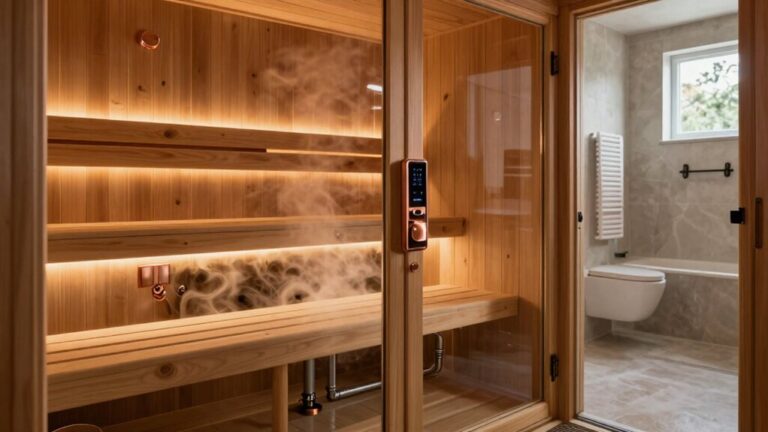
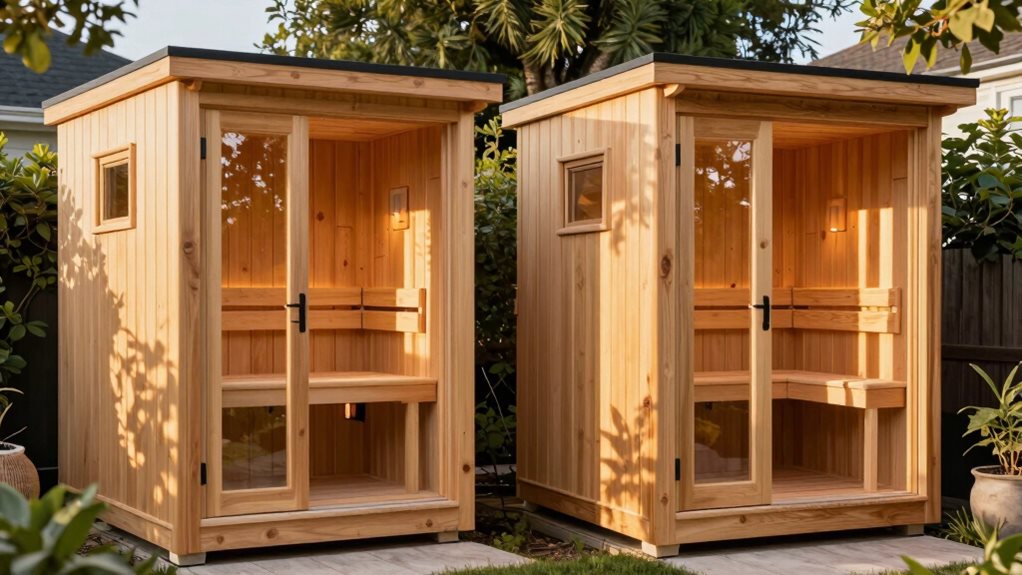

When choosing between panelized and framed saunas, you’ve got some fun options! Panelized saunas are quicker to set up, ideal for a fast sauna fix, while framed ones let you customize size and layout, but take longer to build. Costs vary too; panelized styles start around $4,000, while DIY framing might hit $7,400. Think about heat efficiency, material durability, and how you want your space to look. Keep going to discover more benefits and tips!
Overview of Construction Methods
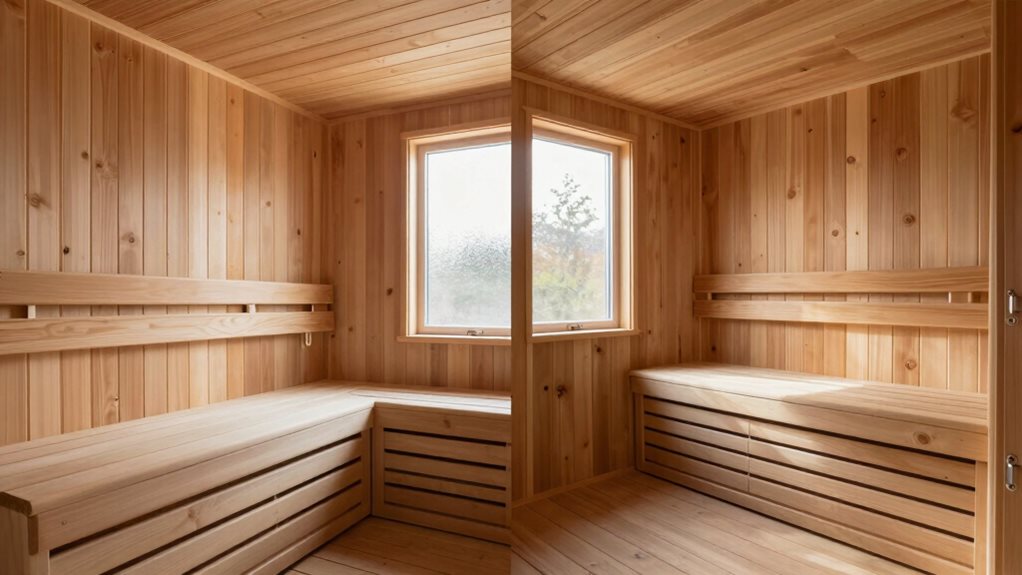
When it comes to building a sauna, you’ve got two main construction methods to choose from: panelized and framing.
Panelized saunas come as factory-made walls, ceilings, benches, and doors that lock together easily on-site, meaning less cutting and fitting for you. They often have pre-installed vapor barriers, making moisture control simpler.
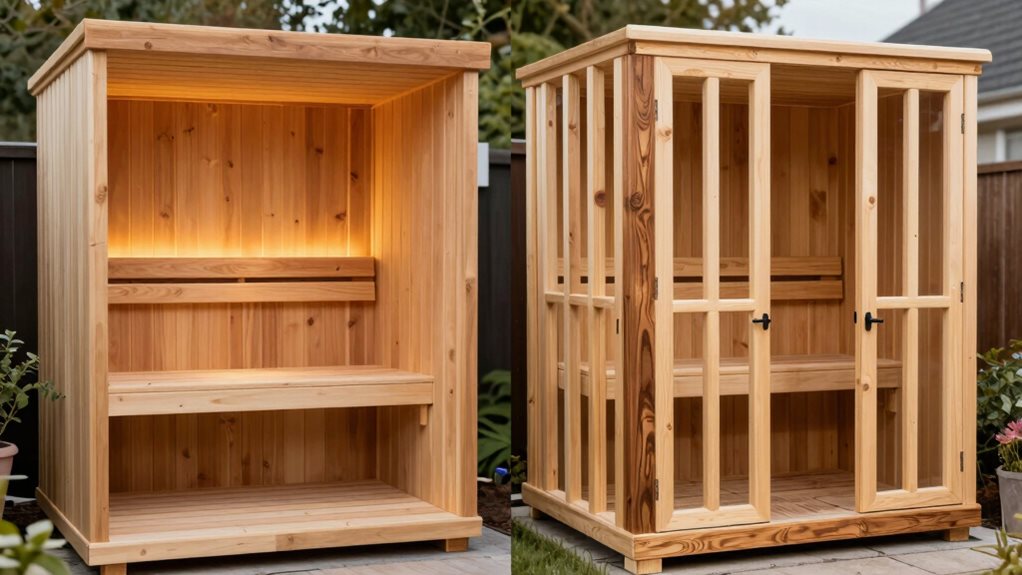
On the other hand, framed saunas let you customize everything, including dimensions and layouts, perfect for fitting unique spaces. However, they need skilled carpentry and take longer to build.
Plus, framed projects expose interiors to weather, while panelized kits speed up the enclosure process. Additionally, opting for a home sauna kit can streamline the installation process significantly.
Both methods have their perks, so consider your space and needs before deciding which style suits you best!
Cost Analysis and Budget Considerations
Building a sauna isn’t just about picking a style; it’s also about managing your budget effectively.
When comparing costs, you’ll find that DIY framing options can set you back about $7,400 for an 8’x12′ structure. On the other hand, pre-cut kits range from $3,000 to $12,000, but require extra framing.
If you prefer prefab panelized saunas, expect costs between $4,000 and $12,000. Installation also matters; while a DIY approach might take you 40–80 hours, professional help could cost you an extra $5,000 to $10,000.
Don’t forget expenses like electrical modifications and foundation work, which all add up. Additionally, investing in a home sauna heater kit can further enhance your sauna experience. In the end, consider your skills and finances to get the sauna that fits both your space and budget!
Evaluating Thermal Performance
When it comes to evaluating thermal performance in your sauna, you’ll want to take into account the insulation quality and how well heat is retained. For instance, materials like fiberglass and mineral wool offer decent insulation, but their R-values can vary greatly, affecting how quickly your sauna heats up and holds onto that warmth. Proper insulation is crucial for both heat retention and operational efficiency, ensuring your sauna performs at its best. Additionally, using durable woods like cedar is essential as they provide natural insulation, contributing to overall thermal performance. Investing in a quality sauna insulation kit can significantly enhance your sauna’s efficiency and longevity.
Insulation Quality Comparison
Insulation is crucial for keeping your sauna cozy, and understanding the different insulation options can help you make the best choice for thermal performance. For example, fiberglass offers good thermal and moisture resistance, while mineral wool excels in fire resistance and soundproofing. Natural fibers like wool or hemp can manage humidity well, too. If you want to reflect heat, consider foil-faced insulation or polyisocyanurate (PIR) boards, which boast high R-values. Proper insulation minimizes heat loss and reduces energy consumption, allowing saunas to reach desired temperatures quickly and maintain heat for extended periods. Walls should have R-13 to R-15 insulation, and ceilings need R-26 to R-30. Additionally, sauna insulation materials play a significant role in achieving optimal thermal performance. Don’t forget about vapor barriers, especially with fiberglass, to prevent unwanted humidity. Choosing the right insulation can make your sauna warmth last longer and feel more inviting, as insulation reduces strain on heaters, ensuring they last longer and operate efficiently.
Heat Retention Efficiency
Heat retention efficiency plays a vital role in how enjoyable your sauna experience can be. The build style you choose impacts this factor greatly.
Panelized systems, with their thicker composite layers, can store more heat, allowing for longer-lasting warmth even after the heater shuts off. This means you stay cozy for longer periods!
In contrast, framed structures might heat up quickly, but they cool faster too—much like a cup of hot chocolate that quickly turns lukewarm. Proper sealing of gaps and thermal bridging is important for both styles.
Just remember, using heavier materials generally leads to better heat retention, so you can savor that soothing atmosphere for every sauna session. Additionally, incorporating sauna moisture protection products can enhance the longevity of your sauna and improve overall efficiency. Cozy up and enjoy!
Customization and Design Options
When it comes to customizing your sauna, you’ve got some exciting options to explore. Framing gives you the freedom to choose materials, adjust layouts, and optimize space, while panelized styles stick to fixed dimensions and standard designs. Additionally, proper insulation is essential when framing a sauna, as it helps retain heat while protecting surrounding structures. Investing in a premium sauna bench kit can enhance the overall quality and comfort of your sauna experience. Custom saunas typically have unlimited design flexibility, allowing homeowners to create a space that perfectly suits their needs and preferences.
Customization Possibilities
Customizing your sauna can transform it from a basic space into a personal retreat that reflects your style and needs. You can choose from luxurious materials like red cedar or basswood for your benches, and even design them as wall-to-wall or floating options for a unique look.
With paneling, mixing wood tones or adjusting the orientation can create stunning visuals for your walls and ceilings. Your door doesn’t have to be ordinary either; options like half glass or all wood doors let you bring in a touch of elegance.
With flexible layouts, you can maximize comfort and creativity. Whether it’s adding LED lighting or unique angles, each decision personalizes your sauna experience, turning it into a cozy escape just for you. Additionally, investing in a quality cedar sauna bench kit can enhance both functionality and style in your sauna.
Design Flexibility Comparison
While creating your perfect sauna experience, the design flexibility of your choice plays a big role in how well you can make it uniquely yours.
If you go with a framed sauna, you can easily customize everything—from the shape to the number of windows. Square designs let you choose from various layouts, complementing your home’s style. Plus, you can mix and match materials to achieve that cozy or modern vibe you love. Additionally, a framed sauna can incorporate features like outdoor portable sauna kits, which enhance convenience and allow for easy relocation.
On the other hand, barrel saunas come with limitations due to their curved shapes. While they offer a classic look, you can’t modify them as much. However, the design flexibility of outdoor saunas can enhance your experience by allowing you to enjoy sessions surrounded by natural landscapes.
Space Optimization Techniques
Even if you have limited space, you can still create a sauna that feels just right for you. Compact traditional saunas can seat one or two people and fit in tight areas, and corner saunas cleverly maximize comfort without taking up too much space. Additionally, portable saunas can be a great solution for those who want flexibility in their sauna experience.
Using FIR technology allows for efficient heat distribution, perfect for small environments. Consider hybrid saunas, which offer dual heat options while saving space.
Strategic placement can be key; you might convert a walk-in closet into a cozy sauna or use an underutilized nook in the basement. Additionally, regular use of a sauna supports health benefits like detoxification and recovery, making it a worthwhile investment even in limited spaces. Add tiered benches for comfort and airiness, and guarantee proper ventilation by placing an inlet near the floor and an outlet up high.
Your dream sauna is possible, even in the coziest of spots!
Material Durability and Longevity
When building a sauna, choosing the right materials is crucial for guaranteeing durability and longevity. You’ll find that thermally modified woods, like Thermo Aspen, are fantastic options. They resist moisture and decay, outperforming cedar in both lifespan and stability. Heat resistance ensures that these woods can withstand high temperatures without adversely affecting their structural integrity. Cedar’s natural oils provide additional resistance to moisture and decay, enhancing its performance in high-heat, high-humidity environments. Additionally, sauna bench kits made from these premium materials can elevate your home spa experience significantly.
Imagine wood that shrinks less, warps, or cracks even in humid, high-heat environments! Cedar, while naturally strong, can fade and warp over time, making it less ideal in the long run.
On the other hand, inferior woods like hemlock or untreated aspen may leave you quickly facing repairs. By selecting premium materials, you’ll enjoy a sauna that’s built to last, giving you peace of mind to relax and unwind without constant upkeep.
Installation Complexity and Compliance
Choosing the right materials for your sauna isn’t the only important consideration; how you install those materials can make a big difference too.
When you opt for framing, you’re diving into a more complex installation. It requires precise measurements and detailed work to guarantee proper insulation and air gaps. You’ll need to plan for multiple layers, making it a job for skilled hands.
On the other hand, panelized installations are a breeze with pre-fabricated panels, allowing for faster assembly. They cut down on site prep, reducing your exposure to weather delays.
While both styles need local permits, framing can accommodate elaborate designs, whereas panelized suits standard spaces, often keeping things simple and efficient.
Safety Considerations and Best Practices
Safety should be your top priority when setting up a sauna, so understanding the various considerations and best practices can help keep your experience enjoyable and hazard-free.
Be certain to maintain at least 500mm between hot surfaces and any combustible materials, or use non-combustible plates with an air gap. For electrical safety, always use hardwired connections and guarantee heat-resistant lighting is in place. Confirm your heating elements have proper clearances to reduce fire risks.
Maintain a minimum of 500mm between hot surfaces and combustibles for optimal safety in your sauna setup.
Don’t forget about accessibility—doors should open outward and controls must be easy to reach.
Regular maintenance, like disinfecting surfaces and checking sensors, will keep your sauna safe and functional. Following these guidelines makes your sauna a safe retreat!
Frequently Asked Questions
What Are the Environmental Impacts of Each Sauna Build Method?
Panelized saunas lower lifecycle emissions and reduce waste through precise, engineered materials. Framed saunas often produce higher emissions and waste, especially with treated lumber and synthetic materials, impacting air quality and the environment negatively.
How Do Local Climate Conditions Affect Sauna Performance?
Local climate conditions greatly impact sauna performance. In cold areas, insulation and powerful heaters are essential, while warm climates benefit from quicker heat sources. Managing humidity is important in humid regions to guarantee longevity and efficiency.
Can I Relocate a Prefab Sauna Easily?
Yes, you can relocate a prefab sauna easily. Just label and disassemble it, guaranteeing proper electrical disconnections and reassembly at the new site. Professional movers can simplify the process, especially for heavy or large units.
What Are Common Maintenance Issues for Each Type?
You might encounter common issues like electrical faults and heater malfunctions in panelized saunas, while framing saunas could face wood warping and ventilation problems. Regular maintenance checks can help prevent many of these issues.
How Do I Choose the Right Sauna Size for My Space?
To choose the right sauna size, measure your available space and decide on user capacity. Aim for 1 m² per person for Scandinavian style and guarantee clearance around the unit to aid ventilation and comfort.
Final Thoughts
In the end, choosing between panelized and framing construction for your sauna comes down to your specific needs and preferences. Panelized styles offer quicker assembly and sleek designs, while framing can give you more flexibility in customization and layout. Consider your budget, installation ease, and how long you want your sauna to last. Whichever style you pick, the joy of relaxing in your very own sauna will make all your decisions worthwhile! Happy building!