
When choosing between DIY and prefab sauna kits, consider costs, effort, and enjoyment. DIY options start around $3,500, while prefab kits range from $1,500 to $5,000, saving you time and hassle. DIY takes 40-80 hours to install, but kits can be set up in a few hours. Both have their perks, like customization for DIY and quicker enjoyment with prefab. Understanding these differences can help you decide what feels right for your personal retreat, and there’s more to explore on this topic!
Initial Costs of Sauna Options
When you’re considering adding a sauna to your home, it’s important to know that your initial costs can vary quite a bit depending on which option you choose.
DIY saunas can start at around $3,500 for basic materials, with total costs averaging about $7,323, excluding labor. This option can be more expensive due to lumber and heating elements.
DIY saunas start around $3,500, with total costs averaging $7,323, excluding labor, due to material expenses.
If you go for a sauna kit, you might spend anywhere from $1,500 to $5,000, often cutting costs up to 50% compared to custom builds.
Traditional saunas can range from $3,000 to over $15,000, depending on the size and features. Installing a home sauna kit can offer a more straightforward setup compared to building from scratch.
Always consider your budget and preferred style to guarantee you pick the right sauna for your home!
Installation Effort: DIY vs. Prefab
Installing a sauna can feel like a huge project, especially if you’re deciding between a DIY build and a prefab kit.
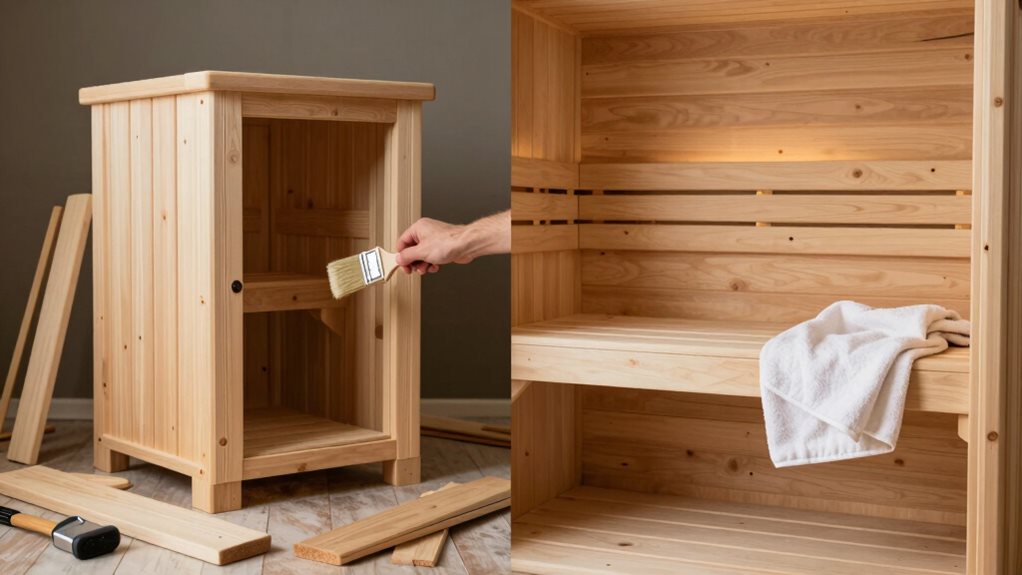
With DIY, you’re in for a substantial commitment, requiring 40-80 hours of work, depending on your skills. You’ll need to gather tools, level the ground, and even pour concrete for foundation options stability. Additionally, a DIY sauna can be tailored to your specific preferences, allowing for a truly personalized portable sauna indoor home experience.
On the other hand, prefab kits are a breeze, taking just a few hours to assemble with a partner. They come with all necessary materials and clear instructions, making your installation experience easier. You won’t need extensive skills or a ton of tools. If you’re itching to sweat it out quickly, a prefab kit might just be your best bet, saving time and effort while still delivering a sauna experience.
Ongoing Operating Expenses
Once you’ve chosen your sauna and tackled the installation, it’s time to reflect on the ongoing operating expenses that come with enjoying your new relaxation space.
Understanding these costs can help you budget better and fully enjoy your sauna experience.
Here are some key ongoing expenses to take into account:
- Energy Costs: Electric heaters usually range from $21.60 to $25 monthly, while infrared heaters can be even less. Investing in a high-quality sauna heater electric can also enhance energy efficiency.
- Maintenance: Expect annual upkeep costs between $150 and $300, depending on your sauna type. Investing in thermowood or Nordic spruce can help lower material costs and contribute to overall maintenance savings.
- Fuel (Wood-burning): If you’ve got a wood-burning sauna, plan for $5 to $7.50 per session on firewood.
- Insurance and Permits: Factor in potential increases in insurance premiums and any necessary permits for installation.
Keeping these in mind guarantees a seamless and enjoyable sauna experience!
Customization Options: Personalization vs. Convenience
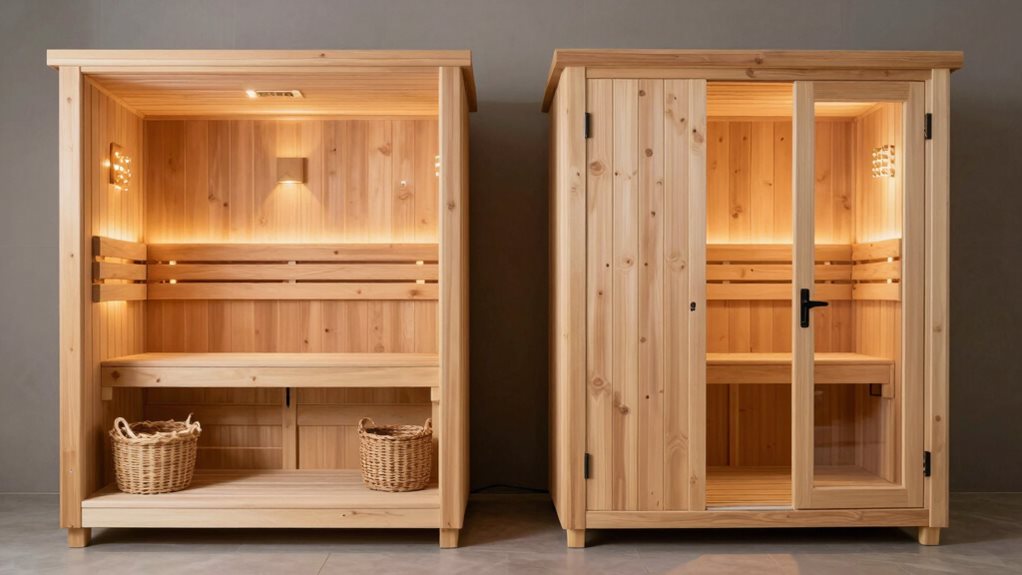
Customization options for saunas can greatly impact your overall experience, as they allow you to create a personalized sanctuary that suits your unique style and needs.
With DIY kits, you can choose from various wood types like cedar or hemlock, mixing materials for a look and scent you love. On the flip side, pre-fab saunas often use standard woods, limiting your choices. While custom saunas typically use higher-grade lumber, prefab models may use cost-effective materials that might not offer the same durability. Additionally, many sauna enthusiasts appreciate the warmth and character of a natural wood sauna heater, adding a touch of authenticity to the experience.
DIY sauna kits offer a range of wood choices, allowing you to create a unique aesthetic and aromatic experience, unlike standard pre-fab options.
You can also pick from different heating options in kits, whether you prefer electric or infrared, guaranteeing comfort customized to you.
While pre-fab might prioritize convenience with fewer choices, DIY kits let you control every detail, transforming your sauna into a cozy retreat.
Ultimately, the balance between personalization and convenience depends on what you value most in your sauna experience.
Time Investment for Assembly and Installation
When you’re deciding between a DIY sauna or a kit, reflect on how much time you’re ready to invest. Prefab kits can usually be set up in only a day or two, while a full DIY build might take you weeks, especially if you choose unique designs or need to get permits. You’ll want to take into account not merely assembly but also the complexity of installation, which can easily add to your timeline. The timeframe for assembly includes sourcing materials and prepping the space, which can prolong the DIY process significantly. For instance, constructing a sauna requires specific foundation construction techniques that can further extend your project duration. Additionally, taking the time to research the benefits of infrared sauna kits can help you make a more informed decision.
Assembly Duration Comparison
How much time are you willing to invest in building a sauna? The assembly time varies widely between DIY builds and pre-made kits.
If you’re ready for a challenge, a DIY sauna might take 20-40 hours, depending on the complexity. On the other hand, kits are much quicker.
Here’s a comparison:
- DIY Build: 20-40 hours over several weekends, needing multiple sessions.
- Standard Kit: 6-8 hours with 2-3 people, usually completed in one weekend.
- Prefab Kit: Just 2-4 hours for assembly, requiring minimal tools. Prefab Sauna Kits typically come with pre-cut or pre-built components, making assembly even simpler. The ease of assembly is often a key factor in choosing a sauna heater kit.
- Planning: Pre-reading instructions can help speed things up!
Consider how much time you can realistically allocate for this project before deciding which route to take.
Installation Complexity Factors
While diving into the world of sauna installation, it’s crucial to recognize the complexity involved, which can impact your time investment considerably.
If you’re tackling a DIY project, you’ll need carpentry, electrical, and plumbing skills. Imagine figuring out precise measurements while using tools like stud finders and levels—it can feel overwhelming! You’ll also handle electrical tasks, where hiring a licensed electrician is often a must, guaranteeing you meet safety codes. Additionally, keep in mind that employing the proper ventilation setup is vital for maintaining temperature and air quality in your sauna, further complicating the installation process. A well-designed indoor sauna heater kit can simplify heating and enhance your sauna experience.
Remember, proper site preparation is key too; you’ll need to measure your space, pour foundations, and install vapor barriers. This complexity can turn your sauna dreams into a time-consuming puzzle, so weigh this against the ease of a sauna kit to find the right fit for you. Additionally, proper installation is essential to avoid safety hazards and ensure longevity.
Long-Term Value and Satisfaction
Choosing between a DIY sauna and a pre-made model can feel like picking your favorite pizza toppings—everyone has their preferences!
When it comes to long-term value and satisfaction, reflect on how each option holds up over time. Here’s what you need to take into account:
- Prefab saunas are built with craftsmanship that guarantees durability. Prefab saunas are often designed for quick assembly, which can be an appealing feature for those looking to minimize installation time. Additionally, many pre-made models come with warranties that enhance their value over time. Investing in a premium sauna bench kit can further elevate your sauna experience.
- Custom saunas offer personalized maintenance, helping you maintain their quality.
- Pre-made units typically come with warranties for added peace of mind.
- DIY options might lead to hidden costs, like costly repairs down the road.
Frequently Asked Questions
What Are the Typical Maintenance Requirements for Saunas?
To maintain your sauna, wipe down surfaces after use, clean weekly, deep-clean the heater every few months, inspect wood annually, treat with preservatives, ventilate properly, and check electrical components yearly for ideal safety and performance.
How Do Local Building Codes Affect Sauna Installation?
Local building codes dictate sauna installation by requiring permits, inspections, and adherence to safety regulations. You’ll need to guarantee compliance regarding electrical, ventilation, and accessibility standards to avoid fines or required modifications later.
Can I Move My Sauna Once Installed?
Yes, you can move your sauna once it’s installed. Just make sure you disconnect power, follow disassembly steps carefully, and use proper packing materials. Reassemble it in your new spot for best functionality and enjoyment.
What Is the Lifespan of Different Sauna Types?
The lifespan of saunas varies: traditional wood structures last 30–40 years indoors, while infrared units reach 15–20 years. Outdoor wood saunas typically last 10–30 years, influenced by materials, maintenance, and usage frequency.
Are There Health Benefits Associated With Regular Sauna Use?
Yes, regular sauna use offers several health benefits, including improved cardiovascular health, reduced risk of dementia, and elevated mood. You may also experience muscle recovery and relief from chronic pain, promoting overall well-being.
Final Thoughts
When deciding between a DIY sauna and a pre-assembled kit, you’ve got to weigh the costs, effort, and enjoyment. A DIY project can be rewarding and save you money upfront, but it requires time and commitment. On the other hand, a prefab sauna offers convenience and quick satisfaction. Ultimately, choose the option that aligns with your lifestyle, budget, and desire for personalization. Remember, whether you sweat it out building or basking, your relaxation is what truly matters!