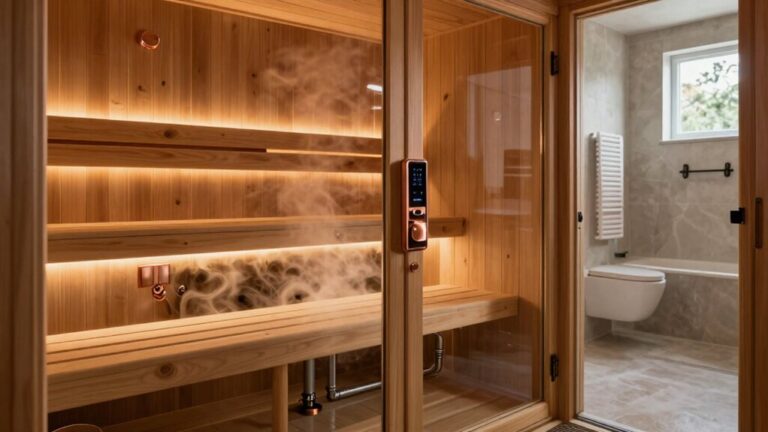
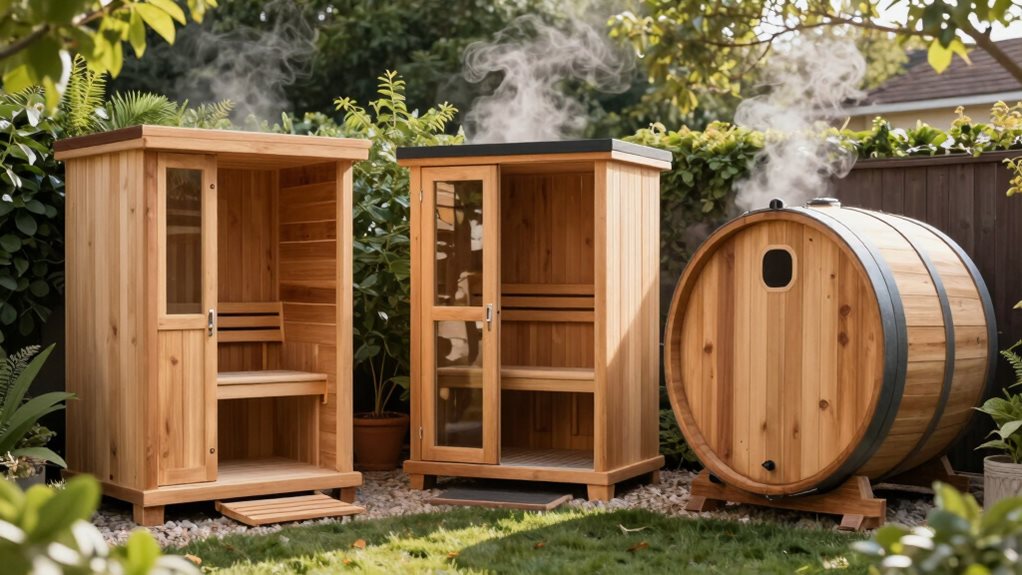

When choosing between DIY, kits, or barrel saunas, consider what fits your style and needs best. DIY saunas offer total customization and creative control, while kits provide a balance of personalization and ease. Barrel saunas stand out with their unique shape and quick heating. Each option comes with its own costs and assembly time, so weigh the pros and cons. If you want to dive deeper into these choices and avoid common pitfalls, there’s more to discover!
Understanding Sauna Types: DIY, Kits, and Barrel Saunas
When it comes to saunas, you’re diving into a world where comfort and relaxation meet personal choice.
You can choose a DIY sauna for total customization, allowing you to select size and materials that match your style. Yes, it takes carpentry skills, but there’s a real sense of accomplishment in building it yourself! However, proper installation requires adherence to safety standards to prevent potential hazards. Additionally, material selection is critical for ensuring both safety and functionality in your DIY project. A DIY sauna can also be tailored to fit your specific preferences, including design features that enhance your experience.
A DIY sauna offers complete customization, letting you choose size and materials while providing a rewarding building experience.
If you prefer a simpler route, sauna kits offer a great balance of personalization and ease. They do require some know-how but cut down on the guesswork.
Then there are barrel saunas, which heat quickly thanks to their unique design. They’re perfect for outdoor spaces but can be tricky to build.
Each type has its pros and cons, so think about your needs before deciding.
Cost Analysis: Upfront, Installation, and Lifecycle Expenses
Before you commence your sauna expedition, understanding the costs associated with each type is crucial. DIY saunas can set you back around $10,323 if you hire help, or about $6,650 if you do it all yourself. Kits vary: a simple 2-person setup starts around $1,200, while a 4-person barrel sauna ranges from $1,800 to $10,000, depending on the style. Installation costs add another layer, with basic wiring around $500 or full setups at $1,700. Barrel saunas provide a cost-effective design that can save you money long-term, heating efficiently with average use costs around $10. Additionally, these kits are designed for easy assembly with pre-cut and pre-drilled sections, making the installation process more manageable for users. Furthermore, investing in an indoor sauna heater kit can enhance your sauna experience significantly. Consider upfront, installation, and lifecycle expenses to figure out which option fits your budget before diving in! The right choice can lead to years of relaxation.
Assembly Time and Required Skills
When you think about assembling your sauna, it’s important to contemplate both the time it takes and the skills you need. Prefab kits can have you relaxing in just a day or two, while DIY builds might stretch to a few months, especially if you’re tackling everything from framing to the final touches. Depending on your experience level, you’ll find different requirements, from basic tools for kits to advanced skills for building from scratch—so choose what fits best for you! Additionally, consider that average time to build a sauna varies significantly based on whether you opt for a pre-made kit or a custom-built sauna, affecting both your timeline and approach. With outdoor saunas requiring complete structures, planning for foundation and electrical costs early on is essential for successful installations. Choosing a sauna heater kit can also streamline the process, making installation simpler and faster.
Prefab Kit Assembly Time
Assembling a prefab sauna kit can be an exciting project, offering both joy and relaxation as you anticipate enjoying your new space. Most average-sized kits take about 4 to 8 hours to assemble, with smaller units finishing in as little as 2 to 4 hours. If you’re tackling an outdoor barrel sauna, plan for a weekend of work, ideally with a buddy, as two heads are better than one! Basic DIY skills like measuring and drilling are usually enough, but for more complex kits, some experience is handy. It’s crucial to follow proper installation guidelines to ensure the sauna is built safely and efficiently. Additionally, the modular design of prefab saunas simplifies the assembly process, which can enhance your overall experience. The ease of assembly is particularly beneficial for those considering an indoor portable sauna kit, as it can provide a quick and convenient solution for relaxation. Don’t forget to gather tools like a power drill and level beforehand to speed things up. A well-organized approach can make this fun project even more enjoyable, reducing stress along the way!
DIY Build Complexity
Building your own sauna can feel like an adventure, but it’s important to know that the process comes with its own complexity. First, you’ll need to frame walls, a ceiling, and a sturdy foundation, all requiring precision. If you’re building outdoors, frost-proof footings and a compact gravel base are essential to support the weight. You’ll spend 40 to 80 hours just on the assembly, depending on your skill level. Plus, the sequence matters a lot; you can’t skip steps or you’ll end up with a mess. Installing insulation and vapor barriers is tricky, too, and proper wood selection makes a huge difference. Traditional Saunas typically require careful attention to wood type and moisture resistance to ensure durability. Additionally, using high-quality fiberglass batts for insulation is crucial for maintaining the sauna’s heat efficiency. It’s also important to consider the quality of insulation materials, as they play a significant role in the overall energy efficiency of your sauna. It’s not merely a weekend project—having a few helpers will make the job easier and more fun!
Skills for Installation
Getting the sauna of your dreams isn’t just about your passion for relaxation; it also involves mastering some practical skills and planning your time wisely.
You’ll need specific electrical skills, especially for electric heaters that require a certified electrician to handle high-amperage circuits. DIY electrical work can void warranties, so hiring a pro is often best.
Additionally, you’ll want solid carpentry skills for accurate framing and fitting. Depending on the kit, assembly could take anywhere from 6 to 20 hours, while custom builds might run several days.
Make certain you have the right tools—think drills, saws, and levels. Furthermore, consider investing in a home sauna heating system to enhance your sauna experience and efficiency.
Finally, don’t forget to permit for a seamless installation; planning is key to enjoying your new sauna stress-free!
Heat Performance and Efficiency Considerations
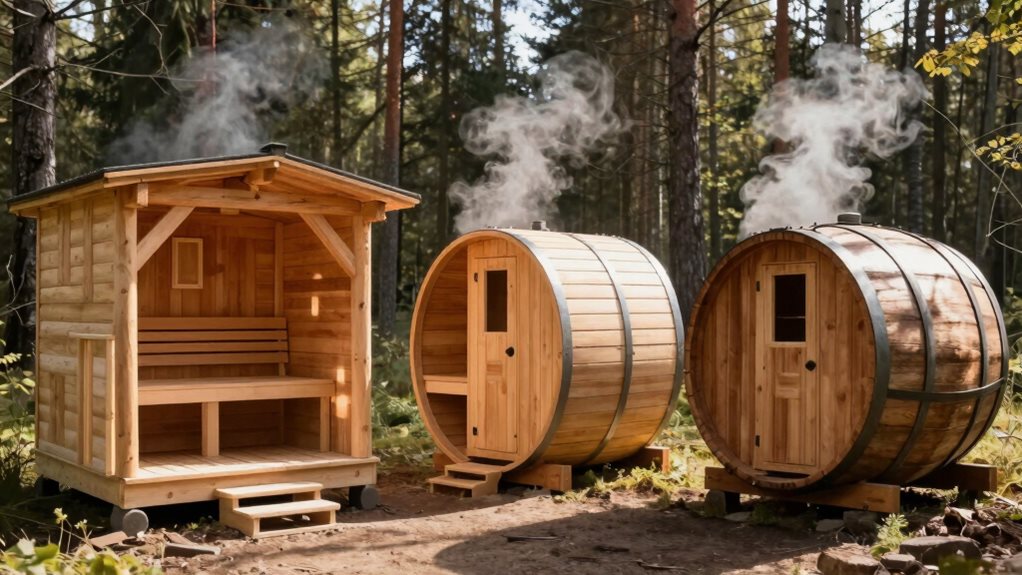
When it comes to heat performance in your sauna, the type of heater you choose really matters.
It’s not only about the heat; insulation thickness and proper ventilation play a big role too, making sure you stay cozy without breaking the bank on energy costs.
You’ll want to think about how these factors work together to create the perfect sauna experience that keeps you warm and happy! Additionally, choosing the right electric sauna heater can significantly enhance your sauna’s efficiency and overall comfort.
Heater Types Comparison
Choosing the right heater for your sauna isn’t just about warmth; it’s about finding the best way to create a cozy, inviting atmosphere that suits your needs. Electric heaters are super easy to install and heat up quickly, perfect for mid-sized saunas. If you crave an authentic experience, wood-burning heaters deliver even heat, making them ideal for a traditional löyly. Gas heaters heat faster and are cost-effective for larger saunas or commercial use, but require professional installation. For quick, eco-friendly warmth without intense heat, infrared heaters are a fantastic option for smaller spaces. Additionally, consider exploring electric sauna heater options that can enhance your sauna experience with efficiency and convenience.
Insulation and Panel Thickness
While you might think that insulation is just about keeping the heat in, it plays a crucial role in how well your sauna performs and how comfortable it feels. The right insulation can reduce heat loss by up to 50%, keeping your sauna toasty.
For walls, aim for at least R-13 insulation, while ceilings need R-26 or more to combat rising heat. Choosing the right materials matters too; for instance, polyisocyanurate boards offer great R-values with a thin profile.
Using a vapor barrier prevents moisture from sneaking in, helping your sauna heat up faster. Thicker panels, especially in barrel saunas, provide better heat retention, so they can keep you cozy even on chilly days. Incorporating sauna insulation kits can further enhance your sauna’s efficiency and performance.
Ventilation Importance
Good ventilation is essential for making your sauna experience enjoyable and efficient, as it affects both heat performance and air quality.
You can choose between passive or mechanical ventilation. Passive uses natural airflow, keeping costs low and maintenance minimal, but it might leave sealed spaces a bit stuffy.
On the other hand, mechanical systems continuously refresh the air but can be noisy and may add complexity.
To keep the warmth just right, position your fresh-air intake low near the heater, while the exhaust vent should sit high. This setup encourages warm air to circulate without cool drafts ruining the fun.
Getting it right helps maintain comfortable oxygen levels, guaranteeing you enjoy every relaxing moment in your sauna! Additionally, effective ventilation systems can greatly enhance your overall sauna experience.
Durability and Maintenance Risks
When it comes to saunas, understanding the durability and maintenance risks is crucial for making a solid investment. Each sauna type presents unique challenges that could affect your enjoyment over time.
- DIY builds often use thinner wood and require considerable labor, increasing error risks.
- Kits feature weak wall joints and limited part availability, making repairs tricky.
- Barrel saunas have overlapping joints, which can lead to leaks and decreased lifespan.
- All types need proper foundations and electrical work, costing you extra if professionals are needed.
- Custom saunas generally last longer and have warranties that outshine other options.
Considering these factors can help you choose a sauna that fits your needs while avoiding future headaches!
Customization Options and Aesthetic Choices
Creating the perfect sauna isn’t just about functionality; it’s also about making it your own. You can choose materials like Western Red Cedar for that wonderful aroma or Nordic Spruce for a sleek finish.
Interior woods can set the mood—clear boards radiate sophistication, while knotty ones add a rustic charm.
When it comes to layout, consider your bench arrangement; an L-shaped setup can offer cozy seating.
Lighting, whether with wall sconces or recessed LEDs, creates a warm ambiance, while sleek electric heaters give a modern vibe.
Don’t forget details like stylish towel racks and designer backrests! All these choices let you express your personal style, transforming your sauna into a unique retreat customized just for you.
Site Constraints and Installation Challenges
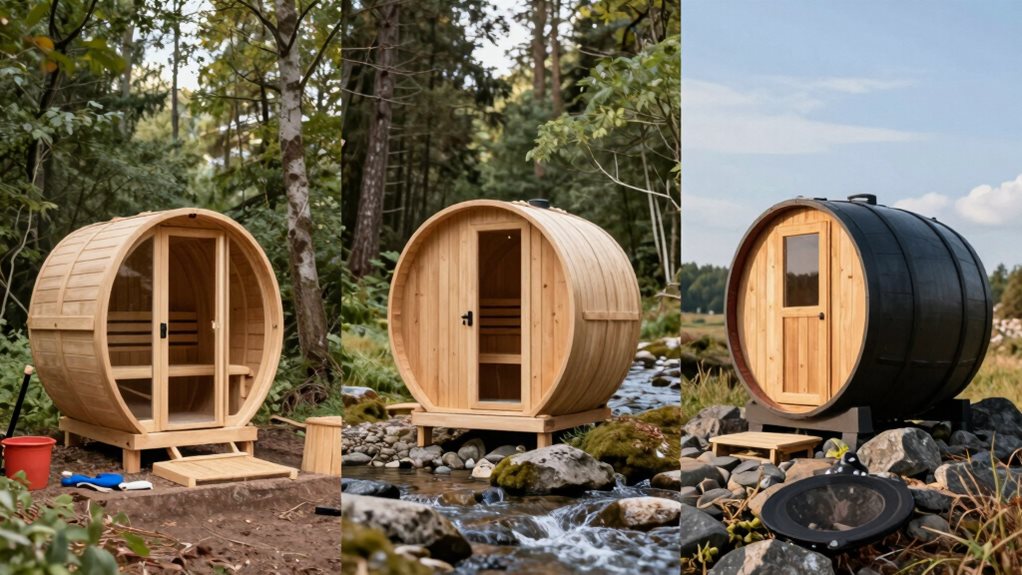
Installing a sauna at home can be as exciting as it’s challenging, especially when you consider the various site constraints and installation hurdles.
You’ll find that careful planning is crucial to avoid setbacks and guarantee a seamless setup.
- Check ground stability; unstable soil needs special foundations.
- Think about drainage; good drainage prevents water issues.
- Confirm clear access for delivery and assembly of the sauna.
- Be aware of local zoning rules and visibility restrictions.
- Consider weather exposure; sheltered sites last longer.
Keeping these factors in mind will make your sauna installation experience much easier and enjoyable.
Accept the challenge with a little preparation, and you’ll create a perfect relaxation spot right in your backyard!
Safety and Code Compliance: What to Keep in Mind
After you’ve carefully tackled site constraints and installation challenges, it’s time to focus on safety and code compliance, which are just as important for your sauna project.
First, check if your local building codes require permits for sauna installation, covering size, location, and materials. This keeps your sauna safe and up to standard.
For electrical safety, make certain you have GFCI outlets away from water and a dedicated circuit for heaters.
Don’t forget fire safety! Your sauna’s heating system should be isolated from other areas and use fire-resistant materials.
Also, guarantee doors meet accessibility standards, opening outward and without complicated locks.
Ventilation is key, too—proper airflow prevents hazards, making your sauna a safe haven for relaxation!
Common Mistakes to Avoid When Choosing a Sauna
When choosing a sauna, it’s easy to overlook important details that can make or break your experience. To get it right, consider these common mistakes:
- Sizing Issues: Confirm your heater matches your sauna’s cubic volume to avoid chilly sessions.
- Insulation Neglect: Use proper insulation and a vapor barrier to prevent heat loss and moisture damage.
- Material Choices: Don’t choose regular wood or flooring that can warp or deteriorate in humid conditions.
- Ventilation Gaps: Proper air circulation is key—plan for intake and exhaust vents to avoid stuffiness.
- Electrical Oversights: Choose the right heater size and confirm you have the proper electrical setup to prevent hazards.
Avoiding these pitfalls will help you enjoy a comfortable and efficient sauna experience!
Frequently Asked Questions
How Do I Choose the Right Heater for My Sauna?
To choose the right heater for your sauna, consider size, fuel type, and features. Electric heaters offer convenience, while wood-burning delivers authenticity. For direct body heat, opt for infrared; gas suits larger spaces efficiently.
What Maintenance Tasks Are Essential for Sauna Longevity?
To guarantee your sauna lasts, regularly wipe surfaces, inspect for damage, clean vents, and maintain your heater. Oil the wood, schedule electrical checks, and avoid harsh chemicals or shoes to prevent wear and tear.
Can I Relocate a Prefabricated Sauna Easily?
You can relocate a prefabricated sauna easily, but it depends on your sauna’s design. Modular panels simplify the process, while heavier, more complex structures require careful disassembly, professional help, and adherence to safety protocols.
What Materials Should I Avoid for Sauna Construction?
You should avoid engineered wood, pressure-treated lumber, standard flooring that traps moisture, and inappropriate finishes or adhesives for sauna construction. These materials can release harmful fumes, degrade quickly, and compromise your sauna’s safety and durability.
Are There Specific Codes for Outdoor Sauna Installations?
Yes, you’ll need to follow local building codes, electrical requirements, and zoning laws for outdoor sauna installations. Compliance guarantees safety, avoids fines, and meets standards for accessibility and structural integrity. Always verify with your local authorities.
Final Thoughts
Choosing between DIY, kits, or barrel saunas really depends on your personal preferences and situation. Each option has its pros and cons, so weigh factors like cost, assembly skills, and customization. Remember, it’s not only about the sauna itself, but also how well it fits into your space and lifestyle. Take your time, avoid rushing the decision, and you’ll find the perfect sauna for your relaxation needs. Happy sauna hunting!