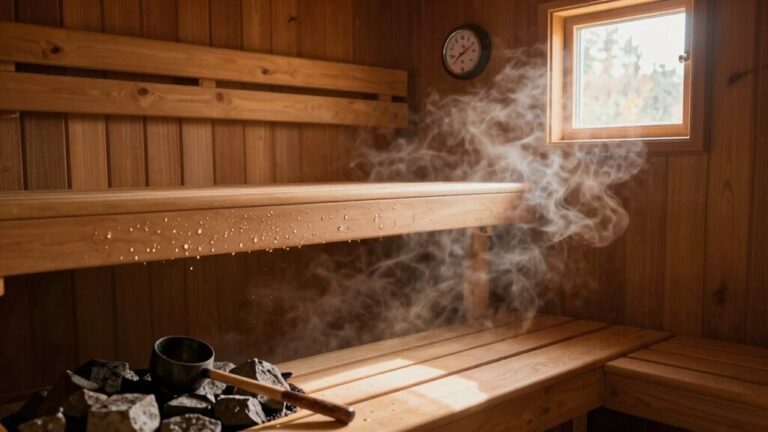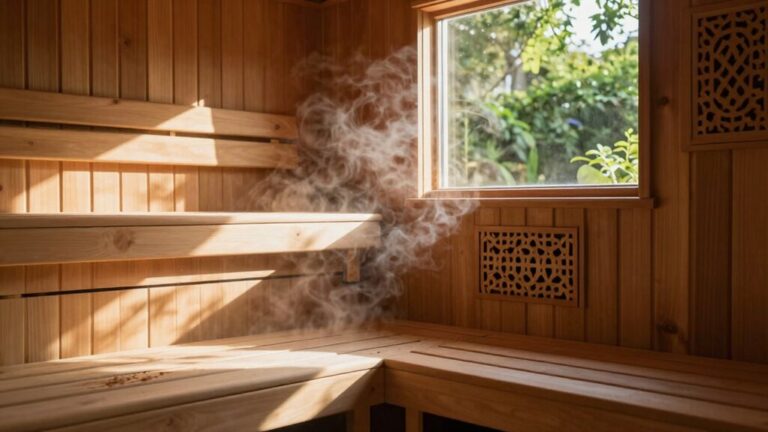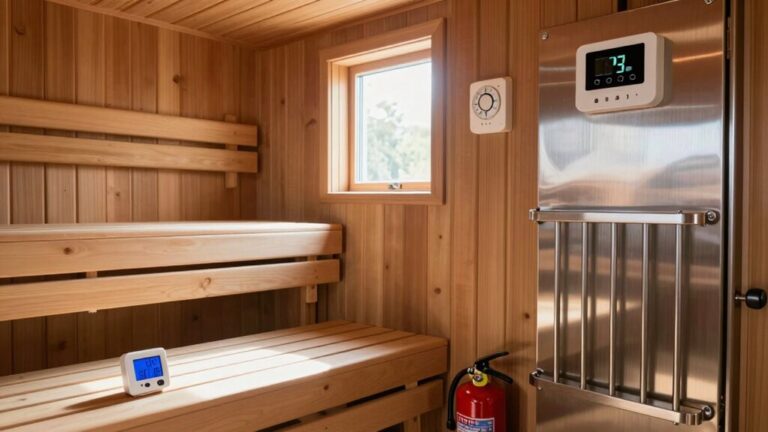
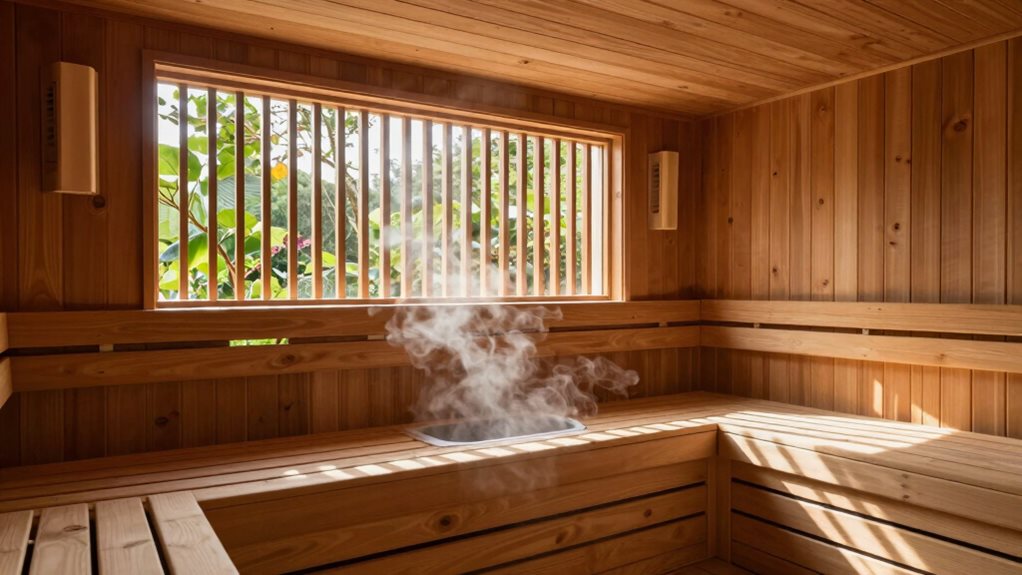

To optimize ventilation in your sauna, you need to maintain fresh air flow while improving comfort. Make sure your intake vent is low near the heater and the exhaust vent is high on the opposite wall. This helps create a natural air exchange that prevents stale air and boosts health benefits like better circulation. Avoid common mistakes, such as placing vents on the same wall. Get ready to explore more tips for a truly rejuvenating sauna experience!
Understanding the Importance of Ventilation in Saunas
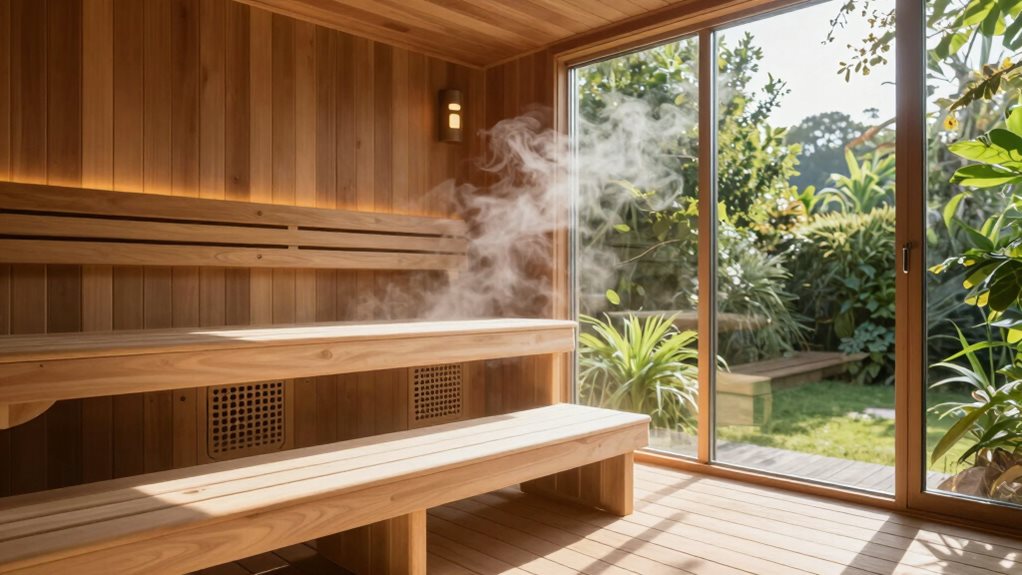
When you step into a sauna, you might expect to feel the relaxing warmth enveloping you, but have you ever thought about the air you’re breathing?
Good ventilation is crucial to guarantee you enjoy your sauna experience without discomfort. It prevents the buildup of carbon dioxide and stale air, keeping the atmosphere fresh. This means you can breathe easily and avoid dizziness or shortness of breath. Proper airflow design can enhance overall comfort by promoting gentle air exchange, preventing extreme heat or humidity pockets. Additionally, effective ventilation helps maximize health benefits by improving blood flow and detoxification. The right sauna ventilation fan system can significantly improve air circulation and overall air quality.
Plus, proper airflow removes airborne toxins and bacteria, promoting a cleaner environment. You’ll enjoy consistent warmth without those awkward hot spots, and that makes for longer, more relaxing sessions.
Exploring Passive Ventilation Techniques
When exploring passive ventilation techniques, you’ll find that they rely on the natural movement of air, thanks to gravity and temperature differences. To set it up right, you’ll want to position your air intake near the heater and the exhaust higher up on the opposite wall, creating a perfect loop for fresh air to flow in and stale air to escape. This setup achieves the recommended 4 to 6 air changes per hour, ensuring optimal performance and a comfortable sauna experience. Not just is this method cost-effective and simple, but it also helps promote convective loops—keeping your sauna air fresh and cozy—like a warm hug on a chilly day! Additionally, a well-designed sauna ventilation system can enhance air quality even further, making your sauna sessions more enjoyable and beneficial.
Gravity-Based Airflow Mechanism
You mightn’t realize it, but the way air flows in a sauna can have a big impact on your experience.
The gravity-based airflow mechanism utilizes warm air rising, creating a natural convection that pulls fresh air from low openings near the floor. This process relies on the differences in pressure and density, with hot air escaping from high points, allowing cooler air to rush in. For best results, place your air intake low, near a stove. This setup helps mix the rising heat efficiently, improving your sauna session. However, be aware that factors like wind can affect this flow, so it’s crucial to design your sauna with strategic vents for a balanced and invigorating experience. Additionally, proper ventilation is essential for preventing discomfort, ensuring that users can fully enjoy the benefits of the sauna without the risk of overheating or low oxygen levels. Implementing mechanical ventilation ensures consistent airflow and enhances thermal comfort, which is crucial for a better sauna experience.
Key Installation Guidelines
Installing the right ventilation in your sauna is key to creating a comfortable atmosphere, so let’s explore some practical guidelines. Here are some crucial tips:
- Intake Placement: Position the intake vent low on the wall, close to the heater—ideally within 12 inches of the floor.
- Exhaust Location: Install the exhaust vent high on the opposite wall, around 6 inches below the ceiling, to help carry warm air out.
- Sizing: Verify the total vent area is at least 1 square inch per cubic foot of sauna volume—common is a 4×4 inch vent.
- Installation Techniques: Cut holes clear of studs and secure vents to control airflow effectively. Additionally, ensure that proper ventilation needs are met to prevent moisture buildup and potential mold growth. Proper venting also helps retain heat and improve air quality, enhancing the overall sauna experience. Incorporating a fireproof sauna ventilation system can further enhance safety and efficiency in your sauna environment.
Stick to these guidelines, and you’ll enjoy superior ventilation and comfort during your sauna sessions!
Benefits of Passive Ventilation
Although it might seem simple, passive ventilation can greatly improve your sauna experience by using natural airflow to keep the environment fresh and comfortable. This technique uses fixed openings and thermal convection, allowing air changes of 6-8 times per hour. With proper placement of round vents in the ceiling or corners, you prevent CO₂ buildup, stale air, and humidity. Maintaining consistent temperatures helps you avoid the discomfort of overheating, while humidity control keeps the space dry and reduces the risk of mold. You benefit from oxygen-rich air, boosting your relaxation and overall health. Additionally, proper ventilation is crucial for comfort, as it helps ensure that you breathe easy throughout your sauna session. Moreover, effective ventilation actively removes excess humidity, preventing condensation and mold growth to enhance your sauna’s longevity. Furthermore, investing in a quality sauna ventilation system kit can provide you with all the essential components needed for optimal airflow. Plus, since passive systems don’t rely on mechanical parts, they’re energy-efficient, guaranteeing your sauna feels great and lasts longer!
Mechanical Ventilation: Enhancing Airflow Efficiency
When it comes to enjoying a sauna, effective mechanical ventilation can make a world of difference in your experience. Good airflow keeps the heat even and freshens up the air.
Here are some tips to improve airflow efficiency:
- Use a properly sized exhaust fan: Choose one that slightly exceeds the intake capacity for effortless air movement.
- Position supply ducts wisely: Place them above the heater to warm incoming air before it cools you down.
- Incorporate sensors and controls: These can automatically adjust ventilation based on humidity and CO2 levels, guaranteeing a comfortable atmosphere.
- Opt for insulated ducting: This minimizes heat loss and keeps your sauna cozy.
With these strategies, you’ll enjoy a healthier and more inviting sauna experience!
Key Components of a Proper Ventilation Layout
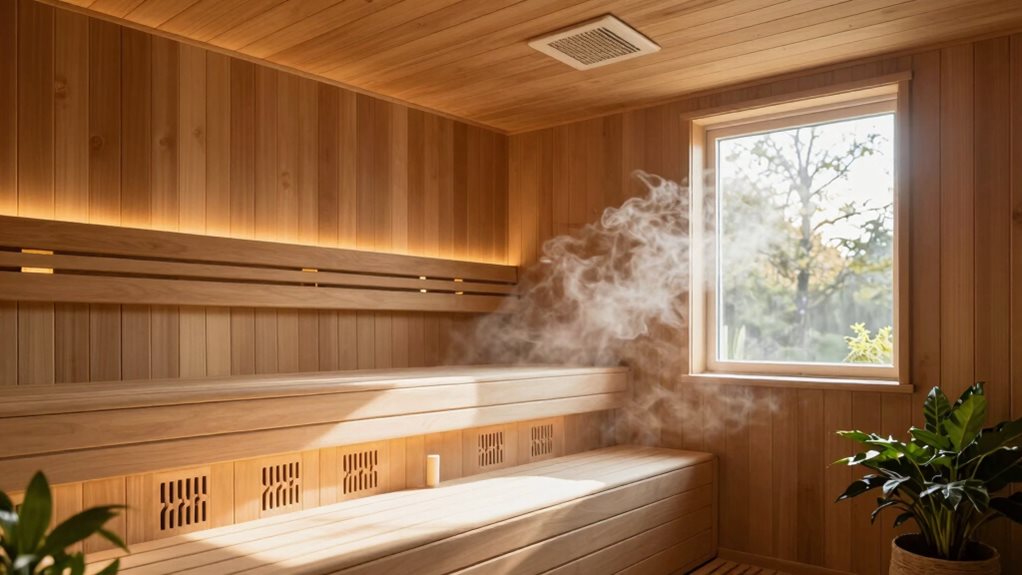
When setting up ventilation in your sauna, the placement of air intake and exhaust vents is essential for maintaining a comfortable environment.
You’ll want to position the intake vent near the floor for cool air to enter and heat up quickly while placing the exhaust vent near the ceiling for hot air to escape.
This balanced setup helps guarantee a seamless flow of fresh air, making your sauna experience invigorating and enjoyable!
Air Intake Placement
To create a comfortable and healthy sauna experience, you need to pay close attention to air intake placement, as it plays a key role in maintaining proper ventilation.
Positioning the intake wisely can improve air quality and thermal comfort. Here are four important factors to take into account:
- Proximity to Heater: Place the intake close to the heater for effective heating and air circulation.
- Size and Flow: Verify the intake area is around 4 in² per person to allow adequate airflow.
- Location Relative to Benches: Keep the intake low to avoid cold drafts and guarantee even temperature distribution.
- Air Source: Contemplate using outdoor air for fresher oxygen and reducing humidity levels.
With these tips, you’ll create a sauna that feels great!
Exhaust Vent Location
Having a well-placed exhaust vent is crucial for creating a properly ventilated sauna that feels just right. Ideally, you should install the exhaust vent on the wall opposite the heater, about 4 to 24 inches above the floor. This captures cooler air near your feet.
For electric saunas, consider placing it higher to remove hot, humid air quickly. A dual-height approach, using both low and high vents, promotes better airflow. Just make sure the exhaust isn’t directly aimed at where you sit—pull stale air from lower levels instead!
Also, keep the exhaust away from the heater intake to avoid losing warm, oxygen-rich air. A well-thought-out placement means everyone can enjoy a comfortable, revitalizing sauna experience.
Tailoring Ventilation to Different Sauna Types
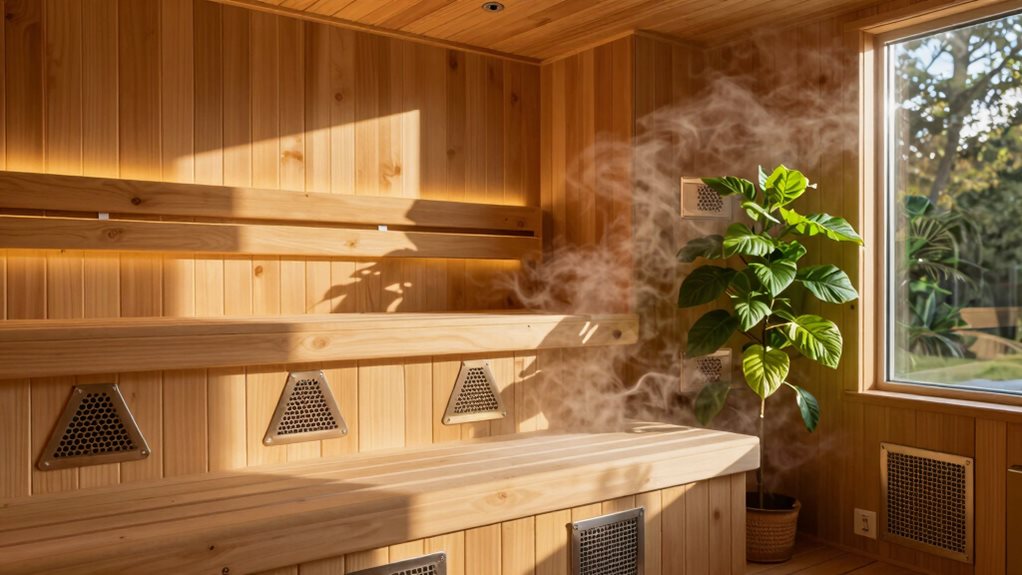
Ventilation plays a crucial role in creating the perfect sauna experience, especially since different sauna types have unique needs.
Understanding these needs helps you tailor ventilation effectively for various saunas:
- Traditional Saunas: Use low inlet vents near the heater, coupled with high outlet vents, to create passive airflow.
- Infrared Saunas: Focus on gentle fans or vents to guarantee even air distribution while keeping oxygen quality high.
- Wood-Burning Saunas: Install strong inlet vents and a chimney to evacuate combustion gases while keeping airflow steady.
- Electric Saunas: Balance inlet and outlet sizes, aiming for 30-40 CFM to maintain fresh air without overwhelming the system.
With a proper ventilation setup, you can enjoy your sauna sessions comfortably and rejuvenate effectively!
Benefits of Effective Ventilation for Sauna Longevity
While you mightn’t think about it much, effective ventilation can greatly improve your sauna’s lifespan and overall health benefits.
Good airflow helps maintain the right temperature and humidity, which keeps the wood dry and prevents mold. This means fewer repairs and a longer-lasting sauna.
Plus, proper ventilation boosts your sauna experience by guaranteeing you get that invigorating, brisk air while sweating it out.
It also augments your heart health, as a well-ventilated sauna can promote better circulation during your sessions.
With regular use, you can enjoy considerable cardiovascular benefits, helping lower risks of heart disease. Additionally, investing in a sauna moisture control system can further enhance the efficiency of your sauna’s ventilation.
Strategies for Maintaining Ideal Air Quality
To truly enjoy your sauna experience, keeping the air quality at its best is key. Here are some strategies to help you maintain that ideal environment:
- Check humidity levels: Use a hygrometer to keep humidity between 10-40% for the best benefits.
- Clear ventilation paths: Monthly inspections help guarantee vents are unobstructed, allowing fresh air to circulate effectively.
- Post-use airing: Always leave the door open after use to let excess moisture escape, preventing mold growth.
- Regular cleaning: Wipe surfaces after every session and deep clean weekly to eliminate dust and odors.
- Consider protective products: Utilizing proper sauna moisture protection products can further enhance your sauna’s air quality and longevity.
Common Ventilation Mistakes to Avoid
Many sauna enthusiasts unknowingly make common ventilation mistakes that can hinder their overall experience. For instance, placing vents on the same wall creates a short air loop, trapping stale air.
You’d want at least one vent high and one low to guarantee good circulation, as both positioned the same way can lead to temperature differences. If your outlet vent is too small, it’ll make the sauna feel muggy.
Remember to use proper materials; metal ducts can radiate uneven heat. Sealing your sauna too tightly might turn it into an airtight box, causing CO2 buildup, and that’s not fun!
Avoiding these mistakes can greatly enhance your sauna sessions and create a healthier environment for relaxation. Happy saunaing!
Integrating Ventilation With Modern Sauna Designs
Integrating ventilation into modern sauna designs is essential for creating a comfortable and enjoyable experience. Proper airflow improves your session, guaranteeing you breathe easy while savoring the warmth.
Effective ventilation enhances sauna enjoyment, ensuring you breathe comfortably while embracing the soothing heat.
Here are key strategies to implement:
- Position your intake low and near the heater to draw in cool air for warming.
- Place the exhaust on the opposite wall, ideally under the upper bench, to efficiently remove humid air.
- Incorporate backdraft dampers to prevent heat loss when fans are off, preserving energy.
- Utilize adjustable vents to control airflow and humidity for optimum comfort during use.
With these approaches, you can enjoy a healthier sauna experience while maximizing energy efficiency and heat retention.
Frequently Asked Questions
How Often Should I Check My Sauna’s Ventilation System?
You should check your sauna’s ventilation system weekly after high-use days and monthly for lower use. Regular visual inspections, filter maintenance, and humidity logging help guarantee peak air quality and performance throughout your sauna sessions.
Can I Use Air Purifiers in My Sauna?
You can use air purifiers in your sauna, but make certain they’re rated for high temperatures and humidity. Avoid ozone-generating devices during use, as they can irritate your respiratory system and create safety concerns.
What Signs Indicate a Ventilation Problem in My Sauna?
You’ll notice signs like stale air, temperature imbalances, excessive moisture, or lingering odors. Headaches, dizziness, and difficulty breathing are key indicators that your sauna’s ventilation needs immediate attention to guarantee a healthier experience.
Is It Safe to Open Windows During Sauna Use?
It’s generally not safe to open windows during sauna use. Instead, rely on adjustable vents for fresh air. Windows can get dangerously hot, and they don’t effectively manage airflow like proper ventilation systems do.
How Can I Minimize Drafts Without Sacrificing Ventilation?
You can minimize drafts by positioning intake vents low and exhaust vents high. Use adjustable dampers to fine-tune airflow, guaranteeing fresh air circulates steadily without creating uncomfortable drafts during your sauna sessions.
Final Thoughts
To sum up, good ventilation is key to enjoying a healthier sauna experience. By using both passive and mechanical techniques, you can create a space where fresh air flows freely, making your time there much more pleasant. Remember to check your ventilation setup regularly, and don’t hesitate to customize it for your sauna type. With these fresh ideas, you’ll not just boost your comfort but also extend the life of your sauna. Happy sweating!