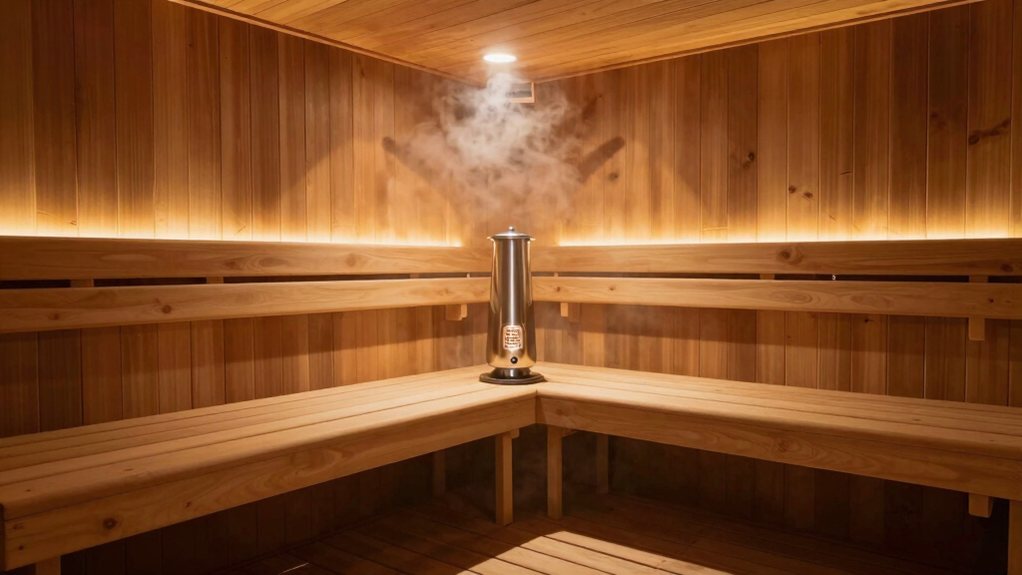

To get the best heat in your sauna, place the heater on the same wall as the door. This helps warm air circulate evenly and prevents heat from escaping when you enter. Measure your sauna’s size to determine the right heater wattage. Make sure to use vents for fresh air and keep the heater about 5–7 inches off the ground. With smart setup and airflow, you’ll feel the warmth quickly, and there’s more to uncover about maximizing your experience!
The Importance of Sauna Heater Placement
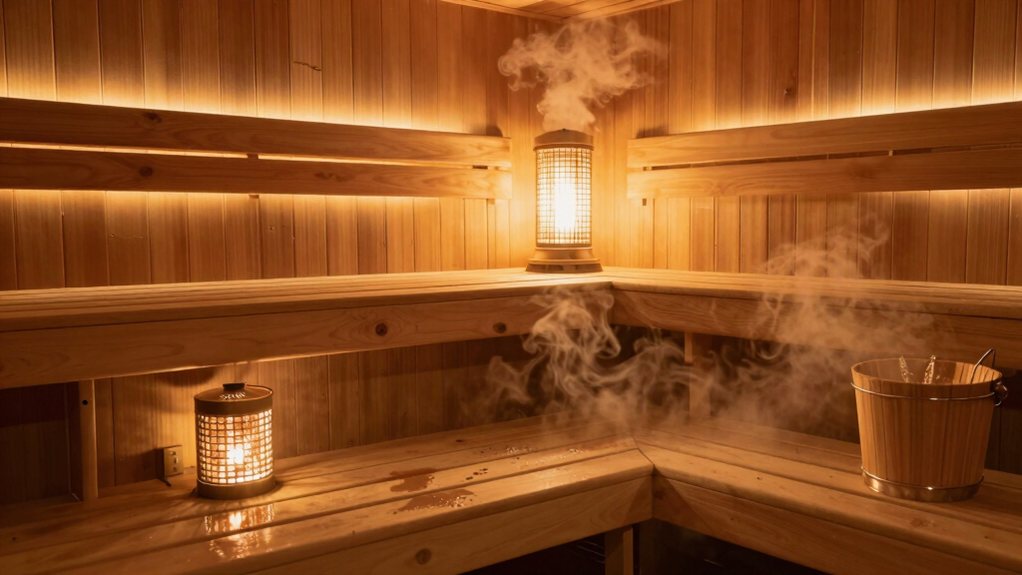
When you step into a sauna, the first thing you want to feel is that cozy, warm hug enveloping you. The way you position the heater plays a huge role in creating that blissful atmosphere. If it’s placed poorly, you might end up with hot spots or cold corners, making your experience less enjoyable. Ideally, you want the heater on the same wall as the door so the warm air circulates efficiently. This setup guarantees that the heat doesn’t escape when you enter. Plus, stacking stones correctly helps distribute the warmth evenly. By optimizing heater placement, you’ll keep comfy, but you’ll also enjoy all those fantastic health benefits like improved circulation and quicker detoxification as you sweat it out! Additionally, strategically placed infrared heaters can enhance heat efficiency and target body warmth more effectively. A well-placed heater also significantly influences energy consumption and can lead to lower running costs.
Essential Measurements for Strategic Sauna Heater Positioning
Getting the heater placement right in your sauna isn’t just about aesthetics; it’s crucial for a comfy, effective experience. Start by measuring your sauna’s length, width, and height to calculate its cubic footage. For instance, a 6-foot wide, 7-foot long, and 7-foot high sauna equals 294 cubic feet.
With a standard ceiling height of 7 feet, think about how higher ceilings impact heat distribution—like an unwanted chill at foot level! To achieve even heat distribution, ensure that the heater is positioned strategically to mix cooler air with warm air effectively. Additionally, proper sizing ensures energy efficiency and consistent sauna experience, so keep that in mind as you measure your space. Next, consider insulation; a well-insulated sauna needs about 1 kilowatt per 45-50 cubic feet.
Finally, guarantee there’s enough clearance around the heater—removing nearby furniture or decorative items keeps heat flowing seamlessly. These measurements set you up for an enjoyable sauna session every time.
Top Strategies for Optimal Sauna Airflow Management
Have you ever wondered how to keep the air in your sauna fresh and comfortable during your sessions?
First, place your intake vent about 6-8 inches from the floor, allowing fresh air to mix with the heater’s warm air. Proper ventilation is critical for maintaining even temperatures throughout the sauna. Additionally, having temperature gradients allows for strategic vent placement that works with natural air movement.
Place your intake vent 6-8 inches from the floor to blend fresh air with the heater’s warmth.
On the opposite wall, position the exhaust vent 6 inches from the ceiling to make use of the stack effect—warm air rises! Try using multiple small vents instead of one large one for better airflow distribution.
Adjustable louvers let you control airflow; keep them partially closed during heating and open up when you’re inside. Finally, make sure air completely replaces every 10 minutes to maintain oxygen levels, preventing dizziness and stale air.
Enjoy your invigorating sauna experience!
Benefits of Proper Sauna Heater Positioning
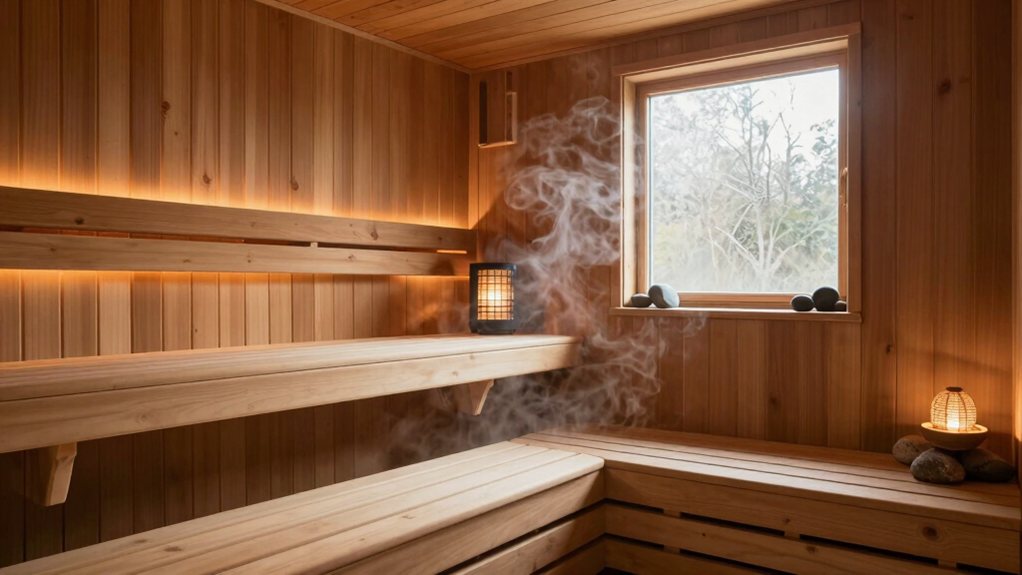
Properly positioning your sauna heater can transform your experience, making it more than just cozy but also beneficial for your health. When you place your heater strategically, you’ll enjoy improved blood flow and better cardiovascular health. This means more oxygen reaching your muscles and tissues, which can help reduce inflammation. You’ll also notice that your core temperature rises faster, allowing you to reap the sauna’s therapeutic benefits in less time. Plus, an efficiently heated sauna boosts your immune system, aiding recovery after workouts. Regular sauna use is associated with reduced incidence of cardiovascular disease, dementia, and respiratory conditions. Consistent heat distribution even supports cognitive functions, helping keep your brain sharp. Additionally, proper heater placement enhances muscle recovery, allowing for quicker healing processes and reduced muscle soreness. So, with the right heater placement, you’re more than simply relaxing; you’re investing in a healthier, happier you!
Maintaining Consistent Heat in Your Sauna
To truly enjoy your sauna experience, maintaining consistent heat is key. Start by positioning the heater 5-7 inches off the ground, guaranteeing the lower areas warm up properly. Incorporating a massive wood-fired stove can create an optimal sauna environment that enhances your experience. Place the temperature sensor 14-18 inches down from the ceiling to prevent early shut-off—it’s like giving your sauna a reliable temperature buddy! Proper insulation and material selection are critical for heat retention, ensuring that your sauna remains cozy throughout your session. A longer pre-heating time, around 15-20 minutes, helps materials, like cedar, absorb heat, creating a cozy atmosphere you’ll love. Don’t forget about ventilation—fresh air is great, but too much can lead to chilly spots. Finally, control your steam application; adding water gradually to the stones helps distribute heat evenly. With these tips, you’ll enjoy a soothing, consistent sauna experience each time you step in!
Frequently Asked Questions
Can I Use a Portable Heater in My Sauna?
You can use a portable heater in your sauna, but make sure it’s designed for the environment. Check for safety features, maintain proper placement, and always follow manufacturer guidelines for the best and safest experience.
What Type of Heater Is Best for Small Saunas?
For small saunas, a 3–4.5kW wall-mounted electric heater works best. It heats efficiently, fits tight spaces, and offers convenience with features like WiFi controls, guaranteeing you enjoy a comfortable sauna experience every time.
How Do I Prevent Heater Failure in My Sauna?
To prevent heater failure in your sauna, routinely inspect heating elements, clean air vents, and keep stones dry. Guarantee proper ventilation and schedule professional checks to identify issues before they become serious problems.
Can I Install the Heater Myself?
You can install the heater yourself if you’re experienced with electrical work, but it’s safer to hire a licensed electrician. They’ll guarantee proper connections and compliance with safety guidelines to prevent hazards.
What Materials Are Safest for Sauna Heater Placement?
For sauna heater placement, use high-quality stainless steel for durability, carbon fiber elements for safety and even heat, and guarantee you choose formaldehyde-free wood with appropriate adhesives to maintain structural integrity and safety.
Final Thoughts
By placing your sauna heater wisely, you’ll create a cozy and evenly heated atmosphere, making every sauna session enjoyable. Remember to measure your space and think about airflow to prevent hot and cold spots. With the right setup, you can look forward to consistent warmth that helps you relax and rejuvenate. So, take the time to optimize your heater placement—you’ll be glad you did when you step into your perfect sauna experience!