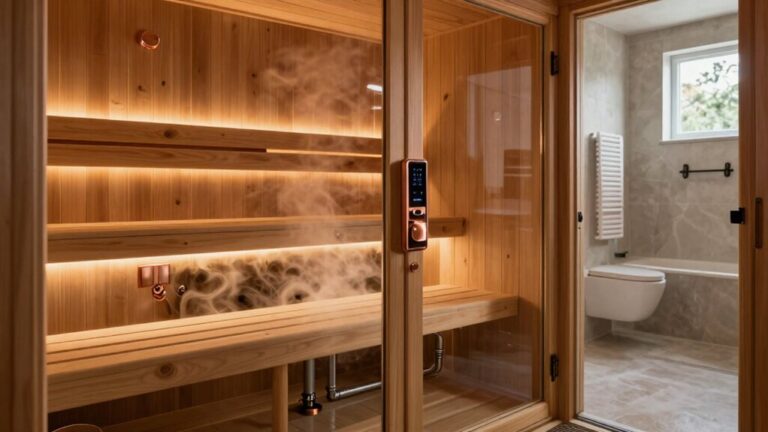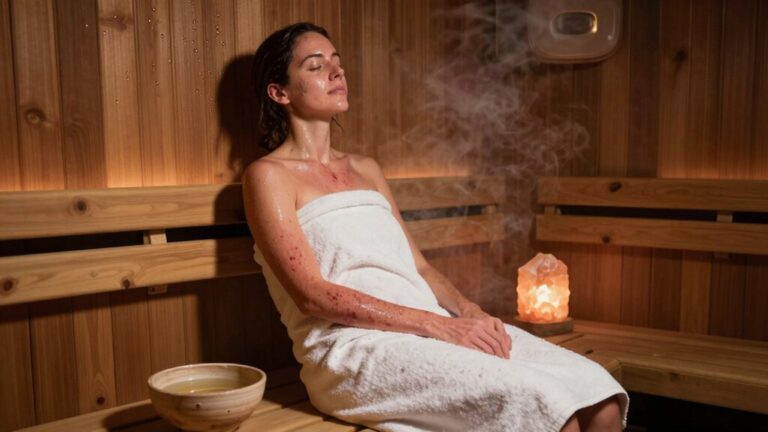
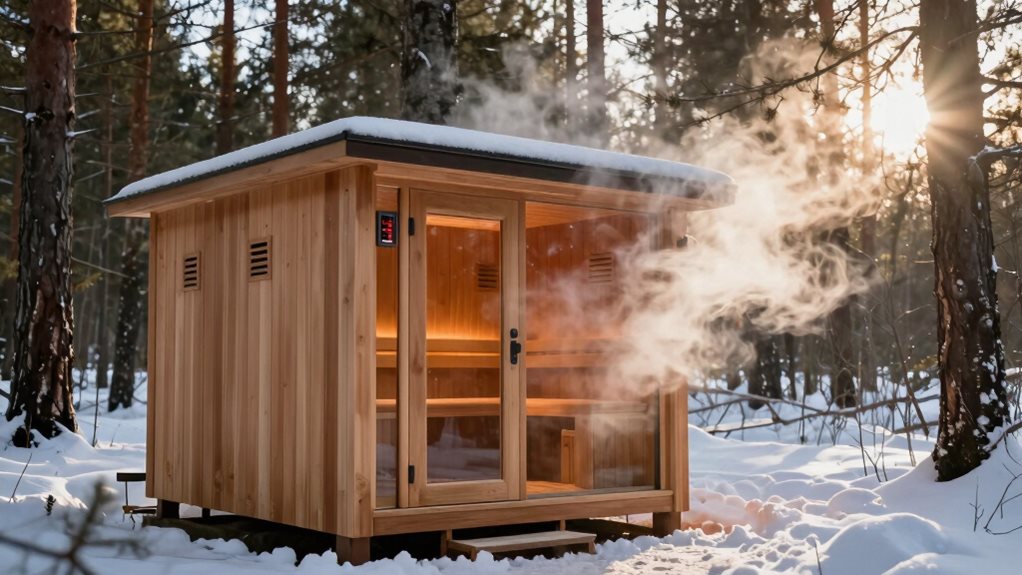

Proper ventilation in your outdoor sauna isn’t just about comfort—it’s crucial for performance. When you install vents diagonally (intake near the floor, exhaust higher on the opposite wall), you create natural circulation that distributes heat evenly, prevents CO2 buildup, and reduces strain on your heater. You’ll breathe easier, experience better therapeutic benefits, and extend your equipment’s lifespan. The right airflow turns a good sauna session into an exceptional health-boosting experience.
The Science Behind Outdoor Sauna Air Circulation
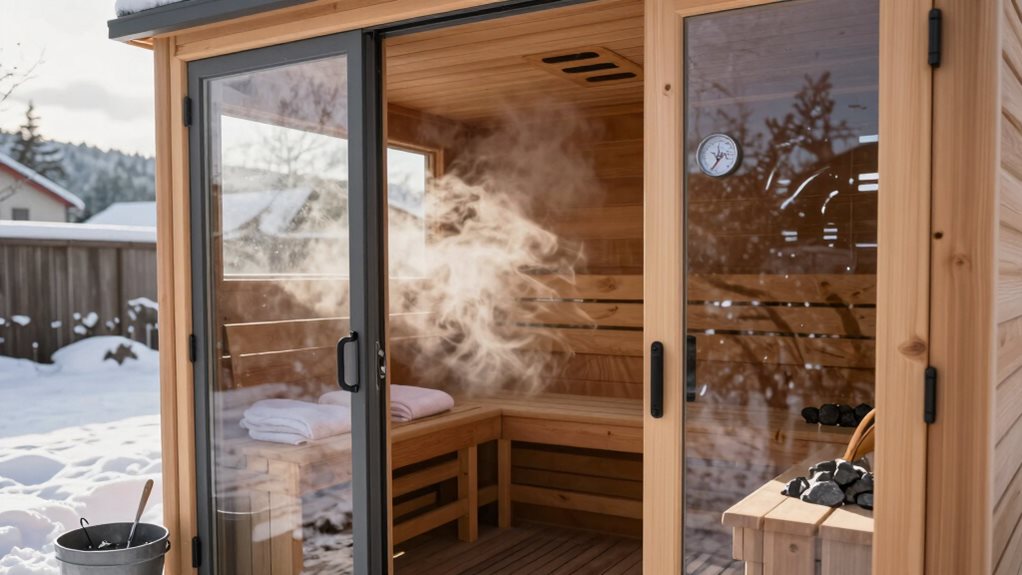
When you step into a properly ventilated outdoor sauna, you’re actually experiencing sophisticated thermodynamic principles at work. Hot air naturally rises due to buoyancy, creating pressure differences throughout your sauna space. This natural movement is what drives effective circulation.
Your sauna creates distinct pressure zones—higher pressure at the ceiling and lower pressure near the floor. When you position vents strategically, you’re working with these natural forces, not against them. Fresh air entering above the heater (about 2 feet from the stove) creates efficient mixing, while exhaust vents below bench level promote circulation. This method enhances the convection heat transfer that distributes warmth throughout the sauna environment. This ventilation design prevents heat stagnation around the heater and ensures a more comfortable experience for all users.
The height difference between intake and exhaust vents directly affects airflow speed. This creates convection currents that distribute heat evenly, eliminating uncomfortable hot and cold spots you’d feel in a poorly ventilated sauna.
Natural Ventilation Techniques for Maximum Efficiency
Natural ventilation turns your outdoor sauna experience from ordinary to extraordinary without requiring complex mechanical systems.
By positioning your intake vent 20-60 cm from the floor near the heater, you’ll initiate the perfect circulation cycle. This works because hot air naturally rises (the stack effect), creating pressure that draws in fresh air.
Proper intake vent placement creates a natural air cycle that refreshes your sauna while maintaining essential heat through the stack effect.
For maximum efficiency, place your exhaust vent on the opposite wall, 2-3 feet higher than the intake. This cross-ventilation setup creates a continuous airflow path that removes stale air while maintaining heat.
You’ll want equal-sized vents with adjustable louvers to control airflow during different phases of your sauna session. This design supports thermal buoyancy which naturally circulates air without mechanical assistance.
The materials matter too – tongue-and-groove boards with small spacing promote better natural ventilation than solid panels, allowing your sauna to breathe properly. Implementing this ventilation strategy helps achieve the recommended 6-8 air changes per hour needed for maintaining optimal air quality.
Optimizing Vent Placement for Seasonal Performance
Properly placing vents in your outdoor sauna becomes especially critical as seasons change throughout the year. For ideal airflow, position your intake vent 4-12 inches above the floor near your heater, while mounting the exhaust vent 6-12 inches below the ceiling on the opposite wall. This diagonal arrangement creates a natural convection current that refreshes air throughout your sauna.
During winter months, you’ll appreciate how this setup prevents cold spots, while in summer, it efficiently removes excess humidity. This ventilation strategy ensures oxygen-rich air throughout your sessions, preventing fatigue and enhancing your sauna experience.
Remember to size your vents appropriately—a minimum of 12 square inches for the intake and 23 square inches for the exhaust. Don’t completely close your vents, even in cold weather; instead, use adjustable grilles to control airflow.
With proper placement and sizing, you’ll achieve the recommended 4-6 air changes per hour that experts suggest for optimal sauna performance.
This balanced ventilation system guarantees your outdoor sauna performs perfectly year-round.
Health Benefits of Fresh Air Exchange in Heat Therapy
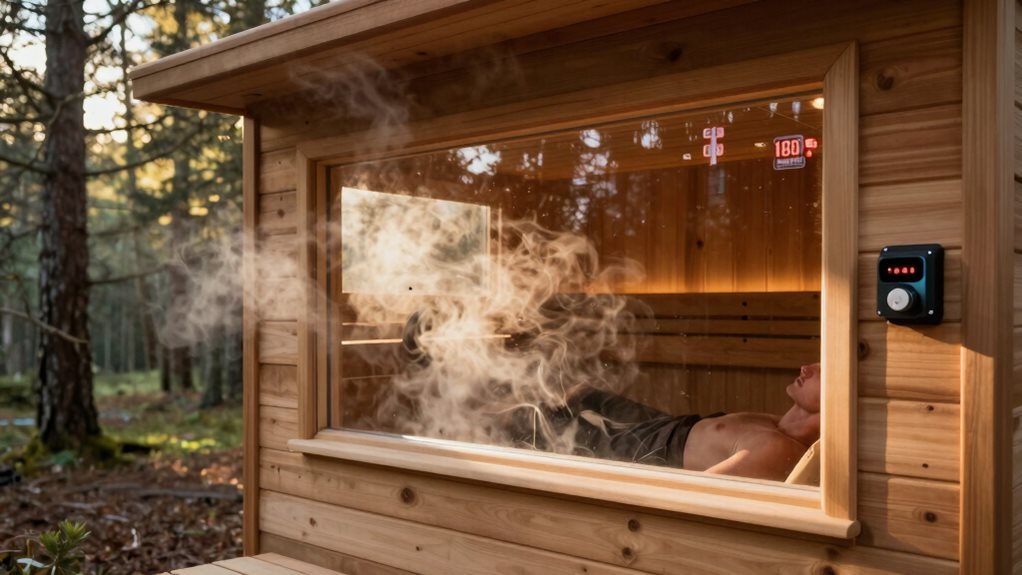
Fresh air exchange in your sauna does far more than simply prevent stuffiness—it actively improves your health outcomes during every heat therapy session.
Proper ventilation supports your respiratory system by encouraging deeper breathing and clearing airways, which optimizes your lung efficiency during and after sauna use. Stagnant air can trigger stress responses in the body, interfering with the relaxation benefits saunas are designed to provide. Regular sauna bathing in well-ventilated environments enhances sleep quality by promoting deeper sleep cycles.
- Your cardiovascular system benefits from fresh air’s oxygen supply, helping your heart respond effectively to heat stress while expanding blood vessels similar to moderate exercise.
- Your immune defenses strengthen with proper ventilation, as regular sauna sessions in well-ventilated environments can reduce your risk of respiratory illnesses and even halve your chances of catching common colds.
- You’ll experience better recovery and performance benefits when fresh air circulation prevents CO2 buildup, allowing you to stay comfortable longer and maximize heat therapy’s therapeutic effects.
Extending Equipment Lifespan Through Ventilation Design
While you invest in a luxurious outdoor sauna experience, proper ventilation serves as your equipment’s strongest ally against premature wear and breakdown.
Your heater operates more efficiently when fresh air flows consistently through the space, preventing it from overworking to compensate for uneven temperature zones.
With diagonal airflow from floor to ceiling, you’ll create a balanced environment that distributes heat evenly, reducing strain on heating elements.
This steady operation helps your electric or infrared heater maintain consistent performance without the stress of heat-trapped areas. The oxygen-rich air near your heater allows hot air to escape properly, extending equipment life markedly.
Installing adjustable vents gives you control over airflow, guaranteeing your heater isn’t fighting against stagnant air pockets that force it to work harder and age faster.
Proper ventilation also complements your sauna’s quality insulation materials, ensuring heat retention while allowing necessary air exchange for optimal performance.
Frequently Asked Questions
How Does Extreme Cold Affect Outdoor Sauna Ventilation Requirements?
You’ll need balanced ventilation in extreme cold—less airflow prevents excessive heat loss while still maintaining air quality. Protect vents from snow buildup and adjust intake positioning to minimize cold spots.
Can Solar-Powered Ventilation Fans Work Effectively for Remote Saunas?
Yes, solar-powered fans work excellently for remote saunas. They’ll maintain proper airflow regardless of grid access, prevent moisture buildup, and improve your sauna experience while operating completely off-grid in various conditions.
What Noise Levels Should I Expect From Mechanical Ventilation Systems?
You’ll experience 40-60dB from typical mechanical ventilation, comparable to soft chatter or normal conversation. For your sauna, target 24-30dB in noise-sensitive areas for ideal comfort.
How Do I Prevent Wildlife From Nesting in Outdoor Sauna Vents?
Install 1/4-inch mesh steel vent covers, secure loose vents, trim nearby branches, and perform seasonal inspections. Use hardware cloth barriers and keep the area around vents debris-free to discourage wildlife nesting.
Does Ventilation Affect Aromatherapy Effectiveness in Outdoor Saunas?
Yes, proper ventilation greatly improves aromatherapy effectiveness in your outdoor sauna by evenly dispersing vital oils, preventing overwhelming scent buildup, and maintaining ideal conditions for both inhalation and skin absorption.
Final Thoughts
You’ve now learned how proper ventilation transforms your outdoor sauna experience. By understanding airflow science, implementing natural ventilation, and strategically placing vents, you’ll enjoy healthier heat therapy and extend your sauna’s life. Remember, fresh air circulation isn’t just about comfort—it’s crucial for your well-being and equipment longevity. With these ventilation principles in place, you’re set to enjoy ideal sauna sessions year-round.