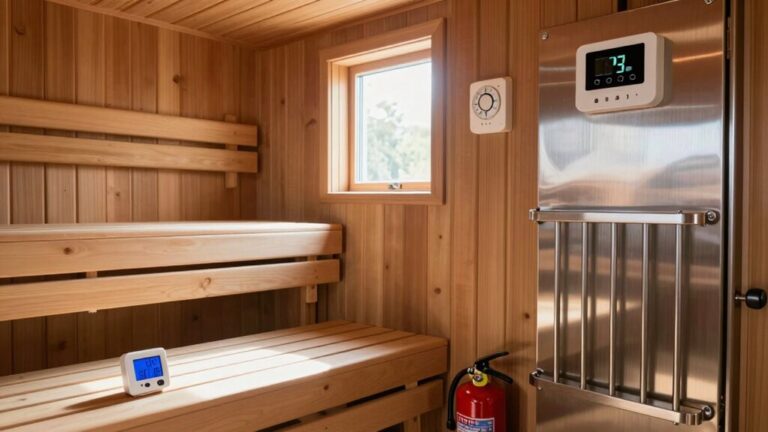

Meeting electrical safety standards in your home sauna requires understanding voltage requirements and proper circuit sizing. Traditional saunas need 240V power, while infrared models can use standard 110-120V outlets. Install dedicated circuits with correctly sized breakers (125% of continuous current), and use appropriate copper wiring (#8 AWG for 40-amp circuits). Always include GFCI protection and guarantee proper grounding of all metal components. Following these guidelines protects your family from electrical hazards while you enjoy your therapeutic retreat.
Understanding Voltage Requirements for Different Sauna Types
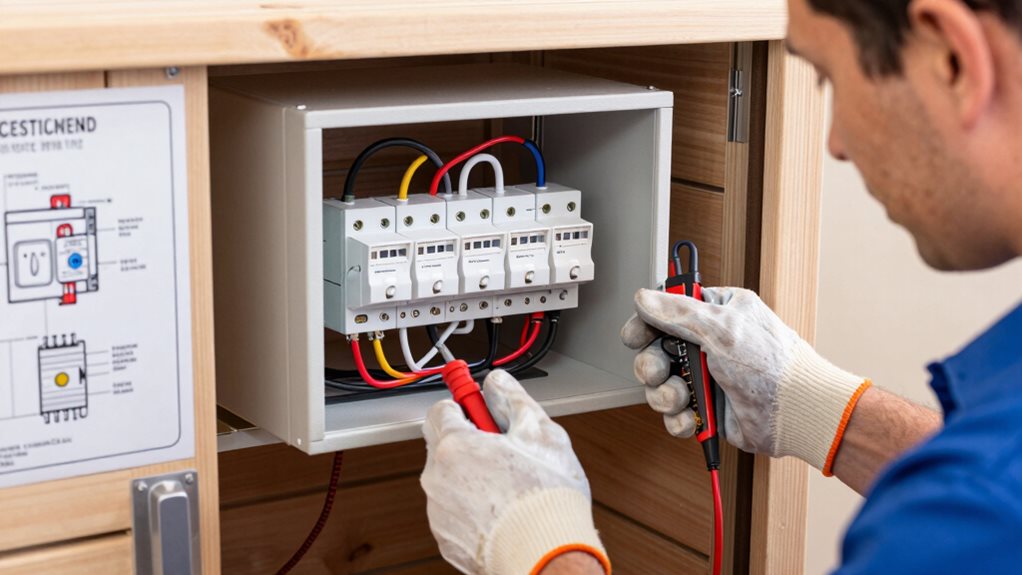
When installing a sauna in your home, understanding the voltage requirements for your specific type is crucial for both safety and ideal performance.
Traditional saunas typically need 240V power to reach higher temperatures efficiently, with most heaters hard-wired at 220V on dedicated circuits. In contrast, infrared saunas are more adaptable, running on standard 110-120V outlets for smaller 1-2 person models.
Choosing between traditional and infrared saunas? Consider your electrical setup—traditional models demand 240V power while smaller infrared units work with standard outlets.
Your sauna’s size greatly impacts voltage needs. Small, portable units work well with 120V and a 15-20 amp breaker, while larger 4-6 person saunas demand 220-240V systems.
Hybrid models combine both worlds, with infrared panels operating at 110-120V and traditional heaters requiring 220-240V, often on separate circuits.
Commercial installations may require three-phase power for peak performance and safety.
Selecting the Proper Circuit Size and Breaker Configuration
Selecting the proper circuit size and breaker configuration stands as the foundation of safe sauna installation in your home. To determine the right setup, you’ll need to calculate your heater’s continuous current by dividing its kW rating by the supply voltage.
For example, a 6.0 kW heater running on 240V draws 25 amps. Since sauna heaters are continuous loads, you’ll need to size your breaker and wiring for 125% of that current. That 6.0 kW heater would require a 40-amp dedicated double-pole breaker.
Choose conductors that match your breaker rating—typically #8 AWG copper wire for a 40-amp circuit. For longer runs, consider upsizing your wire to minimize voltage drop.
Don’t forget GFCI protection for wet locations and a local disconnect switch for servicing.
Essential Wiring Specifications for Safe Sauna Operation
Essential wiring specifications form the backbone of a safe, reliable sauna installation in your home. Always use copper conductors for your sauna heater circuit, as they handle heat better than aluminum. Your wiring must have insulation rated for high temperatures (75°C or 90°C) to prevent deterioration in the hot environment.
Select the proper wire gauge based on your heater’s amperage requirements—typically 10 AWG for 30A circuits, 8 AWG for 40A, and 6 AWG for 50-60A installations. For runs longer than 30 feet, go up a size to minimize voltage drop. Most residential sauna heaters require 240V/1PH power to operate effectively since 120V circuits cannot supply sufficient power.
Don’t forget to install a continuous copper grounding conductor and bond all metal components, including the heater housing and guards, for protection against electrical faults.
GFCI Protection: A Non-Negotiable Safety Feature
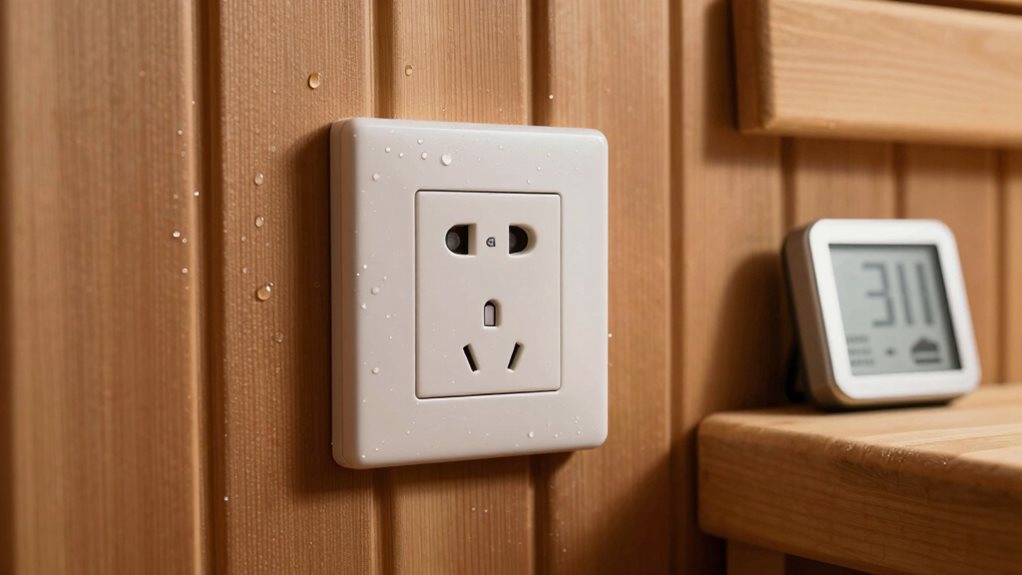
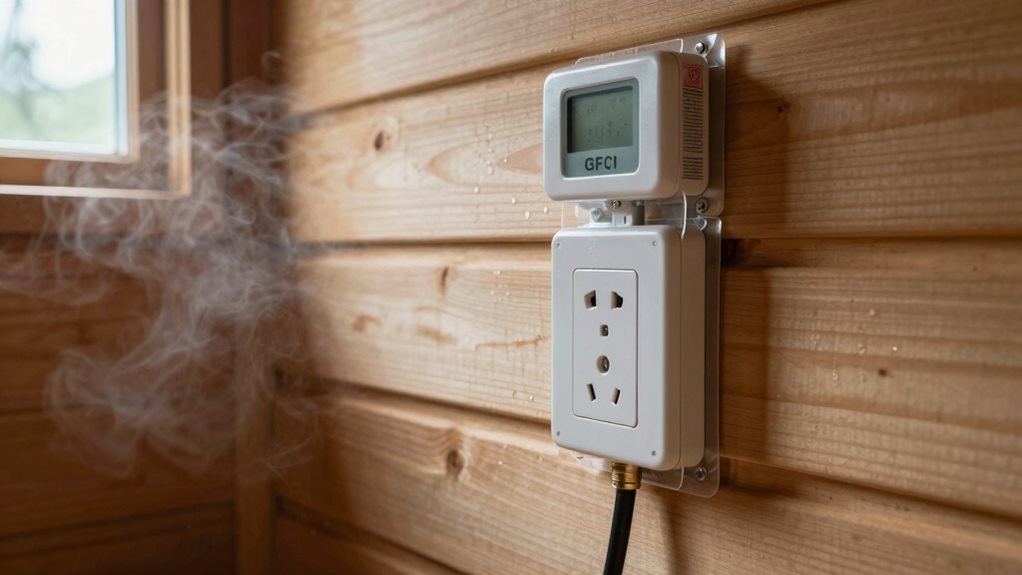
Ground Fault Circuit Interrupters (GFCIs) represent the frontline defense against electrical shock in your home sauna’s potentially dangerous environment. These devices detect current imbalances as small as 4-6 mA and trip within milliseconds, cutting power before a potentially fatal shock can occur.
While the National Electrical Code doesn’t universally mandate GFCIs for all saunas, they’re crucial for outdoor installations, bathroom-adjacent units, and areas with water exposure. Your local jurisdiction may have stricter requirements, so always check before installation.
You have options: install a GFCI breaker at your main panel or use a GFCI disconnect at the beginning of your sauna’s dedicated circuit.
Whatever you choose, place it in an area protected from heat and moisture, following manufacturer guidelines. Having a licensed electrician perform the installation ensures compliance with all applicable codes and standards. Remember, proper GFCI protection isn’t just good practice—it could save your life.
Indoor Sauna Electrical Installation Best Practices
You’ll need to plan your sauna’s temperature controls and wiring carefully, keeping all control panels outside the hot environment and using heat-resistant wiring where necessary.
Proper ventilation systems require their own electrical considerations, including appropriate placement of fans and vents that won’t interfere with the main heater circuit.
Your sauna must have its own dedicated circuit with the correct amperage and breaker size, which prevents dangerous overloads and guarantees consistent heat production throughout your relaxing sauna sessions.
Temperature Controls and Wiring
Proper temperature controls and wiring form the backbone of a safe, functional sauna installation in your home.
You’ll need to mount your control panel outside the sauna or in a protected area to prevent heat damage. Always separate your low-voltage control wiring from the high-voltage power lines to avoid interference and safety hazards.
For most residential saunas, you’ll connect your temperature controls to a dedicated 240V circuit with appropriate GFCI protection.
Remember to use wire gauge that matches your heater’s amperage – typically 8-gauge for standard units or 6-gauge for larger models. If your control panel is more than 30 feet from your breaker box, upgrade to heavier wire to prevent voltage drop.
Always follow your manufacturer’s specific wiring diagram, as control systems vary between traditional and infrared saunas.
Ventilation Electrical Requirements
While many homeowners focus on the heater’s power needs, ventilation systems in your sauna require equally careful electrical planning for safety and performance.
Your ventilation setup will differ based on your heater type, with electric models needing specific configurations.
For electric saunas, you’ll need a 240V power supply with appropriate dedicated circuits (typically 30-60A).
The ventilation design places supply vents near the ceiling to create downward heat rotation, with exhaust vents positioned both high and low for ideal airflow.
Your wiring must match your sauna’s kW rating, usually requiring 10-gauge wiring for mid-sized units. Installing GFCI protection is essential for preventing electrical hazards in the high-moisture environment of a sauna.
Inconsistent temperature distribution is often a sign of poor ventilation, which can be remedied by ensuring the upper exhaust vent can be closed during bathing sessions.
Dedicated Circuit Protection
When installing an indoor sauna, a dedicated circuit serves as the cornerstone of your electrical safety system. Your sauna heater needs its own exclusive electrical pathway, with no sharing allowed for lights, outlets, or other appliances. This prevents overloads and guarantees your heater receives stable, consistent power.
Circuit specifications must match your heater’s requirements exactly, typically requiring 240 volts with amperage ranging from 20-60A depending on your model. Remember, this is considered a continuous load, requiring proper sizing of both breakers and wiring.
- Select the proper wire gauge (typically #10 AWG to #6 AWG) based on your heater’s amperage.
- Install a GFCI protection device unless manufacturer documentation specifies otherwise.
- Include a readily accessible disconnect switch within sight of your sauna for emergency situations.
Weatherproofing Outdoor Sauna Electrical Systems
When installing an outdoor sauna, you’ll need to protect all electrical components from rain, snow, and humidity with waterproof conduit that’s specifically rated for direct burial.
Your junction boxes must be weatherproof with appropriate gaskets and seals to prevent moisture infiltration, which could cause dangerous short circuits or system failure.
Remember to mount all electrical connections at least 12 inches above ground level and use proper weatherproof covers for switches and outlets to guarantee your outdoor sauna remains safe through changing seasons.
Waterproof Conduit Solutions
Protecting your outdoor sauna’s electrical components from the elements requires specialized waterproof conduit solutions that meet stringent safety standards.
When installing your outdoor sauna, you’ll need conduits that can withstand both high temperatures and moisture while keeping your wiring safe.
For ideal protection in your outdoor sauna setup, consider these crucial conduit options:
- Liquid-Tight Flexible Metal Conduit (LFMC) – perfect for maneuvering tight spaces while maintaining moisture resistance
- High-temperature plastic conduits rated for up to 195°F – ideal for areas near heater components
- IP67-rated conduit systems with continuous gaskets – provides complete protection against water ingress
Your outdoor sauna needs a dedicated 240V circuit with 8-10 gauge wiring running through these weatherproof conduits.
Don’t forget to pair them with GFCI protection for thorough safety.
Junction Box Protection
Junction boxes serve as the nerve centers of your outdoor sauna’s electrical system, requiring robust protection against moisture, temperature fluctuations, and environmental exposure.
You’ll need junction boxes with an IP65 rating or higher to withstand water jets and dust that naturally occur in outdoor settings.
Mount your contactor box between 1-2 feet from the ground, never exceeding 28 inches in height for easy access.
When installing disconnect switches, make certain they’re within sight of your sauna and housed in weatherproof enclosures.
The standard adaptable box size of 190 x 145 x 70mm works well for rear sauna connections.
Don’t forget that proper protection isn’t just good practice—it’s required by code.
Your outdoor electrical components need appropriate IP ratings to prevent hazards and make sure your sauna remains safe regardless of weather conditions.
Critical Grounding and Bonding Requirements
Proper grounding and bonding form the foundation of electrical safety in any sauna installation. Your sauna’s metal components—including the heater, benches, and framing—must be connected to earth ground through an equipment grounding conductor. This prevents dangerous voltage from building up and protects you from electric shock.
- Install GFCI protection on all sauna circuits, which will cut power within milliseconds if a fault occurs.
- Connect all metal parts through equipotential bonding to eliminate voltage differences between components.
- Verify grounding resistance is below 25 ohms and have continuity tested by a licensed electrician.
Navigating Building Codes and Permit Processes
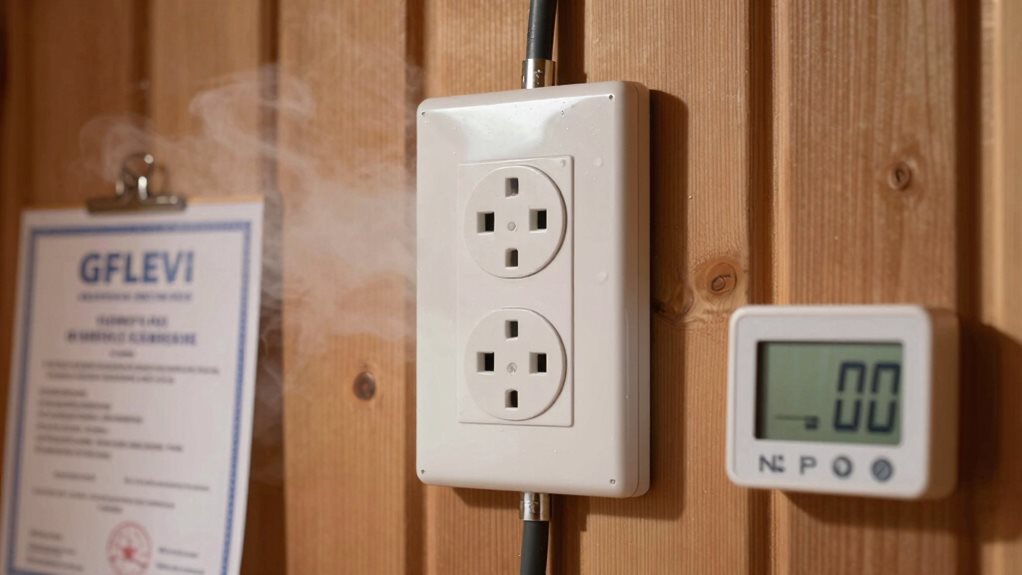
Why do so many homeowners feel overwhelmed when facing the maze of building codes for their sauna project? It’s simple: the combination of NEC requirements, local variations, and permit processes creates a complex environment to traverse.
Most states follow the National Electrical Code, which mandates dedicated circuits, proper GFCI protection, and high-temperature rated components for your sauna.
Building a sauna requires adherence to NEC standards including dedicated circuits, GFCI protection, and heat-resistant electrical components.
You’ll need to obtain a building permit by submitting detailed plans showing your sauna’s size, materials, and electrical diagrams.
Don’t skip this step! Unpermitted work can void warranties and create insurance problems.
After installation, expect at least one electrical inspection and a building inspection to verify compliance.
This process guarantees your sauna isn’t just relaxing but also safe.
The permit approval timeline can take several weeks and usually involves application fees that vary by municipality and project scope.
When to Call a Licensed Electrician for Your Sauna Project
While building codes and permits establish the framework for your sauna project, knowing exactly when to bring in professional help can save you time, money, and potential safety hazards.
Your sauna’s electrical requirements often exceed typical household wiring capabilities, making professional installation essential.
Call an electrician when:
- Your sauna heater requires 220-240V power or a dedicated circuit with specific amperage requirements (30-60A)
- You need proper wire sizing, conduit installation, or routing through walls and ceilings
- The installation requires special grounding, bonding, or GFCI protection to meet safety codes
Don’t risk DIY electrical work for high-wattage saunas. A licensed electrician guarantees your system meets code requirements, preventing fire hazards and making sure your sauna operates safely for years to come.
Frequently Asked Questions
Can I Install a Timer Switch for Automatic Sauna Shutdown?
Yes, you can install a timer switch for your sauna. Verify it matches your heater’s specifications, complies with local codes, and works alongside the required dedicated disconnect switch for safety.
How Far Should Electrical Fixtures Be From Sauna Benches?
You shouldn’t install any electrical fixtures inside your sauna. Keep all electrical components outside except for the heater itself, which needs manufacturer-specified clearances from benches (typically 4-12 inches).
Will Sauna Electrical Needs Affect My Home Insurance Rates?
Yes, your sauna will likely increase your insurance rates due to added fire and electrical risks. Professional installation with proper permits can minimize these premium impacts.
Can Solar Power Effectively Run a Residential Sauna?
Yes, you can power a sauna with solar. You’ll need 8-10 panels for traditional heaters or fewer for infrared models. Consider adding batteries for consistent operation during cloudy periods.
Is an Emergency Shutoff Button Required by Code?
Yes, you’ll need an emergency shutoff for commercial saunas, but it’s exempt for one-family dwellings under NEC 680.41. Local codes may still require it for residential installations.
Final Thoughts
You’ve now learned the crucial elements of sauna electrical safety. By following proper voltage requirements, circuit sizing, wiring specifications, and GFCI protection, you’ll create a safe relaxation space. Don’t forget about grounding, weatherproofing, and building codes. When in doubt, call a licensed electrician. Your attention to electrical safety standards guarantees your home sauna remains a place of rejuvenation, not risk.