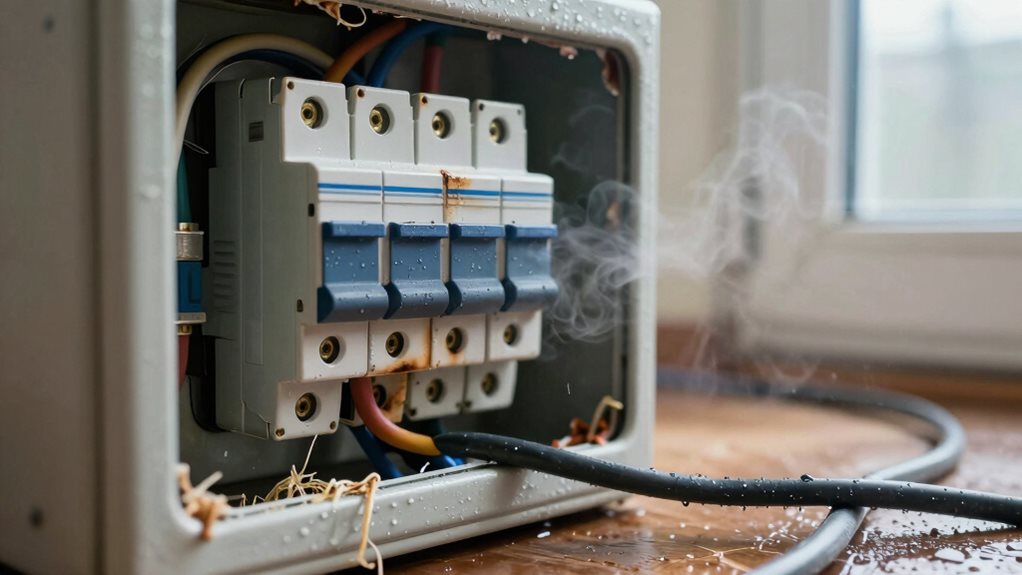

You’re risking fires and damage with improper sauna power connections. Always use dedicated circuits with GFCI protection, never adapters or voltage mismatches. Choose the correct wire gauge for your sauna’s power needs, and guarantee proper grounding and moisture protection. Install accessible disconnect switches within sight of your sauna, and avoid hiding junction boxes behind walls. These safety practices will protect your investment and prevent dangerous electrical failures before they start.
Why Dedicated Circuits Matter for Safe Sauna Operation
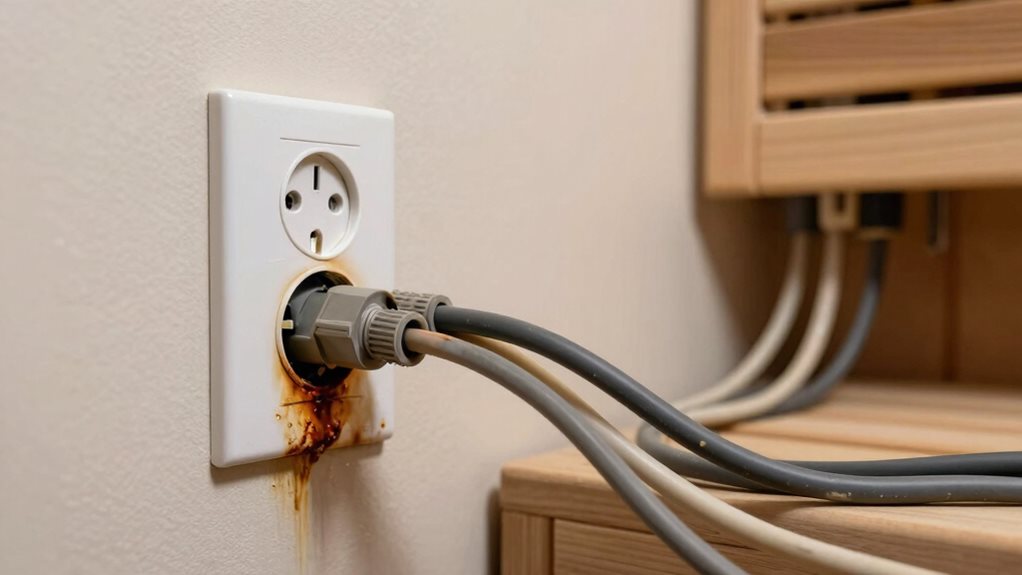
When installing an electric sauna in your home, a dedicated circuit isn’t just a good idea—it’s essential for safety and performance.
Your sauna heater demands considerable power—typically 40 amps at 240V—that shouldn’t be shared with other appliances.
Sauna heaters require substantial electrical capacity—40 amps at 240V—making a dedicated circuit absolutely necessary for proper function.
A dedicated circuit prevents nuisance tripping and guarantees your heater receives consistent voltage, extending its lifespan and maintaining efficient operation.
Without one, you risk overloading your wiring, potentially causing dangerous overheating or even electrical fires.
Most local building codes and the NEC require dedicated circuits for saunas, especially with GFCI protection to prevent shock hazards in these moisture-rich environments.
You’ll also need properly sized wiring that matches your heater’s amperage requirements—typically 8 or 6 gauge for most residential saunas.
The general rule of thumb is 1 KW per 50 cubic feet when determining the power requirements for your sauna heater size.
Don’t compromise here; incorrect electrical setup can void warranties and create serious safety risks.
The Dangers of Adapter Solutions and Voltage Mismatches
Despite what some DIY enthusiasts might suggest, adapter solutions and voltage mismatches represent some of the most dangerous shortcuts in sauna installation.
Plugging a 120V sauna into a 240V socket might seem like a simple fix, but it can immediately damage your equipment and create serious fire hazards.
When you supply 240V to a heater rated for 120V, you’re fundamentally doubling the power to the heating elements, causing them to overheat rapidly.
Similarly, electronic controls and thermostats fail quickly when operated outside their rated voltage ranges, potentially eliminating vital safety protections.
Using travel adapters or homemade solutions also bypasses manufacturer requirements for hardwiring and dedicated circuits, voiding warranties and creating installations that won’t pass inspection.
These shortcuts often lead to melted connectors, tripped breakers, and dangerous fire risks.
Selecting the Proper Wire Gauge for Your Sauna’s Power Needs
Your sauna’s wire gauge must match its power requirements, or you’ll risk dangerous overheating and potential fire hazards.
When selecting wire for your sauna installation, the heater’s amperage rating directly determines the minimum wire size needed, with higher currents requiring thicker conductors (such as #8 AWG for 40-50 amp loads).
Remember that undersized wiring acts like a bottleneck in your electrical system, causing wires to heat up excessively while proper gauge selection guarantees safe operation and compliance with electrical codes.
Wire Gauge Sizing Essentials
Selecting the proper wire gauge for your sauna’s electrical system stands as one of the most critical safety decisions you’ll make during installation.
Undersized wiring quickly becomes a fire hazard as it overheats under load, while oversized wire wastes money unnecessarily.
Your wire gauge needs depend directly on three key factors:
- Heater kW rating – Higher power heaters (7.5-9kW) require thicker 8/2 or 6mm² wire with 40-50 amp circuits.
- Distance from panel – Runs over 9 meters need upsized wire to prevent voltage drop (go up at least one gauge size).
- Voltage requirements – 240V systems need dedicated circuits with appropriate gauge (typically #10 to #6 AWG copper).
Remember that most sauna heaters use the standard 240V/1PH configuration because a single 120V line cannot provide sufficient power for effective heating.
Amperage Dictates Wire Choice
Amperage requirements form the backbone of all wire gauge decisions for your sauna installation. Your heater’s nameplate provides the definitive amperage rating that you must follow, not assumptions or guesswork.
Traditional electric saunas typically need 240V circuits rated for 30-60 amps, while smaller infrared units might operate on 120V using 15-20 amp circuits.
Always use copper conductors for sauna circuits, as they handle high temperatures better than aluminum.
Remember that continuous loads (like saunas) require conductors sized at 125% of the rated current. For example, a heater drawing 40 amps continuously needs wiring rated for at least 50 amps.
Don’t forget to factor in voltage drop for longer runs – you might need to increase wire size to guarantee proper performance when your sauna is located far from your electrical panel.
Avoiding Overheating Hazards
Three critical factors determine whether your sauna wiring will resist dangerous overheating or become a fire hazard waiting to happen.
High temperatures in saunas demand special attention to conductor selection and installation methods that most homeowners overlook.
- Temperature ratings matter – Use conductors and insulation specifically rated for heightened temperatures near heater elements, and avoid standard NM cable in exposed high-heat zones.
- Conductor sizing isn’t just about ampacity – Calculate voltage drop for long runs and increase wire size accordingly. A 3% voltage drop is your maximum target for peak performance.
- Derating for real-world conditions – Apply ambient temperature and grouping derating when multiple wires share conduit or when room temperatures exceed standard ratings.
Don’t rely on minimum code requirements alone – your sauna’s electrical system needs extra protection against the unique heat challenges it faces.
Essential Grounding Practices to Prevent Electrical Hazards
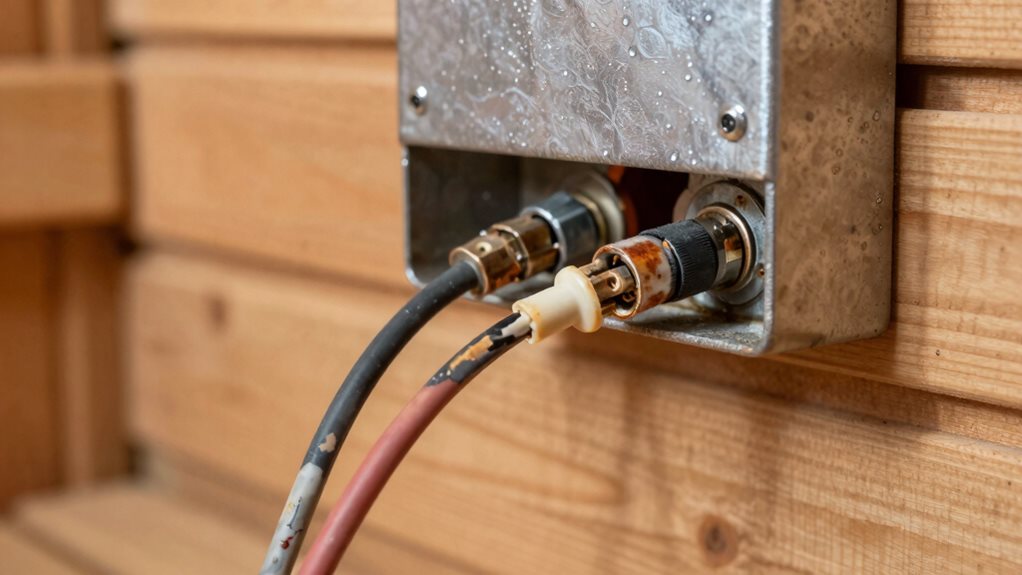
You’ll need three critical safety components to keep your sauna’s electrical system from becoming a hazard: proper equipment bonding, GFCI protection, and moisture-resistant connections.
Bonding all metal parts, including the heater frame and guards, creates a continuous path that prevents dangerous voltage differences and guarantees quick fault clearing.
Your sauna’s electrical circuit must have GFCI protection that trips at 4-6 milliamps, which can mean the difference between a minor tingle and a serious shock in the humid, high-temperature environment.
Proper Bonding Techniques
Proper electrical bonding creates an essential safety net in your sauna installation, preventing potentially dangerous voltage differences between metal components.
Don’t confuse bonding with basic grounding—they work together but serve different purposes. Bonding connects all metal parts to guarantee they maintain the same electrical potential, eliminating shock risk when touching multiple surfaces.
Here are three vital bonding requirements:
- Connect all accessible metal components (heater frame, benches, door hardware) to your equipment grounding conductor using properly sized bonding jumpers.
- Install bonding jumpers across any disconnects or hinged panels to maintain continuity even when parts are separated.
- Use only listed connectors for terminations, never rely on solder alone, and verify continuity with resistance testing before operating your sauna.
GFCI Protection Requirements
Beyond proper bonding, GFCI protection forms another line of defense against electrical hazards in your sauna installation. The NEC doesn’t require GFCI protection for every sauna heater, but it’s mandatory for 125V receptacles within 6 feet of interior walls. Your local code may be stricter, so always check with your area’s AHJ.
When installing GFCI protection, place the device outside the sauna in a dry, accessible area to prevent premature failure from heat and humidity.
Choose the correct type of protection—GFCI circuit breakers protect the entire branch circuit, while GFCI receptacles only safeguard downstream loads.
Don’t forget to match your GFCI device to your sauna’s voltage and amperage requirements. Using a 125V GFCI for a 240V circuit won’t work and creates a dangerous situation.
Test your GFCI monthly to verify it’s functioning properly.
Moisture-Resistant Terminal Connections
When moisture infiltrates your sauna’s electrical system, it creates a perfect storm for dangerous conditions that can lead to equipment failure or, worse, serious injury.
Proper terminal protection is your first line of defense against corrosion, short circuits, and fire hazards in your sauna’s high-humidity environment.
To guarantee safe, moisture-resistant terminal connections:
- Select enclosures with at least IP67 rating for complete protection from steam and condensation, which prevents water from reaching critical contact points.
- Apply heat-shrink tubing with Therma-Flow sealant to create watertight seals while providing visual confirmation of proper connections.
- Use tin or gold-plated copper terminals that resist corrosion in damp environments, extending the lifespan of your electrical system.
Don’t forget to install drip loops when routing cables to direct moisture away from connections.
The Critical Role of Disconnect Switches in Sauna Safety
Safety in sauna installations hinges on the often-overlooked disconnect switch, a critical component that allows you to cut power immediately without running to your main electrical panel.
Your local building code likely requires this switch within sight of your sauna, typically within 10-50 feet depending on your jurisdiction.
Don’t assume your breaker panel can serve as the disconnect—it must be visible from the sauna or lockable according to NEC requirements.
For outdoor saunas, you’ll need a weather-rated, lockable disconnect switch.
Many homeowners make the costly mistake of skipping this safety feature during installation.
Warning Signs Your Sauna’s Electrical System Is Failing
Recognizing the warning signs of electrical failure in your sauna could mean the difference between a relaxing experience and a dangerous situation.
Pay close attention to how your sauna performs, as early detection of problems can prevent serious hazards.
- Flickering or dimming lights that occur alongside heater issues aren’t just annoying—they often signal loose connections or damaged wiring that need immediate professional attention.
- If your sauna’s circuit breaker trips repeatedly, don’t just reset it. This indicates potential overloads or short circuits that could lead to fire risks.
- Strange burning odors, chemical smells, or visible scorching near electrical components are serious red flags.
If you notice these, turn off your sauna immediately and call an electrician.
Common Electrical Code Violations in Home Sauna Installations
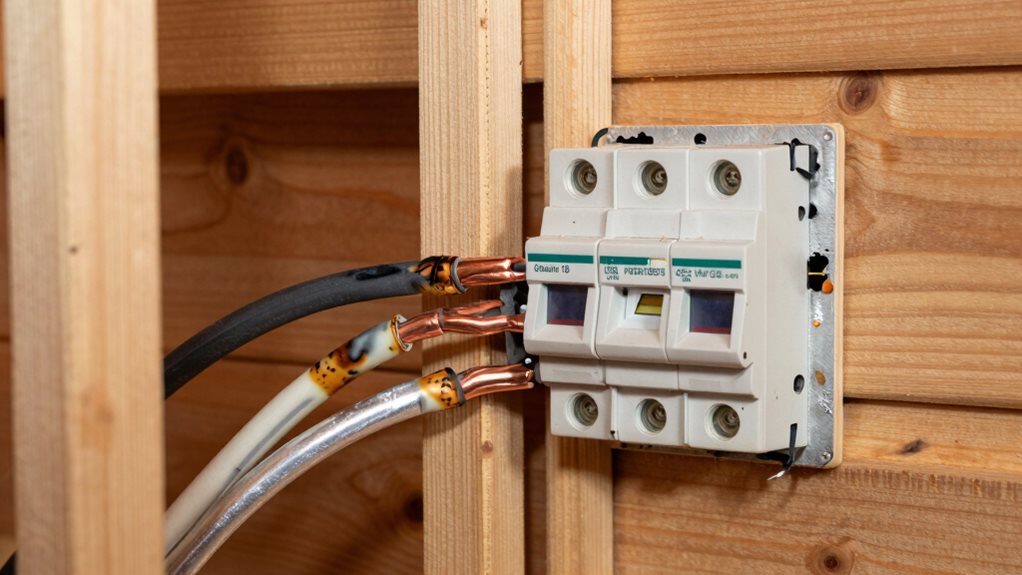
Your home sauna might be hiding two serious electrical code violations that could put your family at risk.
Missing GFCI protection is a critical safety oversight, as these devices prevent deadly shocks in the humid sauna environment where water and electricity mix.
Equally dangerous are illegal junction boxes, often improperly installed inside sauna walls where high heat can damage connections, creating fire hazards that remain hidden until it’s too late.
Missing GFCI Protection
One of the most dangerous electrical code violations in home sauna installations is missing GFCI protection. Without this essential safety device, your sauna becomes a potential shock hazard, especially given the moist environment where electricity and water could interact.
Building codes typically require GFCI protection for good reason – it can save lives by quickly cutting power when a current leak is detected.
When installing your sauna’s electrical system, remember these vital points:
- Most local building codes mandate GFCI protection for all sauna circuits.
- You’ll need GFCI protection either as a breaker in your main panel or as an outlet at the beginning of the circuit.
- Outdoor saunas require special weather-resistant GFCI devices with sealed connections.
Don’t risk inspection failure or, worse, electrical shock – always include proper GFCI protection in your sauna installation.
Illegal Junction Boxes
Illegal junction boxes represent a serious code violation that plagues many DIY sauna installations. According to NEC 314.27, you can’t conceal junction boxes in locations without access provisions. This means hiding electrical connections behind your sauna’s finished walls or ceiling violates code and creates safety hazards.
When you’re installing your sauna, remember that all junction boxes must remain accessible after completion. Many homeowners make the mistake of sealing boxes behind drywall or decorative panels, leading to failed inspections and project delays. Your local inspector will flag these violations immediately.
To avoid this mistake, relocate junction boxes to accessible locations, install proper access panels in finished surfaces, or hire a licensed electrician for compliant installation. This guarantees your sauna not just passes inspection but remains safe for years of enjoyment.
Professional vs. Amateur Installation: What’s at Stake
When comparing professional and amateur sauna installations, the stakes couldn’t be higher than your family’s safety and well-being.
Professional electricians bring code-compliant expertise that prevents electrical hazards, while DIY attempts often overlook critical safety measures that protect against fires and shocks.
Here’s what you’re risking with amateur installation:
- Electrical dangers – improper wiring can lead to malfunctions, shocks, or even fires, especially with 240V circuits that power larger saunas.
- Failed inspections – professionals guarantee your installation meets building codes, saving you from fines and mandatory repairs.
- Hidden costs – while DIY seems cheaper upfront, mistakes often lead to expensive fixes, higher utility bills, and potentially voided insurance coverage. Poor air circulation can also result from amateur installation, affecting both your health and the longevity of your sauna equipment.
- Improper heater selection – choosing between wood-burning and electric heaters requires understanding their different installation requirements, with electric models needing proper circuits and wood-burning ones requiring chimney systems.
How to Properly Size Your Electrical Panel for Sauna Demands
The three most critical factors in sizing your electrical panel for sauna installation begin with understanding your sauna’s power requirements.
First, calculate your sauna’s size – remember that each 50 cubic feet needs about 1 kW of power. Your cozy 5’x7’x7′ medium sauna will require a 6-8 kW heater.
Sizing matters – every 50 cubic feet of sauna space demands 1 kW, making 6-8 kW ideal for standard 5’x7’x7′ installations.
Next, check if your panel has enough capacity. Older homes often run close to their limits, while newer construction typically has room to spare.
Don’t forget that a 6 kW heater needs a dedicated 30-amp circuit with 10-gauge wire, while larger units demand up to 60 amps with 6-gauge wire.
Finally, consider any special circumstances. If you’re installing an outdoor sauna, you’ll need 25-30% more power to compensate for heat loss through uninsulated walls.
Preventing Moisture-Related Electrical Failures in Sauna Environments
Moisture and electricity create a dangerous combination that requires careful planning in your sauna installation. Without proper safeguards, your relaxing steam session could turn hazardous. GFCI protection isn’t optional—it’s crucial for detecting imbalances and cutting power before accidents happen.
To protect your sauna’s electrical system from moisture damage:
- Install GFCI breakers or outlets at the start of your circuit, combined with weatherproof wiring that can withstand the humid conditions.
- Use certified insulation materials and vapor barriers throughout the structure, paying special attention to walls, ceilings, and floors.
- Guarantee proper ventilation with intake vents near the floor and exhaust vents near the ceiling to minimize condensation on electrical components.
Proper flashing installation around electrical access points creates an additional barrier against water intrusion that can compromise your sauna’s wiring.
Regular inspections will help you catch potential problems before they become dangerous failures.
Frequently Asked Questions
Can I Install a Sauna in My Bathroom or Near My Shower?
Yes, you can install a sauna in your bathroom, but you’ll need proper vapor barriers, raised platforms, dedicated electrical circuits, and fire-rated materials to prevent moisture damage and guarantee safety.
How Do Saunas Affect Monthly Electricity Bills?
Your sauna will increase monthly bills by $3-60 depending on type, usage frequency, and local rates. Traditional models cost more (6-13kWh/session) than infrared options (1.5-3.5kWh/session).
What’s the Minimum Distance Between Sauna Heaters and Flammable Materials?
You’ll need to maintain 250-500mm clearance from sides/rear and 500-1000mm in front. Always follow your specific heater’s manufacturer guidelines for exact safety distances from combustibles.
Can I Use Extension Cords Temporarily With My Portable Sauna?
No, you shouldn’t use extension cords with your sauna. They cause overheating, risk fires, and violate safety codes. Instead, install a dedicated circuit with proper GFCI protection for your safety.
Are GFCI Protections Sufficient for Outdoor Sauna Installations?
No, GFCI alone isn’t sufficient. You’ll need proper weatherproofing, correct conductor sizing, appropriate disconnects, and adherence to manufacturer instructions, local codes, and proper grounding for safe outdoor sauna installation.
Final Thoughts
You’ve learned about the critical safety aspects of sauna electrical connections. Remember, proper circuits, correct wire gauge, and professional installation aren’t just recommendations—they’re vital safeguards. Don’t cut corners with adapters or DIY solutions when your family’s safety is at stake. By following electrical codes and investing in proper installation, you’ll enjoy your sauna for years without worry. Electrical safety might seem complex, but it’s worth getting right the first time.