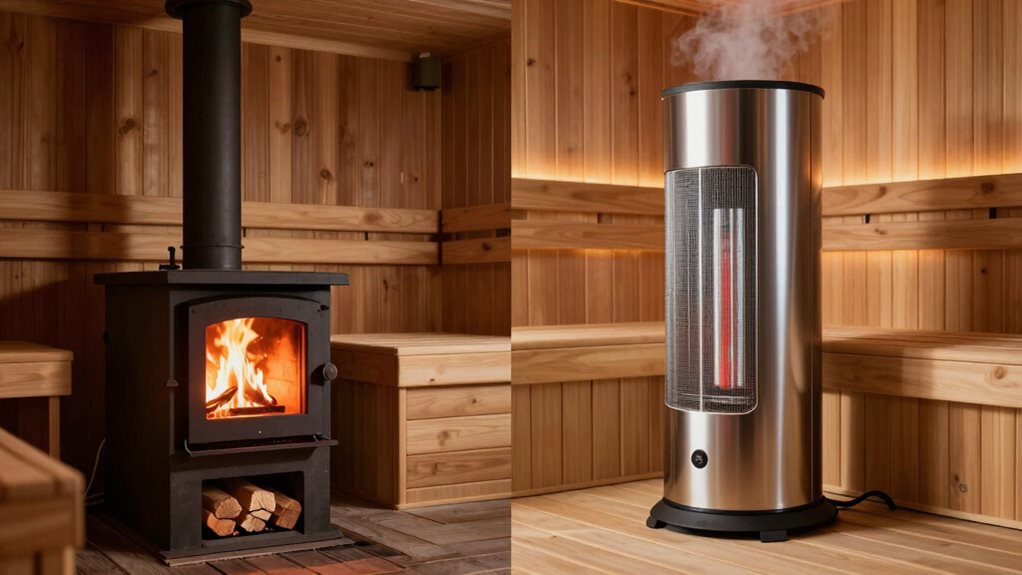

When choosing between wood and electric sauna heaters, you’ll find each has its perks and drawbacks. Wood heaters offer a cozy, traditional vibe with deep heat, but require more time and effort to operate. Electric heaters heat up quickly and allow for easy temperature control but can feel drier. Costs vary too, with electric sessions averaging $0.72 while wood sessions might run you $5 to $7.50. Want to know more about which option suits you best? Keep exploring!
Heat Quality and Sensory Experience
When you’re deciding between a wood or electric sauna heater, the heat quality and sensory experience can play a big role in your choice.
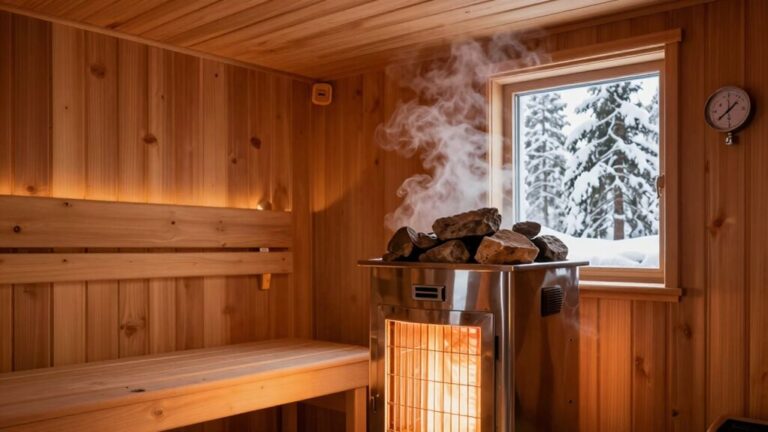
Wood-fired stoves produce radiant heat that deeply penetrates your muscles and skin, often leaving you feeling warmer than electric heaters, which tend to distribute heat more evenly but might feel dryer, like being near an oven. The larger stone mass in quality wood stoves creates a more robust and softer steam, giving you a fuller sauna experience. Meanwhile, electric units are quieter and cleaner, offering a predictable ambiance. Additionally, electric heaters heat quickly, reaching desired temperatures in just 30–45 minutes, making them a convenient option for those who want a quick sauna session. For those interested in sauna heater electric, it’s worth noting that they typically require less maintenance than wood-fired options. However, for those who prioritize traditional practices, the immersive warmth and authenticity of a wood heater might just be your best bet.
Ultimately, if you’re after immersive warmth and an authentic sauna feel, a wood heater might just be your best bet.
Convenience, Control, and Operation
When it comes to starting your sauna sessions, the difference between wood and electric heaters is pretty clear.
Electric heaters heat up quickly, usually taking just 30 to 60 minutes, and many let you set a timer so it’s ready when you are. In contrast, wood stoves can heat saunas faster, reaching 220°F in under 30 minutes, allowing for earlier sweating and a more effective session. Additionally, electric heaters offer precise temperature regulation, ensuring that your sauna maintains a consistent and comfortable environment throughout your session. Moreover, electric sauna heaters can be easily integrated into smart home systems, providing enhanced user convenience for modern sauna enthusiasts.
On the other hand, wood heaters need more prep time and attention, as you’ll be busy chopping, stacking, and maintaining the fire, making your sauna experience much more hands-on.
Preheat Time Comparison
Although both wood and electric sauna heaters have their unique features, preheat times can really change your sauna experience.
Electric heaters typically reach your desired temperature in about 20 to 30 minutes, making them great for spontaneous sessions. In contrast, wood heaters usually need around 40 minutes to an hour, and you’ll spend a bit more time managing the fire. Additionally, electric heaters require a 220V hardwired electrical connection, which can influence installation time and costs. If you’re aiming for temperatures above 200°F, electric models may take up to an hour, while wood can be quicker. However, if you enjoy the ritual of building a fire, it adds to the experience! More stones in electric heaters enhance heat distribution and overall quality, providing added warmth during your sessions. Furthermore, a well-designed home sauna heating system can improve energy efficiency, making your sauna experience even more enjoyable.
Ultimately, if you’re pressed for time, electric is your best bet, but wood can offer a cozy charm.
User Operation Complexity
After discussing how long it takes each type of heater to warm up a sauna, it’s important to contemplate how much effort you want to put into the experience.
If you prefer hands-off convenience, electric heaters are ready with just a button press. There’s no need for lifting heavy logs or monitoring a fire. You’ll enjoy spontaneous sauna sessions without much prep! Electric heaters allow for precise temperature settings that cater to your desired environment with minimal effort. Additionally, electric heaters provide consistent temperature control, ensuring a stable experience during your session. Moreover, indoor electric sauna heaters are designed for easy installation and maintenance, allowing you to focus on relaxation rather than upkeep.
On the other hand, wood heaters provide a ritualistic experience, but they require constant attention, like lighting and stoking the fire.
If you want an engaging challenge, wood might be your pick. However, be ready for extra chores like ash cleanup.
Consider your lifestyle and how much time you want to invest in your sauna experience when making your choice!
Control and Programmability
While both wood and electric sauna heaters offer distinct experiences, their control and programmability features set them apart considerably.
Electric heaters shine with digital thermostats and programmable schedules, letting you preheat your sauna and manage sessions effortlessly. Imagine lounging as the sauna warms to the perfect temperature, all thanks to a smartphone app. Additionally, electric heaters typically have exact temperature settings, allowing for easier regulation of the sauna environment. This convenience is especially beneficial in climate & location where quick heat is essential. Furthermore, many electric sauna heaters come equipped with energy-efficient features, ensuring you can enjoy your sauna without significantly increasing your energy bills.
In contrast, wood-fired heaters rely on manual adjustments, giving you less precise control. You’ll spend more time managing the fire rather than enjoying the warmth. Although some enthusiasts love the hands-on approach, it lacks the speed and stability of electric options.
With electric heaters, you get quick heat and consistent temperatures, making your sauna experience fluid and more convenient.
Installation Requirements and Site Constraints
When you decide to install a sauna, understanding the installation requirements and site constraints is crucial to guaranteeing everything goes seamlessly.
First, check your floor’s load-bearing capacity; it usually needs to hold between 150–300 kg/m² for the heater, stones, and people. If you opt for a wood stove, make sure to extend non-combustible floor protection beyond the stove door—typically 400 mm deep and 600 mm wide.
Ensure your floor can support 150–300 kg/m² and extend non-combustible protection around your wood stove.
Verify the minimum ceiling height, which often has to be at least 1900 mm. Don’t forget about the necessary clearances around combustible walls; proper heat shields can help.
Finally, consider chimney routing and local codes, as they often dictate how your sauna can be safely installed.
Operating Costs and Fuel Economics
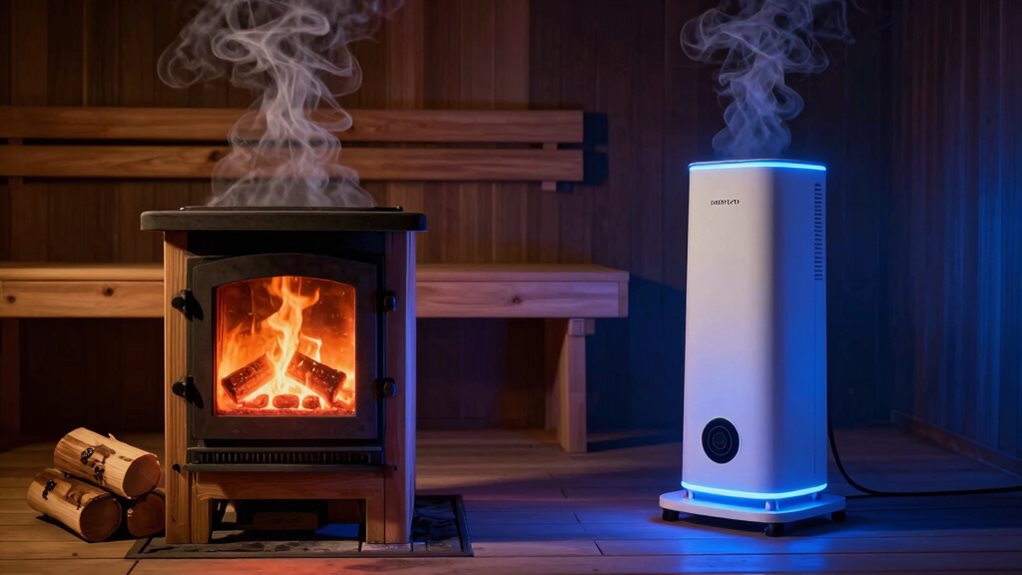
When it comes to sauna heaters, understanding operating costs and fuel economics is essential for making an informed choice.
You’ll want to compare the expenses of electric versus wood-burning options, considering factors like local fuel prices and your own access to resources.
Over time, these choices can greatly impact your wallet, so let’s break down the long-term costs and benefits of each option together.
Cost Comparison Analysis
Understanding the costs associated with sauna heaters is essential for anyone looking to invest in a relaxing sanctuary.
When comparing electric and wood options, electric heaters generally have predictable operating costs. A typical 6 kW electric sauna costs about $0.72 per session, leading to monthly bills between $14.40 and $50—much cheaper in areas with low rates.
In contrast, a wood sauna session costs $5 to $7.50 for firewood. If you can gather your own wood, those costs drop considerably.
Over a year, electric heating might total $300-$600, while wood can range from $150 to $250. Ultimately, your choice will depend on your local rates and how you plan to heat your sauna! Additionally, considering an indoor sauna heater kit can provide a comprehensive solution for your heating needs.
Fuel Accessibility Factors
How do you choose the best fuel for your sauna? Your location plays a big role in that choice.
If you live in a rural area with plenty of firewood, you might just need to gather some for free! On the flip side, if you’re in the city, electric heaters may be your best bet.
Think about the cost too: while firewood prices vary, electricity rates can skyrocket at peak times. Plus, if you’re off-grid, you’ll need to take into account the costs of batteries and solar panels.
Just remember, reliable fuel is key. If storms knock out power, wood can keep your sauna cozy, but you’ll want to plan ahead for your wood supply during those high-demand winter months! Additionally, consider the benefits of an eco-friendly sauna heater, as they offer sustainable options for heating that can save you money in the long run.
Long-term Economic Considerations
Which option is more economical in the long run: wood or electric sauna heaters?
Electric heaters, with an average yearly cost of around $224.64, might appear cheaper upfront. However, wood costs can skyrocket to about $720 annually.
Still, if you gather free firewood, your costs plummet! In regions with lower electricity rates, electric can shine, costing under $0.50 per session.
But keep in mind, it requires regular maintenance costing around $150, while wood maintenance is about $200.
So, if you can source wood easily, you might save more long-term. Additionally, proper sauna insulation can significantly impact the overall efficiency and cost-effectiveness of both heating options.
Ultimately, you’ll need to evaluate both upfront costs and ongoing expenses to find what fits your budget best—whether it’s the convenience of electric or the charm of a wood-burning sauna!
Maintenance and Safety Considerations
While you might love relaxing in your sauna, keeping it safe and well-maintained is just as important as enjoying your time inside.
For wood heaters, remove ash and soot after each use to guarantee good airflow. Electric heaters need periodic dusting to keep things efficient.
Don’t forget to inspect critical components, like electric wiring or wood stove seals, for damage. Clearances from combustibles and proper ash disposal help prevent fires, while smoke detectors keep your sauna safe from hazards.
Regularly check your stones for cracks, whether you go electric or wood. Staying on top of these maintenance tasks not just extends your sauna’s life but also keeps you and your loved ones safe while you unwind. Additionally, consider using HEPA air purifiers to enhance air quality in your sauna environment.
Environmental Impact and Regulatory Factors
When it comes to choosing between wood and electric sauna heaters, understanding their environmental impact and regulatory factors is vital. Here are three key points to think about:
- Carbon Emissions: Wood heaters can be nearly carbon-neutral if you use sustainably sourced wood, while electric heaters are emission-free with renewable energy.
- Air Quality: Electric heaters produce no smoke or indoor emissions, unlike wood heaters that require ventilation and can introduce pollutants.
- Regulatory Requirements: Wood heaters need specific safety measures, like spark arresters and proper ventilation, which can be a hassle compared to electric systems that simply need professional wiring.
Long-Term Longevity and Durability
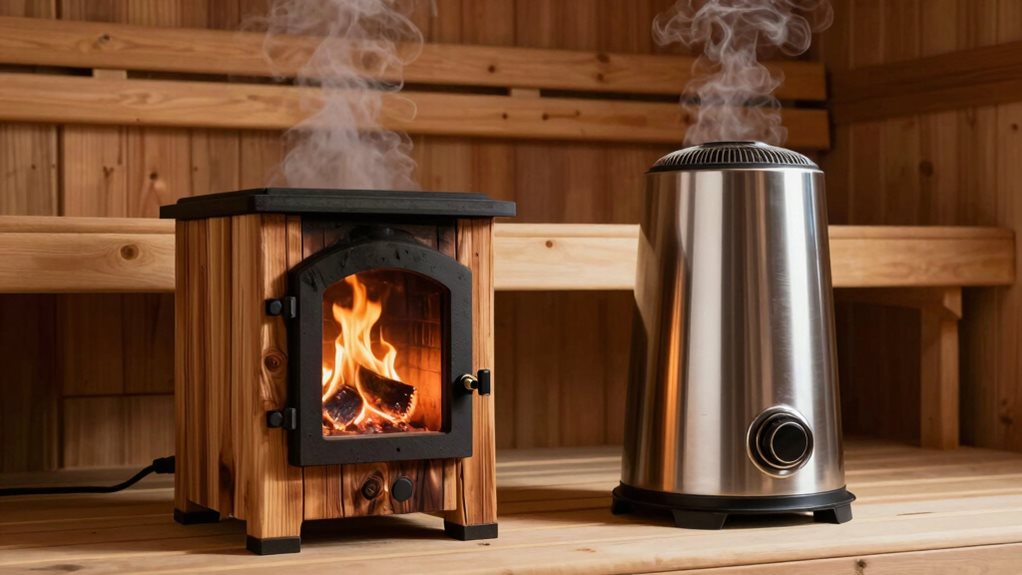
Choosing a sauna heater isn’t just about immediate comfort; it’s also about considering how long it’ll last and how durable it’s over the years.
Electric sauna heaters typically last about 10 to 15 years with proper care, while wood-fired options can exceed 20 years. If you’re willing to invest a little time in maintenance, the wood-fired models often offer that extra longevity.
Electric sauna heaters last 10 to 15 years; wood-fired options can surpass 20 with proper maintenance.
You’ll need to check heating elements in electric heaters, while wood units require consistent chimney cleaning.
Both options have their quirks; electric heaters need reliable wiring, and wood units thrive with seasoned hardwood.
Ultimately, think about your choice regarding long-term performance and the level of upkeep you’re ready to handle!
Frequently Asked Questions
Which Type of Heater Is More Eco-Friendly?
Electric heaters are generally more eco-friendly, especially if powered by renewable resources. They produce no direct emissions and offer consistent temperatures, while wood-fired options can contribute to deforestation and air pollution if not sourced responsibly.
Can I Switch From Wood to Electric Later?
Yes, you can switch from wood to electric later. Just be prepared for structural modifications, electrical upgrades, and compliance with local codes. It’s best to consult professionals to guarantee a safe, efficient changeover.
Do I Need a Special Foundation for Wood Stoves?
Yes, you need a special foundation for wood stoves. Make certain it’s made of concrete or solid masonry at least 12 inches thick, and follow local codes for proper installation to guarantee safety and compliance.
What Are the Best Wood Types for Burning?
For burning, birch, oak, ash, and maple are your best bets. Birch heats quickly, oak offers long burns, ash delivers clean heat, and maple minimizes smoke, giving you options based on your sauna needs.
How Much Space Do I Need for a Wood Stove?
You’ll need at least 36 inches of clearance around your wood stove from all combustible materials. Also, guarantee adequate space for safety, including noncombustible hearth protection and ventilation for peak performance and safety.
Final Thoughts
In the end, choosing between wood and electric sauna heaters comes down to your personal preferences and lifestyle. If you love the cozy, traditional vibe of wood, it’s hard to beat that experience. But if you want convenience and control, electric might be your best bet. Consider the hidden costs, maintenance, and environmental impact as you decide. Whichever you choose, both options can lead to a rejuvenating sauna experience that leaves you feeling refreshed and relaxed!