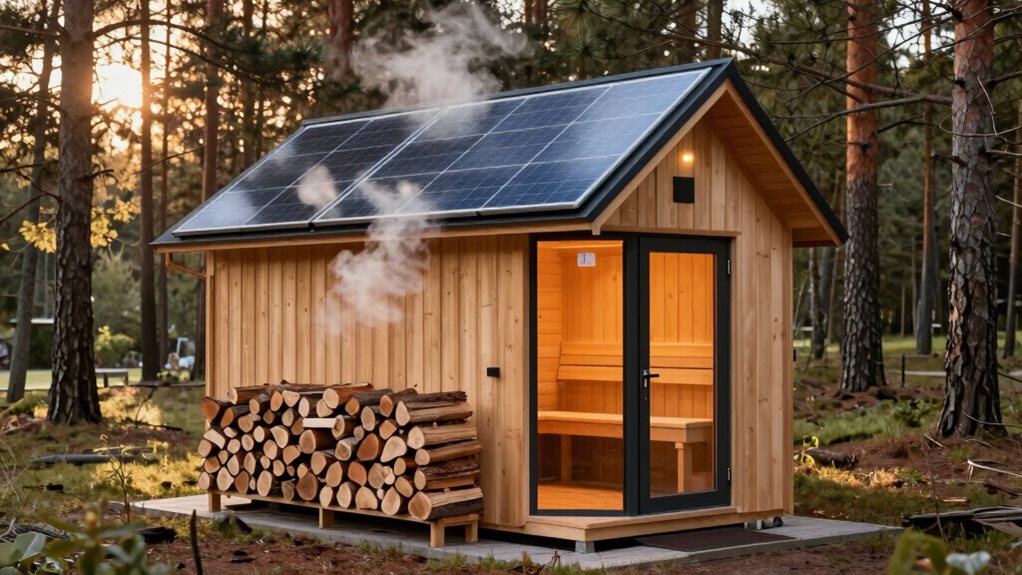

Hybrid sauna systems combine solar power with wood-burning technology, giving you the best of both worlds. You’ll enjoy lower operating costs, as solar-powered infrared models use 75% less electricity than conventional saunas. The wood component provides authentic heat while remaining nearly carbon-neutral when using sustainably harvested wood. Modern designs incorporate smart features like app control and superior insulation for maximum efficiency. Discover how this eco-friendly approach can reduce your carbon footprint while improving your wellness routine.
The Rise of Hybrid Sauna Technology
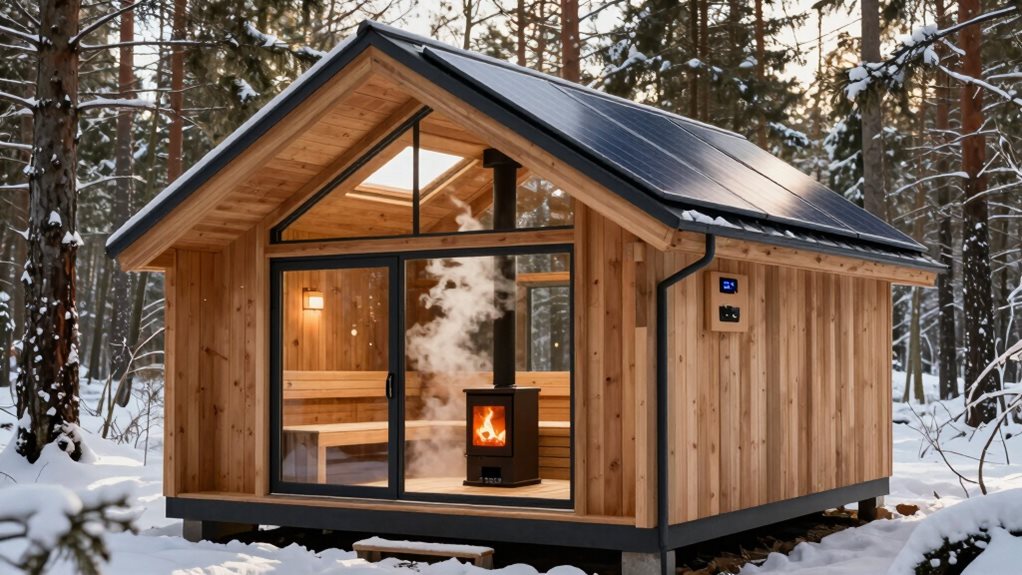
As hybrid sauna technology continues to evolve rapidly, we’re witnessing an exciting transformation in how people experience heat therapy at home.
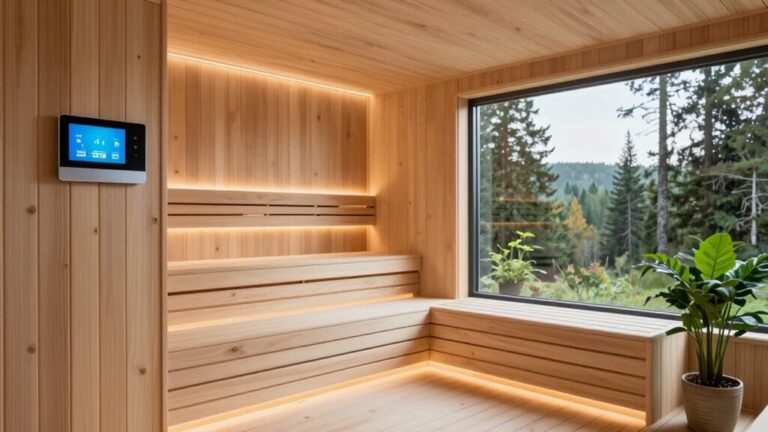
You’ll find these innovative units combining traditional heating elements with infrared panels seamlessly integrated into backrests or walls.
What makes hybrid saunas special is their flexibility—you can control the electric heater for classic steam experiences or activate infrared panels for targeted muscle recovery. These models precisely target specific physiological benefits through enhanced wavelength precision that optimizes the therapeutic effects.
Companies like Harvia and Saunadekor are leading this revolution with smart features including app integration and voice controls that let you monitor temperature from your phone.
The technology is getting sleeker too, with slim infrared panels that don’t require additional space and advanced insulation that keeps heat where you want it.
You’re fundamentally getting two sauna experiences in one efficient package.
Benefits of Solar-Powered Sauna Systems
While traditional saunas continue to dominate the market, solar-powered sauna systems have emerged as game-changers in eco-friendly heat therapy.
You’ll save considerably on energy costs, with infrared models using 75% less electricity than conventional saunas and solar integration eliminating operating costs after the initial payback period.
Your health benefits alongside the planet’s, as regular sauna sessions can reduce cardiovascular disease risk by up to 50%.
Embrace eco-friendly heat therapy and slash your cardiovascular disease risk by half while healing the planet.
The practical advantages are impressive too – these systems work autonomously in remote locations and achieve temperatures equivalent to traditional heaters. The integration of these systems with solar panels offers a significant return on investment with a 6-8 year payback period for most homeowners.
With ready-to-use off-grid designs, you’ll enjoy deep relaxation while reducing your carbon footprint.
The combination of energy efficiency, cost savings, and wellness benefits makes solar-powered saunas an investment that pays dividends for your health and the environment.
Traditional Wood-Burning Heaters vs. Modern Alternatives
Traditional wood-burning heaters have withstood the test of time, but they’re now facing stiff competition from modern alternatives that promise greater efficiency and convenience.
While old-school wood stoves waste up to 70% of heat through smoke, EPA-certified designs achieve 60-80% efficiency with 75% fewer emissions.
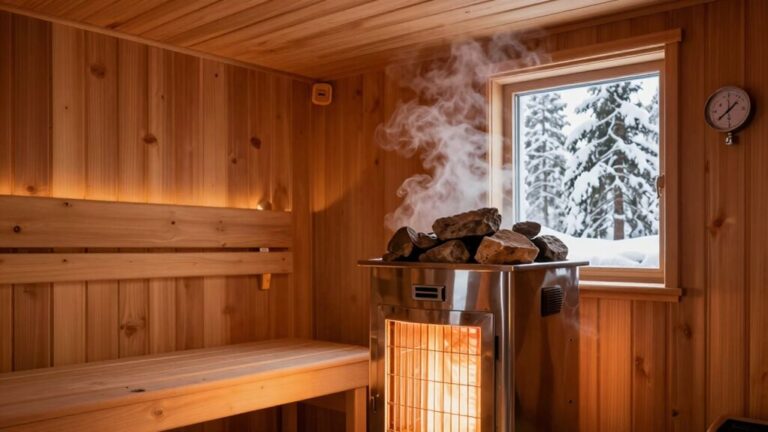
You’ll notice wood heaters take 30-60 minutes to reach temperature but retain heat wonderfully after burning stops.
Pellet stoves offer an impressive 85-95% efficiency with automated feeding and heat up in just 20-40 minutes.
Electric options eliminate smoke concerns entirely but consume 9-13 kWh hourly. Infrared saunas provide a more energy-efficient alternative, using only 1.5 to 3.5 kWh per session while directly heating the body rather than the air.
Cost-conscious sauna enthusiasts appreciate that wood fuel costs only $0.10-0.20/kWh equivalent, making it perfect for off-grid setups.
However, you’ll need to budget time for ash cleanup and chimney maintenance—a tradeoff many consider worthwhile for that authentic wood-fired experience.
Sustainable Materials in Modern Sauna Construction
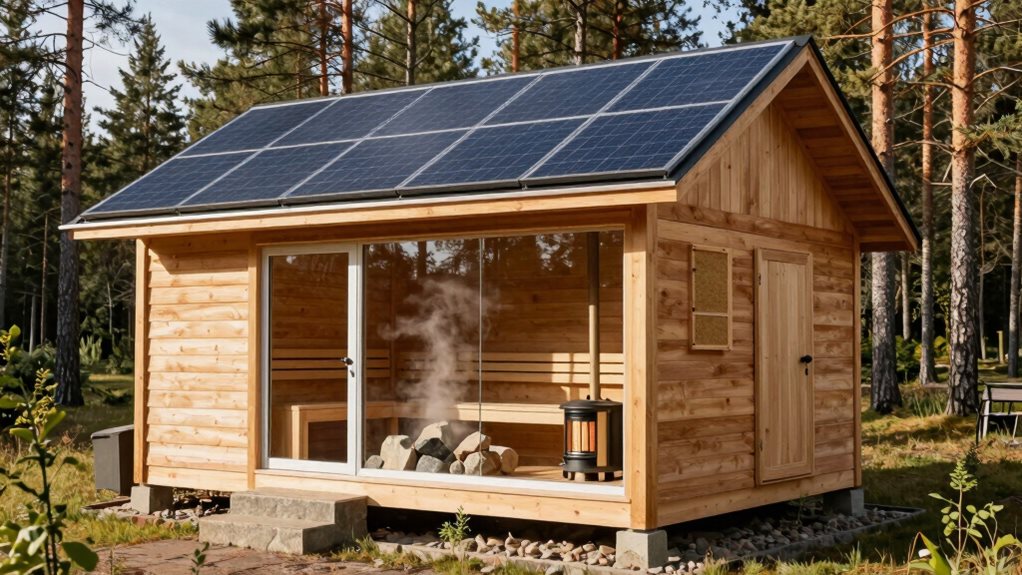
Sustainable materials form the backbone of modern eco-friendly sauna construction, offering benefits far beyond traditional options.
When you’re planning your sauna, consider these earth-friendly alternatives that improve performance while reducing environmental impact.
- FSC-certified western red cedar protects biodiversity while providing ideal properties for both indoor and outdoor infrared saunas.
- Thermowood, treated only with heat and steam, resists warping and decay without chemical treatments.
- Hempcrete, made from hemp hurds and lime, creates a breathable, carbon-negative structure that prevents mold.
- Sheep’s wool insulation absorbs moisture while maintaining excellent heat retention.
- Natural finishes like linseed oil and beeswax protect your sauna without harmful VOCs.
These materials work together to create a healthier sauna experience that’s gentler on the planet, combining durability with sustainability for the conscientious sauna enthusiast. Cob construction offers exceptional thermal mass properties that help maintain consistent temperatures with minimal energy input. Infrared heating systems provide deep penetrating heat while consuming significantly less energy than conventional sauna heaters.
Energy Efficiency Features That Lower Environmental Impact
You’ll find considerable environmental benefits in modern sauna design through innovative energy efficiency features.
Today’s eco-friendly saunas incorporate superior insulation materials that trap heat effectively, pair with solar panels that offset electricity usage, and feature zero-EMF heating technology that reduces electromagnetic radiation while maintaining efficient operation.
These advancements work together to create a wellness experience that’s gentler on both your body and the planet. Combining electric heaters with sustainable power sources creates a hybrid system that offers both the convenience of quick heat-up times and the independence from grid reliance.
Optimal Heat Retention Materials
While designing an eco-friendly hybrid sauna, selecting the right heat retention materials dramatically impacts both performance and environmental footprint.
Thermowood stands out as an excellent primary material, offering natural insulation with reduced moisture content for exceptional stability.
- Thermowood panels absorb five times more carbon during production than they release, helping you achieve eco-friendly goals while maintaining consistent temperatures.
- Mineral wool insulation resists mold and extreme heat without releasing toxic gases.
- Soapstone heater stones release slow, steady warmth that lingers longer than other stone types.
- Foil-faced insulation boards with R-values of 5.0-8.0 help your sauna heat faster while creating effective vapor barriers.
- Cork insulation from renewable tree bark naturally handles moisture fluctuations with built-in antimicrobial properties.
Proper installation of vapor barriers on the warm side of walls is essential for preventing moisture damage to insulation and maintaining optimal thermal efficiency.
Thermowood’s thermal modification process at 180-230°C creates a material that outperforms untreated wood in harsh sauna environments.
Solar-Powered Sauna Options
Modern solar-powered saunas represent a revolutionary shift in how we experience traditional wellness, combining ancient heat therapy with cutting-edge renewable energy.
Models like the Thermasol Solaris and Kirami FinVision Zero demonstrate how you can enjoy sauna sessions without relying on the grid.
With a modest 2-4 kW solar system, you’ll cover your infrared sauna’s energy needs while achieving payback within 6-8 years.
These eco-friendly options use considerably less power than traditional saunas—only 1-3 kWh per hour compared to 6-9 kWh—while heating up in just 10-15 minutes instead of 30-45 minutes.
The direct body heating approach wastes less energy on unused air space, and when you install your sauna indoors, you’ll gain an additional 15-25% efficiency boost over outdoor units.
Zero-EMF Heating Technology
Traditional saunas generate considerable electromagnetic fields (EMF) that many health-conscious consumers now avoid, but zero-EMF heating technology has revolutionized the market with cleaner, safer alternatives.
You’ll find these eco-friendly systems deliver impressive benefits while reducing your environmental footprint.
- Advanced carbon-ceramic combinations, like Clearlight’s True Wave® technology, provide higher infrared output while maintaining EMF levels below 2.5 milligauss
- Patent-pending designs effectively cancel out EMF radiation, making daily sessions worry-free
- Micro-thin carbon fibers (1/1000th human hair thickness) create superior heat distribution with minimal energy use
- High-emissivity heaters generate more heat per watt, lowering your overall energy consumption
- SoloCarbon® and PureTech™ technologies deliver therapeutic 6-12 micron wavelengths that match your body’s natural resonance, maximizing efficiency
ThermaSol Solaris: A Case Study in Off-Grid Sauna Design
As a groundbreaking innovation in eco-conscious wellness, the ThermaSol Solaris stands out as the first fully off-grid, solar-powered sauna available in the United States.
Designed by Texas-based Thermasol, this Finnish-crafted marvel heats to a toasty 170°F in just 30-40 minutes using nothing but the sun’s power.
You’ll find the Solaris in two sizes: a small model that fits 2-3 people and a medium version accommodating 4-5 bathers.
Each unit features a stunning solar-tinted panoramic glass wall that provides natural light while maintaining privacy.
The sauna’s Harvia Delta 3.6 kW heater connects to integrated solar panels and battery packs, making it perfect for remote locations with no electrical access.
Sustainable innovation meets authentic Finnish wellness through off-grid technology designed for the most remote relaxation experiences.
Its Tile Oak construction resists UV damage, while brushed alder benches inside complete the authentic Finnish sauna experience.
Comparing Carbon Footprints: Traditional vs. Hybrid Models
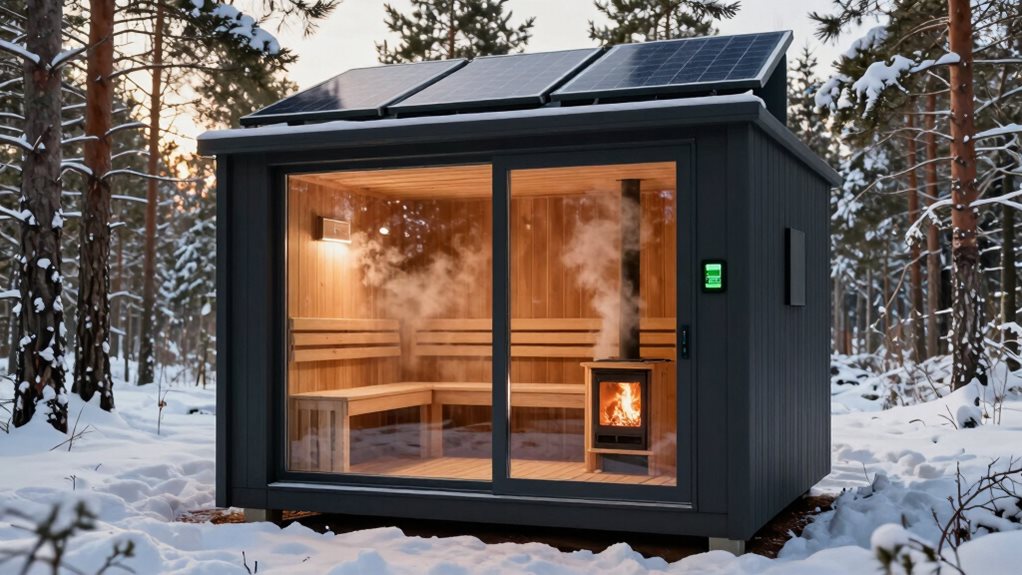
When comparing environmental impact across sauna options, the carbon footprint becomes a crucial factor in making sustainable choices.
Hybrid solar-wood systems offer considerable advantages over traditional single-source heating methods.
- Wood-fired saunas remain nearly carbon-neutral when you’re using sustainably harvested local wood, as the CO2 released is part of the natural carbon cycle.
- Electric saunas powered by fossil fuel grids create a much larger footprint, consuming 6-9 kWh per typical session.
- Hybrid systems with 4-6 kW solar-backed electric components provide flexibility while minimizing emissions.
- Modern Ecodesign-ready wood stoves burn cleaner than older models, reducing harmful particulates.
- Your choice of wood matters – FSC-certified firewood guarantees responsible harvesting and protects biodiversity.
You’ll find that hybrid models balance emissions better than traditional setups, especially when paired with renewable energy sources.
Heat Retention Technologies in Eco-Friendly Designs
The foundation of any truly eco-friendly sauna lies in its ability to retain heat efficiently.
You’ll find vacuum-insulated panels in modern designs like Salus Saunas that dramatically reduce heat loss while using recycled materials. These work alongside zoned heating systems that direct energy solely where it’s needed, saving electricity by avoiding uniform heating.
For traditional styles, high-quality mineral wool and foam board insulation trap heat effectively in barrel and cabin designs, reducing your heater’s workload.
The materials matter too—thermally treated wood and engineered lumber not merely last longer but retain heat better than standard options.
Barrel saunas, like those at the APIPURA eco-hotel, offer superior efficiency through their round shape, making them perfect partners for hybrid solar-wood heating systems.
Maximizing Efficiency Through Smart Controls and Insulation
Modern sauna efficiency relies heavily on the marriage between smart technology and proper insulation, working together to maximize heat retention while minimizing energy consumption.
Smart technology paired with quality insulation creates the perfect formula for energy-efficient sauna experiences.
You’ll find this combination creates the perfect environment for eco-friendly sauna experiences.
- High-quality mineral wool or foam insulation (3-6 inches thick) can reduce your electricity use by up to 25%
- Smart home systems can automatically preheat your sauna during peak sunlight hours when solar production is highest
- Programmable controls with user profiles let you create personalized sessions without wasting energy
- App-based remote monitoring tracks your energy consumption patterns from anywhere
- Motion sensors with eco-modes greatly reduce idle consumption when you’re not using the sauna
With these technologies working in tandem, you’ll enjoy consistent heat while keeping your environmental impact low.
Frequently Asked Questions
How Long Do Hybrid Sauna Heating Systems Typically Last Before Requiring Replacement?
Your hybrid sauna system’s electrical components typically last 5 years, with infrared panels failing sooner due to heat exposure above 80°C. You’ll need replacement when heat-up times exceed 40 minutes.
Can Hybrid Saunas Be Converted Between Indoor and Outdoor Use?
Yes, you can easily convert hybrid saunas between indoor and outdoor settings. They plug into standard 120V outlets, feature convertible roofs, and use tongue-and-groove assembly for quick relocation as needed.
What Maintenance Is Required for Solar Panels on Sauna Systems?
You’ll need to clean your solar panels 1-2 times yearly, inspect for damage regularly, maintain batteries in cool areas, and monitor performance via apps for peak efficiency.
How Do Hybrid Saunas Perform During Extended Power Outages?
Your wood-fired component will keep functioning during power outages as long as you have wood supply, while the electric elements won’t work until power returns or solar batteries recharge.
Are There Tax Incentives for Installing Eco-Friendly Sauna Heating Systems?
You can claim federal tax credits for your sauna’s heating system if you install a qualifying solar water heater (30% uncapped) or biomass stove (30% up to $2,000) through 2025-2032.
Final Thoughts
You’ve discovered how solar and wood hybrid saunas offer the best of both worlds—traditional warmth with modern eco-friendly technology. By choosing these innovative designs, you’ll reduce your carbon footprint while still enjoying authentic sauna experiences. With improved insulation, smart controls, and sustainable materials, you’re not only relaxing—you’re contributing to environmental conservation. As technology advances, your hybrid sauna will become even more efficient and environmentally responsible.