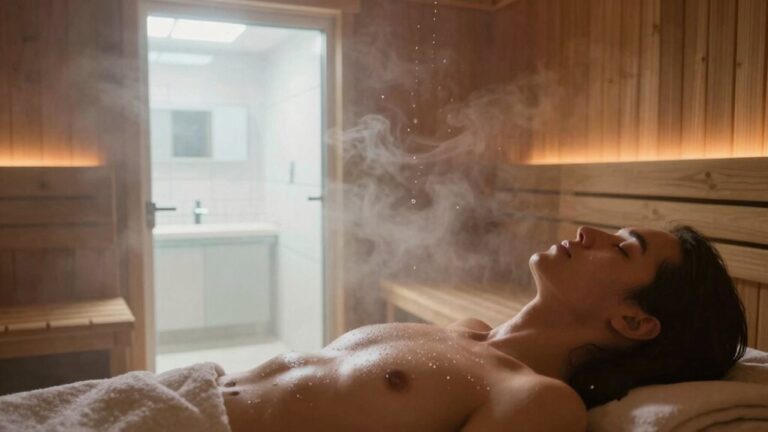


Noisy breathing in steam rooms can really disrupt your relaxation. When steam creates humid air, it may irritate your airways, causing loud breaths that drown out soothing sounds. This can heighten discomfort, especially for those with breathing issues, making it hard to enjoy the experience. Plus, all that noise can mask important signals, like if someone’s in distress. If you want to discover how to improve your steam room experience, there’s more to explore!
Understanding Acoustic Causes of Breathing Noise in Steam Rooms

When you step into a steamy room, it might feel relaxing at first, but for some people, it can quickly turn into a noisy breathing challenge.
You see, airflow can get turbulent when there’s narrowing or partial blockage in the airways. Imagine trying to blow into a trumpet; it’s the same principle! Conditions like subglottic stenosis, either from birth or acquired, can restrict your breathing passage.
Plus, when viruses like the flu or croup come around, they can cause swelling in your throat, making matters worse. Inhaling hot, humid air might feel soothing, but it can irritate sensitive airways, causing even more noise.
Physiological and Behavioral Factors Contributing to Loud Breathing
Although you might find yourself enjoying the warmth of a steam room, physiological and behavioral factors can turn a peaceful moment into a noisy breathing experience. The heat and humidity can narrow your nasal airways, making your breaths sound louder. Also, with steam affecting your throat, you could notice a gurgling noise as mucus shifts. You might even breathe more quickly, which could ramp up the sound. This is particularly true since steam may provide temporary relief to a blocked nose but does not address underlying issues, leading to increased noise from ineffective breathing. Additionally, the steam room’s ability to aid workout recovery can result in more pronounced breathing as your body attempts to cool down from physical activity. If you’re near others, every laugh or conversation can amplify the noise, making it hard to enjoy a calm moment.
Health and Comfort Implications of Noisy Breathing
Noisy breathing in a steam room can bring more than just a few chuckles; it can have real effects on your health and comfort.
If you have asthma or COPD, steam inhalation might irritate your airways, causing them to constrict. The humid air also reduces oxygen levels, making it harder to breathe efficiently. Plus, the heat can trigger spasms for some people, leaving you feeling breathless. Steam therapy can assist in loosening phlegm which may provide symptomatic relief during respiratory distress. Moist air can also soothe irritated nasal passages, aiding breathing for those experiencing congestion.
If you’re exposed to cold air right after using the steam room, it could worsen your coughing.
On the flip side, steam can loosen mucus, offering relief during colds.
But keep in mind, crowded steam rooms can breed harmful bacteria. Always be mindful of your body’s signals for a safe experience!
The Importance of Acoustic Management in Spa Design
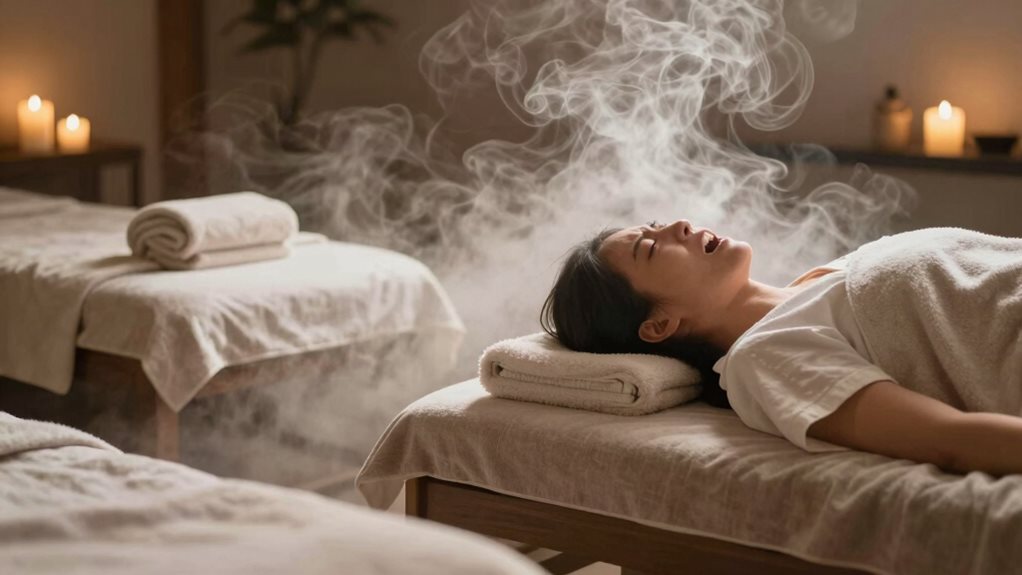
Creating a serene atmosphere in a spa goes beyond just calming scents and soothing music; it also involves managing the sounds around you. Identifying noise sources, like traffic or guest chatter, helps you prioritize areas needing acoustic treatment.
You can install noise-absorbing flooring and acoustic panels to deaden sounds. Consider using natural materials like wood or cork for a more organic touch. Implementing wall treatments and suspended acoustic clouds over relaxation zones maximizes sound control.
Don’t forget to create buffer spaces, like storage rooms, to separate noisy areas from tranquil ones. By consulting acoustic experts and treating your space thoughtfully, you guarantee guests enjoy the calming experience they seek, free from disruptive noises.
Effective Operational Policies for a Quieter Steam Room Experience
To create a quieter steam room experience, you’ll want to enforce silence etiquette.
Remind everyone that loud conversations can disrupt the relaxing ambiance, much like a loud ringtone at a movie!
You’ll also find that managing occupancy limits keeps the space comfortable, reducing the chances of amplified breathing noises that can throw off your zen.
Silence Etiquette Enforcement
When you step into a steam room, it’s easy to get caught up in the relaxing atmosphere, but it’s also important to respect the tranquility of the space. Keeping conversations brief and calm sets the right tone. A simple “Hello” on entry and “Cheers” on the way out works well, while loud, personal stories can really disturb others. If someone has their eyes closed, it’s a signal they want to enjoy their solitude. Clear rules, like no loud talking or excessive movement, help everyone feel comfortable. Additionally, remember that compliance with accessibility guidelines is vital to ensure everyone can enjoy this serene environment.
Occupancy Limit Management
Maintaining a peaceful steam room experience goes beyond just keeping conversations quiet; it also involves managing the number of guests present.
By following occupancy sizing standards, you guarantee everyone has enough space—at least 60 cubic feet per person, with 100 cubic feet being ideal for free movement.
Keeping track of maximum occupancy through clear signage helps prevent overcrowding, which can lead to increased noise and discomfort.
Remember to limit steam sessions to 15-20 minutes to keep the air and atmosphere safe.
Finally, enforce user restrictions by prohibiting children under 16 and those under the influence.
A calm environment not only improves your experience but also promotes safety and enjoyment for everyone.
User Guidance to Enhance Steam Room Etiquette
To make your steam room experience better for everyone, it’s important to be aware of how your actions affect others. By keeping a distance and practicing good hygiene, you can greatly minimize disruptions and create a more enjoyable environment. Additionally, remember to shower before entering the steam room to ensure cleanliness and enhance the overall atmosphere for all guests.
Promote Silent Awareness
Even in the serene space of a steam room, every individual’s behavior can greatly impact everyone else’s experience.
To improve this calming atmosphere, keep conversations to a whisper if absolutely necessary. It’s important to respect others who may want silence to unwind.
When entering or exiting, please do so quietly — a gentle push on the door will help preserve the heat and peace.
Avoid any loud coughs or sneezes directed at others; cover your mouth with your arm.
Remember to keep scents minimal by showering before entry, as strong fragrances can overwhelm.
Finally, sitting on a towel not only promotes hygiene but also helps minimize noise.
Maintain Distancing Practices
While you might be enthusiastic to relax in the steam room, it’s crucial to remember that everyone else is there for the same reason: some peace and quiet.
To guarantee that you all enjoy a calming experience, keep a distance of at least 6 feet from others. That means picking a spot wisely on the benches, perhaps using floor markings set for safe seating. Pre-book your session and stick to the time limits to avoid crowding.
Additionally, follow the one-way flow for entering and exiting the room, steering clear of close encounters at doorways. Everyone appreciates the steam room more when it’s spacious—so let’s keep laughter, relaxation, and respect alive while maintaining good distancing practices!
Educate on Hygiene Standards
When it comes to using the steam room, keeping good hygiene standards is just as important as enjoying the heat.
Start by showering with soap and water before you enter; this helps remove sweat and impurities. Use a clean towel or moisture-wicking swimwear to limit direct contact with benches. Avoid perfumes and lotions—heat can amplify their scents. Don’t forget to take off jewelry, too, as it can trap moisture and promote germs.
Once you’re done, make sure to sit on your towel to keep things clean. Dispose of used tissues properly and wipe off sweat before leaving.
These simple steps help create a pleasant environment for everyone to enjoy the soothing benefits of the steam room!
Risks and Evidence Gaps Surrounding Breathing Noise
Breathing noises in steam rooms pose considerable risks that aren’t always obvious, but understanding these dangers is vital for everyone using these spaces.
Loud breathing can drown out important sounds, like calls for help or coughs, making it harder for staff to notice distress. In humid heat, increased airflow can create louder breathing, and if you’re trying to signal for aid, your voice might be lost in the steam. Additionally, heavy breathing can release more respiratory droplets, raising the risk of infections, especially in tight spaces. Vulnerable individuals, like those with asthma or heart issues, might face intensified symptoms; therefore, saunas can improve lung health by opening airways and promoting easier breathing. Moreover, improved circulation in steam rooms can enhance overall respiratory function, benefiting all users.
With no solid data measuring these issues, it’s imperative to pay attention to your breathing and those around you.
Research Priorities for Improving Steam Room Environments
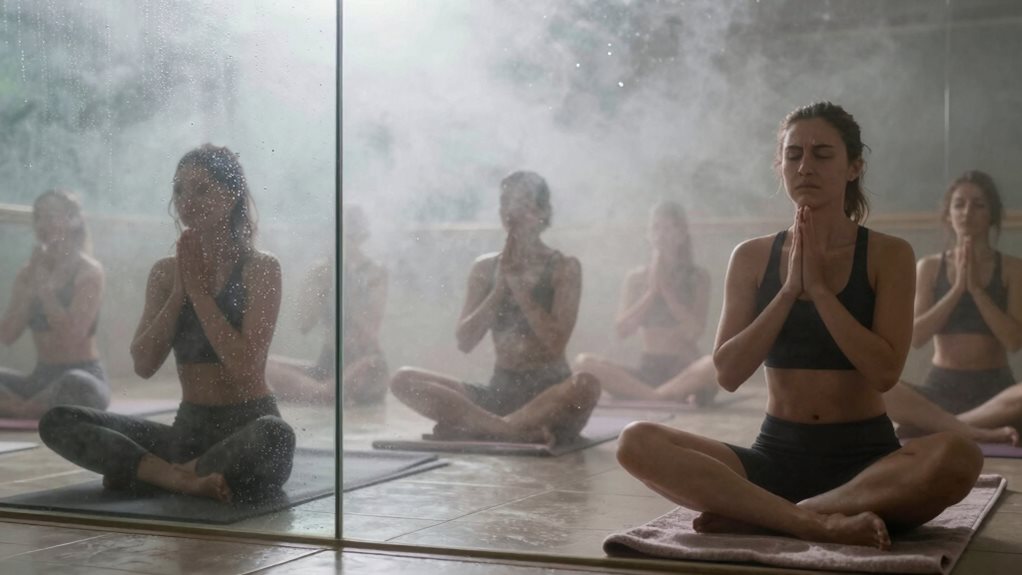
Improving steam room environments is vital for guaranteeing both safety and comfort, especially as their popularity continues to rise.
Focus on water sustainability can help you enjoy your steam session without feeling guilty about water waste. Drench showers, for example, can use up to 40 liters, but switching to cold plunges offers a revitalizing alternative that requires much less water.
Air quality control in steam rooms guarantees a clean atmosphere, making your experience more enjoyable. Plus, optimizing ventilation and humidity creates a perfect environment for relaxation and detoxification. Enhanced skin hydration as a benefit of steam therapy can also be an appealing aspect for many users.
Finally, ongoing research into the benefits of steam compared to saunas is fundamental. So, let’s keep pushing for innovations that improve our steaming experiences while being kind to the planet!
Frequently Asked Questions
How Can I Reduce My Own Breathing Noise in the Steam Room?
To reduce your breathing noise in the steam room, practice deep belly breathing and purse your lips during exhalation. Focus on slow, controlled breaths, allowing warmth to relax your airways for quieter inhalation and exhalation.
Are There Specific Steam Room Designs That Minimize Breathing Noise?
Yes, specific steam room designs can minimize breathing noise by incorporating acoustically absorptive finishes, using textured tiles, applying proper room volume, and guaranteeing effective insulation in ducts to reduce overall sound levels and improve your experience.
What Materials Are Best for Sound Absorption in Steam Rooms?
For sound absorption in steam rooms, use fiberglass or melamine foams. Both materials resist moisture and excel in mid-high frequency absorption. Guarantee proper installation and moisture protection to maintain their effectiveness and longevity.
How Does Steam Room Noise Affect My Relaxation Experience?
Steam room noise disrupts your relaxation experience by increasing cognitive load, interrupting deep-breathing patterns, and elevating stress responses. Such disturbances diminish the overall calming effects you seek, making it harder to achieve desired tranquility.
Can Breathing Noise Levels Be Measured in Steam Rooms?
Yes, you can measure breathing noise levels in steam rooms using specialized equipment like sound level meters and dosimeters, which capture sound intensity and frequency, helping to assess the acoustic environment and its impact on users.
Final Thoughts
To sum up, keeping steam rooms quiet isn’t just about personal comfort; it’s crucial for everyone’s health and relaxation. When we grasp the reasons behind noisy breathing and improve how these spaces are designed and managed, we can create a better experience for all. So, whether you’re a spa owner or a visitor, practicing good steam room etiquette and advocating for sound management can make a big difference. Let’s work together for quieter, more enjoyable steam rooms!