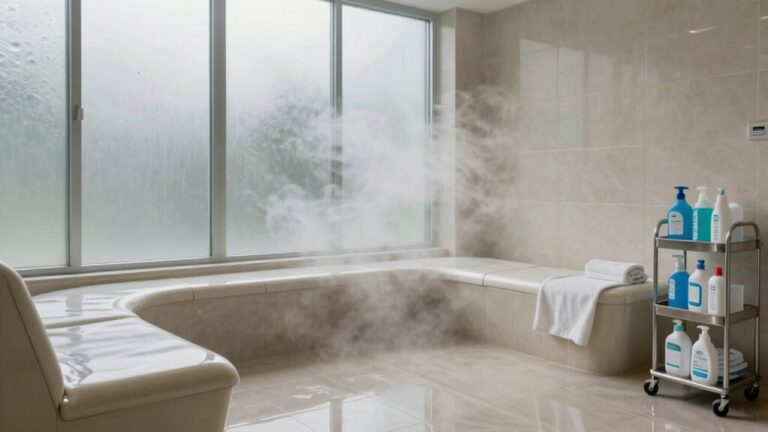

Steam rooms can help your asthma by loosening stubborn mucus and calming irritated airways, backed by research spanning over 40 years. You’ll breathe easier as warm, humid air acts like a gentle massage for your lungs, improving oxygen flow and making coughs more productive.
Studies show regular users report fewer symptoms, with 2–3 weekly sessions cutting respiratory disease risk by 27%. Just start carefully: some people thrive on moist heat while others find dry saunas work better, and there’s a smart way to figure out your perfect approach.
Do Steam Rooms Help Asthma? The 25-Year Research Verdict

If you’ve ever felt your chest tighten during an asthma flare-up, you know how desperate the search for relief can feel, and that’s exactly why researchers have spent decades studying whether steam rooms might help.
German scientists at the University of Munich started investigating this back in 1983, running controlled experiments through 1986. They discovered that steam baths actually loosened mucus and phlegm in people with bronchitis and asthma, much like how hot shower steam clears your stuffy nose when you’re sick. Participants coughed less frequently, and their breathing improved. The warm, moist environment also helped soothe irritated airways and reduce local inflammation, providing additional comfort to study participants. Steam acts as a natural expectorant due to the hot, humid air penetrating the respiratory system.
Fast forward to 2023, and a clinical study in Navi Mumbai confirmed these findings with modern measurements. Patients who inhaled steam twice daily for just one week showed better oxygen levels and easier airflow. The evidence spanning 25-plus years points toward real benefits.
How Steam Changes Your Lungs: Pressure, Volume, and Mucus Clearance
You might be wondering how sitting in a steam room actually changes what’s happening inside your chest. The moist heat works like a gentle massage for your lungs, boosting pressure and volume while loosening stubborn mucus.
First, your breathing muscles get stronger. Studies show low-workout breathing exercises with steam can raise your maximal inspiratory pressure by over 21 percent, that’s like upgrading from a weak hand pump to a powerful air compressor.
Your lung capacity grows too, with slow vital capacity climbing nearly 4 percent in just four weeks. The heat also opens your airways wider, improving oxygen flow without triggering constriction. Research on sauna use has demonstrated this effect in patients with obstructive pulmonary disease, showing measurable improvements in forced vital capacity without bronchoconstriction.
Meanwhile, warm humidity acts like a softening agent, breaking down thick phlegm so you can clear it more easily. Think of it as melting sticky tar into flowing liquid, much simpler to expel. However, individuals with asthma may have varying reactions to steam therapy, so consultation with healthcare providers is crucial before incorporating it into your routine.
Steam Room vs. Sauna for Asthma: Which Delivers Better Results?
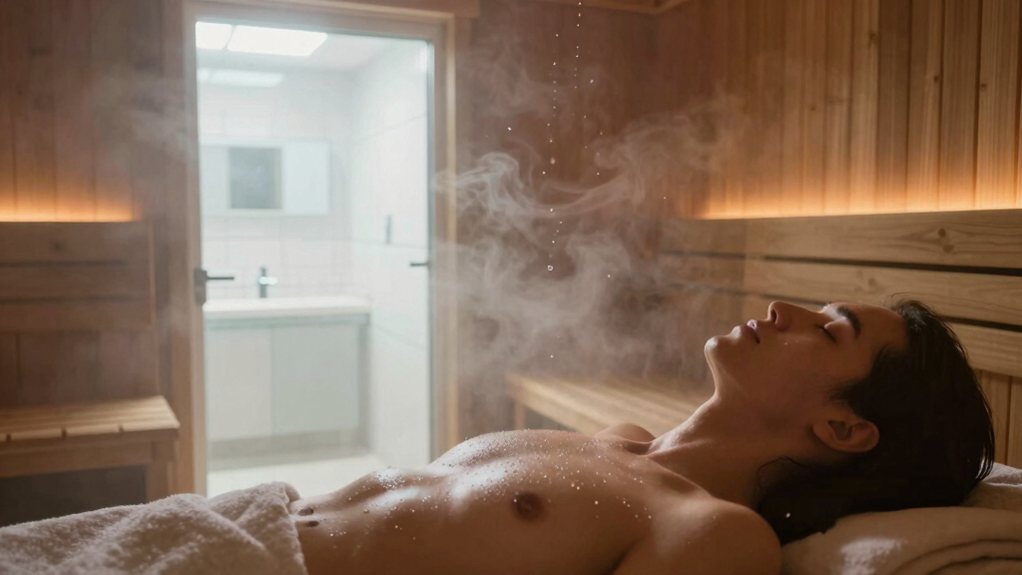
Steam rooms wrap you in thick, wet heat that can loosen mucus like a warm shower on a stuffy morning, while saunas hit you with dry, desert-like air that reduces inflammation throughout your body. For asthma specifically, dry sauna use has been linked to lower C-reactive protein levels, indicating reduced lung inflammation that can improve breathing over time. Both have their fans, but you’ll want to know which one actually wins for asthma before you pick your spot. Research from Finland shows that regular sauna bathing significantly reduces the risk of serious respiratory diseases, including conditions that often coexist with or complicate asthma management.
Humidity Levels Compared
How exactly does humidity shape your experience in a steam room versus a sauna, and why does it matter so much for your breathing? You’ll notice the difference immediately when you step inside.
A steam room wraps you in 100% humidity, think of it as breathing through a warm, wet towel. That dense moisture opens your airways like a gentle hug for your lungs. Steam saunas function at 110-120°F (43-49°C) with high humidity (around 100%), creating a moist environment that soothes respiratory issues. In a traditional Finnish sauna, the ceiling temperature reaches about 100°C while the floor stays much cooler around 40°C, creating dramatic vertical gradients you won’t find in steam rooms.
A traditional sauna, however, keeps humidity between 5-20%, creating desert-dry heat. While this helps some congestion, it lacks the soothing vapor your respiratory system craves.
Here’s the kicker: at 70°C, 40% humidity feels hotter than 10% because your sweat can’t evaporate efficiently. For asthma relief, that steam room moisture wins, it’s like comparing a humidifier to a hair dryer for your lungs.
Respiratory Outcomes Differ
Now that you understand how humidity shapes each environment, let’s look at what actually happens to your breathing. Steam rooms and saunas help your lungs in surprisingly different ways.
When you step into a steam room, you’re getting a direct moisture boost. The hot, humid air acts like a warm towel on your chest, loosening stubborn mucus and helping you cough it out more easily. Studies show your peak expiratory flow rate improves, meaning you can push air out faster and stronger. Steam rooms typically exceed 90% humidity, creating an environment specifically designed to benefit respiratory health.
However, this same high humidity and heat can trigger asthma symptoms for some individuals, making steam rooms unsuitable for everyone.
Your oxygen levels rise too, giving you that “ahhh” feeling.
Saunas work more like a gentle anti-inflammatory pill. The dry heat lowers C-reactive protein, a marker of inflammation, and cuts pneumonia risk by over 35% if you have asthma. Frequent sauna users see respiratory disease drop by 40%.
Choose steam for immediate mucus relief, sauna for long-term protection.
How Many Sauna Sessions Per Week Actually Reduce Asthma Symptoms?
You’re probably wondering how often you’d actually need to hit the sauna to breathe easier, and the research delivers some pretty clear numbers.
Studies show a strong dose-response relationship, meaning the more frequently you sauna, the bigger the benefits you can expect for your lungs.
Let’s look at what “optimal” really means when it comes to weekly sessions and long-term asthma management.
Optimal Weekly Frequency
When you’re managing asthma, you’re probably wondering exactly how often you should hit the sauna to actually feel a difference. Research points to a sweet spot that balances benefit with practicality.
- 2-3 sessions weekly cuts respiratory disease risk by 27%, a solid starting point for beginners.
- 4 or more sessions pushes protection to 41%, with COPD risk dropping 38% and pneumonia risk falling 37%.
- 3-7 sessions delivers the strongest immune and respiratory payoff, especially when you stick with 15-20 minutes at 176-212°F.
Think of it like building muscle: consistency beats intensity. These benefits, tracked across 25 years in nearly 2,000 men, compound over time.
Your lungs adapt gradually, so don’t cram. Spread sessions throughout your week, listen to your body, and watch your breathing ease.
Dose-Response Relationship
How much steam does it really take to calm your lungs? Research suggests there’s a sweet spot, and you’ll want to find yours carefully.
Studies show daily sauna users hit C-reactive protein levels of 1.65 mmol/L, much lower inflammation than the 2.41 mmol/L seen in once-weekly bathers. That’s like watering a plant: too little, and it withers; just right, and it thrives.
Regular sauna bathers report fewer asthma symptoms overall, but here’s the catch: you’re not everyone.
Your dose-response is personal. Some people open up like flowers in moist steam rooms; others find dry sauna heat works better. A few unlucky folks trigger attacks with either.
Start with short trial sessions, maybe 10-15 minutes, and track how your breathing responds. Your lungs will tell you what they need.
Long-Term Risk Reduction
Finding your personal sweet spot with steam is a great start, but the bigger question is what happens when you stick with it for years. Research tracking nearly 2,000 men for over 25 years reveals impressive answers.
You see clear dose-response patterns emerge:
- 2-3 weekly sessions cut respiratory disease risk by 27%
- 4+ sessions weekly boost that reduction to 41%
- Pneumonia risk drops 28% and 37% respectively, crucial since pneumonia hits asthma patients harder
Think of it like building muscle: occasional workouts help, but consistent effort creates lasting change. The warm, humid air keeps your airways open, reduces inflammation, and improves oxygen flow to tissues.
Your lungs essentially get stronger with each session, creating cumulative protection that compounds over decades.
Can Steam Inhalation Burn You? Scald Risks Every Asthma Patient Should Know
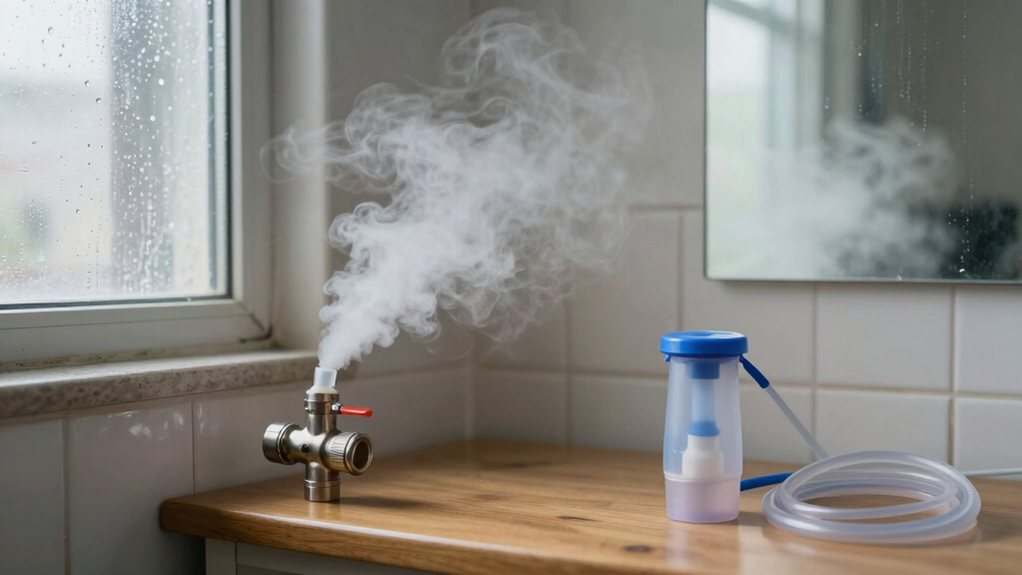
Although you might picture steam as gentle and soothing, it can actually cause serious burns if you’re not careful. Steam inhalation scalds are more common than you’d think, with 201 cases reported across the UK in just two years. These burns typically happen when hot steam contacts your skin during treatment, and 84% of victims suffer lower body injuries.
You’re especially at risk if you’ve got young children at home. Kids under five account for over 65% of all scalds. The damage isn’t minor either.
Nearly one-third of patients need surgery, and hospital stays average over four days. Treatment costs add up quickly, exceeding £31,000 for just nineteen patients. Before trying steam therapy for your asthma, weigh these real dangers against potential benefits.
Your 4-Week Steam Protocol for Asthma: Temperature, Duration, and Frequency
When you’re ready to take control of your asthma symptoms, a structured 4-week steam protocol gives you a clear path forward. You’ll start with mild temperatures around 45°C, which research shows suppresses rhinovirus by over 90% while keeping your airways happy. Think of it like warming up before a workout, gentle and steady wins the race.
A structured 4-week steam protocol gives you a clear path forward when you’re ready to take control of your asthma symptoms.
Here’s your weekly game plan:
- Temperature: Keep steam between 55-65°C for severe flare-ups, but stick to milder warmth if you’re prone to wheezing
- Duration: Inhale for 5 minutes per session, cycling through 20 minutes total within an hour
- Frequency: Practice twice daily, morning and evening, to boost lung power by nearly 20%
Frequently Asked Questions
Does Steam Therapy Replace Asthma Inhalers?
No, steam therapy doesn’t replace your inhalers. You can use it as an adjunctive treatment for symptom relief and mucus clearance.
Inhalation therapy with extra-fine formulations remains your standard asthma management.
Can Children With Asthma Use Steam Rooms Safely?
You should avoid steam rooms for your child with asthma unless their doctor specifically recommends it. High humidity makes breathing difficult, and poorly maintained steam rooms carry infection risks.
Stick to shorter, cooler dry sauna sessions instead.
Should I Steam Before or After Exercise?
You should steam before exercise for mucus clearance and easier breathing, or after for improved lung capacity and recovery.
Both help, so choose based on whether you need pre-workout airflow or post-workout restoration.
Are Essential Oils Safe in Asthma Steam Therapy?
No, you shouldn’t use essential oils in asthma steam therapy. They can trigger breathing problems, worsen your symptoms, and mask emergency warning signs.
Always ask your doctor before trying any alternative treatments.
Does Steam Worsen Exercise-Induced Asthma?
Steam doesn’t worsen your exercise-induced asthma, it actually helps. You’ll find fully saturated warm air completely prevents airway obstruction after exercise, while increased humidity considerably blunts your asthma response.
However, individual sensitivity varies, so monitor your personal reaction.
Final Thoughts
You’ve explored how steam rooms can support your asthma path, from lung mechanics to safety essentials.
Remember, warm, moist air helps loosen mucus like a gentle rain softening hard soil, but scald risks demand caution.
Start slowly, track your symptoms, and chat with your doctor before diving in. With smart protocols and realistic expectations, you’re now equipped to decide if steam therapy deserves a spot in your wellness routine.
Breathe easier, friend.