
To keep steam rooms hygienic, you’ll want to monitor chlorine levels between 1 to 3 ppm and maintain a pH around 7.4. Shower before and after to wash away sweat and germs. Remember, steam rooms can be a breeding ground for bacteria, so keep your time limited to 10-20 minutes. Staying hydrated is key too! Plus, identifying health risks for vulnerable individuals is essential. Stick around to discover more smart tips for a safe spa experience!
Importance of Maintaining Proper Chlorine and Ph Levels
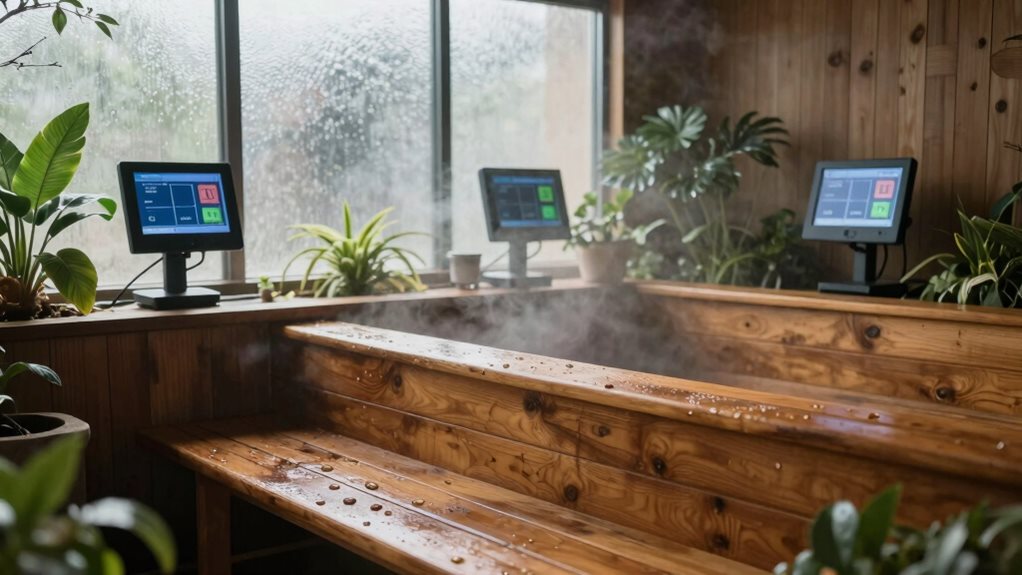
When you’re ready to relax in a spa or hot tub, you mightn’t think about the numbers floating around in the water, but maintaining the right chlorine and pH levels is vital for your safety and comfort.
Ideally, you’ll want free chlorine levels between 1 and 3 ppm to keep the water clean. A pH level around 7.4 is best, too.
If the pH rises too high, it becomes harder for chlorine to do its job, leading to unwanted germs. On the other hand, very low pH can irritate your skin and damage the spa equipment.
Effective Hygiene Practices Post-Steam Room Use
After enjoying a steam room session, jumping into a post-use shower is a must!
This vital step helps rinse away sweat and impurities from your skin while keeping the entire area clean and sanitized.
Pairing this with regular equipment maintenance guarantees your relaxation spot stays fresh and inviting for your next visit.
Post-Use Shower Importance
Taking a revitalizing shower soon after using a steam room isn’t just a nice way to cool down—it’s an essential step in keeping your skin healthy and minimizing germs.
Showering with soap and warm water within 5 to 15 minutes helps wash away sweat, oils, and any sneaky microbes that clung to your skin. Plus, rinsing reduces residues from skin products that could trap bacteria. Focus on those high-contact areas, like your armpits and feet, to lower your risk of skin issues. Steam showers use moist heat, which can raise the humidity on your skin, making it even more important to cleanse thoroughly after your session.
A cool or lukewarm shower gently closes your pores and restores skin balance. Finally, don’t forget to moisturize afterward to keep your skin feeling great and looking its best after that sweat session!
Sanitization of Surfaces
Sanitizing surfaces in a steam room is crucial for keeping you safe and healthy during your relaxation sessions.
To guarantee a clean environment, consider these key practices:
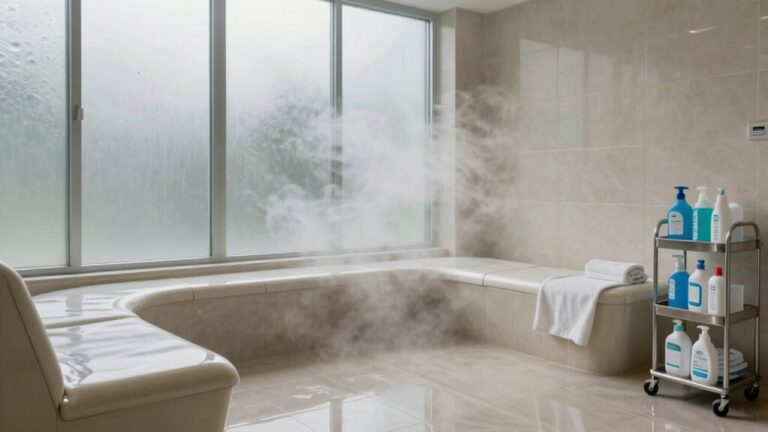
- Use non-porous materials like ceramic tile and stainless steel to reduce bacterial growth.
- Clean floors and high-touch areas daily, including benches and door handles.
- Apply EPA-registered disinfectants correctly, making certain to follow the recommended contact time.
- Keep a cleaning log to track what’s been done, so nothing slips through the cracks.
Regular Equipment Maintenance
Regular equipment maintenance is key to guaranteeing a safe and pleasant steam room experience.
To start, always use distilled water in your steamers to prevent mineral buildup, and replace this water daily. Don’t forget to rinse the reservoir and avoid adding crucial oils, which can compromise hygiene.
Daily, scrub the nozzle and hose ends with a soft brush to keep them clean and verify steam flows freely. At the end of each shift, clean and refill the steamer reservoirs.
Make it a habit to wipe down equipment with gentle disinfectants daily and check for any signs of damage.
Finally, schedule monthly deep cleans to tackle mold or mildew, confirming your steam room remains a relaxing haven for everyone.
Understanding Bacterial and Viral Risks
When you step into a steam room, you’re entering an environment where bacteria and viruses can thrive. The heat and humidity create a perfect breeding ground, making pre-use hygiene even more critical to keep yourself safe. It’s important to note that legionella bacteria can thrive in warm water sources, increasing the risks associated with steam rooms. Additionally, the use of steam rooms can provide congestion relief, which emphasizes the need for proper sanitation to prevent the spread of germs.
Steam Room Contamination Sources
While steam rooms can be a relaxing escape, they also present hidden health risks due to contamination sources. You mightn’t realize that the warmth and moisture create perfect conditions for bacteria and viruses to thrive.
Consider these common sources of contamination:
- High-touch surfaces like benches and handles can spread skin bacteria.
- Shared towels and mats act as hidden vehicles for germs.
- Warm water systems can foster growth of harmful bacteria like Legionella.
- Persistent biofilms in plumbing can recontaminate water, increasing risk.
Being aware of these risks can help you take precautions while enjoying the benefits of the steam room.
Viral Proliferation Factors
Understanding how viruses and bacteria can thrive in steam rooms is crucial for your health, especially as you seek relaxation. High humidity in these spaces actually limits virus spread by settling airborne particles on surfaces.
However, if you’re feeling under the weather, stay away; warm, steamy environments can encourage bacterial growth. While the heat might seem like a defense, it doesn’t always kill bacteria effectively. Instead, it can help viruses spread if someone is already infected.
Plus, poor ventilation can trap harmful aerosols, making the situation worse. To keep your experience safe, being cautious about your health and the cleanliness of your surroundings is important.
Pre-Use Hygiene Importance
Taking a moment to think about your hygiene before stepping into a steam room can make all the difference in keeping germs at bay.
You wouldn’t want to take a dip in a sea of bacteria, right? Here’s why pre-use hygiene is essential:
- Wash Up: Clean your body to reduce transferring sweat and grime.
- Stay Home If Sick: If you’re feeling under the weather, it’s best to skip it.
- Know Your Conditions: If you have a chronic illness or weak immune system, be extra careful.
- Hydrate Properly: Drink water, as staying hydrated helps your body fight off possible infections.
Temperature and Humidity: A Double-Edged Sword
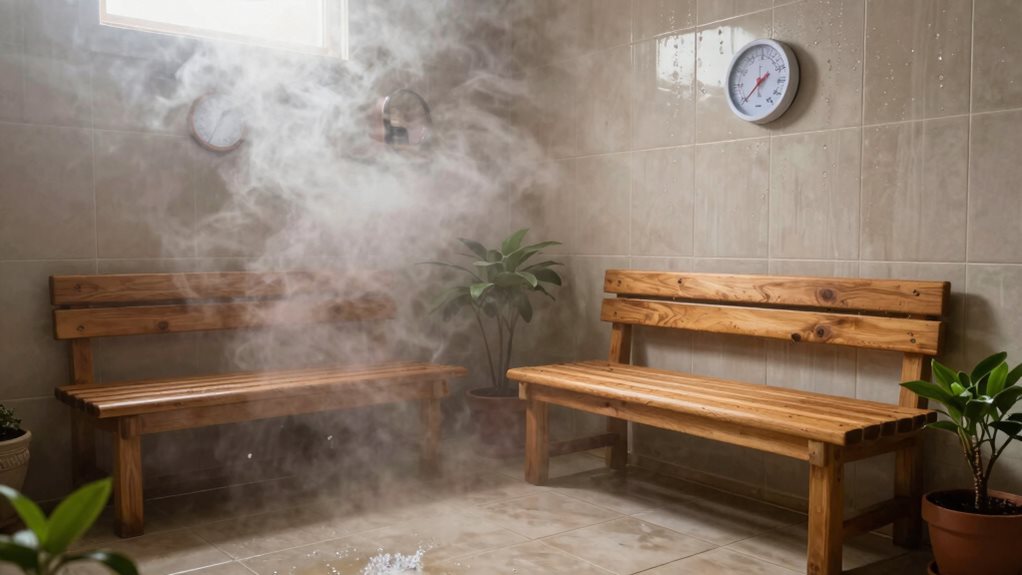
When you step into a steam room, the temperature and humidity can feel like a warm hug, but they also come with a few hidden challenges.
The steam room typically sits between 110°F and 120°F, with humidity soaring to 100%. While this environment can help ease muscle tension and respiratory issues, it also encourages bacteria and mold growth due to the high humidity levels. Additionally, steam rooms can help ease bronchitis symptoms by providing a soothing atmosphere for your respiratory system.
You might feel hotter than in a dry sauna because sweat doesn’t evaporate as easily, potentially leading to dehydration if you stay too long.
It’s essential to be aware of your body’s signals and keep the benefits in mind while maneuvering through this steamy oasis. Enjoy the warmth, but remember, balance is key for your safety and comfort!
User Precautions for Safe Steam Room Use
Before diving into the soothing warmth of a steam room, it’s important to take a few essential steps to guarantee your experience is both safe and enjoyable.
Before enjoying the steam room, remember to prepare properly for a safe and pleasant experience.
Here’s what you should keep in mind:
- Shower with soap: This helps remove sweat and oils, keeping the space cleaner for everyone.
- Limit your time: Stick to about 10–20 minutes in the steam room to avoid overheating.
- Bring your towel: Sit on a clean towel to prevent direct contact with the benches.
- Stay hydrated: Drink water before and after to help balance fluids lost in the heat.
Recognizing Contraindications for Vulnerable Individuals
Enjoying the soothing environment of a steam room can be a wonderful experience, but it’s important to recognize who might need to steer clear for safety reasons. Children under 13 should stay out, as their bodies don’t handle heat well. If you’re over 65, you could be more at risk for heat-related issues. Anyone with heart problems, like uncontrolled high blood pressure or a history of heart attacks, should consult a doctor before entering. Heat exposure strains those with skin conditions or infections, and might find the heat only makes things worse. And if you have neurological disorders or struggle with asthma, extra caution is vital. Always check with a physician if you’re unsure! Your health is worth protecting.
Implementing Operational Controls for Enhanced Safety
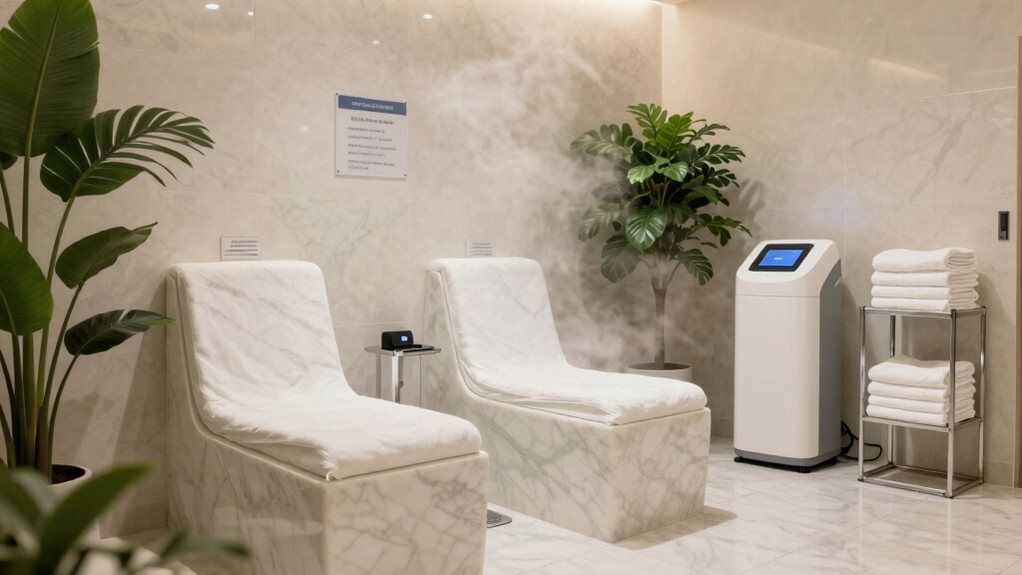
Implementing operational controls for improved safety in spa environments isn’t merely about rules; it’s about creating a secure and enjoyable experience for everyone.
You can introduce crucial measures that improve safety without a hefty price tag. Here are some important steps to take into account:
- Install tamper-resistant temperature controls to prevent changes by users.
- Maintain ventilation systems and schedule regular inspections for cleanliness.
- Limit room access through staff supervision and clear occupancy signs.
- Conduct routine staff walkthroughs to monitor for misuse and emergencies.
When you adopt these strategies, you not only improve safety but also show visitors that their well-being is a top priority—increasing their trust and satisfaction in your spa experience!
Continuous Cleaning Strategies for High-Traffic Areas
A spa is a haven for relaxation and rejuvenation, but high-traffic areas can become hotspots for dirt and germs if not managed properly. To keep these spaces clean, you should establish frequent cleaning schedules, wiping down benches, walls, and floors every 1–2 hours during busy times.
To ensure a pristine spa experience, implement regular cleaning routines in high-traffic areas.
Daily deep-cleaning routines are crucial, targeting grout lines and drains to eliminate stubborn residues. Using safe, pH-balanced cleaners helps protect surfaces while keeping them disinfected.
Keep track of cleaning with visible logs to verify you’re on top of tasks. Don’t forget to maintain good ventilation and moisture control, as this reduces microbial growth.
With these strategies, you can help guarantee a hygienic environment for everyone to enjoy.
Frequently Asked Questions
How Often Should Steam Rooms Be Cleaned Throughout the Day?
You should clean steam rooms multiple times a day. Wipe surfaces with disinfectant between sessions, check for spills, and monitor conditions often to maintain hygiene and minimize contamination risks for users.
Can I Use Essential Oils in the Steam Room?
You can use crucial oils in the steam room, but make sure to dilute them properly. Avoid direct skin contact and limit exposure to prevent irritation or allergic reactions while enjoying the beneficial aromas.
What Should I Wear in a Steam Room for Hygiene?
You should wear a clean swimsuit or loose trunks, paired with a cotton towel to sit on. Avoid tight clothing, synthetic fabrics, and jewelry to guarantee comfort and maintain hygiene while enjoying the steam room.
Is It Safe to Use a Steam Room With an Open Wound?
No, it’s not safe to use a steam room with an open wound. The warm, humid conditions can promote infection and delay healing, so it’s best to avoid steam rooms until your wound is fully healed.
What Are the Signs of Steam Room Contamination?
You’ll notice signs of steam room contamination through visible mold or slimy films, musty odors, skin irritations like rashes, and respiratory symptoms. If you spot these, it’s best to avoid using the area.
Final Thoughts
To sum up, keeping your steam room clean isn’t just nice—it’s crucial! By monitoring chlorine and pH levels, practicing good hygiene after use, and being mindful of who’s entering, we can all enjoy a safer experience. Remember, steam rooms are like a cozy blanket on a cold day; fantastic but requires responsible care. Together, we can reduce risks and create a welcoming environment for everyone. So, let’s steam smart and keep it fresh for all!