
You can power your home sauna using solar panels and battery storage, creating an efficient, eco-friendly setup. Traditional electric saunas require 3-9kW while infrared models need just 1.2-2.5kW. For a typical infrared sauna, you’ll need a 2-4kW solar system with lithium-ion batteries sized to your usage patterns. This combination offers energy independence, eliminates monthly bills, and typically pays for itself within 6-8 years. The following sections reveal exactly how to build your perfect system.
Understanding Sauna Power Requirements
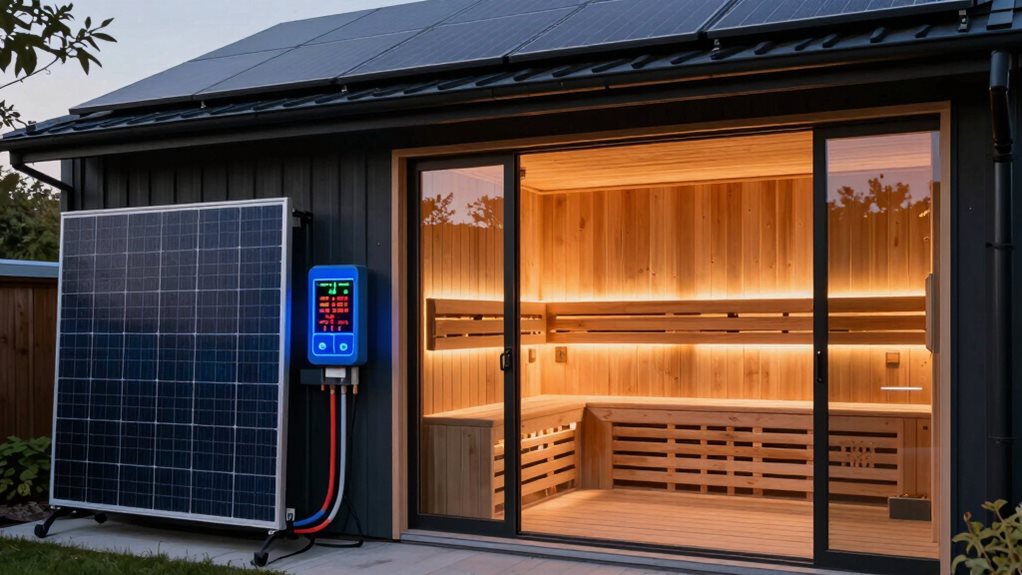
Power consumption is the foundation of any sauna installation, especially when you’re planning to use alternative energy sources. The type of sauna you choose greatly impacts your energy needs.
Traditional electric saunas typically require 3-9 kW of power, while infrared models use much less at 1.2-2.5 kW.
Your electrical setup matters too. Traditional saunas often need 240V service with 20-50 amp capacity, while many infrared models can run on standard 120V outlets with 15-20 amps. This difference affects how you’ll connect to solar or battery systems.
When calculating your energy budget, consider that a traditional sauna session consumes about 9-13 kWh, while an infrared session uses only 1.5-3.5 kWh. These numbers are essential for properly sizing your alternative energy system to meet your sauna’s demands.
Sizing Your Solar Array for Optimal Performance
With your sauna’s power requirements in mind, let’s look at how to correctly size your solar array.
Proper solar array sizing ensures your sauna gets enough power without expensive overbuilding.
For a typical sauna using 3200-6000Wh per session, you’ll need to account for your local peak sun hours. If you’re in a sunny area like Anaheim with 5 daily sun hours, divide your energy needs by this number to determine your base system size.
Don’t forget to add about 20% extra capacity for inefficiencies – this compensates for the 15% system losses from inverters and wiring.
For most infrared saunas, a 2-4kW system works well, while traditional saunas may require 6kW or more. Remember that infrared models consume 75% less electricity than conventional saunas, significantly affecting your solar system requirements.
Calculate the exact panel count by dividing your total system size by individual panel wattage (typically 400W).
A summer-only sauna can get by with half the array size of year-round use.
Battery Storage Options for Uninterrupted Heat
Choosing the right battery storage system guarantees your sauna stays warm regardless of weather conditions or time of day. Your battery needs depend on your heater’s power, how long you’ll use it, and how many days you want to go without sunshine.
- Lithium-ion batteries offer the best combination of lifespan and energy density, with LFP chemistry providing better safety for home use.
- Lead-acid batteries cost less upfront but don’t last as long and can only use about half their rated capacity.
- Flow batteries excel in longevity but take up more space, making them ideal for permanent installations.
- Thermal storage solutions, like water tanks, can complement electrical batteries by storing heat directly, reducing electrical conversion losses.
Calculate your capacity needs by multiplying your heater’s wattage by hours of use, then add 20-50% extra for cloudy days.
Off-Grid Sauna Models on the Market
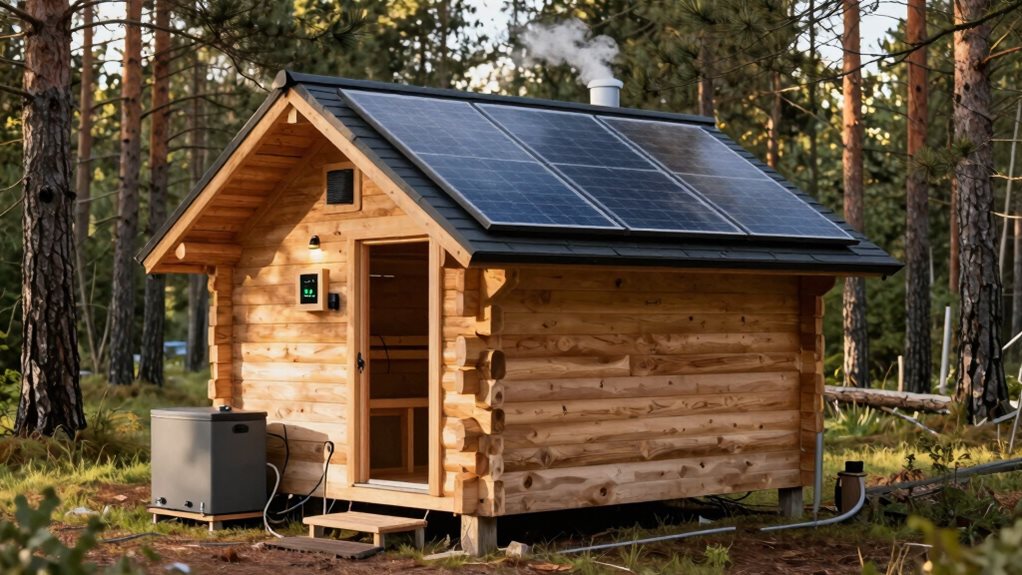
You’ll find several ready-made off-grid sauna solutions that can bring your wellness retreat to life without requiring traditional power hookups.
From the innovative Thermasol Solaris with its integrated solar panels to traditional wood-burning models that offer authentic Finnish experiences, manufacturers have created options for nearly every setting and preference.
These off-grid models range from premium Western Red Cedar barrel saunas by Forest Cooperage to more budget-friendly options like Almost Heaven’s Salem 2-Person Barrel, with many featuring considerable discounts to make your off-grid sauna dreams more accessible. For optimal recovery benefits, many users incorporate these saunas into their wellness routines to experience the muscle recovery benefits that experts like Caine Wilkes and Dr. Raj Dasgupta frequently highlight.
Ready-Made Solutions Available
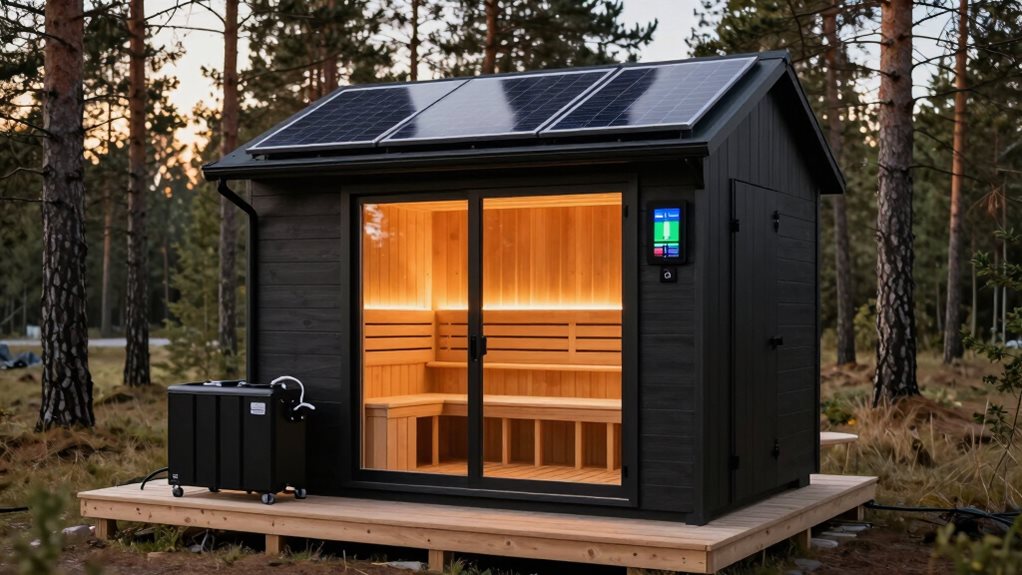
The emerging market of ready-made off-grid saunas has transformed the accessibility of solar-powered wellness spaces. You can now purchase fully assembled electric saunas that operate completely independent of the power grid, thanks to integrated solar panels and battery systems.
- Thermasol Solaris and Kirami FinVision (Zero) lead the market as plug-and-play solutions that require minimal setup for remote properties or retreats.
- These systems typically include 2-3 solar panels (around 410W each) and lithium battery packs designed to power specialized low-energy heaters.
- You’ll enjoy temperatures up to 76°C (170°F) with warm-up times of 30-40 minutes and 2-5 hours of operation per charge.
- Control systems like the Xenio series manage energy use efficiently, extending your sauna sessions through optimized heating cycles.
Top Performance Specifications
When comparing off-grid sauna models, performance specifications reveal substantial differences that affect your experience and energy requirements.
The most efficient options, like the FinVision, heat just 3.29 m³ of space with a modest 2.3-3.6 kW heater, achieving warmth in only 20 minutes due to superior insulation.
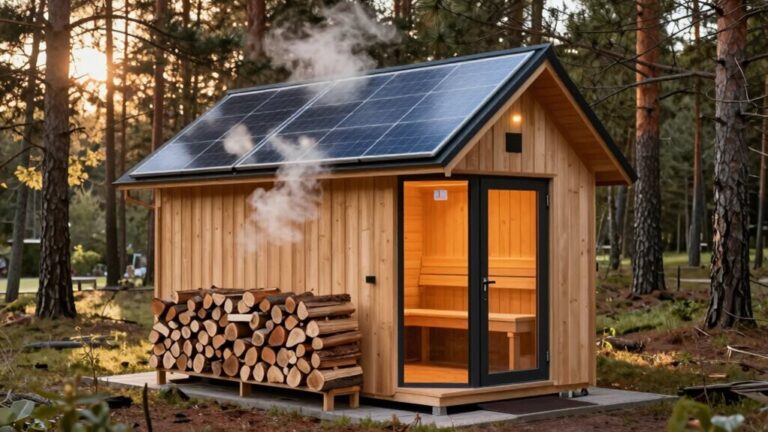
For traditional wood-fired models, you’ll find stoves delivering 13-24+ kW of heat output, perfect for larger barrel saunas spanning 154-259 cubic feet.
While these require 45-90 minutes of heat-up time and regular fire-tending, they’re completely grid-independent. Expect to budget $50-150 per cord of hardwood fuel like oak or maple.
If you’re considering solar compatibility, look for models with 12V LED lighting systems and low-power features that can be easily integrated with panel arrays.
Versatility For All Settings
Today’s market offers several versatile off-grid sauna options that function beautifully in any setting, from remote wilderness cabins to suburban backyards.
These solar-powered saunas eliminate the need for electrical connections, making them perfect for properties without power infrastructure.
- The Thermasol Solaris ships fully assembled with integrated solar panels and batteries, reaching 76°C in just 30-40 minutes with plug-and-play installation.
- Kirami’s FinVision Zero offers adjustable solar panels that provide 2-3 hours of use on fully charged batteries, extending to 4-5 hours in sunny conditions.
- Both manufacturers offer different size options to accommodate various group sizes, from intimate 2-person models to larger 4-5 person versions.
- Installation requires minimal site preparation, with Kirami’s design allowing for customer-installed solar panels and on-site assembly.
Energy-Efficient Design Features to Reduce Consumption
Designing your home sauna with energy efficiency in mind can dramatically reduce power consumption while maintaining the relaxing heat you desire.
Proper insulation is your first defense against heat loss—install R-13 to R-19 in walls and R-22 to R-26 in ceilings, using quality materials like mineral wool or foam board.
Don’t overlook vapor barriers, which do double duty by preventing moisture damage and reflecting heat back into your sauna. Seal all seams with high-temperature aluminum tape and make certain tight-fitting doors with weather stripping.
Your choice of heater matters too. Infrared models use less energy by warming your body directly at lower temperatures (120-140°F), while smart controls let you preheat remotely and automatically shut off when not in use. Selecting the appropriate infrared sauna can reduce energy consumption by 40-60% less compared to traditional saunas.
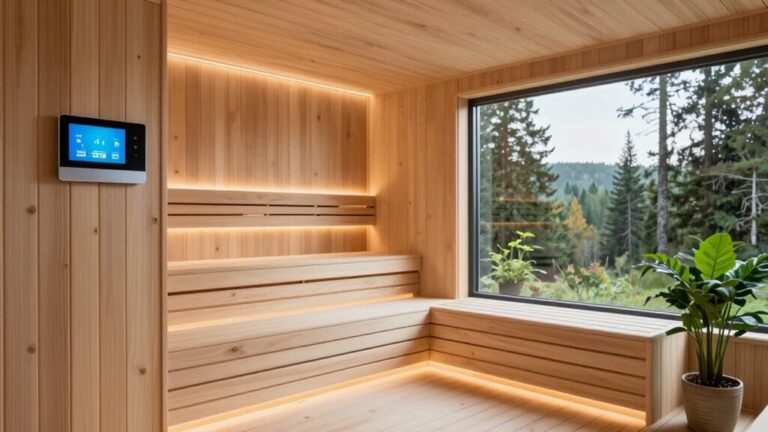
For maximum efficiency, pair these features with thermally treated wood that naturally retains heat and consider installing tiered benches that allow users to choose their preferred temperature level as heat rises to the upper portions of the sauna.
Environmental and Financial Benefits of Solar-Powered Saunas
You’ll enjoy considerable cost savings with a solar-powered sauna, as the initial investment typically pays for itself within a few years through eliminated electricity bills.
Your carbon footprint shrinks dramatically when you switch from grid electricity to solar power, preventing greenhouse gas emissions that contribute to climate change.
Going off-grid with a battery storage system means you can use your sauna anytime, regardless of weather or power outages, giving you true energy independence and peace of mind.
Long-term Cost Savings
Three compelling reasons make solar-powered saunas a smart long-term investment for homeowners.
After your initial installation costs, you’ll start seeing savings that compound over time, eventually reaching a break-even point in about 6-8 years for most setups.
- Your per-session costs drop dramatically – from $0.18-$1.53 per session with grid power to nearly zero once your system is paid off.
- Annual savings range from $100-$700 depending on your sauna type and usage frequency.
- Over 10 years, you could save $8,000-$15,000 compared to grid-powered operation.
- Battery storage lets you avoid expensive peak-hour electricity rates by shifting your sauna use to times when solar production is highest.
This investment becomes even more valuable in states like Arizona, where the average electricity price is 16 cents per kilowatt-hour, significantly increasing standard sauna operating costs.
Carbon Impact Reduction
Beyond the financial advantages, solar-powered saunas offer considerable environmental benefits that protect our planet while improving your wellness routine.
By eliminating fossil fuel dependence, your solar sauna produces zero greenhouse gas emissions during operation, directly combating climate change.
When you switch from a conventional electric sauna on a fossil fuel grid to a solar-powered system, you’re removing a notable carbon footprint from your wellness activities.
Your solar panels emit no harmful pollutants, creating a truly clean energy cycle for your relaxation time.
Solar saunas support the global renewable energy shift while cutting pollution levels compared to traditional power sources.
Pairing solar with energy-efficient designs like infrared technology or improved insulation further reduces your environmental impact, allowing you to enjoy guilt-free relaxation knowing you’re making a sustainable choice for our planet.
Off-grid Living Advantages
For households embracing off-grid living, solar-powered saunas deliver exceptional advantages beyond fundamental heating functionality.
When you’re away from utility grids, your sauna can remain a reliable luxury without the headaches of traditional power systems.
- Complete energy independence – Your sauna operates reliably even during storms or outages that would affect grid-connected properties.
- Zero fuel logistics – You’ll never worry about propane deliveries or diesel transport to remote locations, eliminating both hassle and expense.
- Predictable operating costs – After initial investment, your sauna’s operation becomes fundamentally free, with no monthly bills or fuel price fluctuations.
- Simplified maintenance – Solar + battery systems require minimal upkeep compared to generators that need regular servicing, oil changes, and mechanical repairs.
Smart Integration and Remote Control Systems
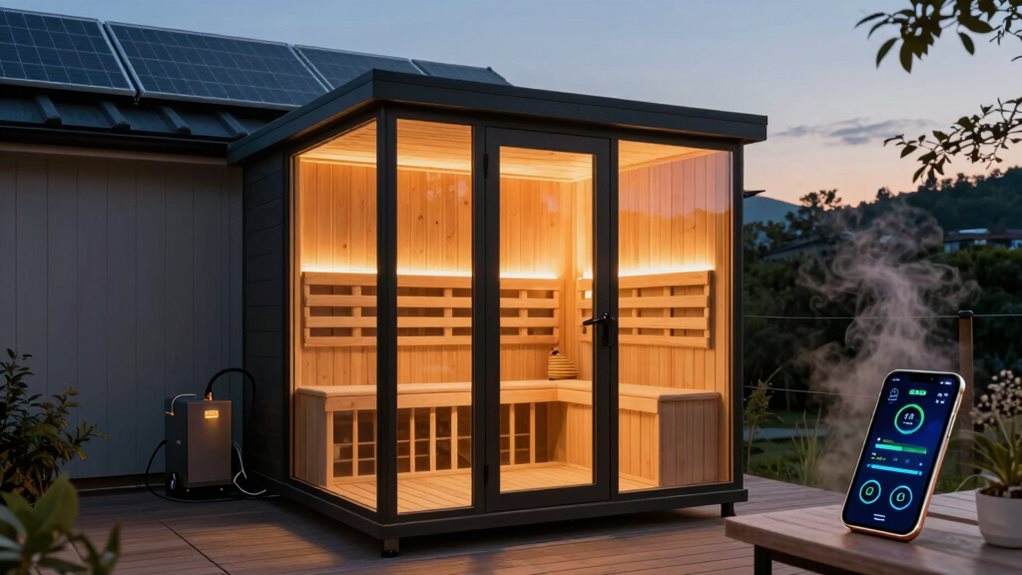
Smart integration and remote control systems have revolutionized how solar-powered saunas function in modern homes.
You’ll appreciate how these systems can schedule your sauna to preheat during peak sunlight hours, maximizing solar energy use.
With voice commands or smartphone apps, you can remotely activate your sauna while tracking real-time energy consumption.
WiFi-enabled panels like Harvia Xenio even monitor if your sauna door is open or closed.
Bluetooth connectivity in Kirami saunas links to free apps that display important system values including battery status and solar input.
Smart scheduling can extend your sauna sessions from 2-3 hours to 4-5 hours in sunny conditions.
Your system’s dashboard will show sunlight optimization patterns, while integrated battery storage guarantees you can enjoy evening sauna sessions using energy collected during daylight hours.
Maintenance Best Practices for Solar Sauna Components
While smart features improve your sauna’s efficiency, proper maintenance guarantees your solar-powered system will last for years to come.
Regular upkeep of both your sauna structure and power system assures safe operation and prevents costly repairs.
Routine maintenance saves money and ensures your sauna system remains safe and functional for years.
- Check your solar equipment quarterly – inspect combiner boxes, controllers, and inverters for loose connections or corrosion, tightening connections as needed.
- Maintain your battery bank monthly by checking charge levels, cleaning terminals, and following manufacturer’s guidance for your specific battery type.
- Clean wood surfaces after heavy use with sauna-safe cleaners, avoiding bleach or pressure washers that can damage the wood.
- Remove and clean sauna stones yearly, discarding any that are crumbling, and carefully restack them to guarantee proper airflow for ideal heating.
Frequently Asked Questions
Can Solar-Powered Saunas Work in Regions With Limited Sunlight?
Yes, they can work in low-sunlight areas through battery storage that captures excess energy on sunny days. You’ll need larger battery capacity and might consider hybrid systems for reliability.
How Do Extreme Cold Temperatures Affect Solar Sauna Performance?
Extreme cold reduces your solar panel efficiency, drains batteries faster, and forces your sauna to work harder. You’ll need thicker insulation, larger arrays, and protected batteries to maintain performance.
Are Permits Required for Installing Solar Panels for Saunas?
Yes, you’ll need permits for solar panel installations for your sauna. Requirements include building and electrical permits, with documentation of site plans, electrical diagrams, and structural load calculations.
Can Existing Traditional Saunas Be Converted to Solar Power?
Yes, you can convert your existing traditional sauna by adding photovoltaic panels and batteries. You’ll need an inverter to transform the DC power from solar to AC for your heater.
What Happens When Battery Capacity Depletes During a Sauna Session?
Your sauna will shut down mid-session as battery power depletes. You’ll need to exit, allow the system to recharge, or switch to backup power to continue.
Final Thoughts
You’ve discovered how to power your sauna sustainably with solar energy and batteries. By matching your system to your sauna’s needs, you’ll enjoy heat even when the sun isn’t shining. The initial investment pays off through lower energy bills and reduced environmental impact. With proper maintenance and smart controls, your solar-powered sauna will provide years of relaxation while keeping your carbon footprint small.