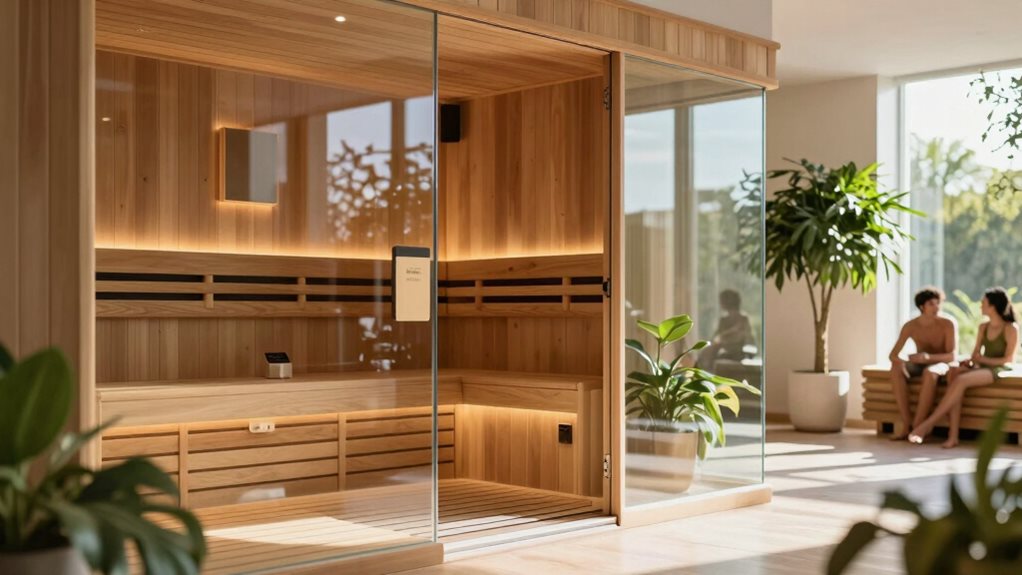

Sauna access is a hot perk in premium gym memberships! It adds value by helping you relax, recover from workouts, and even improve your sleep quality. Imagine stepping into a warm sauna after a tough session—it’s like a mini-vacation for your muscles! Sure, saunas have some setup and maintenance costs, but they boost member satisfaction and can set your gym apart from competitors. Want to discover more about the awesome benefits of sauna access?
The Role of Sauna Access in Membership Tiering

When you think about what makes a gym special, having access to a sauna might just be the cherry on top. Imagine sweating out stress after a workout, feeling rejuvenated and relaxed—sounds great, right?
Saunas play a crucial role in membership tiering because they attract folks who value wellness. Many gyms offer different levels of membership, and access to a sauna often comes with the premium packages. This not only draws in serious fitness enthusiasts but also appeals to casual users looking for relaxation.
When you see a sauna, you might think, “Yes, this is the gym for me!” Ultimately, offering saunas can boost retention rates and keep you engaged in your fitness experience. Who wouldn’t want that?
Cost Considerations for Sauna Implementation
Implementing sauna facilities in a gym brings both exciting benefits and considerable costs. Before diving in, consider these financial factors:
Implementing sauna facilities in a gym offers enticing advantages but also considerable costs that must be carefully considered.
- Installation costs: Traditional saunas range from $6,000 to $11,000, while infrared models cost $4,400 to $9,000.
- Full install expenses: Accounts for benches, heaters, and ventilation, spiraling budgets to $15,000–$50,000.
- Higher ongoing expenses: Traditional saunas use 4.5–6 kW, driving energy bills up, compared to 1.5–3 kW for infrared options.
- Routine maintenance: Regular cleaning and servicing can raise operational costs.
- Compliance fees: Meeting safety and accessibility standards often adds unexpected charges.
Being aware of these cost considerations helps you make informed decisions while planning your gym’s offerings, guaranteeing both value and enjoyment for your members.
Member Perceptions and Value of Sauna Benefits
Saunas can feel like a secret weapon for gym-goers hoping to elevate their workout recovery. With many members viewing saunas as valuable tools, you might find they help reduce muscle soreness and speed up recovery after intense workouts. A good number of folks even use saunas to ease back and joint pain, leading to greater satisfaction with their overall fitness routine. Plus, if you’ve ever enjoyed a good night’s sleep after a sauna session, you’re not alone; about 83.5% of users report improved sleep quality! Members often see saunas as a way to boost circulation and amplify caloric burn, making them a great complement to workouts—even contributing to long-term heart health. Additionally, regular sauna use has been linked to enhanced immune system functioning and decreased chronic inflammation. So, why not give it a try?
Types of Saunas and Their Pricing Impact
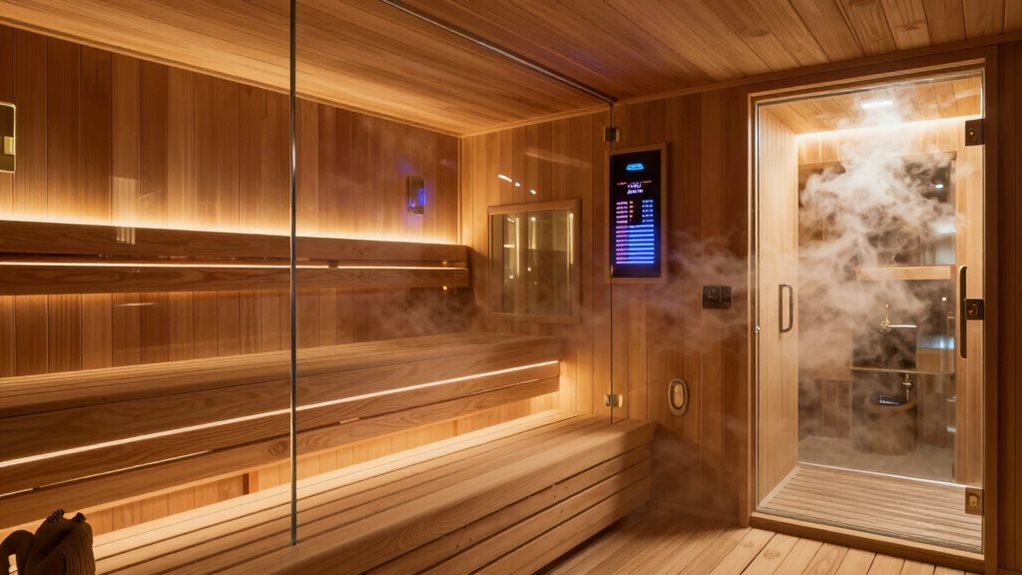
When it comes to saunas, the type you choose can really impact your gym experience and costs. Traditional saunas, with their high heat and cozy atmosphere, may carry higher installation bills due to their heating systems, while infrared saunas offer a budget-friendly option that warms you up without cranking the temperature too high. Additionally, considering the efficiency and maintenance of each sauna type is crucial, as infrared saunas may require less upkeep and have lower operating costs.
Traditional Saunas Costs
If you’re considering adding a traditional sauna to your home, you might be surprised by the range of prices and options available. Here’s what to expect:
- Price Range: Traditional saunas range from $3,000 to $11,000 based on size and materials.
- Heater Types: Choose between electric or wood-burning heaters for different sauna experiences.
- Installation Costs: Be prepared for higher installation costs, especially if you need electrical or chimney work.
- Models and Materials: Mid-range models typically cost between $4,500 and $6,500, while custom builds can exceed $10,000.
- Barrel Saunas: These can be more affordable, priced from $3,000 to $8,000, making them an efficient option for outdoor use.
Infrared Sauna Pricing
While exploring the world of infrared saunas, you might find it fascinating how pricing varies based on size, features, and models.
For example, single-person units range from $1,500 to $3,000, perfect for cozy spaces. If you’re eyeing a two-person model, expect to pay around $2,500, while a family-sized sauna can cost between $4,000 and $8,000.
Mid-range options offer extras like Bluetooth and better ventilation, priced from $2,500 to $4,500. On the other hand, high-end saunas with advanced features can exceed $10,000.
Don’t forget the operating costs, averaging $10 a month, which is much lower than traditional saunas.
With so many choices, you’re sure to find an infrared sauna that fits your budget!
Health and Safety Regulations Affecting Sauna Access

Sauna access comes with a set of important health and safety regulations designed to keep you safe and comfortable during your relaxation time. Understanding these rules helps guarantee a pleasant experience.
Here are some key points to remember:
- Limit your sauna time to 15-20 minutes to avoid dehydration.
- Always shower before using the sauna to maintain hygiene.
- Youth under 17 needs a parent or guardian present.
- Avoid using the sauna if you have heart disease or high blood pressure.
- Facilities must provide slip-resistant floors and accessible features.
Following these guidelines isn’t just about rules—it’s about making your sauna visits enjoyable and safe!
Metrics Used to Justify Premium Pricing
When it comes to premium gym pricing, understanding key metrics can really help you see the value.
Member retention rates and visit frequency increases show how happy and engaged members are, while ancillary revenue generation highlights the potential for extra services.
Member Retention Rates
Member retention rates play a crucial role in justifying premium gym pricing, as they directly reflect how well a gym keeps its members engaged and satisfied.
These metrics show the value of premium services like sauna access, making them more than just a luxury. Here are key retention metrics to evaluate:
- Annual retention rate averages around 60-71%.
- Churn rate, or cancellation percentage, helps estimate revenue risk.
- Average member lifetime lasts about 3.0–3.3 years.
- Net Revenue Retention indicates growth through upgrades.
- Monthly active usage measures how often members utilize premium features.
Visit Frequency Increases
Gym visits are more than just numbers; they’re essential for understanding how often you and other members engage with the club’s offerings.
Premium-tier members, for instance, visit four or more times a week, averaging around 16 visits a month. In contrast, budget members typically check in just 2.5 to 3 times monthly. This difference matters!
Higher visit frequencies support premium pricing because they show you’re getting value for your money, especially if you’re taking advantage of amenities like saunas.
Clubs also analyze metrics like average visits per member to tailor their offerings. When you visit more, you’re less likely to churn, making it a win-win for both you and the gym, while boosting potential revenue for the club!
Ancillary Revenue Generation
As gym visits increase, clubs look for ways to maximize revenue beyond just membership fees.
They tap into ancillary revenue streams that not just improve your experience but also contribute greatly to the gym’s bottom line.
Here’s how gyms justify their premium pricing:
- Personal training sessions, often seeing gross margins over 70%
- Specialty classes like HIIT and yoga, with margins frequently above 60%
- Retail sales of supplements and gear, with margins ranging from 30-60%
- Premium amenities such as saunas and massages, which can be strong revenue sources
- Digital products like on-demand classes, boasting high margins once developed
These metrics help gyms determine how best to price their offerings while improving your workout experience!
Competitive Edge: How Saunas Differentiate Gyms
When you think about what makes a gym stand out, saunas might merely be the first thing that comes to mind, but they can really set a fitness center apart from the competition.
Nearly 20% of gym members consider saunas a key part of their membership. This low-cost perk improves member satisfaction, offering a complete fitness experience.
Gyms with saunas attract a broader audience, from athletes to wellness enthusiasts, giving them leverage over local competitors. It’s not solely about working out; it’s about recovery too!
Members who enjoy sauna access tend to stick around longer, making these facilities crucial for retention. If you want to feel good and keep coming back, saunas could be the perfect addition to your gym routine.
Frequently Asked Questions
How Often Should Saunas Be Cleaned and Maintained?
You should clean and maintain saunas daily, weekly, monthly, and annually. Daily tasks include wiping surfaces, while monthly deep-cleaning and annual inspections guarantee safety and hygiene for a consistently enjoyable experience.
Are There Age Restrictions for Using Saunas?
Yes, there are age restrictions for using saunas. Generally, children under 12 need supervision, while those under 18 can only access saunas during authorized activities with a guardian, guaranteeing safety and adherence to health guidelines.
Can I Use the Sauna Before or After Workouts?
You can use the sauna after workouts for recovery benefits, but if you choose to go before, limit it to 5–10 minutes to avoid impairing your performance. Hydration is essential in both cases.
What Is the Maximum Capacity for Sauna Use?
The maximum capacity for sauna use varies based on size. Generally, a 2-person sauna fits 6-10 square feet, while larger ones accommodate more people. Always check specific regulations for your gym’s sauna capacity.
Do Saunas Require Reservation for Access?
Yes, most saunas require you to make a reservation for access. It’s crucial to check specific policies at your gym or spa, as they may have unique requirements for booking and cancellations.
Final Thoughts
To sum up, sauna access isn’t merely a luxury; it’s a valuable aspect of many premium gym memberships. By understanding how saunas improve your workout experience, you can see why they often come with a higher price tag. It’s more than just relaxation; saunas can boost your health and workout recovery. So next time you’re considering a gym, think about what sauna access brings to the table—it might very well be worth every penny!