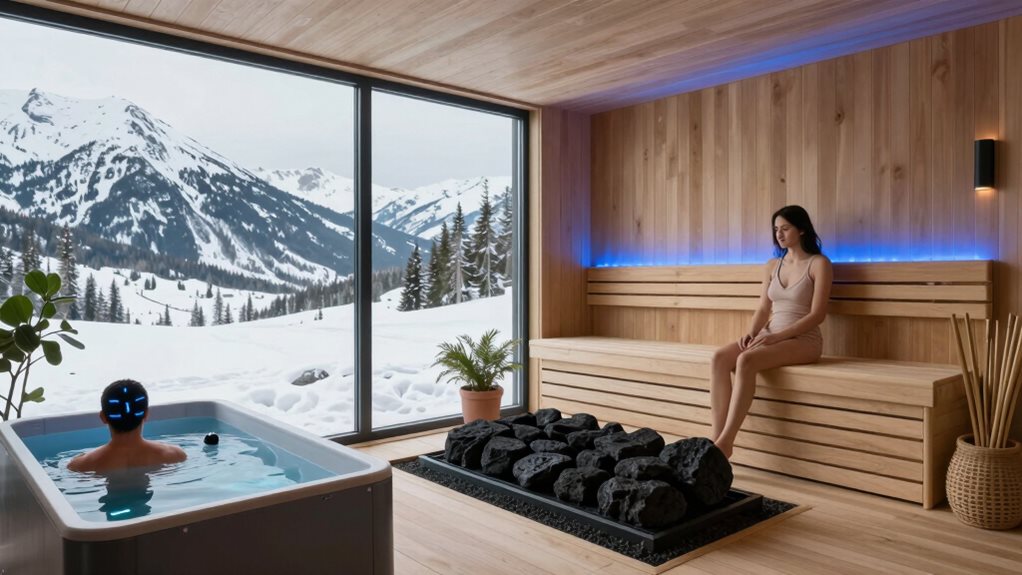

In 2024, standout sauna facilities blend community programming with tech-driven personalization. You’ll find membership models offering themed sessions and partnerships with local practitioners. Smart technology lets you control your environment via smartphone while integrated wellness pathways combine traditional saunas with cold plunges for maximum benefits. Sustainability features like reclaimed woods and solar power demonstrate environmental commitment, while tiered pricing models optimize revenue. These innovations transform simple heat therapy into thorough wellness experiences.
The Evolution of Sauna Spaces: From Private Experience to Wellness Community
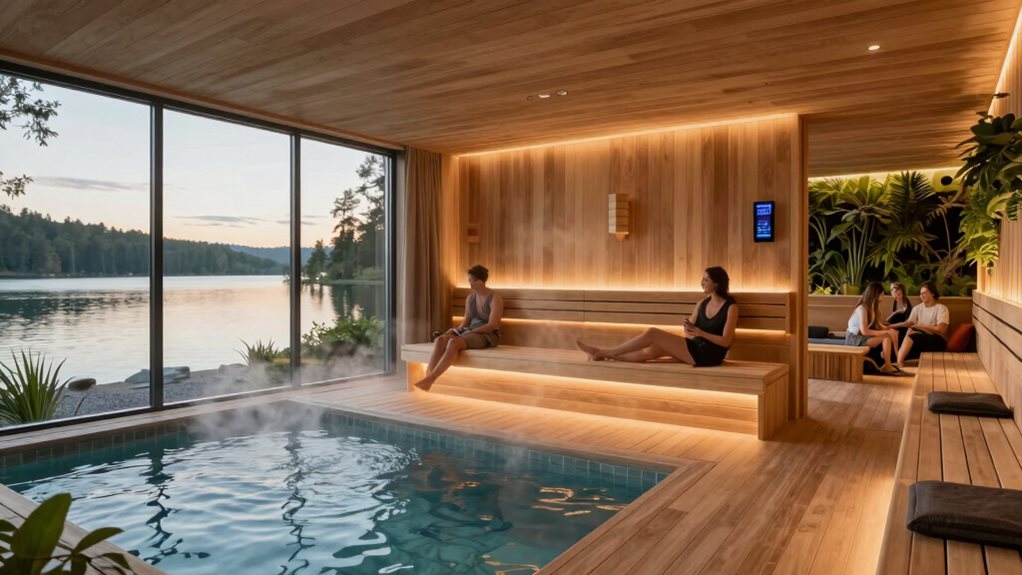
While traditional saunas were once primarily solitary retreats, today’s modern facilities have transformed into vibrant wellness communities that foster both personal healing and social connection.
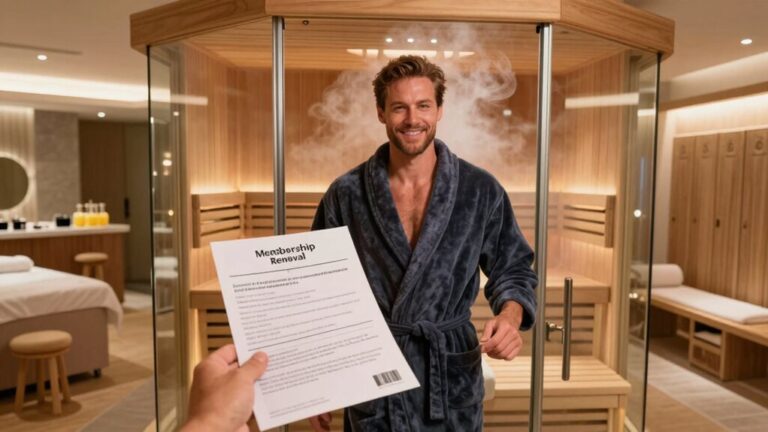
You’ll find that membership models with scheduled group sessions now create regular social touchpoints that boost retention and your overall experience.
What makes these spaces special is their thoughtful programming—themed sessions like recovery nights, mindfulness mornings, or traditional Aufguss ceremonies give you distinct experiences to enjoy repeatedly.
Many facilities partner with local wellness practitioners to offer bundled services like massage therapy and breathwork coaching.
The addition of event-style activities—sound baths, educational talks, and community challenges—turns these spaces into alcohol-free “third spaces” where you can socialize while improving your well-being.
Technology-Driven Personalization: Smart Controls and Immersive Environments
In today’s high-tech wellness facilities, the sauna experience has been revolutionized through smart technology that puts you in complete control of your environment.
You’ll enjoy the convenience of adjusting temperature and humidity from your smartphone, or simply asking Alexa to “increase sauna heat by five degrees” while you relax.
Smart temperature management systems guarantee your comfort with precision heating that adapts to different zones within the sauna.
Experience personalized wellness with intelligent sauna systems that deliver precise, zoned heating for ultimate comfort.
Meanwhile, health monitoring integration connects with your wearables to track your heart rate and customize sessions based on your body’s response. AI analysis of this data provides recovery recommendations tailored to your specific physiological needs.
For a truly immersive experience, you can personalize your sensory environment with chromotherapy lighting that shifts between calming blues and energizing yellows, while built-in diffusers release eucalyptus or lavender to improve your respiratory benefits and mental relaxation.
Integrated Wellness Journeys: Creating Multi-Modal Thermal Experiences
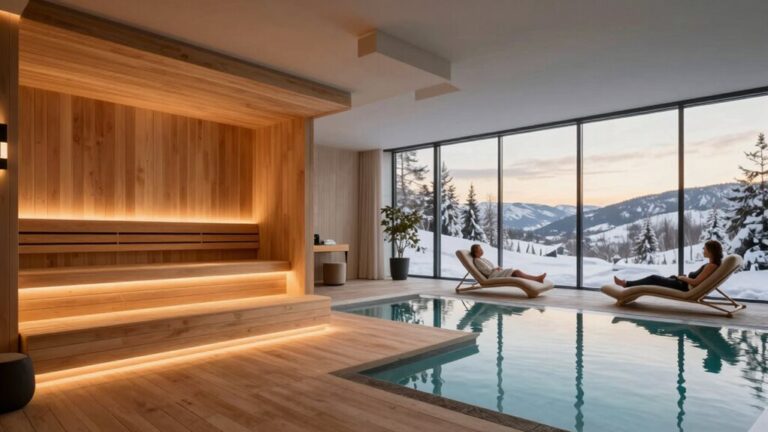
Modern wellness facilities have revolutionized the traditional sauna experience by creating carefully designed, multi-stage thermal odysseys that take you through different temperature zones for maximum health benefits.
You’ll find yourself moving through a thoughtfully sequenced expedition: starting in a high-heat traditional sauna (70-100°C), followed by a rejuvenating cold plunge (0-15°C), and finishing with a gentle infrared session. These contrasting temperatures boost recovery and create that invigorating feeling you crave.
Many facilities now incorporate aromatherapy and chromotherapy—imagine breathing in energizing citrus scents during cold immersion or relaxing with calming lavender in recovery lounges.
The spaces themselves are designed for easy flow, with clear pathways guiding you from hot zones to cold immersion and finally to comfortable recovery areas, all while maintaining proper hygiene and comfort between shifts.
Sustainability as a Core Value: Eco-Conscious Design and Operations
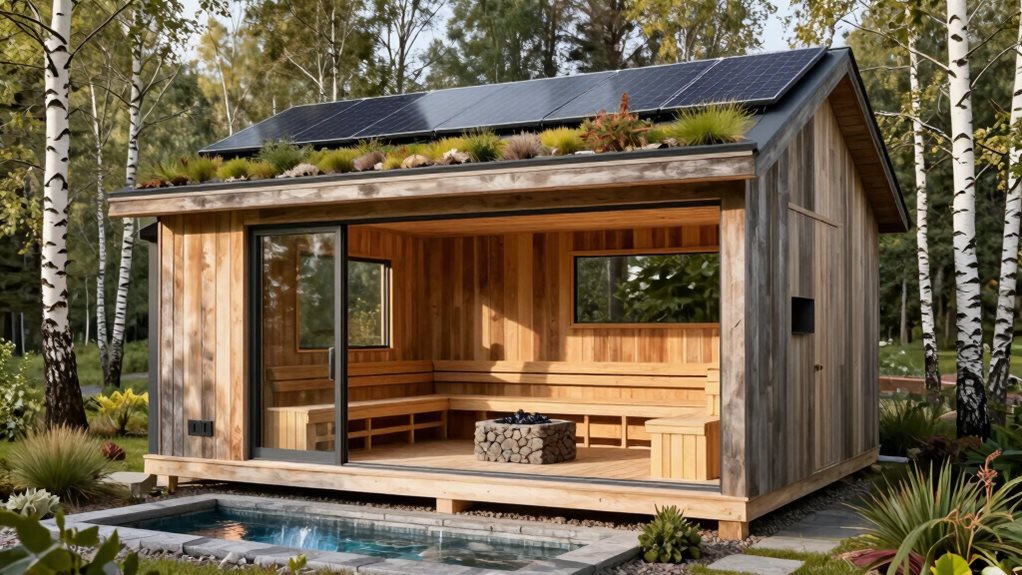
Today’s sauna market has evolved dramatically, transforming sustainability from a marketing buzzword into a fundamental design principle that drives the entire wellness industry.
You’ll find reclaimed cedar and hemlock replacing conventional options, offering natural insulation and aromatic benefits without depleting new resources.
When you install a sauna in 2024, you’re likely choosing low-energy infrared panels or solar-powered systems like Solaris that heat to 170°F in just 30-40 minutes with zero ongoing energy costs.
These eco-conscious designs feature clean lines and seamless indoor-outdoor integration, creating serene spaces that harmonize with nature.
The industry shift is clear: eco-friendly materials are now standard rather than optional.
Thermally modified woods treated with heat instead of chemicals deliver durability while supporting your wellness goals and the planet’s health.
Revenue Optimization: Membership Models and Experience-Based Pricing
While sustainability modernizes sauna design, smart revenue strategies transform how wellness facilities structure their pricing. You’ll find that the most successful saunas now offer three distinct membership tiers—Basic, Standard, and Premium—creating clear value anchors that boost conversions.
Your facility can maximize revenue by implementing dynamic pricing that offers discounts during slow periods and premium rates at peak times. Consider bundling high-margin amenities like private saunas and recovery lounges into premium packages, while also offering à la carte options for special experiences like guided thermal expeditions or contrast therapy.
The hybrid approach works best: a subscription base for regular access plus optional add-ons like sound baths or IV therapy. Offering flexible contracts—monthly, annual, or prepaid—helps you capture different customer segments while maintaining steady cash flow.
Frequently Asked Questions
What Medical Conditions Make Sauna Use Unsafe or Require Physician Approval?
You shouldn’t use saunas with uncontrolled hypertension, recent heart attack, severe heart failure, MS, epilepsy, fever, pregnancy, recent injuries, or while taking blood thinners without doctor approval.
How Do Liability Insurance Requirements Differ for Traditional Versus Infrared Saunas?
Traditional saunas face higher insurance premiums due to fire risks, requiring more fire/property coverage. You’ll need less coverage for infrared saunas, though you’ll still need liability protection for heat-related injuries with both types.
What Specific Certifications Should Staff Have for Sauna and Hydrotherapy Supervision?
You’ll need staff certified in CPR, first aid, and basic safety. For hydrotherapy, pursue I-ACT certification or Aquatic Therapy credentials depending on services. State-specific supervision requirements may apply.
How Do Local Building Codes Affect Sauna Installation and Ventilation Requirements?
You’ll need permits for saunas over 120 sq. ft., with electrical compliance requiring dedicated 240V circuits. Local codes dictate ventilation standards, safety features, and accessibility requirements including proper clearances and doorways.
What Privacy Measures Protect Guests During Gender-Inclusive or Clothing-Optional Sessions?
You’ll find private changing stalls, designated all-gender days, enforced towel policies, clear boundary guidelines, and staff trained to handle complaints while respecting your dignity and personal space.
Final Thoughts
Your sauna facility’s success in 2024 hinges on creating a community space where technology improves, rather than replaces, human connection. By offering personalized, multi-sensory experiences within sustainable environments, you’ll attract today’s wellness-conscious consumers. Remember, it’s not only about heat anymore—it’s about crafting transformative experiences that people value enough to support through memberships and premium offerings. The most successful facilities blend tradition with innovation, comfort with adventure.