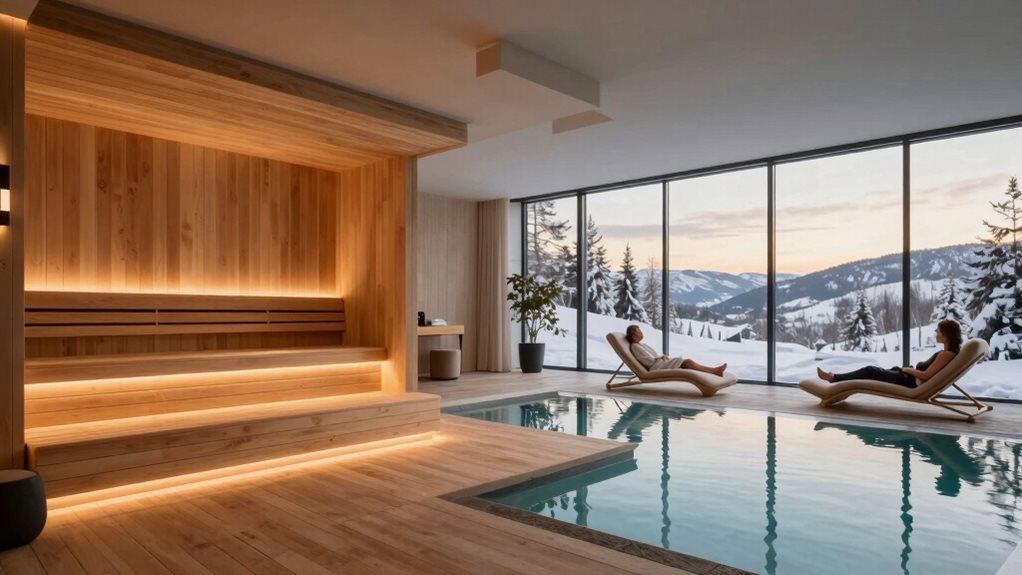

Real estate projects are transforming spa and sauna spaces from luxury add-ons to crucial wellness hubs. You’ll find developers integrating smart technology that pre-heats facilities before your arrival and creating contrast therapy circuits with hot saunas paired with cold plunges. These wellness amenities now command 10-25% price premiums and higher rental rates, with buyers willing to pay 8-12% more for these features. Discover how these spaces blend indoor-outdoor elements for a complete wellness experience.
The Wellness Revolution in Luxury Property Development
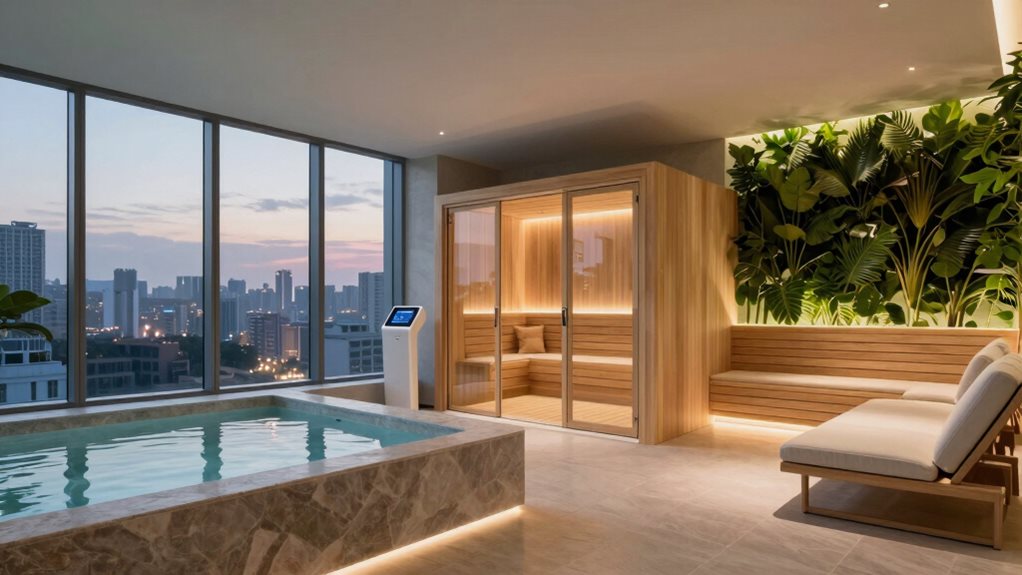
As luxury property development evolves, wellness amenities have transformed from mere extras to vital features that define premium living spaces. You’ll now find shared organic gardens, meditation pavilions, and scenic walking trails in today’s upscale developments.
What’s remarkable is how these wellness-focused properties command 10-25% price premiums in residential markets and 4.4-7.7% higher rental rates per square foot in commercial spaces. The market is responding powerfully, with wellness real estate expected to double from $584 billion to $1.1 trillion by 2029.
Wellness-focused properties aren’t just premium living—they’re premium investments driving extraordinary market growth.
The concept of wellness has expanded beyond physical health to include mental, social, and civic wellbeing. Today’s luxury isn’t about excess—it’s about essence.
Developers are creating spaces that prioritize foundational rituals for quality of life, blending exclusivity with community connection.
Architectural Integration: Designing High-Performance Spa Spaces
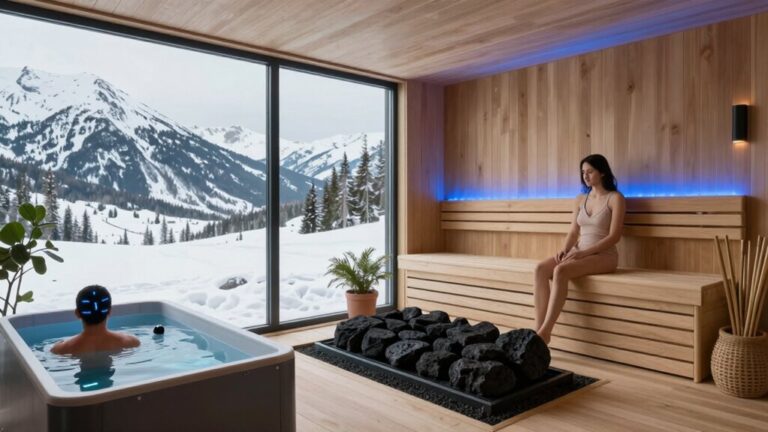
You’ll notice how today’s premier spas blend indoor and outdoor elements through expansive windows, natural stone thresholds, and accessible terraces that connect guests to nature.
The strategic placement of windows allows natural light to flood wellness suites while maintaining privacy through frosted glass, automated blinds, or strategic positioning away from public areas.
These light-optimized spaces not only decrease energy consumption but additionally align with circadian rhythms, creating environments where your body naturally relaxes and rejuvenates.
Seamless Indoor-Outdoor Flow
Creating a seamless indoor-outdoor flow transforms ordinary spa and sauna spaces into extraordinary wellness experiences where guests can connect with both controlled thermal environments and natural elements.
You’ll notice thoughtful positioning of spa components along gentle pathways that lead from saunas to outdoor plunge pools, minimizing circulation distance while maximizing the sensory expedition.
High-performance glazing and operable door systems allow for stunning views and natural ventilation without compromising thermal efficiency.
When you step from an indoor steam room onto an outdoor terrace, you’ll hardly notice the shift thanks to consistent materials like porcelain tile or thermally modified wood that extend across thresholds.
Complementary color palettes and strategic plantings further blur the boundaries, creating spa environments where natural elements become part of the therapeutic experience, regardless of season.
Light-Optimized Wellness Suites
Light-optimized wellness suites transform the traditional spa experience through architectural designs that harness daylight’s powerful healing effects.
You’ll find these spaces strategically oriented to capture morning and midday sun, with carefully placed windows that align with your body’s natural rhythms.
Modern spas now incorporate skylights and light wells that channel sunshine deep into interior spaces, while intelligent shading systems block harsh summer glare but welcome gentle winter rays.
Your treatment expedition flows through thoughtfully zoned spaces, progressing gradually between bright and dim areas for visual comfort.
Behind the scenes, designers use advanced computer modeling to predict exactly how light will move through these spaces.
When natural light fades, tunable LED systems take over, shifting color temperature throughout the day to maintain your body’s natural circadian cues.
From Amenity to Necessity: Changing Buyer Expectations
You’ll notice that spa and sauna features have transformed from luxury extras to expected standards in today’s high-end properties.
Buyers are willing to pay 8-12% premiums for homes equipped with these wellness amenities. Your potential buyers now view these thermal features as crucial infrastructure for their health routines, rather than merely occasional indulgences, especially following the pandemic’s push toward home-based wellness solutions.
The baseline has permanently shifted upward, with even mid-market properties incorporating simplified versions of these once-exclusive features to meet the new minimum threshold of buyer expectations.
Wellness-Centered Value Proposition
The seismic shift in wellness perception has transformed spas and saunas from luxury indulgences to fundamental components of modern living spaces.
You’re witnessing a marketplace where wellness isn’t just desired—it’s expected and valued financially. Properties with major wellness amenities command notably higher revenues, with luxury wellness properties achieving $561 TRevPOR, 67.5% greater than minor wellness counterparts.
Your priorities have evolved, with sleep quality now outranking traditional amenities in booking decisions.
This change isn’t just preference—it’s reflecting in your willingness to pay premium prices for health-enhancing features.
Developers are responding with sophisticated offerings: private saunas for muscle recovery, infrared therapy beds for healing, and voice-controlled meditation pods that integrate seamlessly with your daily routine.
These aren’t luxuries anymore—they’re crucial components of spaces designed for optimal living.
Upward Shifting Baseline Standards
What was once considered a luxury indulgence has now become an essential requirement in high-end real estate, as saunas and spa facilities rapidly transform from optional perks to non-negotiable features.
You’ll now find homebuyers prioritizing health and relaxation amenities over sheer square footage, with wellness suites becoming standard in premium properties.
The market reflects this shift, with luxury sauna sales projected to grow by over $150 million between 2025 and 2029.
High-net-worth individuals increasingly expect their homes to rival world-class retreats, featuring integrated sauna experiences with smart technology and energy-efficient designs.
This evolution isn’t temporary—it represents a fundamental change in how we define luxury living.
Modern properties now incorporate glass-walled saunas, infrared technology, and custom wellness areas that combine functionality with sophisticated aesthetics.
Contrast Therapy Circuits: The New Standard in Home Recovery
As wellness technology rapidly evolves, contrast therapy circuits have emerged as the gold standard for in-home recovery systems.
You’ll find luxury buildings now featuring dedicated spaces where you can cycle between hot saunas and cold plunges, delivering the same benefits elite athletes have enjoyed for years.
These contrast therapy circuits work by alternating heat and cold to dilate and constrict your blood vessels, flushing out toxins and bringing fresh nutrients to tired muscles.
You’ll recover faster from workouts, reduce inflammation, and experience improved mental clarity—all without leaving your building.
Developers are responding to residents’ desires for extensive wellness solutions that address both physical and mental health.
Whether you’re healing from an injury, managing chronic pain, or simply improving your daily wellness routine, these in-building contrast therapy options represent the new frontier in residential amenities.
Smart Technology & Sustainability in Modern Wellness Suites
Modern wellness suites have undergone a remarkable transformation, integrating smart technology with sustainable practices to create personalized spa experiences.
You’ll find your sauna or steam room pre-heated before your arrival, thanks to automated systems that improve efficiency and reduce wait times.
Smart buildings now remember your preferences—from temperature settings to music playlists—and can adjust environments based on your biometrics.
Today’s intelligent wellness spaces learn and adapt to you, creating a truly personalized sanctuary experience.
With mobile apps, you can reserve your session time, avoiding crowds and optimizing your experience.
Behind the scenes, energy recovery systems capture heat from saunas to warm domestic water, while high-performance insulation and infrared technology diminish energy consumption.
Advanced air filtration systems with HEPA filters and UV-C technology guarantee you’re breathing clean air, even in humid environments.
These innovations create healthier, more sustainable wellness spaces while reducing operational costs.
ROI Analysis: The Business Case for Premium Spa Amenities
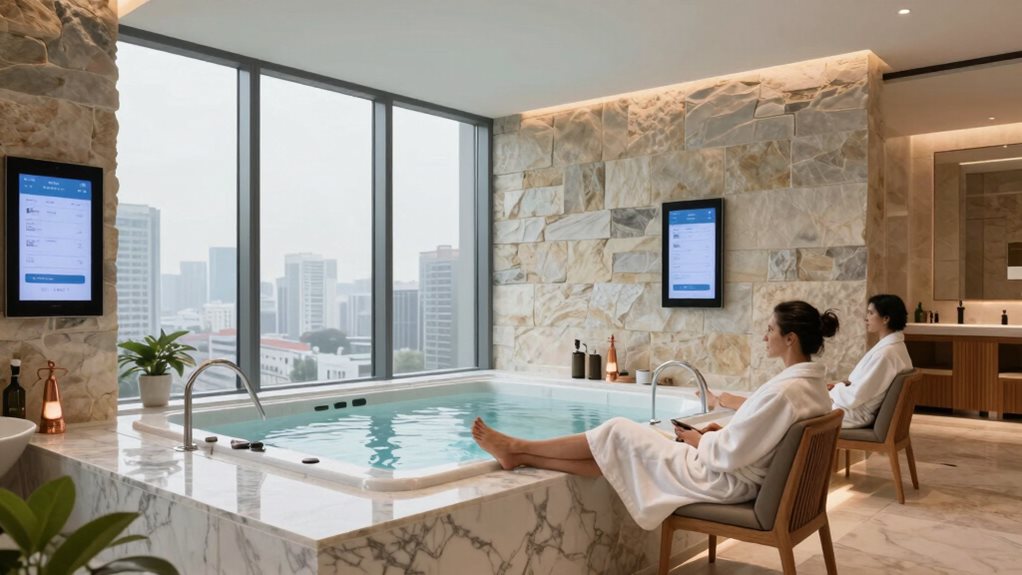
While wellness amenities might seem like luxury additions, the financial returns they generate make them essential investments in today’s competitive real estate market.
The numbers tell a compelling story: properties with wellness features command 10-25% price premiums, and hotels with wellness integration see a 15% increase in average daily rates.
You’ll find the profit margins particularly attractive, as specialized installations like steam showers and saunas justify premium pricing while reducing operating costs.
Thermal facilities, retail spaces, and recovery zones deliver the fastest ROI, while extensive wellness concepts yield a 19% increase in net operating income.
When you’re planning your next development, consider that Zillow data shows wellness features increasing home values by 31% – making these amenities smart investments rather than optional luxuries.
Frequently Asked Questions
How Do Residents Schedule Shared Sauna Spaces in Multi-Unit Buildings?
You’ll book shared saunas through mobile apps like Flexybox or TWICE, receiving digital access codes. These platforms show real-time availability, accept payments, and send automated reminders for your sessions.
What Are Typical Maintenance Costs for Private In-Home Saunas?
You’ll spend about $250 annually on your home sauna maintenance. Infrared units cost less ($100-$250) than traditional ($150-$350) or hybrid models ($200-$400). Outdoor saunas require higher upkeep due to weather exposure.
Can Existing Buildings Retrofit Saunas Without Major Structural Changes?
Yes, you can retrofit saunas into existing buildings without major structural changes. You’ll only need proper insulation, vapor barriers, ventilation systems, and appropriate electrical connections for the heater installation.
How Do Spa Amenities Affect Insurance Premiums for Property Owners?
You’ll face higher premiums due to increased liability risks, property damage concerns from moisture, specialized equipment costs, and expanded workers’ compensation needs for spa operations in your building.
Are Infrared Saunas More Energy-Efficient Than Traditional Steam Options?
Yes, infrared saunas are considerably more energy-efficient. You’ll use about one-third to one-half the electricity compared to traditional saunas, thanks to lower power draw and faster heating times.
Final Thoughts
You’re witnessing a wellness revolution in real estate, where spas and saunas have evolved from luxury perks to expected features. Today’s developments seamlessly blend architectural innovation with recovery-focused amenities like contrast therapy circuits. Smart technology improves these spaces while maintaining sustainability. As buyer expectations continue to shift, developers who invest in premium wellness offerings aren’t just creating healthier buildings—they’re making smarter financial decisions with proven returns.