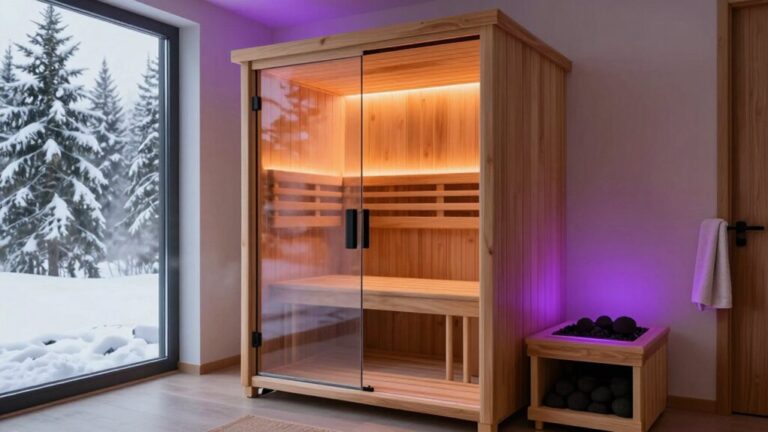
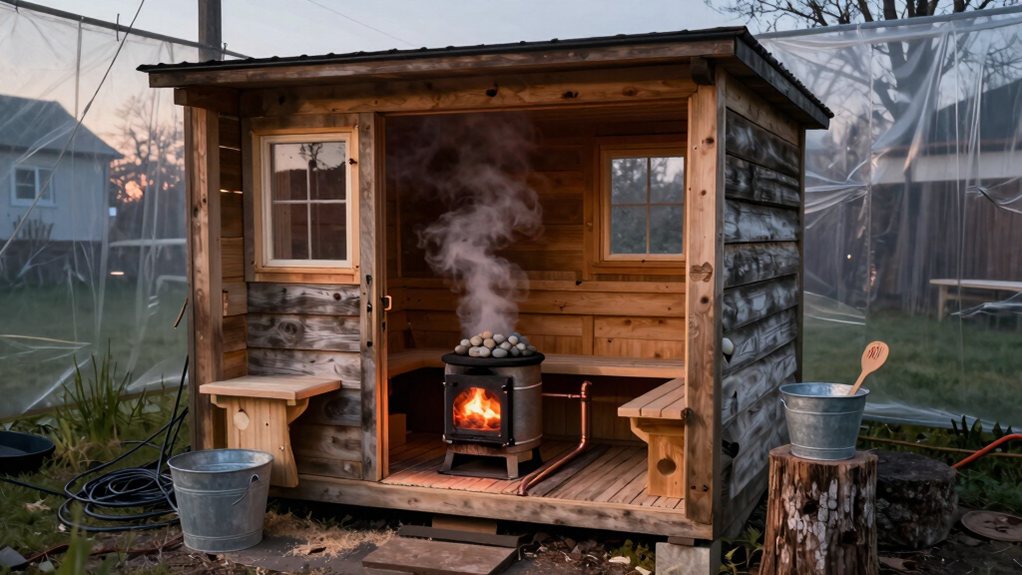

You can build a cheap sauna for under $500 by starting with a portable tent option or gathering reclaimed wood, though most sturdy DIY builds run closer to $800–$900 when you factor in proper insulation and a reliable heater.
Tent saunas like the Smartmak ($170) get you sweating fast, while salvaged lumber cuts material costs if you don’t mind extra labor. A gravel base foundation takes just one weekend, and matching your electric heater to existing outlets avoids pricey electrician fees.
Want to turn that weekend project into a sweat-worthy retreat that lasts? The details below will show you how.
Set Your Realistic Sauna Budget: From $500 DIY to $2,000 Kits
Although $500 might sound like a tempting target for your sauna build, you’ll quickly discover that this figure barely scratches the surface of what a safe, functional sweat space actually requires. You’ll need lumber, insulation, a vapor barrier, door hardware, and a heater: costs that push most builds well past this ceiling.
If you’re resourceful with reclaimed materials and an existing structure, you might scrape by around $400–$500, but you’ll sacrifice durability and finish quality. A more realistic “cheap but usable” target sits at $800–$900, where you’ll find better heaters and sturdier construction. However, if immediate sweat sessions are your priority, portable sauna blankets starting at $170 offer a plug-and-play alternative while you save for your permanent build. For those seeking a middle ground between blankets and full construction, portable steam sauna tents provide an enclosed, seated experience starting around $149 without any building required.
For $1,000–$1,500, you can build something genuinely complete with proper ventilation and weatherproofing. At $2,000, kits offer packaged convenience without the scavenger hunt. Choose your budget wisely, and sweat happy.
Start With the Cheapest Working Option: Tent Saunas Under $500
If you’re itching to start sweating without draining your wallet, a tent sauna under $500 is your fastest, cheapest ticket into the sauna world.
Think of it as the bicycle of saunas: simple, portable, and it gets you there.
The Smartmak runs about $170, giving you machine-washable cotton and a foot heating pad.
Step up to the SereneLife at $194, and you’ll snag a chair plus 5,000+ reviews from fellow beginners.
Want something sturdier? The Overland at $299 weighs under 27 pounds and includes a stove jack for wood-fired heat.
The Overland delivers real durability at 27 pounds, with a stove jack for that authentic wood-fired heat you actually want.
These aren’t forever saunas, they’re starter saunas.
You’ll trade premium materials for lightweight convenience, and temperatures vary from 140°F to 176°F depending on the model.
But you’ll sweat, you’ll save, and you’ll learn what you actually want in your next upgrade.
Upgrade to a Barrel Sauna Kit or Build Custom With Reclaimed Wood
Once you’ve sweated through a few sessions in your tent sauna, you’ll probably start wondering what comes next. You’ve got two solid paths forward, and both keep your wallet happy.
Barrel sauna kits arrive flat-packed, like oversized furniture from a store. You skip the tricky framing, since the curved walls come pre-cut. Barrel saunas heat faster than box cabins thanks to their cylindrical design, so you’ll spend less on electricity over time. Most kits deliver within 2–3 weeks anywhere in the continental USA, so you won’t wait long to start building.
Electric or wood-burning options let you pick what works for your yard and budget.
Just remember: level ground matters, or you’ll be fighting wobbles forever. Gravel or paving stones beat expensive concrete pads.
Feeling handy? Reclaimed wood slashes material costs: think barn boards or demolition salvage.
You’ll work harder, though, pulling nails and sorting warped pieces.
Stick to benches and trim, not structural walls, and you’ll dodge moisture headaches down the road.
Select an Electric Heater and Skip the $500 Electrician Bill
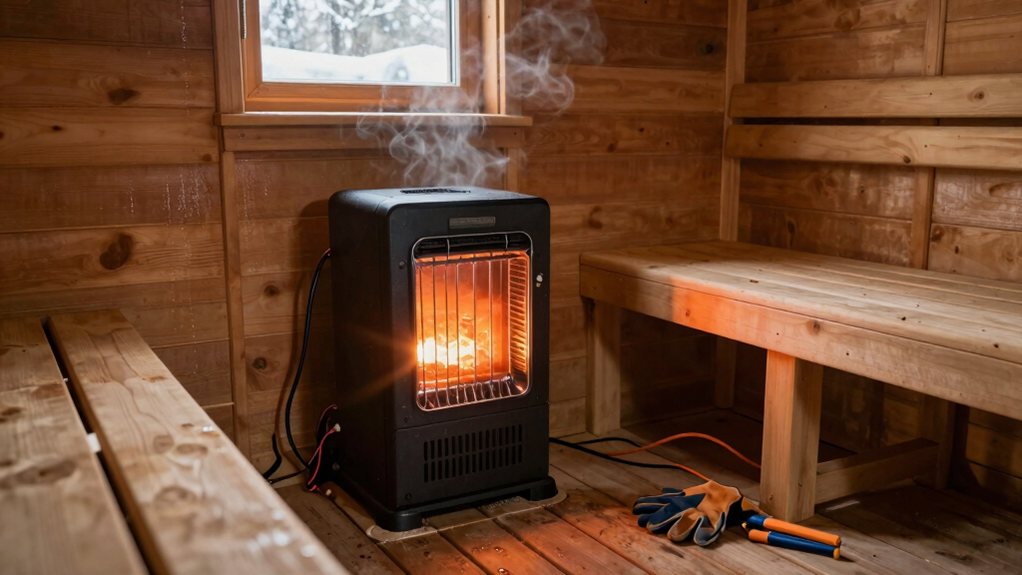
When you’re ready to swap out that wood stove for something simpler, picking the right electric heater becomes your next big win, or your next expensive mistake.
Size it to your room’s cubic footage, not guesswork. Too big wastes money and energy; too small leaves you shivering.
Grab lower-wattage models for compact spaces, they sip electricity instead of gulping it.
Match that 220V heater to your existing outlet, and you’ll dodge the $500 electrician bill. Need a rewire? Your budget just went up in steam. Most models require a 30-amp breaker and 10/2 wire for typical installations, keeping your electrical work straightforward and affordable.
Look for stainless steel construction and simple controls.
Skip the fancy extras that don’t heat better.
Compare brands like HUUM, Harvia, and Narvi, but prioritize fit over flash.
Choose smart now, and your wallet stays warm later. Remember that infrared gimmicks aren’t worth your money when a proper electric heater can deliver real wet, dry, or Finnish sauna experiences with temperatures reaching 180°F or higher.
Pour a Gravel Base and Finish Your Build in One Weekend
Pour a gravel base instead, and you’ll finish your sauna in one weekend.
Pick a spot with good drainage and fairly level ground.
Clear away all vegetation, roots, and rocks, then strip 4 to 6 inches of topsoil until you hit firm subsoil.
Lay commercial geotextile fabric, overlapping seams by 6 inches to block weeds.
Pour 3/4-inch crushed gravel in 2-inch lifts, compacting each layer with a hand tamper or plate compactor. Skipping compaction is a common mistake that leads to uneven settling over time, especially after rain and freeze-thaw cycles.
Build 4 to 6 inches total depth, extending 6 to 12 inches beyond your sauna’s footprint for solid support and runoff control.
Most experienced builders prefer this method over concrete for backyard saunas due to its superior drainage, natural airflow beneath the structure, and significantly lower cost.
Keep checking level with a straightedge: aim for 1/4-inch tolerance.
Dampen the top slightly before your final tamp.
Frequently Asked Questions
Can I Use a Regular Space Heater Instead?
No, you shouldn’t use a regular space heater. It isn’t rated for sauna humidity, so you’ll risk electric shock, fire, and equipment damage.
Choose a sauna-rated heater or infrared system instead.
Do I Need a Building Permit for Small Saunas?
You usually don’t need a building permit for saunas under 120 square feet, but you’ll likely need an electrical permit for hardwired heaters. Always check with your local building department first.
How Long Does Cheap Wood Last Outdoors?
You’ll get 10, 15 years from pressure-treated pine outdoors with proper sealing and maintenance, while untreated pine lasts only 3, 5 years.
Keep it off soil and reapply protective finishes regularly to maximize lifespan.
Is It Safe to Sauna Alone at Home?
Yes, it’s safe if you’re careful. Keep sessions under 15, 20 minutes, stay hydrated, watch for dizziness, and avoid alcohol.
Use a timer, check your equipment, and exit immediately if you feel unwell.
Can I Convert My Shed Into a Sauna?
Yes, you can convert your shed into a sauna if it’s structurally sound, weatherproof, and at least 6×6 feet. You’ll need insulation, a vapor barrier, proper ventilation, and a suitable heater to complete the transformation safely.
Final Thoughts
You’ve got everything you need to sweat smart without emptying your wallet. Start small with a tent sauna, upgrade when you’re ready, and remember that reclaimed wood plus a gravel base keeps costs low.
Whether you spend $500 or $2,000, you’re building something amazing. Now grab your tools, pick your heater, and turn that backyard into your personal wellness retreat. Your future relaxed self is already thanking you.