
You’re basically hitting a biological fast-forward button for sleep. When you sauna, your core temperature spikes, then drops rapidly afterward. This tricks your brain into thinking it’s nighttime, triggering melatonin like evening darkness does.
You’ll fall asleep up to 36% faster and spend 70% more time in deep, restorative sleep during those first two hours. Your body also releases growth hormone while stress hormones fade, setting you up for truly restful recovery.
The sweet spot? Heat up 90 to 120 minutes before bed, so you catch that perfect cooling wave. Stick with it, and you might join the 83% of regular users who notice dramatically better sleep within a year. There’s more to this temperature trick than meets the eye.
How Sauna Heats Your Way to Deeper Sleep
This temperature plunge sends powerful sleep signals to your brain.
You’re essentially fast-forwarding through the cooling process that normally takes hours.
Fast-forward through hours of cooling in minutes, letting your body temperature do the heavy lifting while you simply relax.
Your circadian rhythm, that internal clock governing sleep-wake cycles, gets perfectly aligned.
The result? You fall asleep faster and sink into deeper, more restorative sleep phases.
Think of it as a shortcut to quality rest, where your body temperature does the heavy lifting while you simply relax.
Research shows this heat exposure can increase deep sleep by over 70% within the first two hours of bedtime, with benefits extending up to six hours after your session.
Additionally, sauna-induced melatonin production helps regulate your sleep-wake cycle naturally.
Why Your Deep Sleep Increases 70% After Sauna
Why exactly does your brain reward you with such dramatically better sleep after a sauna? Your body undergoes fascinating changes that boost deep sleep by 70% in those crucial first two hours.
Here’s what happens inside you:
- Hormones shift into sleep mode: Growth hormone surges, while cortisol drops, creating perfect conditions for restorative rest.
- Your temperature mimics nature’s signal: The post-sauna cooldown tricks your brain into releasing melatonin, just like evening darkness does. Temperature regulation plays a central role in this process, as the rapid cooling signals your brain to wind down for sleep.
- Stress melts away: Endorphins flood your system, quieting racing thoughts that normally keep you tossing.
- Your sleep architecture transforms: Polysomnography studies confirm you spend significantly more time in slow-wave sleep, the kind that repairs your body and sharpens your mind.
This enhanced slow-wave sleep persists for hours, with deep sleep remaining elevated by ~45% even six hours after your sauna session.
You’ll wake up feeling genuinely refreshed, not just rested.
When to Sauna for Faster Sleep Onset
Ever wondered why some nights you drift off in minutes while others leave you staring at the ceiling? Your sauna timing might be the missing puzzle piece.
Aim for 90 to 120 minutes before bed, that sweet spot lets your body cool down naturally, like a car engine settling after a drive. Think of your core temperature as a sleep signal: when it drops post-sauna, your brain gets the “time for bed” message loud and clear. This autonomic shift from sympathetic to parasympathetic states promotes deeper physiological relaxation that primes your body for restorative rest.
Research shows this timing can slash your fall-asleep time by up to 36%. This temperature drop also increases deep slow-wave sleep, the most restorative phase of your nightly rest cycle.
Too close to bedtime backfires, you’ll feel wired, not tired. Too early misses the window. Keep sessions brief, 10 to 20 minutes, and pair them with calm activities. Your circadian rhythm will thank you with faster, deeper sleep.
Best Temperature and Duration for Sleep
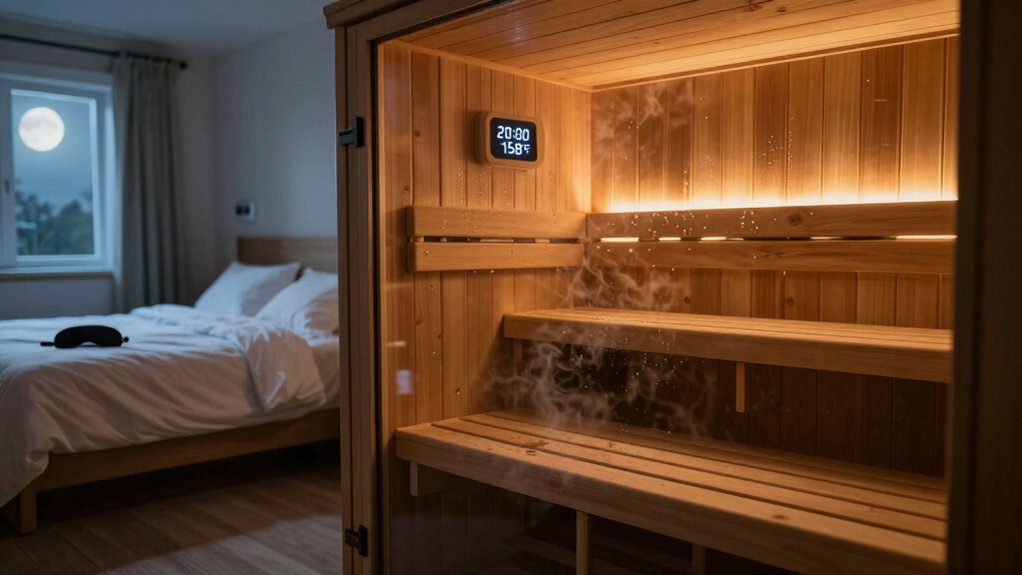
How hot should you crank that sauna dial, and how long should you stay put? Here’s your roadmap to sleep-boosting heat:
- Aim for 104°F-109°F, this range mimics traditional sauna temperatures and shortens how long you toss and turn before drifting off.
- Stretch sessions to 20-30 minutes, this sweet spot maximizes benefits without leaving you wiped out. Blood vessel dilation during this window helps pump warm blood to your extremities, setting up your body for efficient core cooling later.
- Embrace the cooldown, your dropping core temperature afterward triggers melatonin, nature’s sleep switch. Post-sauna cooling acts as a strong zeitgeber, signaling your circadian system to begin nightly descent and melatonin production.
- Skip the extremes, anything above 150°F or marathon sessions backfire, increasing wakefulness instead of restfulness.
Think of it like baking cookies: too little heat and nothing happens, too much and you burn the batch.
Your body responds similarly, rewarding that perfect balance with deeper, more restorative sleep.
What Happens After Months of Sauna Sleep Habits
You’ve figured out the right temperature and timing, but the real magic shows up when you keep at it week after week.
After months of regular sauna use, your sleep transforms in ways you mightn’t expect. Your body learns to regulate temperature better, so you fall asleep faster and stay asleep longer. Studies show symptomatic individuals gain nearly two extra hours of sleep after 4-6 weeks.
Your deep sleep increases by up to 70% in those first two hours, thanks to sustained temperature regulation. Your brain keeps producing melatonin more effectively, supporting deeper sleep stages night after night. Infrared saunas offer a gentler approach that some users prefer for evening sessions, as they warm the body directly without the intense heat of traditional saunas.
Like training a muscle, your sleep system grows stronger with practice. After one year, 83% of regular users report noticeably better sleep. The benefits compound, building a foundation for lasting rest. Research from Sweden’s MONICA study found that sauna 1–4 times per month appears most optimal for health benefits, with more frequent use showing no additional improvements.
Frequently Asked Questions
Can Sauna Replace Sleep Medication?
You can’t replace sleep medication with sauna use. Saunas support natural melatonin through heat and relaxation, but they won’t substitute prescribed treatments.
Always follow your clinician’s guidance before changing any medication regimen.
Is Infrared Sauna as Effective for Sleep?
You’ll find infrared saunas work just as well for sleep, with a slight edge. They trigger melatonin through red light wavelengths and offer gentler heat that fits bedtime routines better than traditional saunas.
Should I Shower Cold or Warm After Sauna?
You should start with warm water, then gradually shift to cold. This contrast therapy boosts circulation, speeds muscle recovery, and amplifies detoxification.
Cycle between temperatures 2-3 times for maximum benefits.
Can I Sauna if I Have Sleep Apnea?
Yes, you can sauna with sleep apnea, and it’ll likely help you. It improves your nasal breathing, deep sleep, and oxygen delivery while supporting weight loss.
Just check with your doctor first and stay hydrated.
Does Sauna Help With Insomnia Long-Term?
Yes, sauna use can help your insomnia long-term. You’ll boost melatonin, cut cortisol, and activate your parasympathetic nervous system.
Regular sessions improve sleep architecture, helping you fall asleep faster and stay asleep longer.
Final Thoughts
You’re now equipped to turn up the heat on your sleep quality. By timing your sauna session right, keeping temperatures moderate, and staying consistent, you’ll unlock deeper, more restorative rest.
Think of it like a warm bedtime story for your muscles, relaxing, comforting, and perfectly paced. So go ahead, embrace the steam, and let your body drift into dreamland. Your best night’s sleep is just a sauna away.