
Steam can ease your nighttime wheezing for 20-30 minutes by loosening mucus and soothing irritated airways, but it won’t fix the underlying problem. Your airways naturally narrow at night, and steam merely offers temporary comfort, like a warm hug that eventually fades.
Use it while you gather your thoughts, but don’t let it replace proper medical care. If symptoms persist or worsen, you need more than moisture to breathe easy.
Keep scrolling to learn when steam isn’t enough and what steps come next.
Why Nighttime Wheezing Gets Worse (And How Steam Helps)
Why does your chest sound like a rusty squeezebox the moment you finally drift off? Your body works against you at night, and understanding this helps you fight back.
Your airways naturally narrow during sleep, while fluid pools in your breathing passages when you lie down.
Meanwhile, your epinephrine and cortisol levels drop around 4 a.m., removing your natural airway relaxants. Histamine rises, inflammation increases, and your bronchial tubes tighten like a clenched fist. Dust mites, cold air from the window, and postnasal drip add fuel to this fire. Nocturnal symptoms affect 41% of children with persistent asthma aged 4–10, causing night waking and sleep disturbances that disrupt entire families.
Here’s where steam becomes your nighttime ally. Warm, moist air thins stubborn mucus, loosens secretions, and soothes those inflamed passages. It counters the cold air trigger and helps clear accumulated allergens.
Think of steam as a gentle massage for your irritated airways, buying you comfort before seeking medical help. However, nocturnal attacks are linked to more than half of all asthma deaths, making it crucial to monitor symptoms closely and seek emergency care if breathing difficulties persist despite home remedies.
The Safest Way to Steam Before Bed
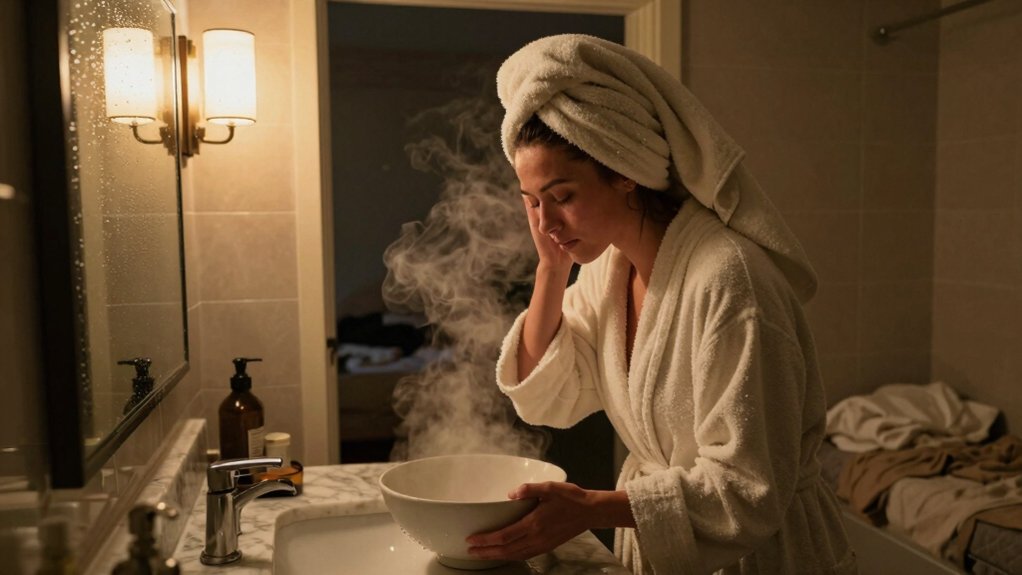
How do you turn steam into a bedtime ally without singeing your nose hairs or turning your bathroom into a sauna? Start by keeping your session short, just ten to fifteen minutes, like a quick TV episode. Steam inhalation thins thick, sticky mucus so you can expel it more easily before sleep.
Turn steam into a bedtime ally by keeping sessions short—just ten to fifteen minutes, like a quick TV episode.
Position your head eight to twelve inches from hot water, the same distance you’d hold a book to read comfortably. If it feels scorching, back up another ten inches. Steam can ease irritation and swollen nasal blood vessels, helping you breathe more freely as you settle in for the night.
Inhale slowly through your nose, imagining you’re smelling fresh cookies from the oven. Skip this routine if you have asthma, since hot, humid air can squeeze your airways like a tight hug.
Finish thirty to sixty minutes before bed, giving your body time to cool down like a cake on a windowsill. Sweet dreams await.
Shower or Bowl: Which Steam Method Works Better?
You’re probably wondering whether you should hop in the shower or grab a bowl for your nighttime steam session, and honestly, both have their own strengths. The shower gives you a cozy, humid environment that’s easy and safe. The bowl method packs a more concentrated punch right where you need it: your nose and throat.
Steam from hot showers delivers respiratory benefits by opening airways and helping with nighttime wheezing before you decide to seek medical attention.
Research indicates that nasal cavity temperature can rise to about 40°C (104°F) with proper steam inhalation, which helps explain why both methods can provide meaningful relief for constricted airways.
Let’s break down how they compare in safety, effectiveness, and convenience so you can pick what works best for you.
Safety Comparison
When you’re struggling to breathe at 2 a.m., the kitchen and bathroom both look like tempting sources of relief, but here’s the catch: not all steam is created equal.
You face real dangers with that bowl of hot water. Here’s what keeps parents awake at night:
- Scald burns, spilled boiling water scars small hands instantly
- No temperature guard, your bowl hits 60°C while safe steam stays at 40°C
- Trapped faces, towels create enclosed burn zones near scalding vapor
- Delayed help, kids hide bowl injuries, worsening outcomes
Your shower offers escape without the gamble. Water flows at steady, milder temperatures you can’t knock over. You stand freely, breathe easily, and skip the balancing act of bowl-and-towel gymnastics.
For wheezing relief at midnight, controlled warmth beats risky heat every single time. Even so, neither method reaches lower airways where wheezing actually originates, so neither treats the real problem. Remember that steam offers moisture and warmth to upper airways only, providing temporary comfort rather than medical treatment.
Effectiveness Levels
Safety isn’t the only thing that matters at 2 a.m., you also want to know if that steam will actually open your airways. Both shower and bowl methods work similarly, so pick what fits your night.
Shower steam surrounds you like a warm cloud, keeping humidity steady for 20-30 minutes while relaxing tight bronchial muscles. It’s like breathing inside a gentle rainforest. Effects are typically short-lived, usually mirroring that same 15-30 minute window seen with any steam approach. Since narrowed airways can cause wheezing during both inhalation and exhalation, the temporary relief from steam may help you get back to sleep, but it won’t address the underlying obstruction.
Bowl steam packs more punch, hotter, concentrated vapor hitting your face, but fades faster, like a strong espresso versus a slow-drip coffee.
Here’s the real talk: neither method has proven superiority in clinical trials. Both loosen mucus and soothe irritation temporarily, but neither fixes wheezing’s root cause.
Studies show steam improves how you *feel*, not necessarily your measurable airflow. Think of it as comfort food for your lungs, warming, helpful, but not a cure.
Convenience Factors
How do you decide between shower steam and bowl steam when you’re already exhausted and wheezing at midnight? Both methods work, but your situation shapes the better choice.
Consider these four factors:
- Speed: You can start shower steam immediately, just turn the handle. Bowl steam needs boiling water, which feels endless when you’re struggling to breathe.
- Flexibility: The shower pins you in the bathroom, but you can move the bowl to your bedside. Picture sipping water between steam breaths without leaving your warm covers.
- Multitasking: Shower steam lets you wash up simultaneously, like hitting two needs with one remedy.
- Safety: Bowl steam near children creates scary burn risks, like holding a wobbly cup of hot coffee. Choose shower steam for kids, or wait until morning.
Pick what fits your midnight reality.
How Long Steam Relief Actually Lasts
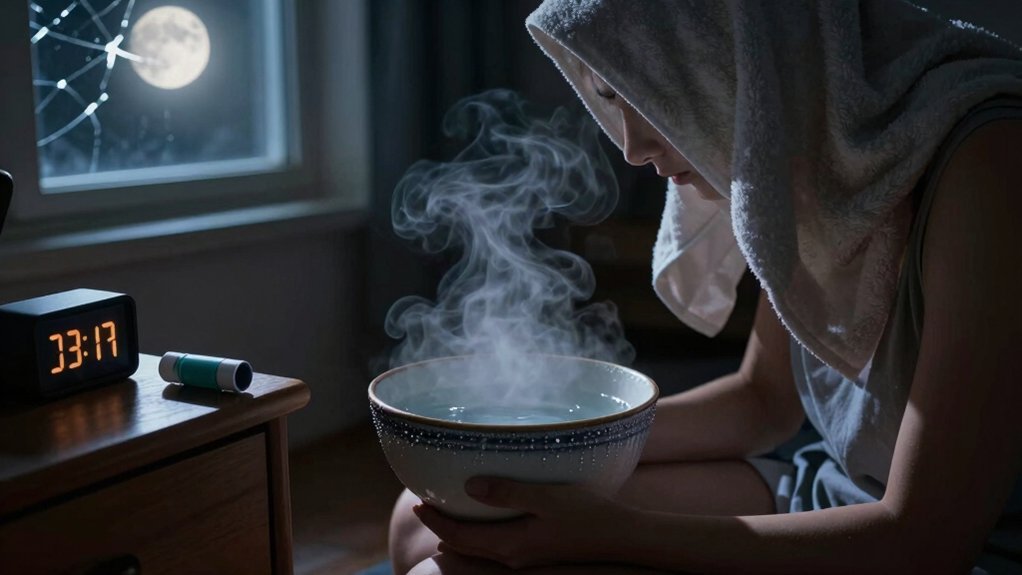
You might feel your airways open up after just a few minutes of steam, but don’t expect this relief to carry you through the night.
Most people notice their wheezing and congestion creeping back pretty quickly, since steam works more like a temporary patch than a lasting fix.
Understanding exactly how long you can count on this comfort helps you decide when it’s truly time to reach for your phone and call the doctor.
Duration of Relief
Just how long can you expect that steamy relief to stick around when wheezing strikes at midnight?
The truth might surprise you. That cozy, open-air feeling fades faster than you’d hope. Here’s what you’re really working with:
- 20-30 minutes of real relief, Your nasal passages clear, but the clock starts ticking immediately.
- Immediate comfort, quick goodbye, The warmth soothes, yet symptoms creep back before you’ve settled.
- Psychological boost, The ritual itself tricks your brain into feeling better, briefly.
- Repeated sessions needed, You’ll want another hit within the hour.
Don’t bank on steam carrying you through till morning. It’s a band-aid, not a cure.
For wheezing that won’t quit, that doctor’s number matters more than your kettle.
Temporary Symptom Easing
Where does that steamy relief actually go when your wheezing returns? Steam inhalation offers temporary comfort, not a cure. When you breathe warm, moist air, your airways relax, mucus loosens, and inflammation calms, but these effects fade as tissues cool and dry.
Think of it like a warm shower on sore muscles: soothing, yet not healing. Studies show symptom relief typically lasts 30 minutes to 2 hours, depending on your condition.
For wheezing, you might notice easier breathing during the session and shortly after, but constriction often returns once the moisture dissipates.
You can extend comfort by repeating sessions every 3-4 hours, capping at 2-3 daily. Remember, steam complements medical treatment, it doesn’t replace your inhaler or doctor’s care when nighttime wheezing persists.
Clinical Time Limits
Steam inhalation’s soothing effects might feel wonderful, but they’re built on a ticking clock. You need to know exactly how long relief lasts before symptoms creep back.
Here’s what the evidence shows:
- First breath to final wheeze: Each session gives you 2-5 minutes of active relief, like a short playlist that ends too soon.
- Daily ceiling: You can’t marathon this. Cap your total at 10-15 minutes, or 20 minutes spread across cycles for severe cases.
- The weekly arc: Runny noses ease after week one, itchiness fades by week two, and real frequency drops come week three.
- The maintenance truth: Daily 20-breath training sustains gains, but skip days and you’re rebuilding from scratch.
Track your timer, respect the limits, and you’ll maximize every steamy breath.
Can Steam Replace Your Doctor?
When you’re wheezing at 2 a.m., steam might feel like your best friend, but can it really take your doctor’s place? The short answer: no. While steam can loosen mucus like turning “concrete into honey,” it won’t fix what’s causing your wheezing.
Think of steam as a Band-Aid, not surgery, it soothes symptoms but doesn’t cure infections, asthma flare-ups, or chronic sinus issues.
Steam soothes the surface but never heals what’s underneath.
Research shows steam falls short where it counts. In studies of 871 patients, it barely helped chronic sinus symptoms compared to nasal irrigation, which actually improved scores by over 2 points. For wheezing, prescribed bronchodilators like albuterol open airways far more effectively than hot mist ever could.
Steam also carries real risks. You could burn yourself with boiling water, and for some asthmatics, extra humidity worsens breathing. Children especially face danger from scalding injuries.
Use steam for quick comfort while you plan your next move, but don’t let it delay calling your doctor when symptoms persist or worsen.
When Steam Fails: Warning Signs to Watch For
You might find steam soothing at first, but your body will send clear signals when it’s not enough. Watch for symptoms that stick around or get worse, like nighttime coughing that keeps waking you up or breathing that feels harder instead of easier.
Some warning signs mean you need help right away, so knowing what to look for can keep you safe when minutes matter.
Persistent Nighttime Symptoms
How can you tell if your nighttime wheezing is more than just a temporary flare-up? Persistent symptoms signal your asthma isn’t under control, and steam alone won’t fix the underlying problem.
Watch for these warning signs:
- You wake up coughing or breathless more than twice monthly, robbing your rest and leaving you drained.
- You reach for your rescue inhaler nightly, like a crutch that keeps you walking but never heals the injury.
- Morning chest tightness greets you daily, your airways squeezed tight as a fist overnight.
- Your peak flow readings drop consistently at dawn, numbers falling like a sunset you can’t stop.
These patterns reveal hidden inflammation, hormonal dips, and narrowing airways working against you while you sleep. Don’t wait: your lungs need professional adjustment.
Worsening Breathing Difficulty
Steam might feel nice for a bit, but your lungs don’t lie. When wheezing keeps climbing despite your steam routine, you’re facing a warning you can’t ignore. Your chest tightens like a belt squeezing tighter, not looser. You feel better mentally, maybe a 3 out of 5, but your peak flow meter shows no real change.
It’s like polishing a car with a broken engine; looks shiny, still won’t run. Your cough fades briefly, then roars back stronger. Mucus loosens, then glues itself shut again within hours. In dry winter air, your relief evaporates faster than morning frost.
If you’re burning yourself trying to get relief, or needing steam multiple times nightly, your airways are screaming for professional help. Don’t let ritual mask danger.
Emergency Warning Signs
When does home comfort turn into a hospital trip? Steam helps with minor wheezing, but some signs demand immediate action.
Your body sends clear distress signals when breathing becomes truly dangerous.
Watch for these critical warnings:
- Blue lips or fingernails, your oxygen supply has dropped dangerously low, and your skin literally shows it.
- Confusion or extreme sleepiness, your brain isn’t getting enough air, making thinking foggy.
- Inability to speak in full sentences, words become impossible when every breath fights for survival.
- No relief from your rescue inhaler, the medicine that should open your airways fails completely.
Don’t wait, don’t hesitate, and don’t try another home remedy. These signs mean your lungs need professional help now. Call 911 immediately when steam and medicine fall short.
Other Nighttime Wheezing Fixes That Work

Why stop at steam when you’ve got a whole toolbox of tricks to quiet that nighttime wheeze? You can sip warm honey water or chamomile tea to coat your irritated airways like a soothing balm.
Elevate your head with an extra pillow, think of it as creating a gentle slide for easier breathing. Keep your bedroom cool and dry, between 65 and 72 degrees, while booting pets out to slash allergens.
Pop a ginger candy or turmeric-spiced snack for natural inflammation relief. Track your triggers like a detective solving a mystery, and stash that quick-relief inhaler right beside your bed. These simple tweaks, combined with your prescribed medications, help you reclaim peaceful nights without immediately reaching for the phone.
Pair Steam With Breathing Exercises and Humidifiers
You’ve already got chamomile tea and extra pillows working for you, but let’s crank things up a notch. Pairing steam with targeted techniques turns a quick fix into real relief.
Here’s your power combo:
- Steam plus breathing exercises: Inhale warm mist, then practice slow belly breaths. Studies show this duo boosts lung power, pushing your FEV₁ from 3.6 liters to 3.8 liters. Your airways relax, mucus thins, and you actually strengthen the muscles keeping your throat stable.
- Add a bedroom humidifier: Set it before sleep to maintain moisture all night. Thirty percent of people suffer winter nasal dryness; this hydrates passages continuously, no burn risk involved.
- Time it right: Steam rooms or showers before bed reduce congestion, improving sleep quality dramatically.
- Track your response: Notice wheezing patterns. Humidity helps most, but triggers asthma in sensitive cases.
Your Step-by-Step Bedtime Breathing Routine
How do you wind down when your chest feels tight and sleep seems impossible? Start with pursed-lip breathing: inhale through your nose for two counts, then exhale through pursed lips for four counts, like gently blowing out a candle. This keeps your airways open longer, giving trapped air an escape route.
When your chest feels tight and sleep seems impossible, start with pursed-lip breathing: inhale for two counts, exhale for four, like gently blowing out a candle.
Next, try nasal breathing, slow, steady breaths that warm and humidify the air before it reaches your lungs. Imagine your breath as ocean waves, steady and rhythmic.
If you’re comfortable, attempt the Buteyko method: plug your nose after exhaling, hold until you feel the urge to breathe, then release. Repeat this cycle five times.
Finally, add gentle stretches or calming music to lower stress. Practice nightly, and your lungs will learn to relax even when wheezing strikes.
Still Wheezing? When to Call for Help
Those breathing exercises can work wonders, but sometimes your lungs need more help than a bedtime routine can provide. You know your body best, and recognizing when wheezing crosses into danger territory could save your life.
Watch for these warning signs that demand immediate action:
- Blue lips or fingernails, your body is screaming for oxygen
- Gasping or struggling with each breath, like drowning on dry land
- Chest pain spreading to your arm or jaw, never ignore this crushing pressure
- You can’t speak full sentences, words shouldn’t feel like marathon finish lines
If your quick-relief inhaler hasn’t worked after 20 minutes, or you’re using it more than every four hours, pick up the phone. Nighttime wheezing twice weekly, or symptoms persisting three days, also warrants prompt medical attention.
Don’t wait until morning, your breathing won’t.
Frequently Asked Questions
Is Steam Safe for Children With Nighttime Wheezing?
No, steam isn’t safe for your child. You risk serious scalds in under a second, and experts warn against it for kids under 12.
Choose nebulisers or cool-mist humidifiers instead, they’re effective and burn-free.
Can Essential Oils Enhance Steam’s Effectiveness?
Yes, they can. You’ll get anti-inflammatory, decongestant, and antimicrobial benefits from oils like eucalyptus or thyme. Just add 1-2 drops to hot water, but stop immediately if your wheezing worsens.
How Often Should I Steam Before Bed Nightly?
Steam once nightly before bed for 10-15 minutes.
You can repeat during the day if symptoms persist, but don’t exceed 10-15 minutes per session to avoid airway irritation or burn risks.
Does Steam Help Wheezing From Acid Reflux?
Steam won’t help your acid reflux wheezing. It only reaches upper airways, not your bronchi where reflux mucus settles. Heat might even worsen symptoms.
Try saline nebulization instead, and see a doctor if wheezing persists.
Can I Steam While Using My Inhaler Medication?
Yes, you can use steam while using your inhaler. There’s no direct contraindication between the two.
Steam soothes your airways and may improve comfort during your inhaler routine, though effects are temporary.
Final Thoughts
You’ve got smart tools to ease nighttime wheezing now. Steam loosens mucus like warm water softens dried glue, but it won’t fix serious breathing trouble. Pair it with breathing exercises and a humidifier for your best shot at sleep.
Watch your symptoms closely, though. If wheezing persists or worsens, don’t wait, call your doctor. Your health matters more than a home remedy, and getting help shows wisdom, not weakness.