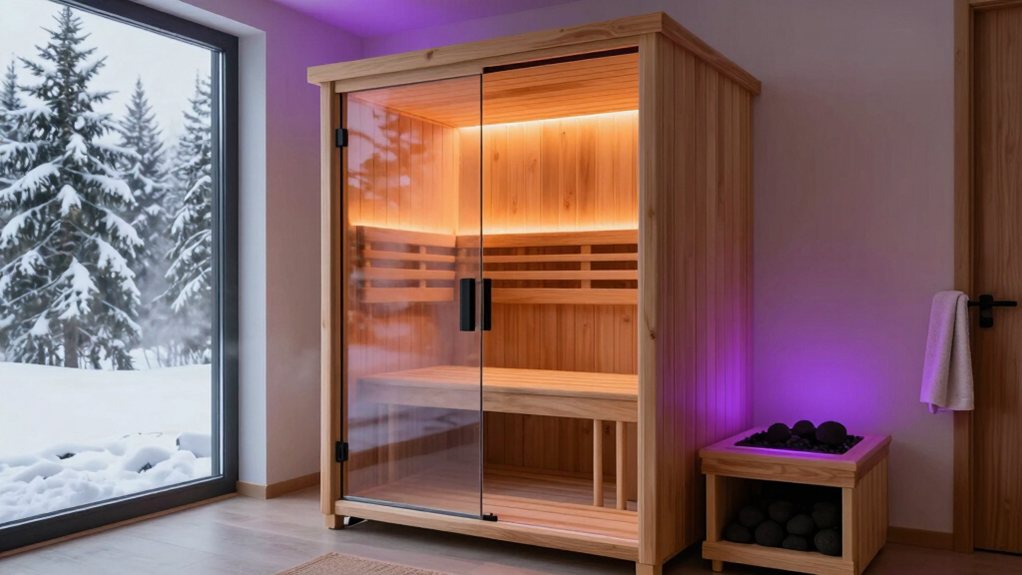

The best home sauna depends on how you’ll actually use it, beyond marketing hype. If you want intense, social heat sessions, go traditional: think 150–195°F, space for family or friends, and a higher budget.
If quick, gentle daily sweats fit your life better, infrared’s 110–140°F “walk-in closet” setup wins for convenience and lower bills. Steam rooms suit humidity lovers but need serious waterproofing.
Match the heat to your habits, not showroom dreams, and you’ll build a lasting wellness ritual instead of an expensive closet. There’s more nuance ahead if you’re curious.
How Home Sauna Types Actually Differ
When you’re shopping for a home sauna, you’ll quickly notice that not all hot rooms work the same way, and understanding these differences can save you from buyer’s remorse.
Traditional Finnish saunas heat the air around you using electric or wood-burning stoves, reaching 150–195°F with low humidity: think of it as a desert breeze that makes you sweat. Operating between 158°F to 230°F, these classic designs can also accommodate water poured over hot stones to generate steam when desired. Savu saunas, a true traditional Finnish option, fill the room with smoke before ventilating after the fire burns out, offering an authentic heritage experience without a chimney.
Infrared saunas skip heating the air entirely, instead using invisible light waves to warm your body directly at cooler temperatures, like sunlight through a window.
Wet saunas crank up humidity to 60–100% by pouring water over hot stones, creating that thick, tropical sensation.
Combo units let you switch between dry and steam modes, while portable infrared blankets squeeze the experience into tight spaces.
Each method shapes how hot you feel, how long you can stay inside, and what kind of ritual you’ll build.
Which Sauna Makes You Sweat Most?
Which Sauna Makes You Sweat Most?
Why does one sauna leave you drenched in minutes while another has you barely glistening? The answer lies in how each sauna delivers its heat.
Traditional dry saunas win the sweat race. They blast you with air temperatures of 150–195°F, surrounding your body like an oven. Your skin heats fast, and your cooling system kicks into overdrive. Traditional steam saunas typically operate at 70–85°C, using heated rocks with steam to warm the air first and then the body.
Think of it like standing near a campfire versus basking in sunlight: both warm you, but one feels instantly intense.
Infrared saunas take a gentler approach. At 110–140°F, they beam heat directly into your skin, about 1.5 inches deep. You sweat steadily without feeling smothered. Unlike traditional saunas that simply heat the air around you, infrared light penetrates beneath the skin to heat the body directly, triggering deep, therapeutic sweat without the stifling ambient heat.
Steam saunas feel swampiest, not hottest. At 110–120°F with 100% humidity, your sweat can’t evaporate, so it pools on your skin instead.
For maximum sweat, choose traditional dry heat.
How Much Space Each Home Sauna Type Needs
Before you start shopping for a sauna, you’ll need to figure out if you’ve actually got room for one.
Space You Actually Need:
- Traditional sauna: You’ll want 4×4 feet for two people, or 6×8 feet for four, think small bedroom, not closet. For a more comfortable multi-person experience with upper and lower benches, a 5×7 interior is the most popular home sauna size.
- Infrared sauna: Much friendlier to tight spaces; a single person fits in 3×3 feet, roughly walk-in closet size. Infrared models work best when you have under 50 square feet total to work with, since they’re usually the only practical option without major construction changes.
- Steam room: Plan 4×5 feet minimum for two people, plus serious waterproofing, imagine a shower that never stops.
- Height matters everywhere: Aim for 7-foot ceilings so you’re not crouching like you’re hiding in a blanket fort.
Home Sauna Costs: Upfront and Monthly
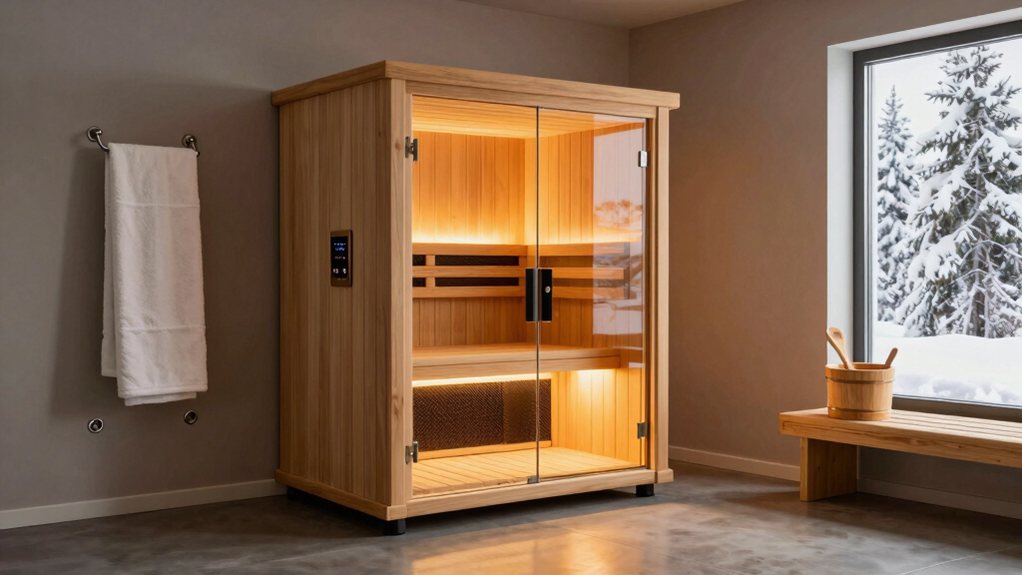
You’re probably wondering what a home sauna will actually cost you, both when you buy it and each month when the electric bill arrives.
The upfront price can swing wildly from a few hundred bucks for a simple portable kit to over $30,000 for a fancy custom outdoor cabin, so knowing your budget helps narrow the field fast. Insulation quality plays a major role in long-term operating expenses, as better-insulated saunas retain heat more efficiently and reduce monthly energy consumption significantly.
Once you’re sweating regularly, your monthly costs usually land somewhere between the price of a couple lattes and a nice dinner out, depending on whether you choose an energy-sipping infrared model or a powerful traditional heater. Infrared saunas typically run $10 to $25 monthly, while traditional Finnish models usually cost $20 to $60 per month due to their higher wattage and longer preheat times.
Upfront Purchase Prices
The upfront price tag on a home sauna can swing wildly depending on what you’re after, so let’s break down what you’ll actually pay before that first sweat session.
If you’re watching your wallet, infrared saunas offer the gentlest entry point.
You can snag compact one-person models for $1,000–$3,000, while mid-range options with extra features typically run $3,000–$6,000.
Traditional indoor saunas demand more, usually starting around $4,000 and climbing to $8,000 for quality prefabricated units.
Outdoor saunas hit hardest, with kits alone starting at $3,500–$4,500 and complete projects often reaching $6,000–$18,000 once installation wraps up.
Consider these realities when budgeting:
- Portable infrared units give you the cheapest ticket in, sometimes under $1,500
- Electrical work and site prep can quietly add thousands to your total
- Custom builds transform your vision into $15,000–$50,000+ investments
- Material quality and brand reputation directly inflate or deflate your final number
High-end sauna installations can push well beyond typical ranges, with some models exceeding $15,000 when premium features and materials enter the equation.
When comparing entry-level options specifically, infrared saunas typically cost $1,500–$2,500 versus traditional models that usually begin closer to $3,000–$4,000, making the price gap even more pronounced at the budget end of the market.
Match your choice to both your dreams and your bank account.
Monthly Operating Costs
Once you’ve got your sauna home and running, you’ll want to know what it actually costs to keep those sweat sessions coming month after month.
Your electricity bill depends on sauna type and how often you use it. Infrared saunas are the energy-saving champs, running you just $2.50 to $8 per month for regular use, that’s less than a fancy coffee.
Traditional electric saunas hit harder at $15 to $45 monthly for daily sessions, like keeping a space heater cranked for hours. Wood-burning models swap electricity for firewood, costing $20 to $50 monthly depending on local wood prices.
Don’t forget basic upkeep, which adds roughly $13 to $17 monthly for cleaning and small repairs. Choose wisely, and your wallet won’t break a sweat.
Long-Term Value Comparison
Before you drop thousands on a home sauna, it helps to see the full picture of what you’ll actually spend, and what you’ll get back over the years.
Your wallet feels the difference between DIY and prebuilt paths. DIY kits run $4,500–$15,000 fully realized, while prebuilt models hit $8,000–$25,000.
You can pocket 20–50% savings by building yourself, like choosing home-cooked meals over restaurants.
Consider these value factors:
- Infrared wins for tight budgets: lower upfront cost, easier setup, faster payback
- Traditional suits longevity lovers: higher initial hit, but decades of authentic steam
- Barrel models balance speed and price: $6,500–$9,500, ready in days not weeks
- Custom builds reward planners: $15,000+ buys your exact vision, but patience required
Most buyers land in the $2,000–$15,000 sauna range before add-ons. Match your choice to how you’ll actually use it, not just showroom dreams.
Match Your Wellness Goals to the Right Heat
Whether you’re chasing better sleep, easing sore muscles after weekend sports, or simply craving a quiet escape from daily chaos, the heat source you choose shapes everything about your sauna experience.
If you want intense heat that mimics a classic Finnish ritual, you’ll gravitate toward traditional saunas. These units blast air between 150°F and 195°F, perfect for quick, powerful sessions that leave you breathless and renewed, like jumping into a cold lake after a hot summer run.
Prefer gentler, longer escapes? Infrared saunas operate at 120°F to 140°F, warming your body directly rather than the air around you. Think of it as sunlight on your skin during a crisp morning.
This lower heat burden lets you stretch sessions to 45 minutes, making daily recovery routines actually stick.
Your goals, not marketing hype, should drive this choice.
Why Infrared Saunas Work Better in Most Homes
You’ve got your wellness goals mapped out, but now comes the real question: which sauna actually fits your house without turning your basement into a construction zone? Infrared saunas win for most homeowners because they work smarter, not harder.
Here’s why you’ll probably prefer one:
- Gentler heat: At 110°F–140°F, you sweat without feeling like you’re melting. It’s like warm sunshine instead of a blast furnace.
- Plug-and-play setup: No stoves, rocks, or steam systems. Many units arrive as prebuilt panels you can slide into a spare room.
- Easier on your energy bill: Lower temperatures mean less electricity, so daily use won’t shock your wallet.
- Comfort keeps you coming back: Direct body warming feels better than hot air, helping you build a lasting habit.
Start with 5–10 minutes, stay hydrated, and enjoy.
When Traditional Heat Is Worth the Extra Setup
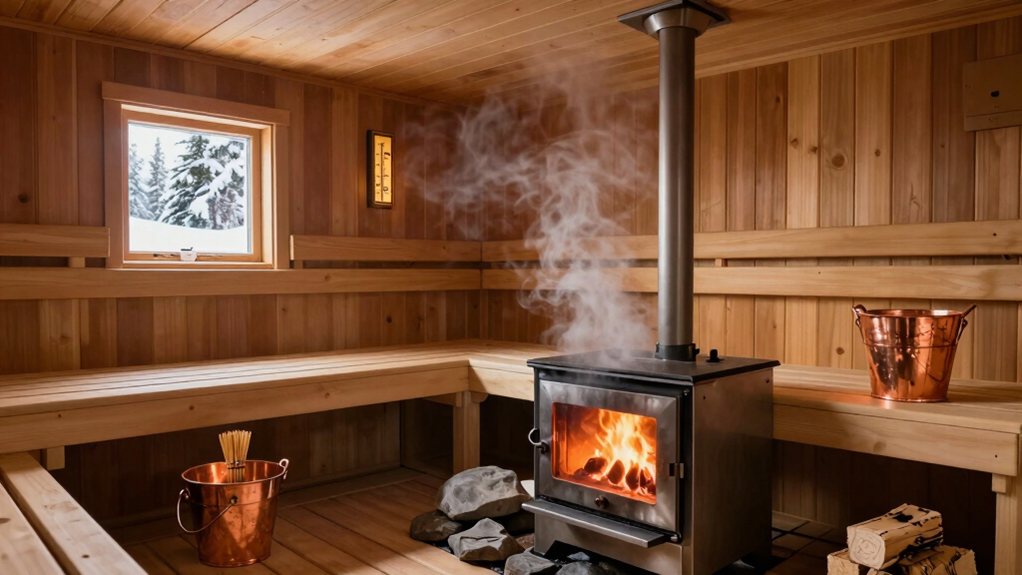
If you crave that intense, full-body heat that makes you sweat fast and hard, a traditional sauna might be your perfect match.
You’ll get the classic experience of pouring water over hot stones, creating bursts of steam that wrap around you like a warm, wet blanket.
Sure, it takes more space, money, and planning to set up, but for some people, nothing beats the authentic, old-school sauna feeling.
Intense Heat Benefits
Because your heart works harder without you moving a muscle, traditional sauna heat delivers something special: a cardiovascular workout you can do while sitting still. You’re essentially getting light exercise without stressing your joints, and research shows this pays off big.
A landmark Finnish study found men who sauna 4–7 times weekly cut their hypertension risk by nearly half over 25 years.
Here’s what intense heat does for you:
- Your heart gets stronger, regular sessions improve blood flow and lower blood pressure like cardio training.
- Your muscles recover faster, deep heat reduces soreness and boosts flexibility after tough workouts.
- Your stress melts away, endorphins flood your system, creating that post-sauna calm.
- Your sleep improves, the autonomic “reset” helps you rest deeply.
At 176–212°F, traditional saunas simply deliver more.
Classic Ritual Appeal
While infrared models might win on convenience, there’s something irreplaceable about stepping into a traditional sauna, the kind that Finns have perfected over centuries. You feel the dry heat wrap around you like a thick blanket, temperatures climbing between 150°F and 195°F, as you settle into the hot-room atmosphere that defines authentic sauna culture.
The real magic happens when you ladle water onto heated stones. That burst of steam transforms your session into something ceremonial, a ritual that infrared simply can’t replicate. Your body experiences intense, physiologically demanding heat that purists crave.
Yes, you’ll invest more effort in setup and sizing your heater correctly. But when you prioritize authenticity over ease, traditional heat delivers. You aren’t just buying a wellness appliance, you’re creating a legacy experience, deeply restorative and time-tested.
When a Hybrid Sauna Is Worth the Extra Cost
A hybrid sauna earns its price tag when you’re actually going to use both heating styles, not merely dream about the possibilities. You’re paying for two complete heating systems in one cabin, so that flexibility needs real purpose.
Four moments when the splurge truly pays off:
- Your partner loves gentle 130°F infrared sessions, but you crave intense 180°F traditional heat, no more compromise, you both win.
- Your morning routine needs quick, mild warmth, yet weekends demand that classic sweat-dripping ritual, one cabin, two completely different experiences.
- Your home has space for just one wellness zone, the hybrid becomes your gym, spa, and meditation corner rolled together.
- You’re honestly unsure which style you’ll prefer long-term, you can experiment without buyer’s remorse.
Skip the hybrid if you already know your perfect temperature.
Home Sauna Installation: DIY Kit or Pro Build?
You’re probably wondering whether you should roll up your sleeves for a DIY sauna kit or leave the heavy lifting to the pros, and honestly, both paths have real perks worth weighing.
Kit assembly lets you control the pace and save some cash, while professional installation brings speed, expertise, and peace of mind when wiring and weatherproofing get tricky.
Let’s look at what each approach actually demands from you, so you can pick the route that fits your budget, skills, and patience level.
Kit Assembly Ease
If you’ve ever assembled furniture from a big-box store, you’ll find that most DIY sauna kits follow a similar spirit, though with a bit more sweat equity and a much hotter payoff. You’ll unpack pre-cut panels, benches, and heater parts that snap together like a grown-up puzzle.
Grab a friend, because lifting that ceiling panel solo is a recipe for frustration.
Here’s what makes the build feel genuinely rewarding:
- The “aha” moment when walls click into place and your sauna suddenly looks real
- Pride swelling as you tighten the final screw on benches you’ll soon sweat on
- Relief washing over you when the heater hums to life on the first try
- Pure anticipation stepping inside something you built with your own hands
Most kits need only basic tools, a level base, and one weekend. Your preparation, clean, dry, spacious, determines whether you’ll smile or swear.
Professional Installation Benefits
While there’s real satisfaction in building something yourself, hiring a professional installer brings peace of mind that’s hard to put a price on, especially when electricity and 200-degree heat are involved. A licensed electrician handles the 240-volt wiring your sauna likely needs, cutting fire and shock risks while meeting local codes.
Think of it like having a pilot fly your plane, you could learn, but some stakes are too high for beginners.
Pros also plan ventilation that keeps air fresh and moisture from damaging your home, plus they guarantee your foundation is level and water-resistant.
You’ll pay more upfront, roughly $8,000 to $15,000 versus $3,000 to $7,000 for DIY, but you’re buying safety, best performance, and longevity.
When budget allows, professional installation transforms technical headaches into confident relaxation.
Sauna Shopping for Families, Couples, and Solo Users
Whether you’re sharing the experience with your whole crew or carving out solo relaxation time, choosing the right sauna starts with knowing who’ll use it most.
Choosing the right sauna starts with knowing who’ll use it most—your crew or just you.
Families often thrive in traditional or roomier infrared cabins where everyone fits comfortably, like a cozy living room that brings people together.
Couples love compact two-person units that won’t hog space or spike your electric bill.
Solo users typically want quick warm-ups and easy setups: think microwave convenience versus oven patience.
Here’s what sparks joy for different households:
- Family bonding – Larger cabins create memories through shared sweat sessions
- Couple connection – Intimate two-person designs fit small spaces perfectly
- Solo sanctuary – Fast-heating infrared models reward your daily routine
- First-timer comfort – Lower temperatures welcome nervous newcomers
Match your sauna to your lifestyle, and you’ll actually use it.
Frequently Asked Questions
Can I Use a Sauna During Pregnancy?
You should avoid saunas during pregnancy, especially in your first trimester, due to overheating risks.
If your doctor approves later use, keep sessions under 10 minutes, stay hydrated, and stop immediately if you feel dizzy.
How Often Should I Clean My Home Sauna?
You should wipe down surfaces after every use, do a light weekly scrub, and deep clean monthly.
Increase frequency with heavy usage.
Always ventilate the sauna after sessions to prevent mold buildup.
Do Saunas Help With Weight Loss Permanently?
No, saunas don’t help you lose weight permanently. You’ll shed water through sweating, but you’ll regain it once you rehydrate.
Any calorie burn is too modest for lasting fat loss without diet and exercise changes.
What’s the Best Wood Material for Sauna Construction?
You’ll find Western Red cedar ranks as the gold standard for its decay resistance, insulation, and pleasant aroma. Clear Canadian hemlock offers excellent durability with lower scent if you’re sensitive to fragrances.
Can I Install a Sauna in My Bathroom?
Yes, you can install a sauna in your bathroom if you have at least 12–50 square feet, proper ventilation, and adequate electrical capacity.
Infrared cabins work best for compact spaces, while traditional saunas need more room and planning.
Final Thoughts
You’ve explored the heat, the space, and the price tag: now it’s decision time. Pick the sauna that matches your sweat style and living situation, not only the trendiest option.
Whether you’re going solo or fitting the whole family, the right choice feels like a warm hug you actually want to pay for. So measure twice, budget smart, and get ready to turn your home into your personal wellness retreat.