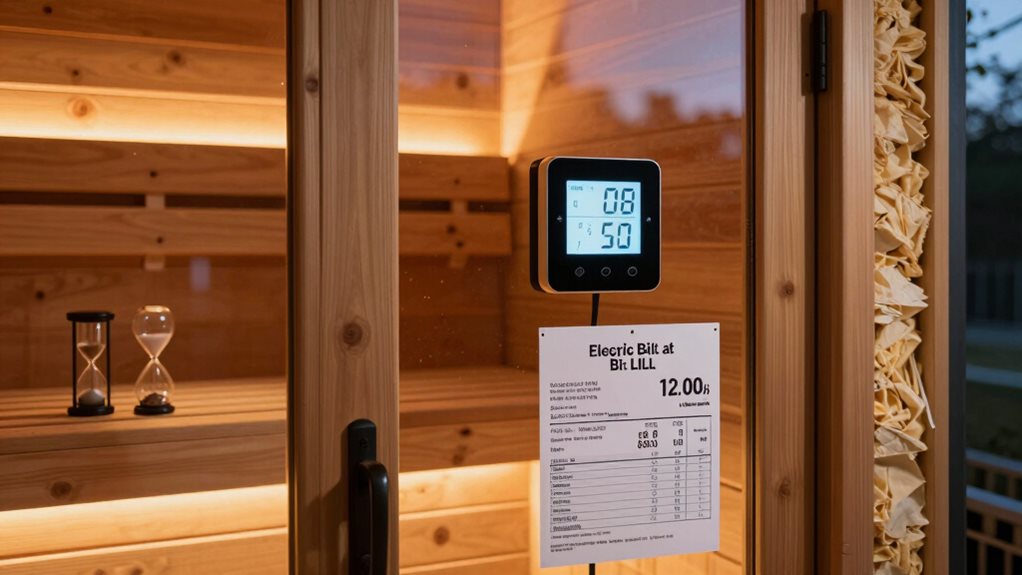

To slash your sauna’s running costs, choose an infrared model that uses 40-60% less electricity than traditional units. Right-size your sauna at 4-6 square feet per person with a standard 6.5-7 foot ceiling. Schedule back-to-back family sessions to minimize preheating, which accounts for 60-70% of energy use. Install your sauna indoors with quality insulation, and maintain temperatures between 158-190°F. These simple adjustments will transform your monthly utility bills.
Energy Consumption by Sauna Type: Which Saves You the Most
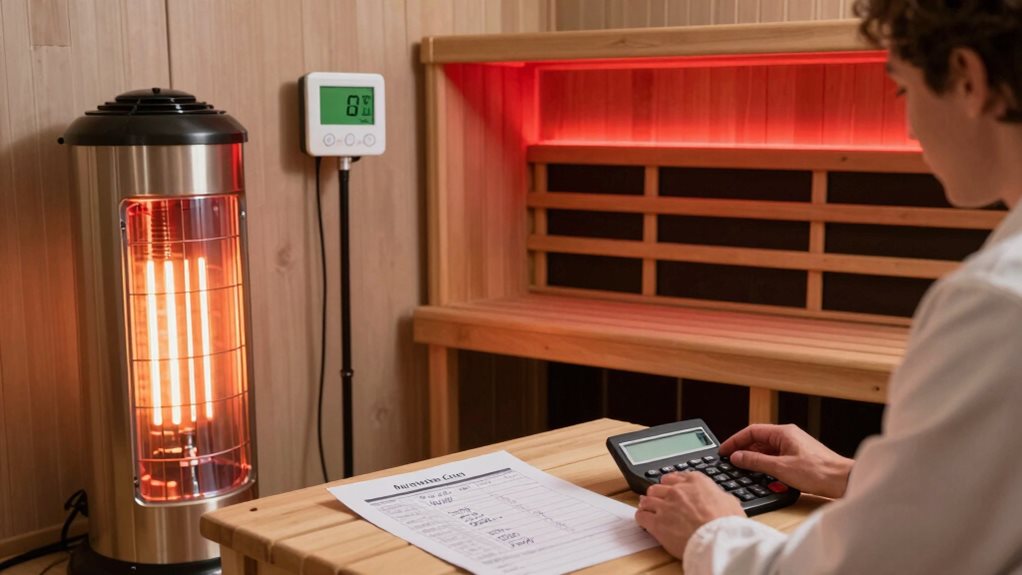
When it comes to saving money on your home sauna, the type you choose makes a notable difference in your utility bills.
Infrared saunas are clear winners, using just 1.5-3.5 kWh per session while heating up in only 10-15 minutes. They’ll consume 40-60% less electricity than their traditional counterparts.
Traditional electric saunas are considerably more power-hungry, requiring 9-13 kWh per hour and a lengthy 30-45 minute warm-up time.
Steam saunas demand even more energy for continuous humidity maintenance, making them the most expensive electric option.
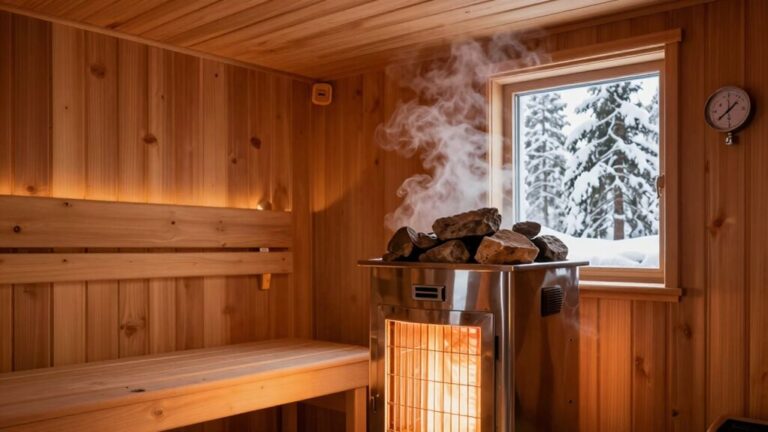
If you’re looking to avoid electricity costs altogether, wood-burning saunas offer an alternative, though they require fuel preparation and chimney maintenance.
For the most economical choice, portable infrared models use just 1.2-3 kWh hourly, providing efficient therapy with minimal power consumption.
Optimal Sizing Strategies to Minimize Power Usage
Selecting the right sauna size is perhaps the most crucial decision you’ll make to control ongoing utility costs. Every cubic foot you add requires more heating power—roughly 1 kW for every 35-50 cubic feet of space.
Don’t fall into the oversizing trap. A sauna that’s too large wastes energy heating unused air, driving up your monthly bills unnecessarily. For efficient operation, allocate 4-6 square feet per person: a 3×3 space works for one person, while a 6×8 area comfortably fits six. Both sizing errors can significantly increase energy consumption and potentially lead to premature heater failure.
Consider ceiling height carefully too. Standard 6.5-7 foot heights optimize heat retention, while lower ceilings (about 6.5-7.5 feet) reduce cubic footage and lower power requirements. Smaller saunas provide the additional benefit of faster heating, which translates to less energy consumption during the initial warm-up phase.
Smart Usage Patterns for Lower Monthly Bills
Once you understand your sauna’s energy demands, optimizing your usage patterns can dramatically slash your monthly bills.
Instead of daily one-hour sessions, consider scheduling back-to-back family uses to avoid repeated preheating, which accounts for 60-70% of energy consumption.
Preheating drains up to 70% of sauna energy—schedule family sessions consecutively to minimize this costly cycle.
Try limiting sessions to 30 minutes instead of full hours, cutting your energy use in half.
For even greater savings, drop your temperature setting by 10-20°F—each 10°F reduction saves 5-10% on energy costs. Traditional saunas run efficiently at 170-180°F rather than maxing out at 200°F.
If you’re shopping for a new unit, infrared models use 75% less electricity than traditional ones, operating at lower temperatures while delivering similar benefits. A 2-person infrared sauna offers the best efficiency balance for most households while providing adequate space.
With consistent scheduling and smart temperature control, you’ll keep your sauna enjoyment high and your utility bills low.
Location and Installation Factors Affecting Efficiency
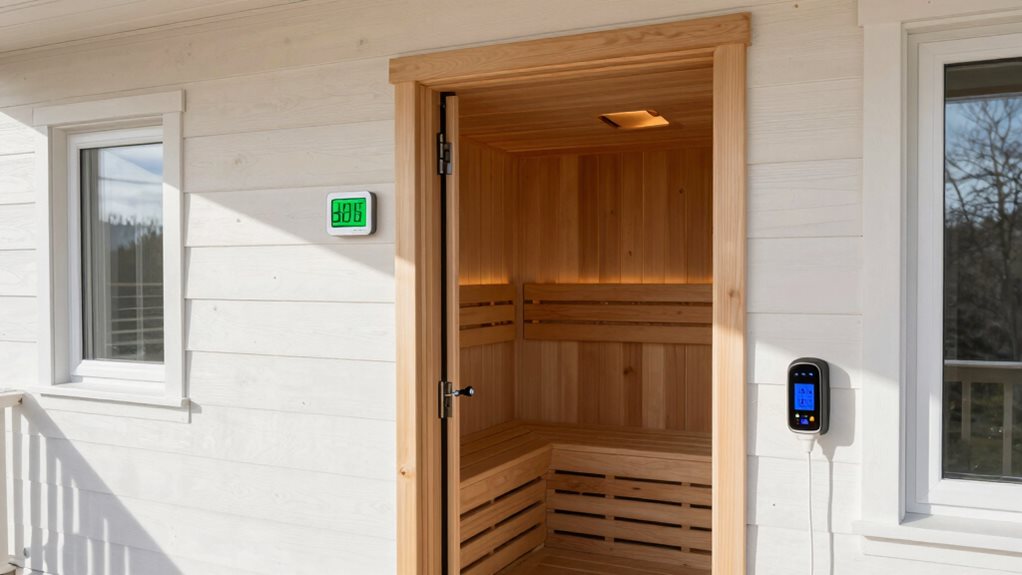
Smart usage isn’t the only way to save on your sauna expenses—how and where you install it directly impacts your long-term costs. Your sauna’s efficiency depends largely on proper planning and installation decisions that affect heating performance.
- Insulation quality is vital—high-quality materials like mineral wool can improve efficiency by up to 30%, maintaining consistent temperatures and reducing heater runtime. Installing a proper vapor barrier prevents moisture damage while reflecting heat back into the sauna, further enhancing energy efficiency.
- Location matters—indoor saunas outperform outdoor ones because they’re protected from temperature fluctuations, while outdoor installations require extra weatherproofing and superior insulation. Selecting a flat area with good drainage while ensuring shelter from wind will further reduce energy costs and improve overall efficiency.
- Proper sizing guarantees you’re not wasting energy—your heater should provide about 1kW per 45 cubic feet of space, and infrared options can reduce energy use by 30% compared to traditional heaters.
Heat Management Techniques for Maximum Energy Savings
Although running a sauna inevitably uses energy, implementing smart heat management techniques can dramatically reduce your utility costs. Start by setting your sauna to 158°F-190°F rather than maximum heat—you’ll still get all the benefits while cutting energy use by 20%.
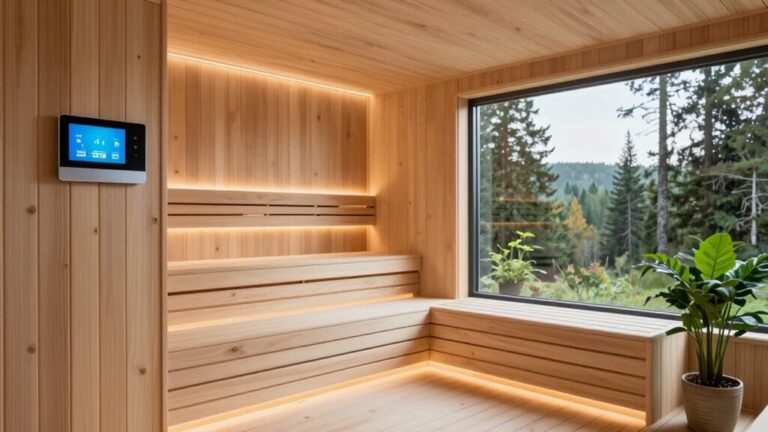
Install a smart thermostat that learns your usage patterns and allows remote preheating through Wi-Fi controls. This prevents wasted energy from idle operation and maintains steady temperatures using only 50% power after the initial heating phase.
Keep your door firmly shut and all gaps sealed to trap heat inside. When possible, schedule family sessions back-to-back to maximize one heating cycle. A standard two-hour session with a 6 kW heater typically consumes 7-9 kWh of electricity.
Don’t forget yearly maintenance—replace eroded stones and check seals to guarantee peak performance. These simple adjustments add up to considerable savings over time.
Frequently Asked Questions
How Do Traditional vs. Infrared Sauna Long-Term Maintenance Costs Compare?
You’ll spend $3,000-8,000 less over 10 years with infrared saunas due to lower electricity costs, fewer maintenance requirements, and no need for wood treatments or stone replacements.
Will Using a Sauna Affect My Home’s Circuit Breakers?
Yes, your sauna will affect circuit breakers. Traditional saunas require dedicated 240V/30-60A circuits, while infrared models can use standard outlets but may trip shared circuits under heavy loads.
Can Solar Panels Effectively Power a Home Sauna?
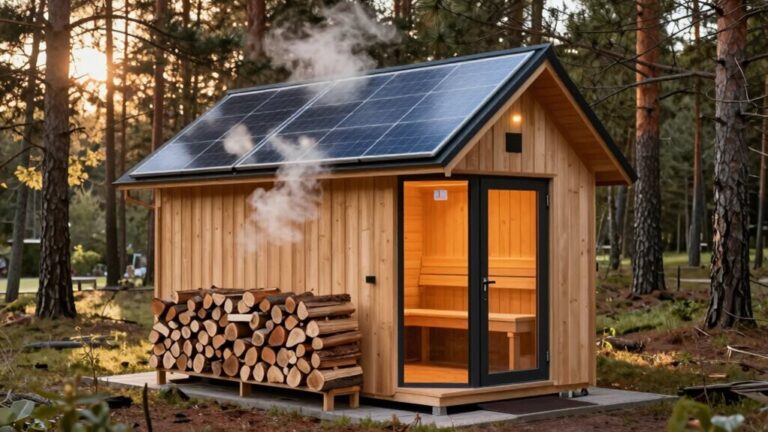
Yes, solar panels can effectively power your home sauna. A 2-4kW system will easily handle most infrared saunas, which typically use 1600-3000W during operation.
How Does Sauna Use Impact Household Humidity Levels?
You’ll notice increased home humidity from sauna use, especially with steam saunas. Your bathroom or adjacent spaces will experience higher moisture levels requiring proper ventilation to prevent mold issues.
Are There Seasonal Adjustments Needed for Optimal Sauna Temperature Settings?
Yes, you’ll need higher temperatures (150-195°F) in winter for better warmth and lower settings (120-140°F) in summer to prevent overheating. Adjust gradually in 5-10°F increments based on seasonal conditions.
Final Thoughts
You’ve now got all the tools to make your sauna both relaxing and cost-effective. By choosing the right type, sizing appropriately, establishing smart usage habits, optimizing location, and managing heat efficiently, you’ll enjoy lower utility bills without sacrificing comfort. Remember, small changes add up—insulating properly, maintaining components, and timing your sessions strategically will keep your wellness routine affordable for years to come.