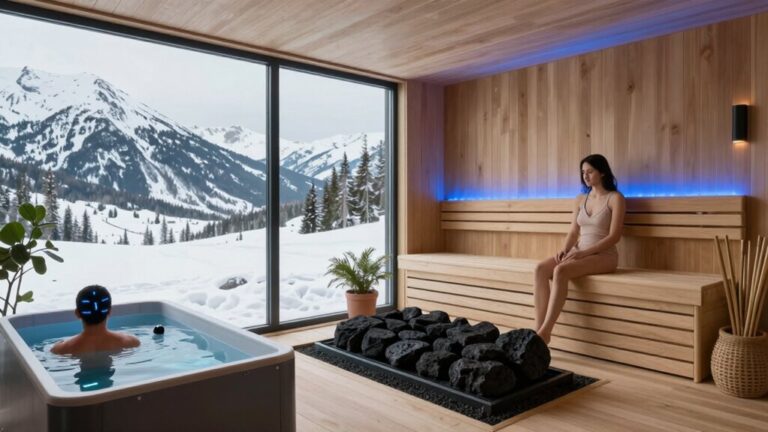
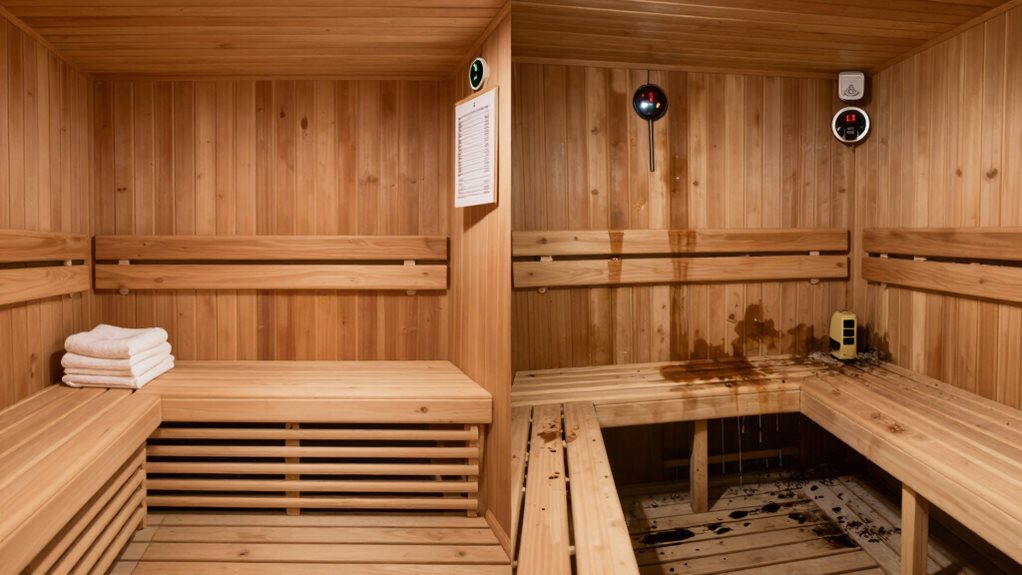

When comparing fitness facilities, sauna access varies considerably between gyms and spas. Gym saunas typically run hotter (150-195°F) for post-workout recovery, while spa saunas offer lower temperatures (110-120°F) with added aromatherapy for relaxation. Quality facilities maintain strict hygiene protocols with daily cleaning, temperature monitoring, and regular staff inspections. Though only 24% of members regularly use saunas, these amenities boost retention rates up to 70%. The right sauna experience might just become your favorite membership perk.
Defining Gym vs. Spa Sauna Experiences
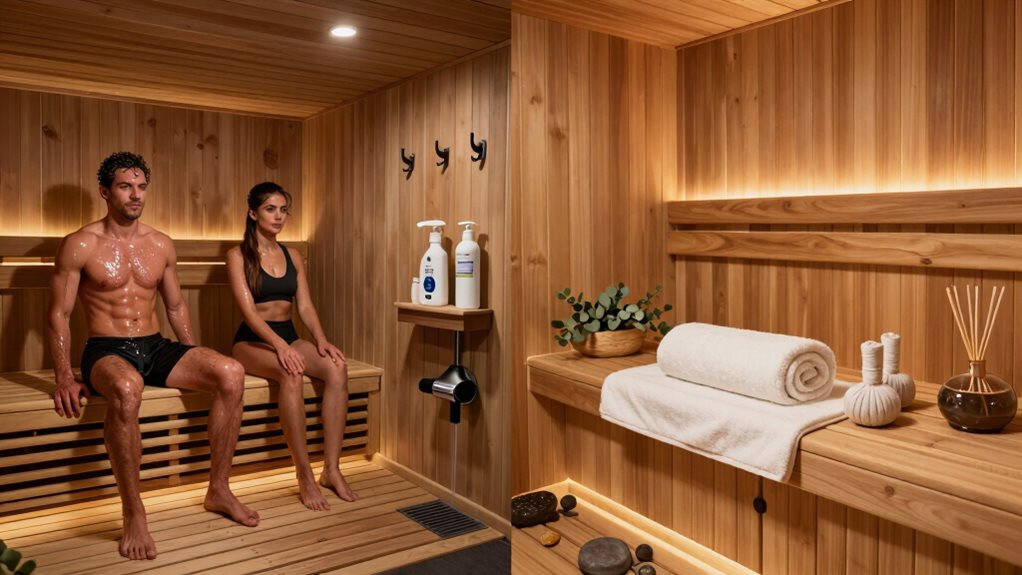
While both provide heat therapy, gym saunas and spa saunas differ dramatically in their design purpose and user experience.
You’ll find gym saunas focused on recovery after your workout, with straightforward wooden benches and practical layouts that keep things moving. They’re built for efficiency, not lounging, with temperatures often running hotter (150-195°F) to deliver quick results.
In contrast, spa saunas invite you to relax and unwind. They’re crafted with softer lighting, aromatherapy, and more comfortable seating to encourage longer stays.
You’ll notice lower temperatures with higher humidity, especially in steam rooms (110-120°F), making it easier to extend your session.
While gym saunas are marketed as a membership perk, spa saunas are positioned as part of a premium wellness experience.
Sauna Usage Patterns Among Gym Members
How often do gym members actually use the saunas available at their fitness facilities? Despite 36% of gym-goers prioritizing wellness amenities when choosing a gym, the usage patterns reveal interesting trends.
Only 24% of members regularly utilize saunas and spas, though this number rises to 58% when considering all wellness programs.
If you’re a regular gym-goer (attending at least twice weekly like 44% of members), you’ll get the most benefits by incorporating sauna sessions 2-4 times per week.
These 20-30 minute post-workout sessions considerably aid recovery, reducing muscle soreness and boosting performance. Many members report impressive results, including 83.5% experiencing better sleep and athletes seeing a 30% increase in endurance capacity.
The calorie-burning bonus of 200-300 calories per session makes saunas even more appealing.
Hygiene Protocols in Commercial Saunas
You’ll find that commercial saunas require thorough daily cleaning of high-touch surfaces like benches, door handles, and backrests to maintain proper hygiene.
Facilities should provide towels for sitting or require you to bring your own, creating a barrier that prevents direct skin contact with wooden surfaces.
Cross-contamination risks are greatly reduced through half-hourly cleanliness checks, proper ventilation, and the use of manufacturer-approved disinfectants on all user-contact areas.
Daily Cleaning Essentials
Cleanliness stands as the cornerstone of any well-managed commercial sauna facility. You’ll notice top-tier establishments wipe down benches and headrests with microfiber cloths after busy periods, removing sweat and oils that harbor bacteria.
Daily attention to high-touch surfaces, like door handles and control panels, prevents germ transmission between users.
Quality facilities sweep and vacuum floors before mopping with sauna-appropriate cleaners, avoiding harsh chemicals that damage wood. They’ll also rinse interior wood surfaces after heavy use to prevent salt stains from perspiration.
Smart sauna operators maintain proper ventilation daily, checking for dust buildup that might restrict airflow. They require fresh towels for each user and immediately remove used ones.
When visiting a commercial sauna, these cleaning practices aren’t just nice-to-haves—they’re crucial for your health and safety.
Cross-Contamination Prevention
While cleanliness forms the foundation of sauna maintenance, preventing cross-contamination requires specialized protocols that go beyond basic tidying.
You’ll need to implement strategic measures to guarantee pathogens don’t spread between users or surfaces in your facility.
- Use disposable wipes rather than reusable towels to avoid transferring germs from one area to another.
- Designate separate cleaning tools exclusively for your sauna environment.
- Store sanitized equipment properly after thorough disinfection.
- Require users to shower before and after sessions to minimize bacterial transfer.
Your facility design should incorporate self-draining surfaces and slopes that prevent water pooling, which can harbor bacteria.
Choose materials like 304 or 316 grade stainless steel for their corrosion resistance and ease of cleaning.
Don’t forget to maintain proper ventilation—it’s vital for reducing airborne pathogens and controlling humidity levels.
Member Retention Benefits of Wellness Facilities
Modern fitness facilities that incorporate wellness amenities such as saunas, steam rooms, and spa services demonstrate consistently higher member retention rates than their basic counterparts.
You’re more likely to maintain your membership when these options are available, with wellness-focused clubs achieving retention rates up to 70%, compared to the industry average of 60-71%.
The reasons are clear: you’ll visit more frequently when you enjoy post-workout recovery options, with each additional visit reducing your cancellation risk by 33%.
These amenities also create social bonding opportunities, as members who participate in shared wellness experiences develop stronger community connections.
Plus, the habit of “workout + sauna recovery” strengthens your routine, especially during those critical first 90 days when most people consider quitting.
Cost Analysis: Installing and Maintaining Sauna Facilities
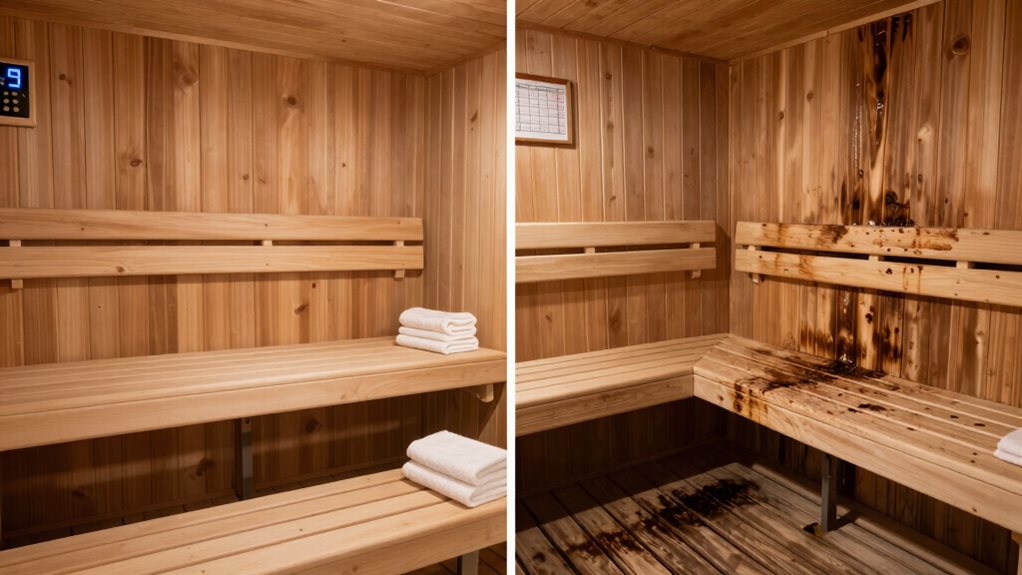
When considering the addition of sauna facilities to your fitness center, understanding the full cost picture becomes essential for making informed decisions.
Different types of saunas carry varying installation and maintenance costs that affect your long-term budget.
Understanding sauna options requires weighing both upfront installation costs and ongoing maintenance expenses in your financial planning.
Traditional saunas typically cost $3,000-$6,000 to install, while infrared options range from $2,000-$12,000.
For businesses looking to save, prefabricated models ($3,000-$10,000) or DIY kits can reduce expenses by up to 50% on labor.
- Commercial sauna units start at $3,599, making them accessible for small fitness centers.
- Monthly operating costs vary greatly: electric saunas ($14-$27), infrared ($0.15-$1/hour).
- Don’t forget additional expenses like electrical work ($1,000-$3,000) and ventilation.
- Annual maintenance runs $150-$200 for cleaning and repairs.
Safety Guidelines and Recommended Sauna Practices
You’ll need to follow key safety guidelines for a safe sauna experience, including limiting sessions to 10-20 minutes and cooling down properly after exercise.
Always monitor yourself for warning signs like dizziness or nausea, which indicate you should exit immediately.
Staying properly hydrated before and after your session, sitting on a clean towel, and following facility rules about age restrictions will help guarantee your sauna time remains beneficial rather than risky.
Optimal Session Timing
Establishing a safe and effective sauna routine requires careful attention to session timing, which varies based on the type of sauna and your experience level.
If you’re new to saunas, start with just 8-10 minutes to help your body adjust. As you become more comfortable, you can extend to 15-20 minutes in traditional saunas or up to 45 minutes in cooler infrared saunas. Always stay properly hydrated before entering the sauna to prevent dehydration during your session. For optimal health benefits, many experts recommend following the contrast therapy approach alternating between hot and cold exposure.
- Post-workout sessions (15-20 minutes after exercise) boost muscle recovery and circulation
- Pre-workout short sessions (5-10 minutes) help warm muscles and reduce injury risk
- Evening sessions should end at least 2 hours before bedtime for ideal sleep benefits
- Multiple shorter sessions with cooling breaks follow the Finnish approach for maximum benefits
The best weekly frequency depends on your goals—aim for 2-3 sessions for general wellness, or 3-5 for muscle recovery.
Health Monitoring Requirements
Effective health monitoring forms the backbone of any safe sauna operation, requiring systematic oversight across multiple dimensions. Your facility should conduct regular inspections—every 15-30 minutes for saunas and every 30 minutes for locker rooms.
Look for staff completing documented walk-throughs with checklists that verify proper conditions and equipment function.
Quality facilities maintain precise temperature controls (70-100°C for Finnish saunas, 40-60°C for infrared) with automatic shut-offs if limits are exceeded.
They’ll have robust cleaning schedules: daily disinfection of high-touch surfaces, weekly deep cleans, and monthly maintenance checks.
You’ll notice thorough documentation everywhere—logbooks recording inspection details, compliance signage, and temperature displays.
The best facilities combine these manual checks with surveillance systems that monitor areas continuously when staff can’t be physically present.
Compliant saunas should provide wheelchair turning space of at least 60 inches in diameter to ensure proper accessibility for all users.
Emergency Procedure Protocols
Beyond proper monitoring, extensive emergency procedure protocols are the last line of defense in sauna safety. Every fitness facility should maintain written emergency plans covering situations like power failures, overheating, and medical emergencies.
You’ll want to verify your chosen facility has visible evacuation routes that remain legible even in steamy conditions.
- Staff should be CPR-certified with specific training on heat-related illnesses
- Emergency equipment must include temperature alarms, first aid kits, and accessible AEDs
- Panic buttons or call points should be available where cameras can’t monitor for privacy
- Clear instructions for patrons on how to summon help and exit during emergencies
When comparing facilities, ask about their emergency drills and how staff respond to incidents.
The best locations conduct regular training and maintain detailed incident logs linking problems to repairs.
Membership Value: How Saunas Affect Gym Selection
Saunas represent a considerable value driver in gym membership decisions, often serving as the tipping point when consumers compare facilities.
You’ll find that gyms with saunas can justify higher premium tier pricing, typically exceeding $150/month, because recovery amenities signal quality and extensive wellness offerings.
When you’re choosing between facilities, consider that saunas are relatively affordable additions for gym owners ($4,400-$11,000) but create notable perceived value for you as a member.
Facilities strategically use saunas to segment their membership options, allowing you to choose between basic access or premium tiers that include recovery amenities.
The presence of a sauna might also indicate the gym’s commitment to retention—members who use additional amenities like saunas typically renew at higher rates and generate more revenue through wellness packages.
Market Growth Trends in Wellness-Focused Fitness Centers
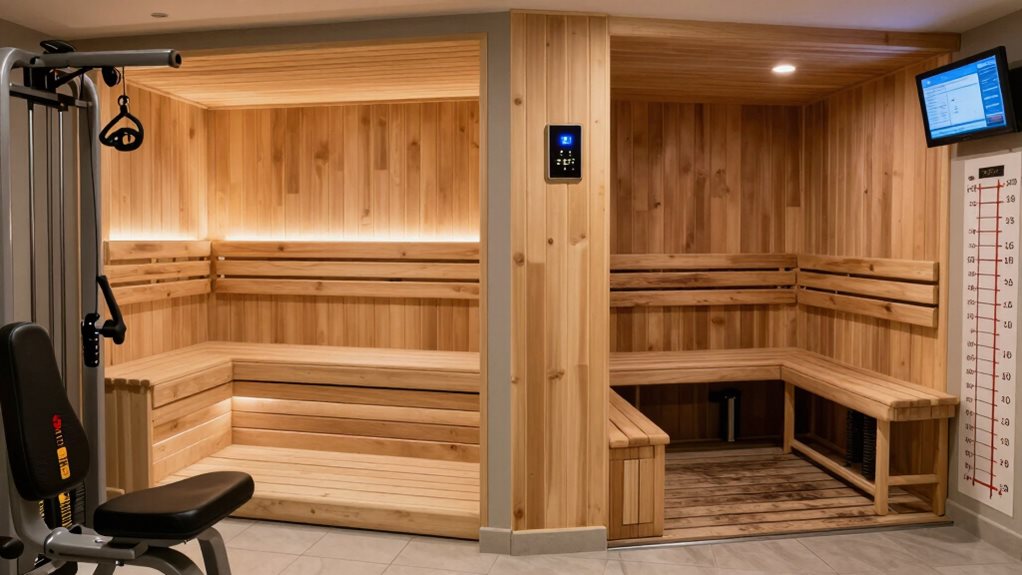
The fitness industry has entered a remarkable period of expansion, with wellness-focused centers leading this growth. You’ll find the global fitness market projected to more than double from $102 billion today to $235 billion by 2034, driven by consumers seeking extensive wellness experiences rather than just traditional workouts.
Key growth indicators include:
- Membership numbers increasing 6% year-over-year
- Facility counts expanding at roughly 4% annually
- Revenue growth averaging 8% across operators
- 91% of fitness businesses expecting further revenue gains in 2025
This expansion reflects how your priorities are shifting toward preventive health and longevity.
Younger generations, particularly Gen Z and Millennials, are fueling this trend by demanding personalized fitness experiences and recovery services like infrared saunas, cryotherapy, and compression therapy—transforming these once-luxury amenities into standard offerings at forward-thinking facilities.
Frequently Asked Questions
Can Children Use Gym Saunas, and What Are the Age Restrictions?
Children generally can’t use saunas until age 12 at most gyms. You’ll find policies vary, with some allowing supervised kids 8+ at reduced temperatures for brief 5-10 minute sessions.
Are There Gender-Specific Sauna Protocols in Mixed-Gender Fitness Facilities?
Yes, most facilities have gender-specific protocols. You’ll find co-ed spaces require swimwear or towels, while designated single-gender areas may permit nudity following facility-specific guidelines and cultural norms.
How Do Saunas Impact Calorie Burning and Weight Loss?
You’ll burn 210-290 calories in a 30-minute dry sauna session. Despite temporary water weight loss, saunas aren’t effective standalone fat-loss tools. They complement, but don’t replace, diet and exercise.
What Clothing Is Appropriate or Required in Different Sauna Environments?
In public saunas, wear swimsuits or towel wraps. Private facilities may allow nudity with towels beneath you. Traditional European saunas favor nude bathing, while most American venues require swimwear.
Can Saunas Help Reduce Muscle Soreness After Intense Workouts?
Yes, saunas greatly reduce your post-workout muscle soreness by increasing blood flow, releasing endorphins, and decreasing inflammation. You’ll experience faster recovery and maintained performance after intense training sessions.
Final Thoughts
You’ve now seen how saunas differentiate fitness facilities, affecting both member choices and gym economics. When you’re choosing your next gym membership, consider sauna access as part of your wellness experience, not merely a luxury. Remember, proper hygiene protocols and safety practices make the experience worthwhile. As wellness-focused fitness centers continue growing, you’ll find more facilities investing in these amenities to attract and keep members like you.