
Sauna amenities in luxury condos offer both advantages and drawbacks worth considering. On the plus side, they provide health benefits like improved sleep and cardiovascular health, increase property values by 7-10%, and attract premium buyers willing to pay 4.4-7.7% higher rent per square foot. However, they require dedicated space (4-8 sq ft per person), ongoing maintenance costs ($100-350 annually), and necessitate clear usage policies to manage liability. The full financial picture reveals surprising ROI potential for your investment.
The Wellness Revolution: How Saunas Elevate Residential Living
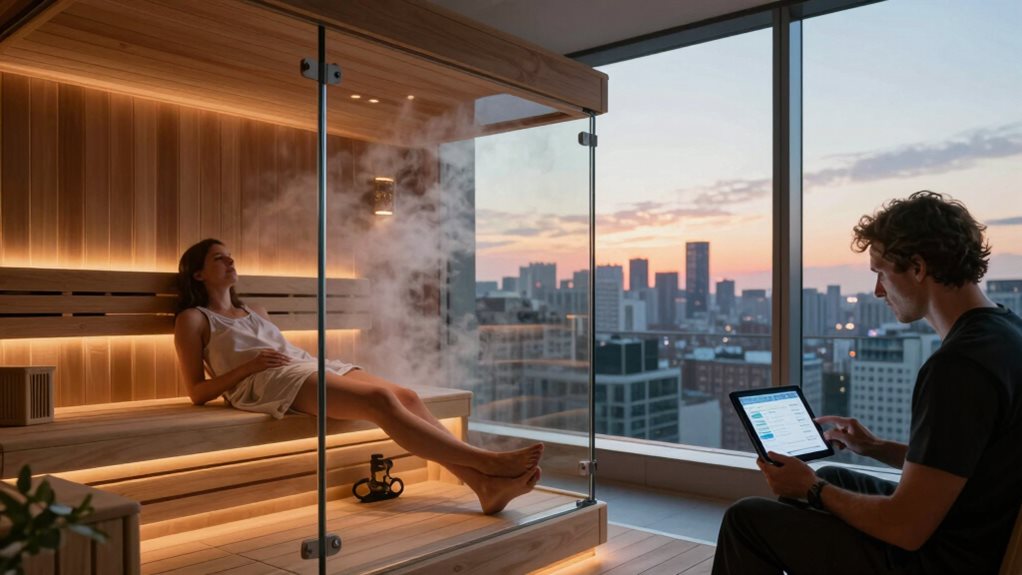
As luxury real estate evolves beyond mere square footage and location, saunas have emerged as centerpieces of the wellness revolution transforming high-end residential living.
Today’s luxury homes transcend traditional metrics, with saunas becoming essential wellness focal points in premium residential spaces.
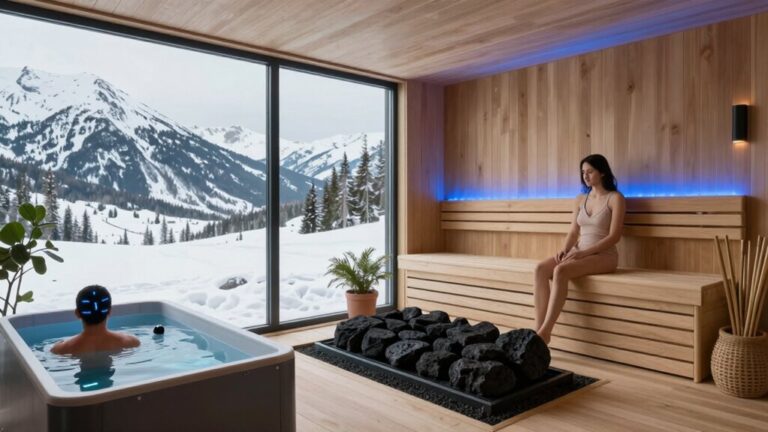
You’ll find these heat-therapy spaces increasingly common in upscale New York and Miami developments, often paired with cold plunges and other wellness amenities.
This shift reflects changing priorities among affluent buyers who now seek homes that actively support their health.
Custom room-sized saunas, costing around $100,000, offer cardiovascular benefits similar to moderate exercise while promoting better sleep for 83.5% of users.
When you step into these therapeutic environments, you’re not only enjoying luxury—you’re investing in longevity, with regular sessions linked to lower risks of Alzheimer’s, dementia, and heart disease.
The endorphin release also creates a perfect meditation space, augmenting your mental wellness alongside physical benefits.
Property Valuation Impact: Do Saunas Actually Increase Resale Value?
When deciding to invest in a sauna for your luxury condo, you’ll likely wonder if this wellness feature truly pays off at resale time. The answer isn’t straightforward, as sauna value depends on market conditions, installation quality, and buyer preferences.
Here’s what impacts your sauna’s contribution to property value:
- Buyer Demographics – 42% of buyers view saunas as highly desirable, particularly among wellness-focused home shoppers who may pay premium prices.
- Comparable Properties – Appraisers rely on recent sales; your sauna adds more value when similar units with saunas have sold nearby.
- Quality and Documentation – Professional installation with warranties and code compliance boosts value more than DIY projects.
In luxury condo markets, a sauna can differentiate your property, potentially justifying higher listing prices even when direct ROI figures vary.
Health Benefits and Lifestyle Enhancement for Residents
Luxury condo residents who regularly use their building’s sauna facilities gain far more than just a pleasant amenity—they’re investing in their long-term health and wellbeing.
Research shows that frequent sauna use is linked to impressive cardiovascular benefits, including lower risks of heart attacks, strokes, and hypertension. Your regular sauna sessions might reduce your risk of serious heart problems by up to 83%, similar to the benefits of a consistent exercise routine.
Beyond physical health, you’ll likely experience improved mood, better sleep quality, and reduced stress levels after sauna sessions. The heat triggers endorphin release while lowering stress hormones in your body.
For active residents, saunas can improve your workout recovery by increasing blood flow to tired muscles and potentially reducing soreness, making them a valuable complement to your fitness regimen.
Space Planning Challenges and Design Considerations
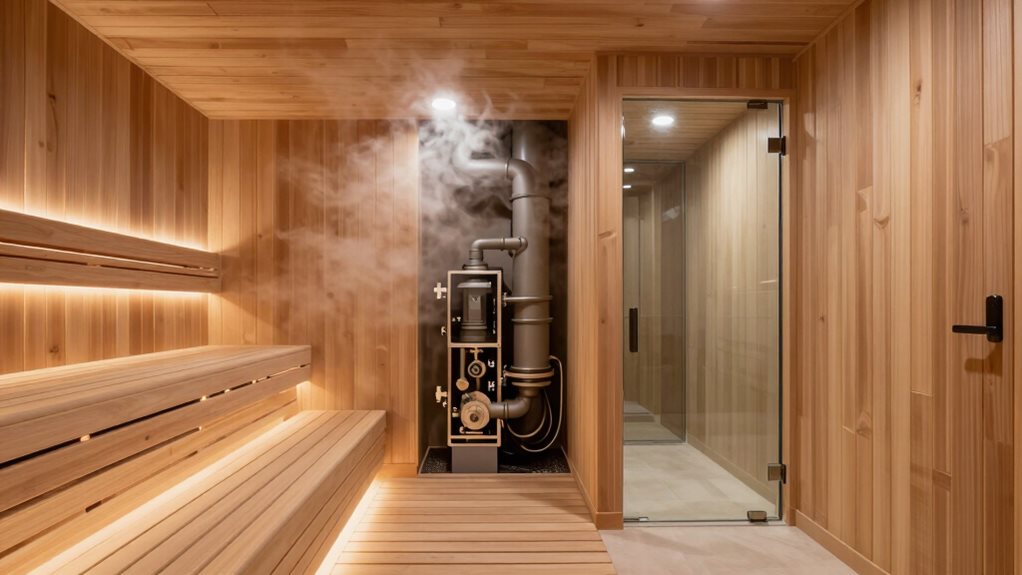
Designing a sauna for your luxury condo involves maneuvering considerable spatial challenges that extend well beyond simply finding room for a hot box.
Creating a sauna in upscale residential spaces demands navigating complex spatial constraints far more nuanced than mere square footage allocation.
You’ll need to allocate 4-8 square feet per person with ceiling heights of at least 7 feet to guarantee proper heat circulation and comfort. Proximity to existing plumbing is vital to avoid costly new drain installations.
When planning your sauna, consider these significant factors:
- Electrical requirements – heaters need dedicated circuits, and long runs may require panel upgrades.
- Ventilation design – proper airflow prevents moisture damage to surrounding areas.
- Material selection – non-resinous softwoods like hemlock or cedar perform best under heat and humidity.
Door swing clearances, structural loading, and fire safety codes will further impact your design decisions, especially in multi-unit buildings where noise and heat transfer must be carefully managed.
Operational Costs and Maintenance Requirements
Beyond the initial installation of your luxury sauna, you’ll need to carefully consider the ongoing operational costs and maintenance requirements that impact your long-term budget.
Professional cleaning services will cost $100-$350 annually, with frequency increasing in high-use facilities. You’ll also face periodic expenses like heater checks ($50-$150), filter changes ($60-$180), and replacing consumables like stones and door seals ($20-$200).
Don’t forget to budget for unexpected repairs and replacements. Heater elements typically cost $200-$1,500 to replace, while major issues like water damage or mold remediation can run $1,000-$10,000.
Smart condo managers set aside 5-10% of the original installation cost as a replacement reserve to avoid financial surprises down the road.
Community Management: Policies, Usage, and Resident Satisfaction
Successfully managing a luxury sauna amenity in your condominium community requires thoughtful policies that balance accessibility with proper maintenance and safety.
Your HOA board can’t arbitrarily restrict amenity access without established rules, as this could create liability issues. Well-documented policies protect property values while guaranteeing fair usage for all residents.
For effective sauna management, consider these key practices:
- Post clear signage near the sauna outlining hours, usage guidelines, and safety requirements in compliance with local regulations.
- Establish a cleaning and maintenance schedule handled by professional property management to prevent deterioration.
- Create fair policies that avoid age-based restrictions (which violate the Fair Housing Act) while still addressing safety concerns.
When rules are consistently enforced and professionally managed, your sauna amenity will improve community satisfaction and property values.
Competitive Edge: Marketing Luxury Wellness Amenities
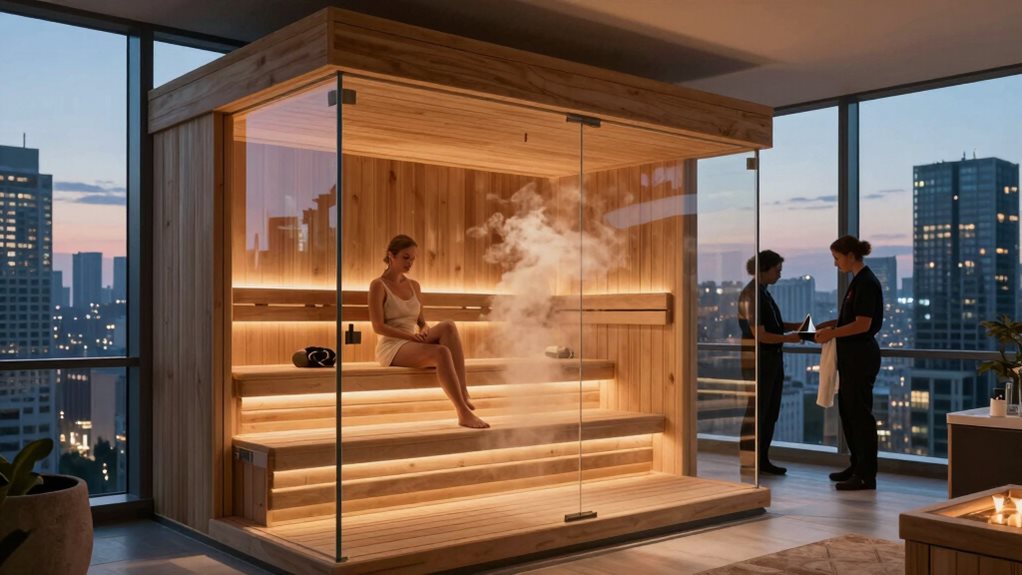
You’ll notice that wellness has become the defining feature of today’s luxury real estate market, with saunas and thermal experiences setting premium properties apart from their competitors.
Your marketing strategy can transform these health-oriented spaces into powerful selling points that justify higher price points and create lasting value perceptions among affluent buyers.
When you showcase your sauna amenities through targeted campaigns and exclusive events, you’re not merely selling square footage—you’re offering a lifestyle centered around the $6.32 trillion wellness movement that resonates deeply with today’s health-conscious luxury consumers.
Wellness: The New Luxury
Transformation defines today’s luxury real estate market, where wellness amenities have evolved from optional perks to essential selling points.
With 78% of luxury buyers now considering wellness features compulsory, developers are responding to this shift in expectations.
Your property can stand out by emphasizing these wellness elements:
- Sauna circuits that create memorable wellness rituals, connecting traditional saunas with cold plunges and relaxation spaces
- Branded partnerships with respected wellness names that justify premium pricing while elevating your property’s status
- Community programming around your wellness amenities, encouraging longer residency and deeper resident engagement
The story you tell about your wellness offerings matters as much as the amenities themselves.
When marketing to health-conscious buyers, focus on how these features support their daily restoration and recovery routines.
Monetizing Health-Oriented Spaces
Beyond creating wellness spaces that residents enjoy, savvy developers are discovering that health-oriented amenities deliver impressive financial returns.
Properties featuring saunas and wellness spaces can command 10-25% higher prices in middle and upper markets, while generating rental premiums of 4.4-7.7% per square foot.
You’ll find these wellness-focused properties sell faster and attract more tenants, especially health-conscious millennials and baby boomers.
In competitive markets like Chicago, adding a sauna isn’t just nice—it’s a strategic differentiator that makes your property stand out among growing inventory.
The investment pays off long-term too.
Green wellness amenities protect property values while creating what feels like a high-end resort experience for residents.
It’s no longer about basic gyms; it’s about creating holistic wellness ecosystems that command premium pricing.
Differentiation Through Thermal Experiences
Modern luxury condominium developers are now separating themselves from competitors through distinct thermal experiences that go far beyond basic amenity offerings.
You’ll find properties like Aman New York featuring banya and hammam treatments alongside hot and cold plunge pools within their massive 25,000 square foot spa complex.
These wellness-focused offerings create compelling market advantages:
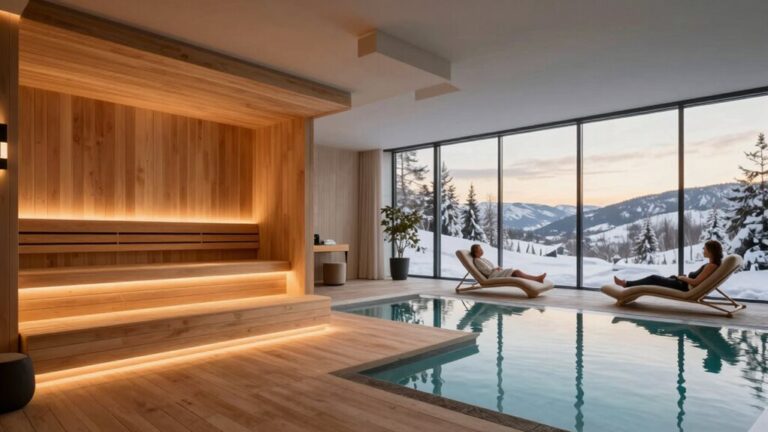
- Unique thermal combinations (like 130 William Street’s infinity-edge lap pool paired with thermal pool, cold plunge, and dry sauna) attract discerning buyers.
- Specialized features such as THE WELL’s halotherapy steam room with lymphatic support create memorable selling points.
- Premium thermal amenities show the highest correlation to increased price per square foot in rental market analysis.
Your luxury condo experience now includes specialized thermal experiences that replace expensive spa memberships with in-house exclusivity.
Financial Analysis: Return on Investment for Developers and HOAs
You’ll find that sauna installations in luxury condos deliver impressive returns despite their upfront costs, with ROI figures ranging from 180-300% annually in prime markets.
Your property’s value can appreciate considerably when wellness amenities are strategically marketed, often yielding 7-10% higher selling prices compared to non-equipped competitors.
When calculating performance, consider how saunas reduce typical vacancy rates by up to 27% during shoulder seasons, effectively lowering your risk profile while improving overall financial stability.
Capital Intensity vs. Returns
The financial equation behind sauna installations presents a stark contrast between luxury condos and short-term rental properties, with dramatically different payback periods depending on the business model.
While short-term rentals can recoup sauna costs in 6-18 months through nightly premiums, condo associations often face 3-10+ year recovery periods through shared HOA fees.
When evaluating sauna investments, consider these key factors:
- Capital intensity – Infrared units ($6,000-$10,000) offer faster payback than custom traditional saunas ($10,000-$30,000+)
- Ongoing expenses – Factor in electricity, maintenance, and cleaning costs that impact HOA budgets
- Replacement timeline – Plan for 7-15 year refresh cycles that affect long-term financial planning
Your choice between low-cost infrared and premium traditional options should balance upfront affordability against the amenity’s long-term value to residents.
Value Appreciation Metrics
Looking beyond implementation costs, sauna investments can greatly impact property values and revenue potential for luxury condos. Your property could see value increases of up to 31% when wellness features like saunas are properly highlighted in listings, according to Zillow survey data.
The financial benefits vary considerably by market segment. In luxury settings, you’ll typically see stronger returns than in mass-market properties.
For short-term rentals, the impact can be dramatic—some case studies show ROI between 180-301% in suburban markets, with payback periods as short as 6-18 months. These returns come from both higher nightly rates ($50+ premiums) and increased occupancy rates.
For long-term rentals, while monthly premiums are smaller, they still contribute substantially to NOI when properly marketed.
Risk-Adjusted Performance Calculation
When evaluating sauna investments for luxury condos, calculating risk-adjusted performance provides a clearer picture than simple ROI metrics.
You’ll need to take into account both the returns and the risks specific to amenity investments to make sound financial decisions.
To properly assess sauna investment performance:
- Calculate Sharpe or Sortino ratios to compare your sauna project against other amenity options by normalizing returns based on volatility or downside risk.
- Apply scenario testing with base, downside, and upside cases to understand potential outcomes under different utilization and maintenance cost scenarios.
- Use risk-adjusted discounting by adding an amenity-specific premium to your discount rate that reflects operational, regulatory, and reputational risks unique to saunas.
This approach helps you avoid overestimating returns and guarantees your investment decisions account for sauna-specific uncertainties.
Frequently Asked Questions
How Does Sauna Use Affect Building Insurance Premiums?
Your insurance premiums will likely increase due to higher risks of fire, water damage, and liability. You’ll need to notify your insurer and may require special coverage for sauna-related hazards.
Can Saunas Be Retrofitted Into Existing Buildings?
Yes, you can retrofit saunas into existing buildings with proper ventilation and waterproofing. You’ll need to assess structural soundness, upgrade electrical systems, and guarantee compliance with building requirements.
What Certifications Do Sauna Operators Need?
You’ll need a high school diploma, completion of approved training courses, and annual ethics training. You must pass a certification exam and maintain your license through continuing professional development.
Are There Sustainable/Eco-Friendly Sauna Options?
Yes, you’ll find eco-friendly sauna options using reclaimed cedar, thermally modified wood, energy-efficient infrared panels, LED lighting, and smart systems that reduce your carbon footprint while maintaining luxury features.
Do Sauna Amenities Appeal Across Different Cultural Backgrounds?
Yes, saunas appeal across cultures but with varying levels of familiarity. You’ll find Nordic residents expect them, while others from Asia and Eastern Europe appreciate them through their own heat bathing traditions.
Final Thoughts
As you weigh the sauna decision for your luxury condo investment, consider both sides of the steam-filled coin. You’ll gain wellness benefits and potential property value increases, but you’re also signing up for maintenance costs and space commitments. Whether saunas deliver meaningful ROI depends on your target market’s priorities. In today’s wellness-focused real estate environment, thoughtful amenity planning can turn your property into a competitive, sought-after sanctuary.