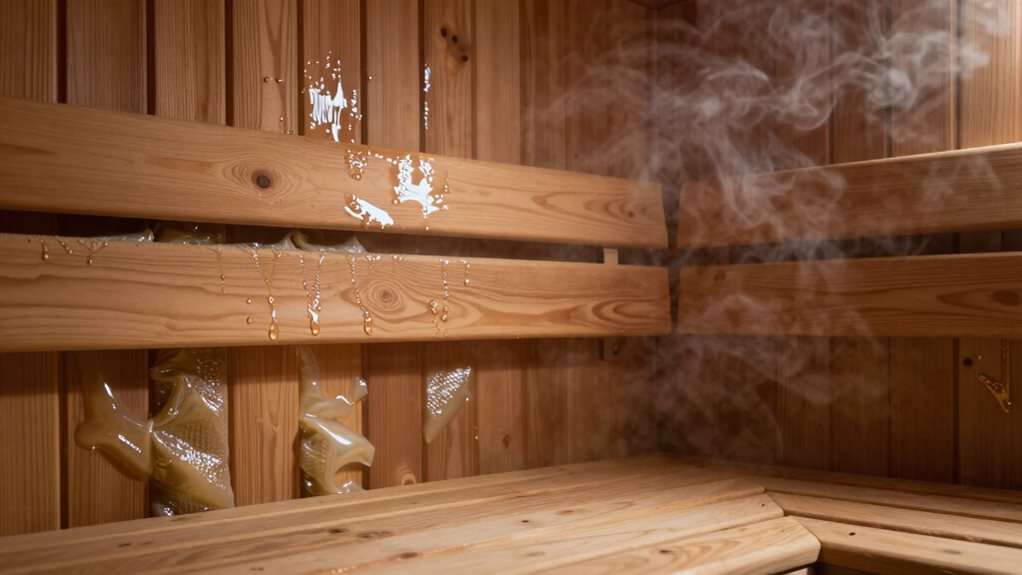

Insulation and vapor barriers are crucial in saunas because they keep heat in and moisture out. Think of insulation as a cozy blanket for your sauna—higher R-values mean better heat retention. Vapor barriers act like a shield, preventing water damage and condensation. This not merely maintains a strong structure but also saves on energy costs. With the right materials and placement, you can enjoy a more comfortable sauna experience. Want to know how to choose the best options?
The Importance of R-Values in Insulation
When it comes to saunas, understanding R-values is like knowing the secret recipe for keeping the heat just right. R-value measures how well insulation resists heat flow, meaning a higher R-value equals better heat retention. Proper insulation also helps prevent moisture damage by creating a thermal barrier that blocks condensation buildup, further enhancing sauna efficiency. Additionally, using the right sauna insulation materials can significantly impact the overall effectiveness of your sauna.
Imagine wrapping yourself in a warm blanket; that’s what good insulation does for your sauna! For indoor saunas, aim for an R-value between 13 and 15, while outdoor ones need at least 19. Proper insulation can help reduce energy consumption and keep your sauna more efficient.
Materials like fiberglass and mineral wool help achieve these values, with fiberglass being budget-friendly. But remember, not all materials are created equal; foil-faced boards can greatly boost efficiency.
Optimizing Heat Retention for Better Sauna Performance
To create a sauna experience that truly warms your soul, optimizing heat retention is essential. Start by using heat-reflective foil behind wall panels, which keeps your sauna cozy and efficient. These foil-faced boards can handle high temperatures and improve R-values. It’s important to remember that heat is primarily transferred through conduction and convection, enhancing the overall effectiveness of your sauna. Additionally, using sauna insulation kits can streamline the installation process and ensure a proper fit.
Make sure your ceiling insulation is sturdy, as that’s where most heat escapes. Filling cavities completely and using foil vapor barriers stops heat and moisture from sneaking out. Additionally, selecting the right sauna heater can greatly reduce energy consumption for a more economical operation.
Ensure your ceiling insulation is robust to minimize heat loss, using foil vapor barriers to keep warmth and moisture in.
Also, consider ventilation—it helps maintain steady temperatures and prevents excess humidity. A little preheating goes a long way too, guaranteeing even heat distribution.
Finally, keep your heater clean and well-matched to the sauna size, so it operates seamlessly and effectively. Trust me, these steps will enhance your sauna experience!
Proper Placement of Vapor Barriers
Proper placement of vapor barriers is crucial for keeping your sauna cozy and preventing moisture problems, so let’s explore what you need to know.
First, install the vapor barrier on the warm-in-winter side of the insulation, which is the inside of your sauna walls and ceiling. Make sure it’s continuous, with overlaps and taped seams to create an airtight seal. Foil vapor barriers do not melt at sauna temperatures, ensuring they remain effective in protecting your sauna. Additionally, using moisture protection products can further enhance the durability of your sauna. Don’t place it directly against the wood cladding; instead, leave a small air gap to reduce condensation risks. This is particularly important because a non-breathable vapor barrier ensures moisture retention and prevents damp insulation from compromising thermal properties.
When you start, run the ceiling vapor barrier first, making certain it flows onto the upper wall, and seal it at the floor level to stop moisture from sneaking into your subfloor.
Following these steps will set you up for a truly enjoyable sauna experience!
The Role of Moisture Protection in Sauna Longevity
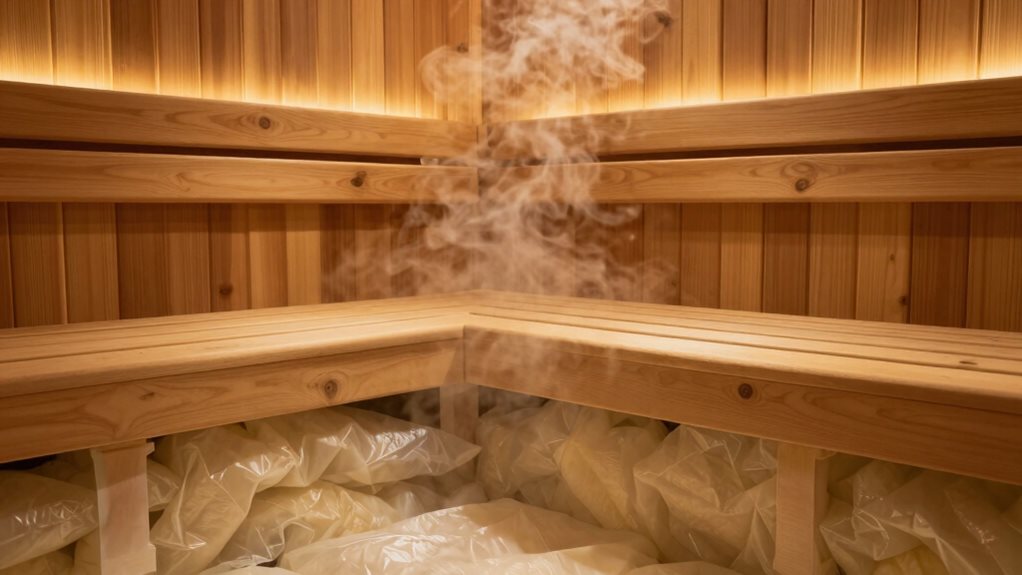
Moisture protection is key to keeping your sauna in great shape for years to come. When you prevent condensation, you’re not only saving your sauna’s wood from swelling or warping, but also helping your insulation work effectively. This means a hotter sauna with lower energy bills and less chance for mold to ruin your relaxation time! Regular sauna use can also contribute to cardiovascular health benefits, making it even more important to maintain optimal sauna conditions. Furthermore, proper insulation and vapor barriers support the health benefits associated with regular sauna use, enhancing your overall wellness experience. Investing in a sauna moisture control system can further optimize your sauna’s performance and longevity.
Preventing Condensation Issues
While enjoying the soothing heat of your sauna, you mightn’t realize that the warm, moist air can lead to condensation problems if not managed properly.
When warm air hits cold surfaces, like uninsulated walls, you can see droplets forming, which may drip onto the wooden structure. To combat this, installing a vapor barrier, like foil bubble wrap, helps keep that moisture out of your walls. Ensuring a safe, healthy home environment is paramount, as moisture issues can escape from the sauna into adjacent living spaces. Proper flashing installation is essential in protecting your sauna from water intrusion and minimizing moisture-related risks. Investing in premium sauna insulation kits can greatly enhance the effectiveness of your vapor barrier.
Vents near the floor and ceiling promote air circulation, pulling fresh air in as hot air rises. After your sessions, don’t forget to open doors or windows to let out damp air.
Simple practices, like wiping surfaces and treating your sauna wood annually, can keep your sauna happy and healthy, avoiding unwanted moisture damage.
Protecting Structural Integrity
After taking steps to prevent condensation issues, it’s time to focus on the bigger picture of how moisture protection impacts a sauna’s overall durability.
By using moisture barriers, you’re fundamentally giving your sauna a shield against rot, keeping structural elements safe and sound. Treatments like thermowood cut moisture absorption in half, which means your wood lasts longer.
With kiln-dried wood, you minimize the risks of warping and decay. Barriers also block unpleasant mold growth, improving air quality and safety. Investing in HEPA air purifiers can further enhance your sauna experience by ensuring clean air circulation.
When framing is protected from moisture, it maintains strength despite temperature changes. Investing in quality materials prevents those nasty surprises later on, guaranteeing your sauna remains a cozy, safe retreat for years to come!
Enhancing Insulation Effectiveness
To maximize the effectiveness of your sauna’s insulation, understanding the role of moisture protection is crucial. When moisture seeps into insulation, it loses thermal resistance, making your sauna harder to heat.
Using foil-faced vapor barriers helps reflect radiant heat back, making it feel warmer faster. Opt for rigid PIR boards, which maintain their insulating properties better than traditional batt materials.
And remember, placing the vapor barrier on the warm side of the insulation stops condensation from sneaking in. Keeping seams sealed and regularly checking for damage also helps your sauna stay cozy. Additionally, investing in a quality waterproof sauna floor membrane can further enhance moisture protection, ensuring the longevity of your sauna.
Recommended Materials for Effective Insulation
When you’re planning the insulation for your sauna, picking the right materials can make all the difference in keeping the heat in and the moisture out.
You’ve got options like mineral wool and fiberglass for insulation, along with aluminum foil as an excellent vapor barrier.
Insulation Material Types
Choosing the right insulation for your sauna is like picking the perfect outfit for a cozy winter day—it can make all the difference in comfort!
Consider mineral wool for its high heat tolerance and moisture resistance. It’s great at keeping out mold and has excellent thermal performance, too.
Fiberglass batts are budget-friendly and, when installed correctly, offer similar benefits. You might like rigid foam boards, too, which can fit snugly in tight spaces while providing a high R-value.
If you’re leaning towards eco-friendly options, natural fibers like hemp or sheep wool can be effective but need solid vapor control to perform well. Additionally, opting for an eco-friendly sauna heater can complement your insulation choice by reducing energy consumption and enhancing sustainability.
Whatever you choose, the right insulation sets the stage for that warm, inviting sauna experience!
Vapor Barrier Options
Vapor barriers are like protective shields for your sauna, guaranteeing that moisture doesn’t sneak into the walls and wreak havoc on your insulation.
One popular option is aluminum foil, which works best when it’s seamless and placed on the warm side of your insulation. This foil not only stops steam but also reflects heat, keeping your sauna cozy.
Foil-faced rigid boards, like polyiso, add insulation and a foil layer all in one. If you want to control moisture more flexibly, consider vapor-check membranes, designed to allow limited moisture diffusion.
Finally, creating a small air gap with foil-backed systems can improve heat retention and prevent condensation.
Choose wisely, and your sauna will thank you!
Installation Best Practices
Installing insulation in your sauna is essential for guaranteeing a comfortable and energy-efficient environment. You’ve got several great options to choose from.
Fiberglass insulation is affordable and provides solid thermal resistance, but be sure to seal it well to avoid moisture issues. If you need something fire-resistant, mineral wool is an excellent choice, especially for high temperatures.
For maximum heat retention, consider foil-faced insulation; it reflects heat back while maintaining an airtight seal. If you’re into DIY, foam board insulation can give you a strong thermal barrier without much fuss.
Finally, natural fiber insulation offers an eco-friendly twist, but remember, it needs good sealing to avoid damp problems.
Happy insulating!
Health and Safety Benefits of Good Insulation Practices
When it comes to enjoying your sauna experience, good insulation practices aren’t just about comfort; they play a crucial role in your health and safety. Proper insulation helps maintain stable temperatures, guaranteeing that you reap the heart-healthy benefits of consistent heat exposure.
When your sauna warms up quickly, you’re more likely to use it regularly, boosting the health effects over time. Plus, good insulation controls moisture and keeps mold at bay, which is critical for respiratory health. Additionally, effective ventilation systems ensure that fresh air circulates, further enhancing your sauna experience.
Key Construction Considerations for Sauna Insulation
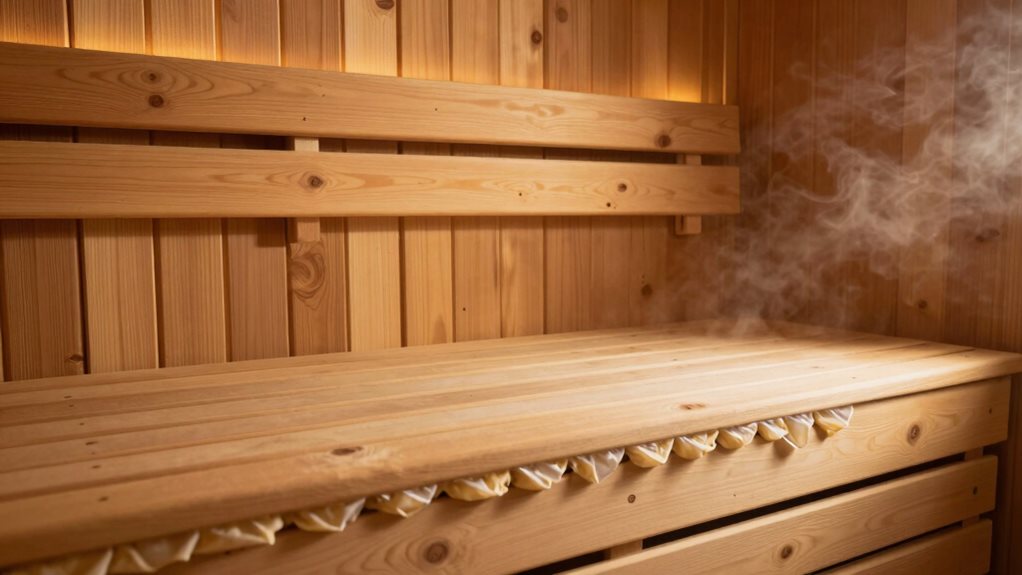
To create a sauna that’s both cozy and efficient, you need to take into account a few key construction factors surrounding insulation.
First, choose insulation materials wisely—mineral wool is excellent for resisting heat and moisture, while foil-faced foam boards reflect heat effectively.
When it comes to vapor barriers, pure aluminum foil works wonders to keep moisture out while reflecting radiant heat.
For the walls, make certain you fill gaps tightly with insulation and cover them with a foil vapor barrier, sealing all seams properly.
The ceiling deserves extra attention, so aim for thicker insulation—use an R26 rating or higher. Additionally, consider implementing a fireproof sauna ventilation system to ensure optimal air quality and safety.
Finally, don’t forget to protect your sauna’s floor with waterproof membranes to maintain a dry space.
Happy building!
Frequently Asked Questions
How Do Different Insulation Types Compare in Energy Efficiency?
Different insulation types vary in energy efficiency; fiberglass offers good thermal resistance, mineral wool excels in moisture resistance, and foil-faced insulation boosts heat retention. Choosing wisely maximizes your sauna’s energy efficiency and comfort.
Can Poor Insulation Affect Sauna Temperature Consistency?
Yes, poor insulation definitely affects sauna temperature consistency. You’ll experience uneven heat, longer warm-up times, and increased energy costs. Insulation helps maintain stable temperatures, allowing you to enjoy a more comfortable sauna experience.
What Are the Signs of Insulation Failure in Saunas?
You’ll notice insulation failure in your sauna if heating takes too long, heat’s uneven, you find cold spots, mold appears, or you see gaps in insulation. Increased energy use also indicates something’s not right.
How Often Should I Inspect My Sauna Insulation?
You should inspect your sauna insulation weekly for clear signs of damage, while conducting detailed inspections monthly. Every six to twelve months, consider scheduling professional checks to maintain ideal performance and safety of your sauna.
Do Vapor Barriers Need Maintenance After Installation?
Yes, vapor barriers need maintenance after installation. Regularly check for tears, separated seams, or discoloration. Address any issues immediately to prevent moisture penetration and guarantee your sauna remains efficient and comfortable during use.
Final Thoughts
To summarize, good insulation and vapor barriers are crucial in making your sauna experience enjoyable and safe. They keep the heat in and moisture out, guaranteeing a comfy environment that lasts longer. By choosing the right materials and placing them correctly, you’ll not just improve your sauna’s performance but also protect your investment. So, don’t overlook these details—they’re the secret ingredients for creating the perfect sauna that you’ll love to use time and time again!