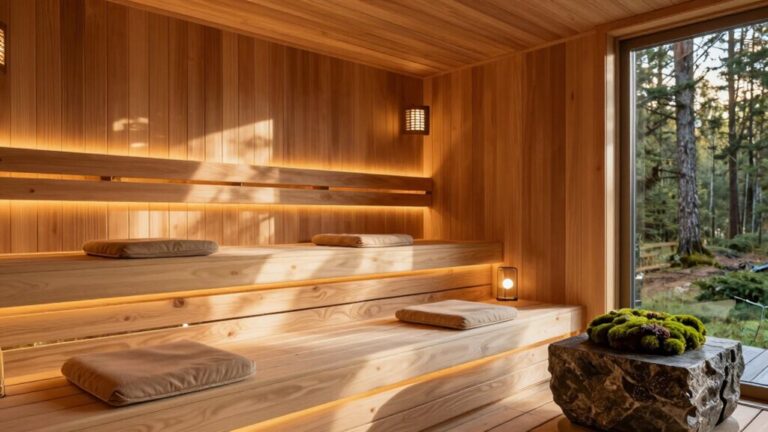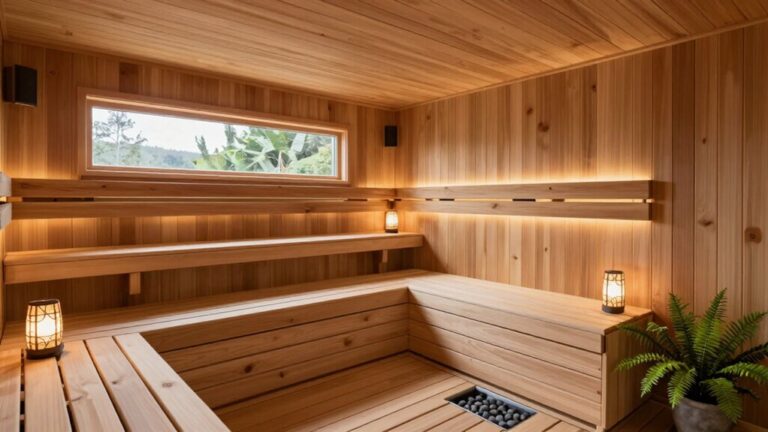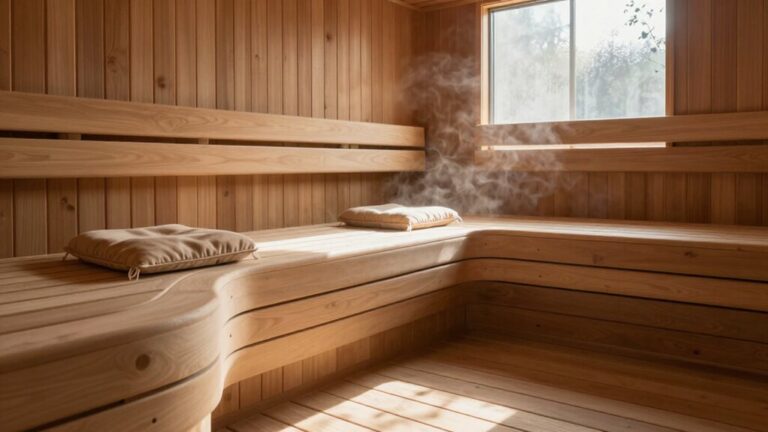
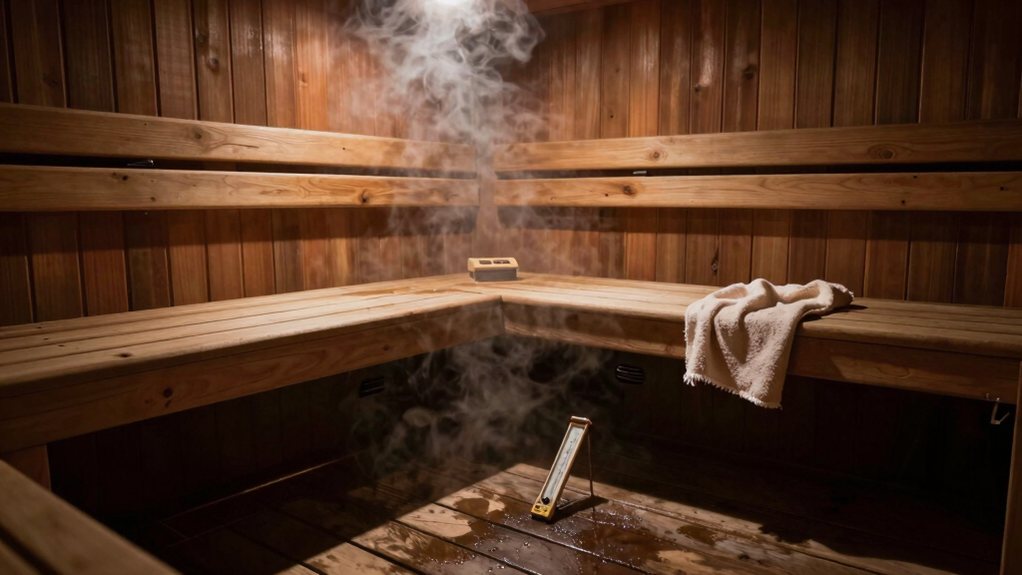

If your sauna isn’t cozy or efficient, you’ve likely made some common mistakes. Poor insulation can let heat escape, while inadequate ventilation might leave you with stale air. Your bench heights could also be off, causing discomfort. Plus, using the wrong heater size means fluctuating temperatures. It’s all about creating a balanced space where you can truly relax. By being mindful of these factors, you’ll create the perfect sauna retreat. Stay tuned for tips on fixing these issues!
Common Problems in Sauna Construction and Their Solutions
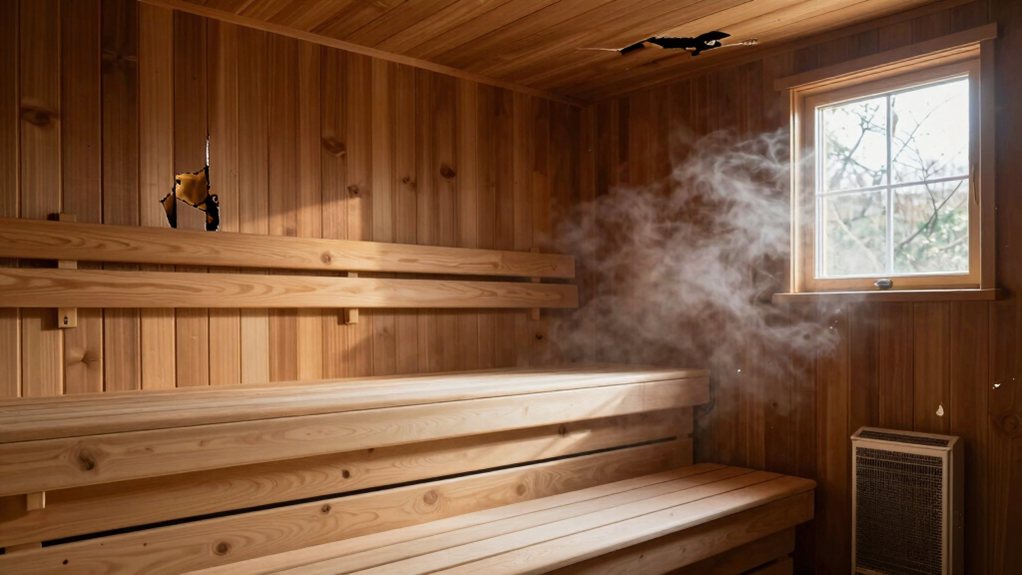
Have you ever wondered what can go wrong when constructing a sauna? Many homeowners face common problems that can ruin their sauna experience. For instance, if the container walls bow, it complicates your framing. Using shims and making precise measurements is crucial to keep everything square and level. You’ll also want to attach the framing to the ribs well, using construction adhesive or bolts. Additionally, if you don’t manage drainage properly, standing water can cause timber decay and slippery floors. Installing a tiled floor with a central drain is a smart move, and remember to slope it toward the drain. By addressing these issues early on, you can create a sauna that’s both safe and comfortable to use! Furthermore, ensure that you monitor gaps around doors to prevent pest entry, which can lead to structural damage over time. Neglecting proper ventilation planning can also trap moisture, leading to mold and compromising the sauna’s lifespan.
Understanding Proper Insulation Practices for Optimal Performance
When it comes to building a sauna, understanding proper insulation practices is key to keeping that cozy warmth where it belongs. You’ve gotta think about the fundamental air gaps and effective vapor barrier usage, as these elements play a major role in maintaining heat and preventing moisture buildup. Proper insulation enhances energy efficiency by minimizing heat loss, allowing the sauna to reach desired temperatures quickly and efficiently. Additionally, using suitable materials that are heat-resistant and moisture-protective will enhance the durability and comfort of the sauna experience.
Essential Air Gap Importance
Creating the perfect sauna experience goes beyond just the right temperature; it hinges on understanding the essential air gap. This gap is necessary because it keeps your insulation and wood surfaces dry, which prevents unwanted moisture buildup. Ideally, you need at least 20 mm of air space behind your sauna’s internal cladding and ceilings to allow condensation to evaporate, keeping mold and rot away. Think of it like a revitalizing change that helps your sauna heat up faster while maintaining a steady temperature. Plus, it reduces energy use and extends your heater’s lifespan. By guaranteeing proper air circulation, you not only improve comfort but also protect your sauna and surrounding structures, leading to a truly enjoyable experience. Furthermore, the air gap plays a crucial role in heating distribution, ensuring uniform warmth across your sauna walls. In addition, maintaining an air gap protects the wood from prolonged moisture exposure, which can help preserve cedar’s resilience.
Effective Vapour Barrier Usage
To guarantee your sauna performs at its best, the effective use of a vapor barrier is crucial. Place the barrier on the warm side of your insulation, right behind the interior wall cladding. This stops moisture from reaching the wall cavities. By doing so, you prevent mold growth which thrives in warm, moist hidden spaces. The use of aluminum foil as a vapor barrier ensures optimum protection against moisture penetration, making it a reliable choice for sauna construction.
Use aluminum foil, since it’s durable and withstands high temperatures better than plastic. Seal all seams with high-quality foil tape, overlapping them by a few inches—every little bit counts! Avoid gaps, as they can lead to condensation and ruin your sauna experience. If you live in a colder climate, make certain you have enough exterior insulation to keep things cozy.
What Safety Features Make Your Sauna Safer?
When it comes to sauna safety, guaranteeing proper drainage and clearances for heaters is essential. You wouldn’t want any water pooling around, which can lead to slips or even electrical issues! Plus, using durable flooring materials additionally improves safety but also helps your sauna last longer, letting you enjoy those relaxing sessions worry-free. Ensuring that your sauna complies with local building codes is also critical to avoid any legal and safety-related issues. Installing a mesh guard over the heater is another important safety feature to prevent accidental contact with the heater while providing essential protection.
Proper Drainage Systems
Having a proper drainage system in your sauna isn’t just a good idea; it’s essential for keeping the space safe and enjoyable. A floor that slopes gently towards the drain helps guarantee water flows away, preventing puddles and making cleaning easier.
You’ll want drains placed at the lowest points to capture runoff efficiently. If your sauna is larger, consider using multiple drains or modern linear designs.
Don’t forget about drain covers—they protect users from accidents and keep debris out! Waterproof membranes beneath the floor help prevent damage, and maintaining these systems assures there’s no mold or bacteria.
Regular inspections are key, too. With these features, you can relax knowing your sauna is a safe, comfortable haven.
Clearances for Heaters
Every sauna heater needs to be positioned correctly to guarantee a safe and enjoyable experience. For electric heaters, make sure there’s at least 3 feet in front and 6 inches to the sides and rear.
When it comes to wood-burning heaters, the clearance is a hefty 36 inches! Always check the manufacturer’s guidelines, as they detail specific clearances.
For added safety, consider using certified heat shields; they can reduce required clearances considerably.
Remember, improper spacing is a top reason for failed inspections, so always adhere to local codes.
If you have any doubts, consulting a professional electrician can save you from potential hazards. Your sauna should be a place of relaxation, not a safety risk!
Durable Flooring Materials
Choosing the right flooring for your sauna isn’t just about looks; it plays a big role in your safety and comfort. Opt for non-slip textures like rubber or textured tiles to prevent falls in those humid conditions.
Plus, moisture-resistant materials, like Ipe wood and PVC, stop warping and mold from ruining your space.
Durable options, such as ceramic tiles or cedar duckboards, can handle heavy traffic and last for years.
Don’t forget drainage! Perforated tiles and duckboard panels keep water from pooling and make cleanup a breeze.
Finally, easy maintenance with non-slip, anti-microbial surfaces guarantees you can enjoy your sauna without worrying about germs.
How to Select Safe and Comfortable Bench Heights?
What makes a sauna bench height just right for you? It’s all about comfort and safety. Ideally, lower benches should sit at 16-18 inches, giving you chair-like seating without scrunching your legs.
For upper benches, aim for 35-36 inches, guaranteeing plenty of headroom—about 43-44 inches from the ceiling. This keeps heat where it belongs, plus it makes it easy for everyone to sit down and stand up.
Customize your benches based on your tallest or shortest users, maintaining a versatile range of 17-24 inches in height. Remember to avoid benches over 24 inches to prevent balance issues.
With the right height, you can fully relax and enjoy your sauna experience. No more awkward crouching!
Identifying Common Ventilation Issues for Improved Airflow
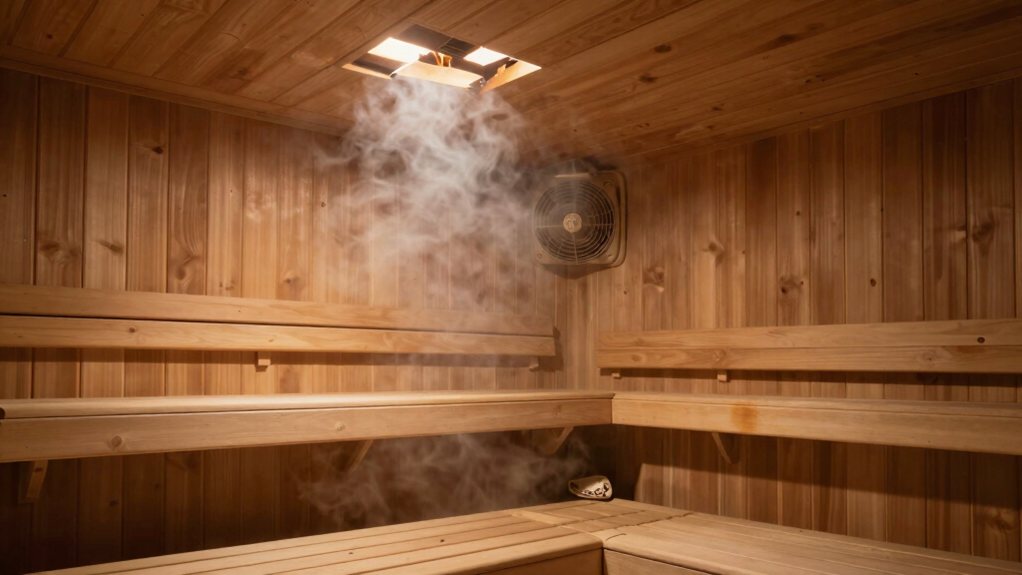
While enjoying your sauna, comfortable seating heights play a vital role in creating a relaxing atmosphere, but good ventilation’s just as important to keep the air fresh and the heat evenly distributed.
Here’s how to identify common ventilation issues that can hurt your sauna experience:
- Vents that don’t match in size can create pressure problems and bad air flow.
- If vents are on the same wall, air may just circle rather than spread evenly.
- Without enough fresh air, you risk ineffective combustion, which can lead to a smoky sauna.
- Moisture build-up can invite mold, turning your sanctuary into a health risk.
Addressing these points can transform your sauna into a lush oasis of relaxation!
Is Your Heater Size Causing More Harm Than Good?
Ever wondered if your sauna heater might be doing more harm than good? If it’s oversized, it might cause rapid temperature spikes, making your experience uncomfortable. Plus, the frequent on-and-off cycling wastes energy.
On the other hand, an undersized heater can take forever to warm up, sometimes over an hour! It struggles to achieve high temperatures, which means you won’t get the quality steam you crave.
Think about it: a proper heater size additionally matches your sauna’s volume but also delivers even heat and saves on energy costs. For instance, a 6x8x7 foot room needs at least 9 kW. Choosing the right size matters for your comfort and your heater’s longevity!
Maximizing Room Dimensions for Sauna Comfort
Choosing the right heater size for your sauna plays a big role in your overall comfort, but it’s not the only factor to take into account. You also need to take into account room dimensions. Here are key points for maximizing comfort:
- Aim for a square or near-square layout—this helps distribute heat more evenly.
- The ideal sauna size is between 36 to 64 square feet with a 7-foot ceiling height, taking into account both comfort and efficiency.
- For multiple occupants, take into account dimensions like 8’x10′, which accommodate seating arrangements better.
- Keep widths between 5 to 8 feet—this supports lying positions and versatile bench layouts.
Effective Strategies for Safer Drainage in Your Sauna
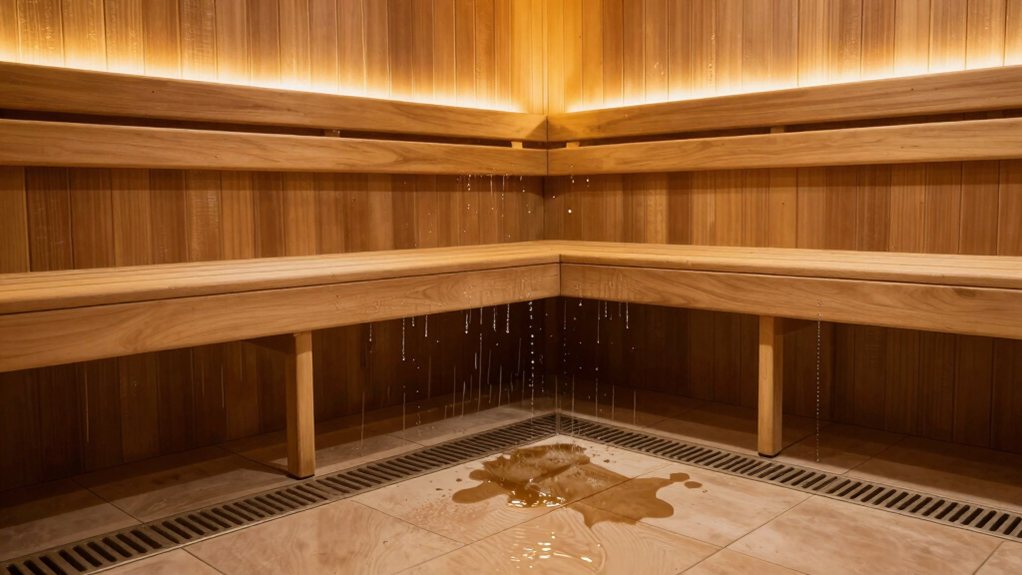
Effective drainage in your sauna is crucial to creating a safe and enjoyable environment. Start by evaluating your site for low-lying areas where water might pool. If your soil is clayey, you’ll need extra drainage measures.
A central floor drain works great for smaller saunas, while a shower-style linear drain suits hybrid wet rooms. Make sure to slope your floor slightly toward the drain using properly aligned corners or triangular sleepers.
As you install, seal all seams with elastic grout to prevent leaks.
For outdoor saunas, consider using gravel as a foundation and French drains for improved water flow.
Each of these strategies will help keep your sauna dry and cozy, making your relaxing sessions far more enjoyable!
Frequently Asked Questions
How Can I Improve Airflow in My Sauna?
To improve airflow in your sauna, install adjustable intake and exhaust vents. Make sure they’re positioned correctly for fresh air circulation. Aim for consistent air changes and consider sealing door gaps to retain heat while optimizing flow.
What Is the Ideal Sauna Bench Layout?
For an ideal sauna bench layout, opt for two tiers: the lower bench at 17-20 inches and the upper at 38-42 inches. Guarantee an 18-20 inch gap between tiers for comfort and foot placement.
How Do I Prevent Moisture Damage in My Sauna?
To prevent moisture damage in your sauna, install vapor barriers, guarantee proper ventilation, and monitor humidity levels. Regularly clean and dry surfaces, using mold-resistant materials and maintaining floor drainage for effective moisture control.
What Materials Should I Use for Sauna Wall Cladding?
You should consider using thermo-treated woods like Thermo Aspen or Thermo Alder for sauna wall cladding. They offer excellent moisture resistance, durability, and aesthetic appeal, guaranteeing your sauna’s interior remains comfortable and visually pleasing.
Can I Customize Sauna Ventilation Locations?
Yes, you can customize sauna ventilation locations. Adjusting vent placement improves heat distribution and comfort. Make sure to follow guidelines specific to your heating system for best performance and air circulation. Enjoy your personalized sauna experience!
Final Thoughts
Ultimately, avoiding common sauna mistakes can make a big difference in your comfort and enjoyment. By guaranteeing proper insulation, safe bench heights, and effective ventilation, you’ll create a relaxing environment you love. Remember to choose the right heater size and maintain good drainage too. With these tips in mind, you can transform your sauna into a safe and inviting space, making every session a fantastic experience. So, go ahead and enjoy your perfect sauna retreat!