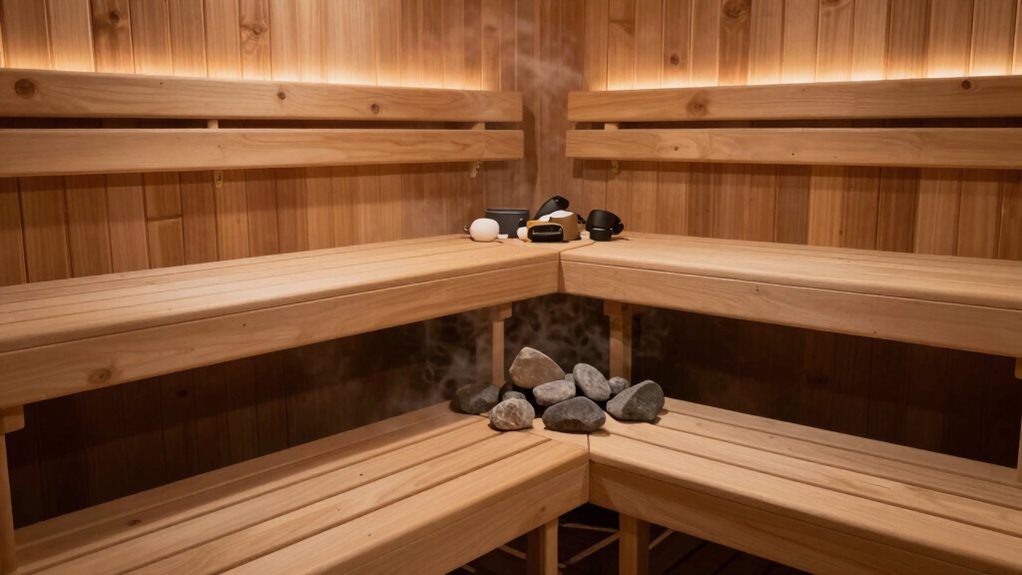

Good sauna layouts struggle due to a mix of limited industry standards, design challenges, and heat distribution issues. You might find that different countries have unique building codes, which complicates things. Then there’s the ventilation, which is key for comfort but often overlooked. Plus, considerations about energy efficiency and accessibility make design trickier. When you add in technology needs and costs, creating the perfect sauna can seem almost like a puzzle. Want to find out more?
Limited Industry Standards and Variability
When you step into the world of sauna design, you quickly realize that there’s a surprising lack of uniformity in industry standards.
In sauna design, navigating the maze of inconsistent industry standards can feel like piecing together a mismatched puzzle.
Imagine trying to build a puzzle, but half the pieces come from different boxes! You’ve got various standards for heaters and cabins, but none lay out a clear blueprint.
Each country has unique building codes, adding even more confusion. Without a common guide, whether it’s for bench sizes or vent placement, you often rely on inconsistent regional advice. In addition, proper ventilation requirements emphasize the complexity of design decisions, complicating the overall planning process. This diversity makes building regulations crucial for ensuring the safety and durability of sauna installations. Furthermore, incorporating a fireproof sauna ventilation system can significantly enhance safety and compliance in your design.
This makes planning a sauna project tricky, especially for businesses operating in multiple areas. You might find yourself creatively balancing accessibility and safety with the traditional sauna’s warm, inviting vibe.
Isn’t that a puzzle worth solving?
Challenges in Heat Distribution and HVAC Design
Designing a sauna may sound simple, but mastering heat distribution and HVAC design turns out to be anything but straightforward.
You mightn’t realize that if vents are poorly placed, hot air can short-circuit, bypassing the area where you sit. Imagine cool drafts under your benches while the ceiling cooks!
Poor airflow doesn’t just mess with comfort; it affects humidity too. Tall ceilings and proper bench heights can help, but those aren’t always possible. Additionally, poor steam dispersion and optimal humidity can result from incorrect vent placements, making it crucial to consider air mixing dynamics in your layout. Proper ventilation is essential to ensure continuous fresh air, which significantly enhances the overall sauna experience. Furthermore, maintaining balanced airflow is vital to creating an inviting atmosphere and optimizing heat retention.
On top of that, heater placement is essential. If it’s too close or the wrong type, you get uncomfortable hot spots instead of a nice warm hug.
Without proper airflow and smart design, your sauna experience could fall flat, literally leaving you cold!
Energy Efficiency and Sustainability Concerns
Energy efficiency and sustainability should be top of mind when planning your sauna, especially if you want to keep both your enjoyment and the environment in harmony. One way to improve energy savings is by choosing the right technology and materials. Here are a few tips:
- Opt for infrared saunas, which use less electricity, reducing operational costs. Infrared sauna kits are a great investment for those seeking both comfort and energy savings.
- Guarantee solid insulation to prevent heat loss; this can make your sauna up to 30% more energy-efficient.
- Incorporate smart controllers for heaters to minimize unnecessary energy spikes. Additionally, consider that infrared saunas consume 75% less electricity than traditional saunas, making them a more sustainable choice. Moreover, using moderate power consumption heaters like those from Harvia during the initial heating phase helps maintain a consistent temperature while further enhancing energy efficiency.
Accessibility and Multi-Use Considerations
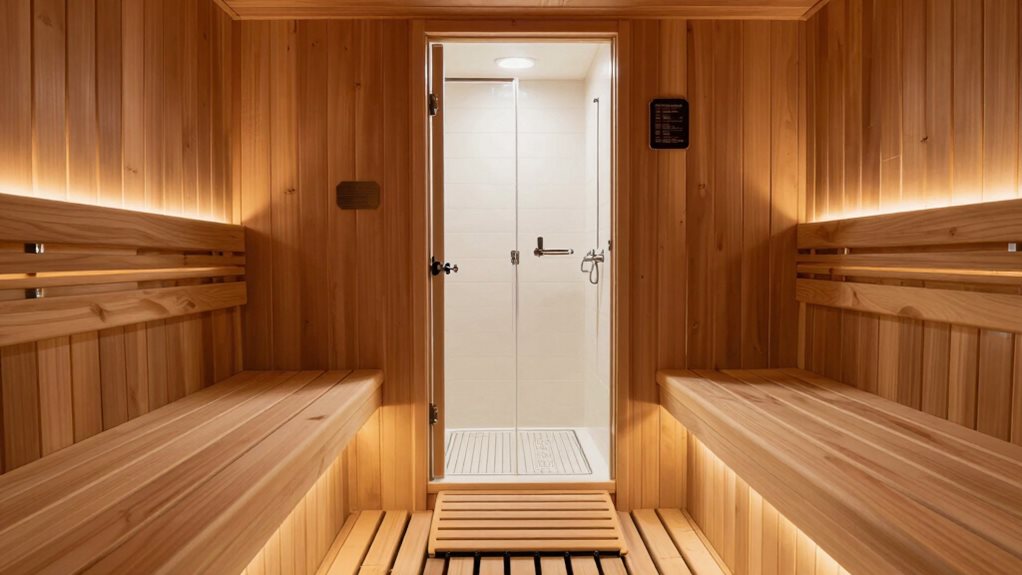
Creating a sauna that everyone can enjoy means prioritizing accessibility and considering multi-use options right from the start.
When planning, think about how physical layout affects access. Many saunas don’t have enough space for wheelchair turning circles, making it hard for everyone to enjoy. You might also notice that typical bench layouts can block clear maneuvering areas, causing compliance headaches. Additionally, ensuring that turning space is adequately provided allows for seamless navigation and enhances the overall user experience. Installing accessible features is crucial, as 2010 ADA Standards for Accessible Design outline precise requirements for inclusive design. Furthermore, investing in sauna moisture protection products can help maintain the longevity of accessible features in a humid environment.
Plus, door swings shouldn’t invade that precious bench space! If you’re designing a multi-sauna facility, remember, at least 5% of each sauna type must be accessible.
And don’t forget the importance of accessible benches—if they’re not built in and supportive, mobility device users may find it challenging. You want to create a welcoming retreat for everyone!
Technology Integration and Cost Constraints
While technology can improve the sauna experience, integrating advanced features often comes with challenges and costs that can catch you by surprise. Adding smart sensors and controls doesn’t just raise the price tag but also the complexity of installation. You might find yourself grappling with:
- Different sensor types, like temperature and humidity, that complicate systems.
- Compatibility issues due to proprietary protocols from various vendors.
- The need for real-time data processing, which can require reliable internet connections. IoT integration enables seamless control and optimization of the sauna environment, further complicating installation challenges. Additionally, incorporating HEPA air purifiers can enhance air quality within the sauna, but this also adds to installation complexity.
These factors combine to create design challenges, especially when you’re trying to make retrofits. Additionally, AI integration can enhance user experience but comes with its own set of complexities. Balancing innovation and cost is essential; you want a high-tech sauna that doesn’t drain your budget or cause headaches during installation!
Frequently Asked Questions
What Common Materials Are Used for Sauna Construction?
You’ll commonly find Western Red Cedar, Aspen, and Hemlock used for benches and walls. For insulation, mineral wool works well, while stainless steel hardware guarantees durability. Electric heaters paired with dense stones create the perfect sauna environment.
How Do I Choose the Right Sauna Size for My Space?
To choose the right sauna size for your space, measure available area, consider user capacity, and account for ventilation and clearance needs. Aim for 2 feet of bench space per person for ideal comfort.
What Are the Health Benefits of Regular Sauna Use?
Regular sauna use boosts your cardiovascular health, lowers blood pressure, improves lung function, enhances cholesterol levels, aids metabolic response, and considerably reduces risks of death from heart-related issues and dementia. You’ll feel better overall!
How Often Should Saunas Be Cleaned and Maintained?
You should clean your sauna after each use, perform a shallow clean monthly, and conduct deeper maintenance quarterly or annually. Regular inspections and upkeep keep hazards at bay and improve your sauna experience.
What Types of Heaters Are Best for Home Saunas?
For home saunas, electric heaters offer convenience and modern aesthetics, while wood-burning heaters provide an authentic experience. Infrared heaters also work well in small spaces, combining efficiency with easy installation for a cozy atmosphere.
Final Thoughts
To sum up, creating great sauna layouts faces several challenges, like inconsistent industry standards and heat distribution issues. By addressing energy efficiency, accessibility, and technology integration, we can design saunas that truly meet everyone’s needs. It’s time to think creatively and push the boundaries of what saunas can be. After all, a well-planned sauna can be a perfect escape, combining relaxation with style. So let’s welcome innovation and make that ideal sauna a reality!